

Introduction
In the oil and gas industry, every system, valve, and pipeline operates under immense pressure—both literally and professionally. A small miscommunication during safety training can lead to costly mistakes or life-threatening risks. That is why realistic 3D animation for pipeline safety presentations has become a powerful tool for educating teams, clients, and stakeholders.
3D animation can show component relationships, cutaways, and a sequence that is difficult to see in the field. Its accuracy depends on the supplied references and review by the people responsible for the equipment and training. A realistic appearance does not establish that the sequence is correct or that learners are qualified to perform it.
If your company values precision and safety, now is the time to modernize your training materials. Contact Austin Visuals 3D Animation Studio at info@austinvisuals.com or call +1-512-591-8024 to create your next safety presentation that truly connects with your audience.

The Challenge of Communicating Pipeline Safety
Pipelines carry more than just oil and gas—they carry the responsibility of safety, efficiency, and reliability. Yet explaining how a pipeline system works is no small task. Training sessions often rely on lengthy PowerPoints, static illustrations, or outdated videos that fail to capture how real systems behave under stress.
Most field and safety teams operate in high-risk environments where procedures must be followed exactly. Understanding pressure control, valve isolation, and emergency shutoffs from a diagram is difficult. Visual clarity can mean the difference between prevention and a serious accident.
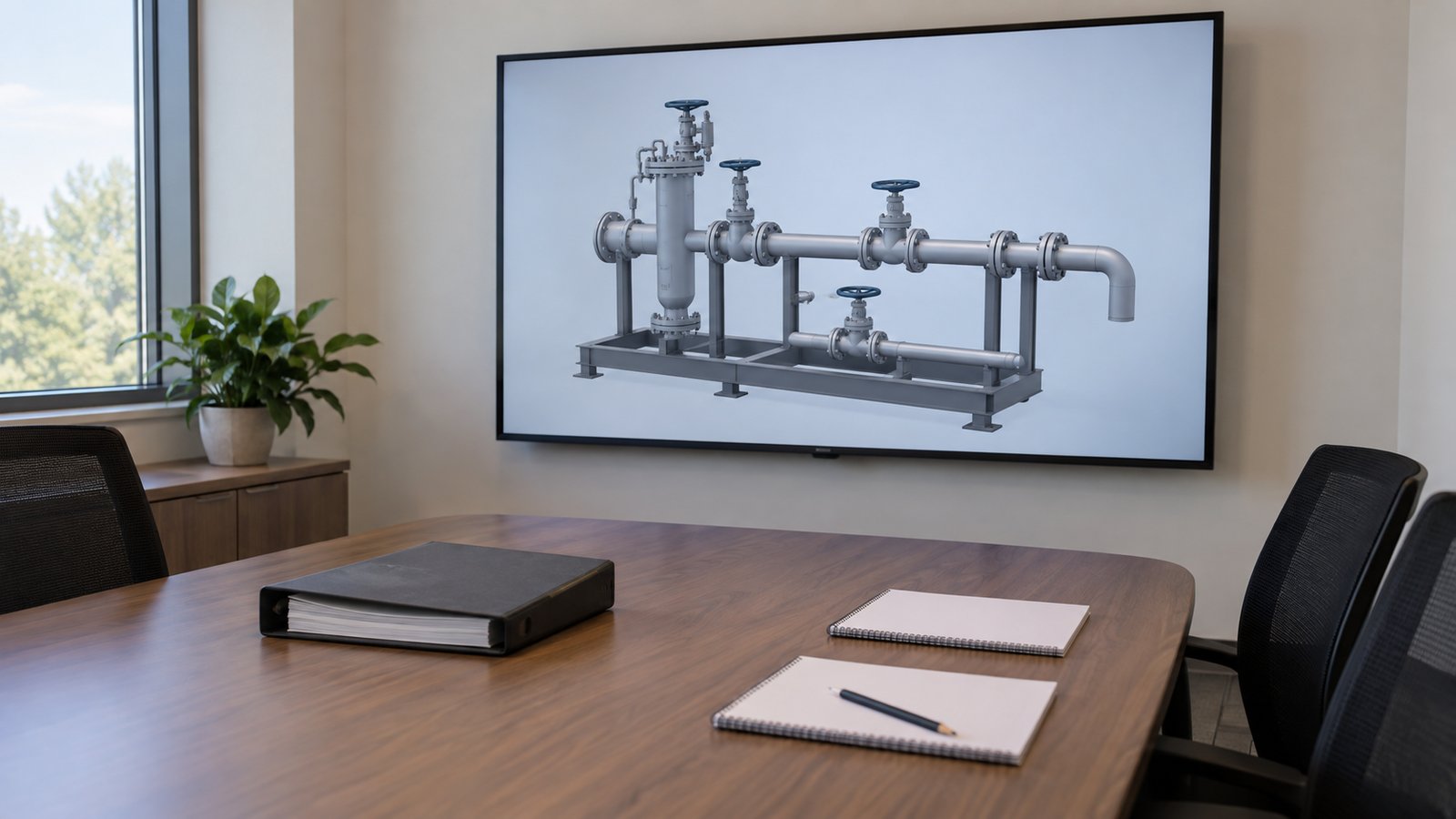
A cutaway of a valve or pipeline can help an instructor explain a hidden mechanism. Label representative elements and show only the sequence approved for the specific training objective. The visual supports explanation and discussion; it cannot remove every ambiguity or prevent operating errors.
Why Realistic 3D Animation Changes the Way Teams Learn
Realistic 3D animation can make equipment recognizable through its scale, layout, and visible features. The required level of detail depends on the lesson. Important labels and component relationships should follow approved references, while unnecessary surface detail can be simplified to keep attention on the task.
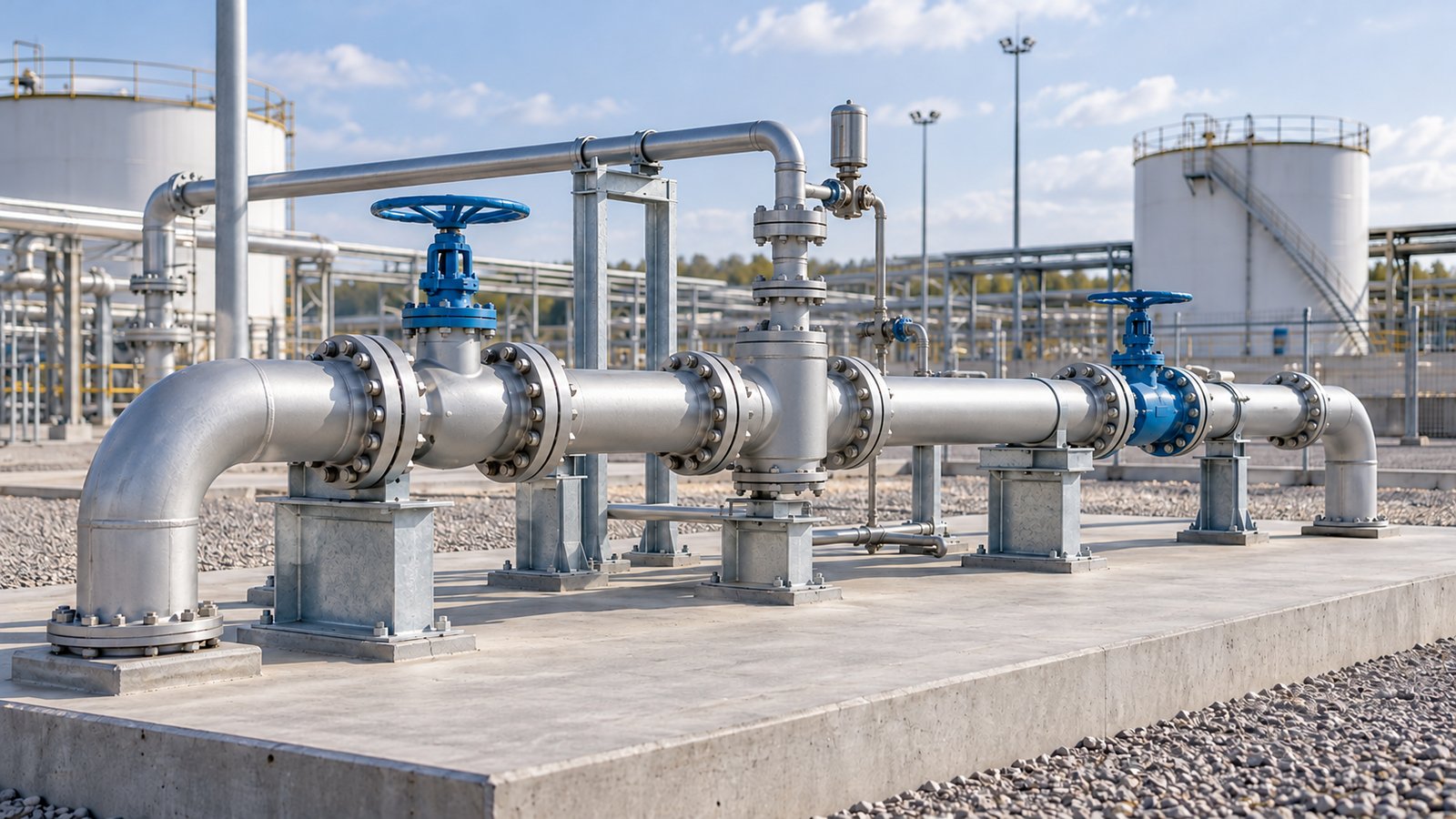
Recognizable equipment can provide context for a lesson, but realistic rendering alone does not establish better retention. Use knowledge checks, discussion, or a practical assessment suited to the training objective to determine whether learners understood the content. Keep the assessment criteria consistent when comparing formats.
Showing a reviewed scenario can help an instructor discuss why a procedure matters and which conditions require attention. Compliance and safe performance still depend on the operator’s procedures, qualification program, supervision, and assessment. Animation is one supporting resource within that system.
The Key Benefits of Using 3D Animation for Pipeline Safety
Accuracy begins with approved source material. A 3D model can show component locations and an agreed sequence, with assumptions recorded for review. The instructor should identify which elements are exact and which are representative before using the visual in a lesson.
An animation can present a hypothetical pressure event or component failure without physically creating that event for a demonstration. State the assumptions and intended learning point. Such a visual is not evidence that the depicted system would behave that way under real operating conditions.
Third is consistency. Every trainee receives the same high-quality instruction, no matter where they are located. This is essential for large organizations that manage global operations or remote teams.
An approved visual may be reused where the equipment, procedure, audience, and learning objective still match. Budget for revisions when any of those change. Reuse may reduce production effort, but it does not automatically eliminate travel, supervised practice, or physical demonstrations required by the training plan.
Motion, labels, and controlled camera views can focus attention on the lesson. Reviewers should check whether those choices clarify the task. Instructor feedback and learner assessment are more useful evidence of effectiveness than assuming that realistic physics or visual polish guarantees retention.
How 3D Animation Brings Pipeline Safety Procedures to Life
For an illustrative lesson about a pressure-related event, the animation could show selected sensor information, equipment relationships, and the approved response sequence. The actual control logic and operator actions must come from the system’s documentation and responsible reviewers. Do not infer automatic valve behavior from a generic example.
Training videos can illustrate a reviewed scenario involving weather, corrosion, or a human-factor question. Define the scenario with the operator’s technical and safety reviewers. Show the response they approve for that system, and preserve uncertainty where the source information does not establish a conclusion.
Camera movement and framing add context. A medium shot can focus on a technician performing maintenance, while a cutaway view reveals internal pipe behavior. Smooth transitions and realistic timing help the viewer follow each stage of the process without confusion.
Realistic textures, reflections, and fluid simulations give these scenes a professional finish that mirrors live footage. The more lifelike the visuals, the more credible the message. That is the strength of realistic 3D animation—it makes safety instruction feel immediate and grounded in reality.
The Process of Creating Realistic 3D Safety Animations
Producing realistic 3D animation for oil and gas requires both engineering knowledge and creative skill. It begins with understanding the system being visualized. Engineers and safety officers provide technical references—diagrams, models, and procedures—that form the foundation of the project.
The modeling team builds the equipment and environment from the approved reference package. Identify the dimensions, labels, geometry, and motion that need to be exact for the lesson. Fluid motion used for explanation should be identified as illustrative unless it comes from a separately validated analysis suitable for the intended use.
Lighting and materials are crafted to match field conditions. For example, a desert pipeline might reflect harsh sunlight and dust, while an offshore rig would feature damp metal textures and reflections from ocean light. These details add realism and authenticity.
Review the storyboard and low-detail animation before final rendering so the operator’s designated reviewers can check the sequence, labels, and assumptions. The final visual supports the training plan. It does not replace operating procedures, qualification evaluation, or supervised practice. PHMSA’s operator qualification guidance identifies the operator’s role in defining its program and personnel requirements for covered tasks.
Published Energy Visualization Examples from Austin Visuals
Cameron LNG: interactive industrial visualization
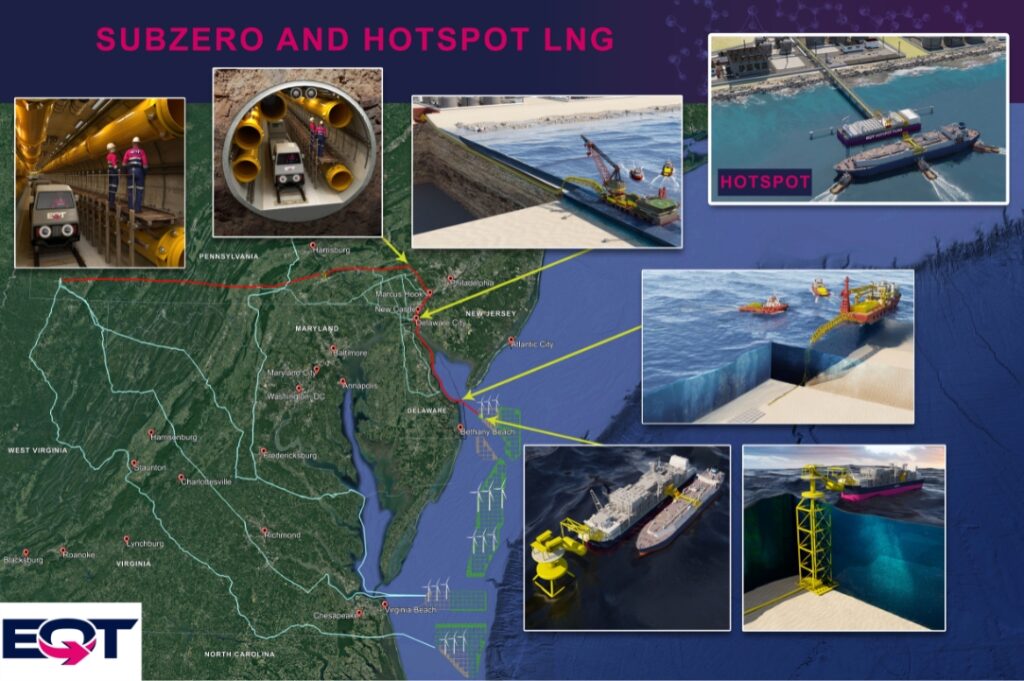
The Cameron LNG visitor-center VR case study describes an interactive experience explaining facility operations, including liquefaction and gas treatment. This is a visitor-education example. Its visual approach can inform an industrial presentation brief, while operational training still requires its own operator-approved content and assessment.
Tesoro LARIC: communicating refinery integration
The published Tesoro LARIC animation case study describes a presentation explaining refinery integration to community members and other stakeholders. Aerial views and technical schematics connect equipment, pipelines, and project context for audiences who may not work inside the facility.
These examples demonstrate industrial communication formats. A pipeline safety lesson should use the specific equipment references, procedures, and review responsibilities defined by its operator.
Illustrative Training Scenario: Explaining a Reviewed Sequence
Consider a hypothetical pipeline training module whose objective is to help learners identify equipment relationships and explain a documented sequence. This is an illustrative planning example, not a report of a named or anonymous Austin Visuals client project. The operator would provide the source procedures and approve the intended lesson.
A possible set of 3D safety animations could show an overview, a cutaway, and pause points for instructor discussion. Exact valve timing, control-system behavior, and personnel actions would require system-specific references and review. The example does not prescribe a shutdown procedure.
Before release, record the existing training approach and assessment criteria. After release, evaluate the same learning objective with a comparable assessment and note any other program changes. Training time alone does not establish competence, safe performance, or an improvement attributable to animation.
Document the review date and assign responsibility for future updates. If an actual project is later published as a case study, include approved project context, the measurement method and period, and the limits of any reported result.
Beyond Safety: Broader Uses in Oil and Gas Communication
While safety is the primary driver, realistic 3D animation also enhances communication in many other areas of the oil and gas industry. Engineers use it to demonstrate new systems during project approval meetings. Executives rely on it for investor briefings to explain complex operations in minutes.
Marketing teams use these visuals in trade shows or promotional videos to show technology in action. The same principles that make 3D animation effective for safety also apply to sales and public relations—it conveys confidence through clarity.
Even environmental teams use 3D visualization to demonstrate impact assessments and containment strategies. By visualizing the data, stakeholders understand not just the science but also the responsibility behind every operation.
Partnering with a Specialized 3D Animation Studio

Creating realistic 3D animation for pipeline safety is not a simple task. It requires collaboration between engineers, designers, and storytellers who understand both the science and the stakes. That is why working with a specialized studio matters.
Austin Visuals has built a reputation for producing high-quality 3D animations tailored for industrial and oil and gas clients. The studio’s team combines technical accuracy with cinematic storytelling to make complex processes understandable.
Austin Visuals provides animation for industrial communication and training materials. Discuss the references available, the audience, and the technical-review responsibilities before deciding how much detail the presentation needs. A visualization should not be represented as a validated pipeline integrity analysis unless that analysis is separately part of the project.
If your organization needs a visual partner that understands engineering accuracy as well as creative delivery, Austin Visuals 3D Animation Studio can help. Every project is guided by collaboration, technical review, and a focus on clarity.
Our Clients include:

Conclusion
Pipeline safety animation is most useful when it supports a defined learning objective and an operator-approved lesson. Check the visual against the actual equipment and procedures, and evaluate understanding through the training program. Animation can support instruction, but it cannot guarantee correct field behavior.
By using realistic visuals, safety managers can deliver messages that resonate across all levels of the organization—from the control room to the field. The combination of engineering accuracy and cinematic presentation turns procedures into stories people remember.
When every decision depends on clarity, realistic 3D animation becomes an essential communication tool.
If your company wants to elevate its pipeline safety presentations with precision and visual impact, reach out to Austin Visuals 3D Animation Studio. Email info@austinvisuals.com or call +1-512-591-8024 to start building visuals that make safety training clear, memorable, and effective.
Frequently Asked Questions
What is realistic 3D animation for pipeline safety?
It is a visual training method that recreates real-world pipeline systems and procedures using accurate digital models. These animations help teams understand how safety mechanisms work by showing them in motion.
Why is realism important in safety training?
Recognizable equipment can help learners connect a visual to their work environment. Review labels, sequence, and assumptions with the operator’s designated experts, then assess understanding. Realism alone does not guarantee faster learning, better recall, or fewer errors.
How long does it take to produce a 3D safety animation?
Production time varies by complexity. A short sequence can take a few weeks, while a full training module with multiple systems may require several months. Each project is tailored to accuracy and client goals.
Can these animations be used outside of training?
Yes. Realistic 3D animations are also used for investor presentations, marketing, regulatory communication, and safety demonstrations. They are versatile tools for any company needing visual clarity.
Does Austin Visuals provide custom engineering-based animation?
Austin Visuals can create custom industrial visuals using your engineering references and designated reviewers. Agree on the approval criteria for geometry, labels, motion, and simplified elements. The project scope should state whether the visual is explanatory or based on a separately validated engineering analysis.
Have a Project to discuss? Use this form to Contact Austin Visuals