

Introduction
Animation has transformed training and simulation for aerospace and defense, making it easier to teach specialized skills and communicate abstract concepts. These industries cannot rely on guesswork; accuracy and clarity are demanded. Using high-quality animation, teams visualize scenarios, experiment with procedures, and prepare for complex events with less risk and greater control. Training time shortens, confidence grows, and costly errors are reduced.
When technology and expertise come together, teams perform more effectively. By drawing on advanced visual techniques, Austin Visuals enables organizations to reach their goals without compromise. Ready to take your training up a level? Contact Austin Visuals at info@austinvisuals.com or call +1-512-591-8024 to discuss your next project.
Understanding the Importance of Animation in Aerospace and Defense
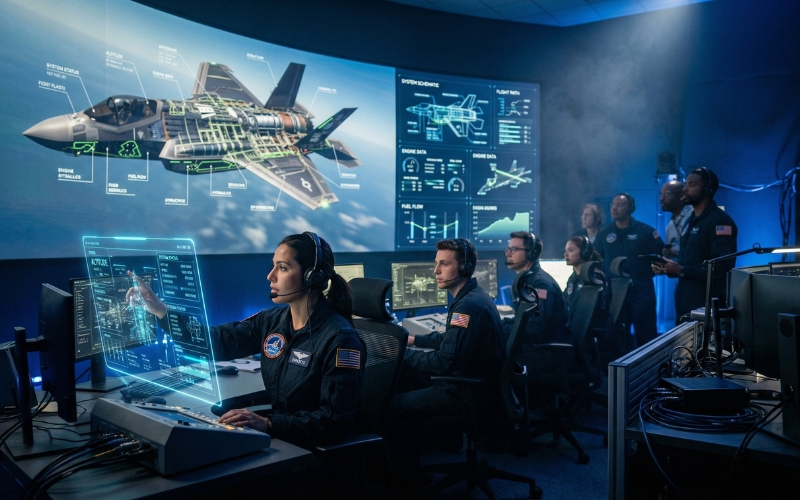
The aerospace and defense fields depend on precision and clear communication. Animation makes it possible to break down the science behind flight, aerodynamics, and systems operations into clear, visual stories. By using both 2D and 3D animation, organizations can demonstrate aircraft mechanisms, mission strategies, and safety procedures without the costs or risks associated with real-world training. In fact, teams from engineering to operations have shown greater comprehension when they use animation to visualize objects or processes.
Real aircraft, spacecraft, and defense systems are complex and not always accessible for hands-on learning. Animation creates a bridge for trainees, allowing them to fully grasp everything from turbine operations to combat scenarios. One example can be found in NASA’s instructional videos, which rely on animated sequences to describe how satellite components function or how launch stages separate. This isn’t simply about making content “look good”—it’s about presenting crucial information accurately.
Visual storytelling through animation also has advantages for those learning new skills. Diagrams or static images only show a single angle and can miss subtle movements; animations display cause and effect, reveal interior workings, and guide learners through each step. As a result, individuals preparing for high-stakes aerospace and defense roles benefit from superior understanding in less time. Every movement, force, and response is visible—a big step ahead of traditional lectures or textbooks.
Our Work samples
Challenges Faced by the Aerospace and Defense Industries
Training in aerospace and defense is rarely simple. Many concepts involve layers of information, where a mistake can have serious consequences. Instructors must find ways to teach both broad principles and minute details. Real equipment is expensive, simulations require technical skill, and safety must be protected.
Traditional lectures often fall short. Static slides and lengthy manuals can bore trainees or even foster confusion. Hands-on exercises, while helpful, may not always be possible due to location, security, or safety concerns. Large-scale scenarios, such as emergency response or equipment failure, are almost impossible to practice “live” without excessive cost or risk. It’s also a challenge when trainees begin with different levels of understanding or language barriers exist between instructors and students.
Animation presents solutions for these problems. Animated simulations can run through incident response, system checks, or fault troubleshooting—repeating steps as many times as necessary, without risk or extra expense. Language is no barrier when advance visuals show every important point. Animation also speeds up onboarding and reduces training downtime, making each hour matter more. In this way, organizations hold onto best practices and spread knowledge faster.
How Austin Visuals Can Enhance Training Efficiency

Austin Visuals stands apart in its commitment to clarity and technical accuracy. Our work with organizations like NASA and The Smithsonian proves our experience in creating animations that meet strict industry standards. Each project is guided by strong attention to scientific details, whether showing the dynamics of a flight simulator or deconstructing the behavior of advanced weaponry.
Our team consistently delivers animation solutions that make even complex equipment, systems, and maneuvers easily understood. Clients depend on our ability to translate engineering data and technical documents directly into visual sequences. This process not only improves learning but often uncovers new insights about how systems operate.
The Austin Visuals process emphasizes speed, convenience, and collaboration. Because every stage is managed efficiently and completely in-house, clients benefit from faster turnaround and lower costs. No lengthy delays or missed details. Every project can be fine-tuned until it matches the precise requirements of training programs or simulation labs. To see past examples or start a discussion, email info@austinvisuals.com.
Our clients include:

The Advantages of Using Animation for Simulation Practices
One of the greatest strengths of animation in simulation is its ability to replicate events that may be too dangerous, costly, or rare to experience in real life. Using visualizations, teams can “walk through” challenging environments, troubleshoot failures, or practice rescue operations step by step—safe from harm and without draining resources.
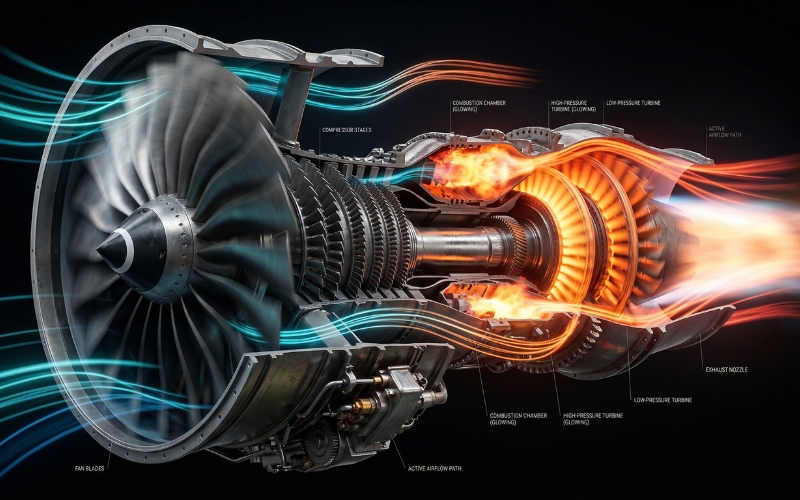
Instructors rely on animation to demonstrate system start-up procedures, explain the physics of flight, or recreate emergency landings. In these lessons, details such as engine operation or fuel dynamics are displayed in a way text cannot achieve. A turbine assembly, for example, can be both exploded and animated, showing how each part functions, moves, and contributes to the whole.
Animations also encourage repetition and rapid skill acquisition. Learners can play, pause, and review material as often as needed, which has proven to boost retention and confidence. This approach removes much of the stress from early training, since mistakes are virtual and corrections come easily. As a result, new hires reach competency faster, while experienced staff stay sharp on new equipment or mission protocols.
Custom Solutions for Aerospace and Defense Needs
Every aerospace and defense client has a unique set of requirements. Austin Visuals takes a custom approach, developing tailored solutions for specific aircraft, missions, or hardware. Whether a client needs interactive 3D models to train engineers, or immersive motion graphics for scenario planning, our team brings years of technical experience to the table.
Our service options range across 3D and 2D animations, cutaway diagrams, visual FX, and detailed system walk-throughs. Specialty projects, such as simulations that help pilots master avionics systems or engineers diagnose flight data, are designed to deliver both accuracy and usability.
Clients are closely involved at every phase, from concept sketches to the final render. Feedback is welcomed, ensuring that results match both scientific and operational standards. For teams that value transparency and flexibility, this collaborative model leads to stronger results and greater satisfaction.
Collaborating with Austin Visuals: Our Process
At Austin Visuals, we understand that clients need both convenience and control. Our remote collaboration system enables stakeholders to take part from anywhere, eliminating travel costs and delays. Communication is clear and every deadline is predictable.
With each project, a dedicated team of specialists—including animators, engineers, and visual designers—works side by side with the client. This team manages planning, production, and revisions, all while making sure technical precision is never sacrificed. Most importantly, this model allows us to finish projects faster, maintain high standards, and adapt to changing schedules or urgent needs.
For time-sensitive projects or organizations with global teams, our remote process means progress never stops. Even as the animation evolves, each stakeholder receives regular updates and previews. Adjustments can be made instantly. With Austin Visuals, distance is no barrier to high-quality training and simulation content.

Future Innovations in Aerospace and Defense Animation
Animation technology is always moving forward—and so are the ways it serves the aerospace and defense sectors. New techniques, such as real-time rendering, virtual reality (VR), and interactive simulations, allow for immersive lessons and more flexible training options. VR headsets, for example, provide “hands-on” practice with zero risk, building skills for pilots, technicians, or astronauts in a completely safe setting.
Artificial intelligence and machine learning are also increasing the depth and interactivity of animated content. Soon, animated instructors could adapt in real time to the skill level and progress of each student, making training even more personalized. 3D scanning and photorealistic rendering will keep raising the quality and detail in every scene, from cockpit controls to complete spacecraft interiors.
Austin Visuals remains at the leading edge, constantly updating workflows and technologies to deliver animations that anticipate tomorrow’s training needs. Our goal is always to provide tools that help organizations train faster, teach smarter, and prepare for the future with total confidence.
Conclusion
Animation drives progress in aerospace and defense training, improving safety, skill development, and mission readiness. Austin Visuals delivers content that’s accurate, easy to understand, and ready for today’s challenges. Whether you’re planning new learning modules or need advanced simulations, our team brings technical skill and creative vision to every project. Experience the difference that clear, scientific animation can bring to your operation. Ready to improve your results? Schedule a consultation, request a quote, or view our project portfolio by reaching out to info@austinvisuals.com or calling +1-512-591-8024.