
Most animation projects that run into problems — missed deadlines, unexpected revision rounds, final videos that don’t quite land — share a common root cause. Not bad animation. Not a difficult client. Usually it comes down to one thing: the project started before the right information was in the room.
Austin Visuals works with marketing directors, product teams, medical device companies, engineering firms, and corporate communications departments across a wide range of industries. The projects that move smoothly almost always begin the same way — with a client who came prepared. Not necessarily with a finished script or a locked creative brief, but with a clear sense of what they were trying to accomplish and who they were trying to reach.
This post is a practical guide to what an animation studio actually needs from you before production begins. Whether you’re planning a product explainer, a medical animation, a trade show video, or a full training series, the information below will help you walk into that first conversation ready — and help your studio deliver something worth watching.
Why the Brief Matters More Than the Concept
Animation is not a commodity. The same topic — say, how a surgical device works — can be executed as a 90-second sales tool, a 4-minute surgical training video, a patient education piece, or a board-level investor presentation. Each version requires different pacing, different language, different visual complexity, and a completely different emotional register.
A studio that doesn’t know which version you need will make assumptions. Some of those assumptions will be right. Others will cost you revision rounds, reset timelines, and budget overruns — all of which could have been avoided in the first conversation.
The creative brief for animation is not a bureaucratic box to check. It’s the document that lets a production team make intelligent decisions on your behalf at every stage of the process, from script to storyboard to final render. When that information is incomplete, every downstream decision becomes a guess.
The Core Information Every Animation Project Needs
Before a single frame is drawn, a production team needs to understand six things clearly: the goal, the audience, the message, the format, the timeline, and the usage context. These aren’t always fully formed ideas when a client first reaches out — and that’s fine. But they need to be resolved before production begins.
The business goal. What is this video supposed to do? Increase demo requests? Train new operators? Support a regulatory submission? Build investor confidence before a raise? The answer shapes everything from the script structure to the visual style to the length of the final asset. A video that’s meant to sit on a homepage works differently than one that lives at the bottom of a sales funnel or plays in a trade show booth.
The target audience. A technical explainer written for an engineer reads very differently from one aimed at a procurement manager, a clinician, or a first-time buyer. Knowing who is watching — and what they already understand — determines the vocabulary, the level of detail, and the emotional tone of the entire piece.
The core message. Most clients come in with many things they want to say. Animation forces discipline. You generally have 60 to 120 seconds to make one or two points clearly. The studio’s job is to help you identify what the most important message is. Your job is to have a clear point of view going in — and to be willing to trust the process when the production team asks you to cut something that isn’t serving the main point.
The preferred format and style. 2D or 3D? Character-driven or product-focused? Photorealistic or stylized? Some clients arrive with reference videos that show exactly what they’re going for. Others have a general direction but aren’t sure how to describe it. Either is workable. What the studio needs is some signal — even something as simple as “we want this to feel premium and technical, not cute and simplified” — to make the right decisions early.
The timeline. Animation production takes time. A realistic 60-second 3D product animation takes four to eight weeks depending on complexity, approval speed, and the number of assets that need to be built. Clients who come in with hard launch dates — a trade show, a board presentation, a product release — need to communicate that immediately. Studios can often accommodate tight deadlines, but only when they know about them early enough to plan resources accordingly.
How and where it will be used. A video that will be presented in a large conference hall needs different audio mixing than one that plays in a browser tab. A social media cut has different aspect ratio requirements than a broadcast spot. A video embedded on a landing page may need a subtitle file for SEO. These details affect deliverables, and deliverables affect scope. It’s not a minor consideration.

What to Prepare Before Your First Animation Meeting
You don’t need a finished brief to start a conversation with a studio. But there are a handful of things that will make that first meeting significantly more productive.
Examples of videos you like. Pull two or three reference videos — from competitors, from other industries, from anywhere — that reflect the tone, style, or structure you’re aiming for. Even references you dislike (“not like this”) are useful. They tell the production team a great deal about your aesthetic instincts and your audience expectations.
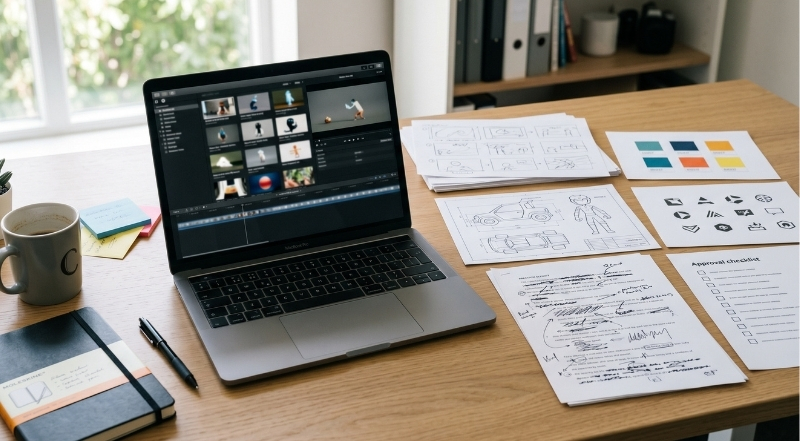
A description of what you’re animating. If you’re animating a physical product, the studio will eventually need 3D files, CAD models, product photography, or high-resolution reference images. If you’re animating a process or a concept, a written description or a diagram — even a rough one — is a useful starting point. The more technically complex the subject, the more important this becomes.
Existing brand assets. Brand guidelines, color palettes, logo files, and approved font sets should come over early. A studio working on a product explainer for a Fortune 500 company needs to understand what “on-brand” looks like before the first frame is designed — not after the first round of revisions.
A draft script or talking points, if you have them. Not all clients have a script when they come in. Many prefer to let the studio write one from a brief. But if your team has been workshopping a script internally, share it. Even a rough internal draft tells the production team what language you use, what you emphasize, and what you’ve already decided matters most.
A realistic sense of your decision-making process. One of the most useful things a client can communicate upfront is how approvals work on their end. Is one person the final sign-off? Is there a legal review step? Does the marketing VP need to approve every stage? Animation projects have multiple approval gates — script, storyboard, style frames, animation, sound — and knowing in advance how long each review cycle takes allows the studio to build a production schedule that actually holds.
What Austin Visuals Collects in a Discovery Call

At Austin Visuals, the first conversation with a new client isn’t a sales pitch. It’s a working session designed to surface exactly the information needed to scope the project accurately and plan production realistically.
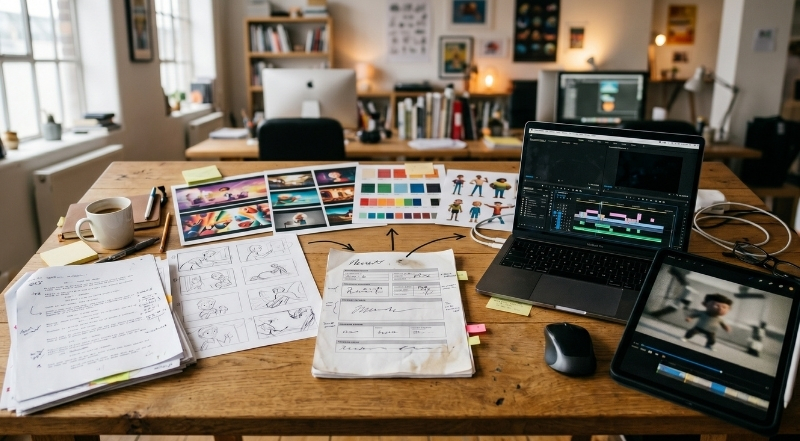
In that call, the team works through the business goal, the audience profile, the subject matter, the preferred style direction, any existing assets that will carry into the project, and the timeline constraints. For technical projects — medical animation, industrial explainers, engineering walkthroughs — there’s usually a deeper discussion about subject matter accuracy: what sources will be used to verify the science or mechanics, who on the client side is the technical expert, and how that review process will work during production.
For clients who are newer to commissioning animation, the studio often walks through the production process step by step so there are no surprises. Understanding what a storyboard is, what “style frames” means, and what a final delivery package includes makes the entire project easier to navigate.
Our clients include:

Why Subject Matter Access Changes Everything
This is particularly true in specialized industries. Medical and biotech clients often underestimate how much a studio relies on access to their internal experts during production. A mechanism of action animation, a device demonstration video, or a surgical training piece requires more than reference materials — it requires a knowledgeable contact who can review the animation for clinical accuracy at each stage and flag anything that misrepresents the science.
The same applies in industrial and engineering contexts. An animation of a manufacturing process, an oil and gas facility walkthrough, or a structural engineering visualization needs a technical reviewer who understands the subject well enough to catch errors. Studios like Austin Visuals bring production expertise; clients bring subject matter expertise. Both are required for the final product to be accurate, credible, and useful.
The Difference Between a Prepared Client and an Unprepared One
In practical terms, clients who arrive with clear information — even imperfect information — move through production faster, spend less on revisions, and end up with videos that do what they’re supposed to do. Clients who arrive without it don’t move faster. They just move the information-gathering process into the production phase, where changes are more expensive and more disruptive.
The creative brief for animation isn’t a formality. It’s a working document that the production team will reference from kickoff to delivery. The more complete it is at the start, the less time gets spent clarifying, correcting, and realigning. That time is real money — and in most cases, it’s money that could have stayed in the client’s pocket.
How to Start If You Don’t Have Everything Ready
If you’re early in the process and don’t yet have a brief, a timeline, or a clear visual direction, that’s not a problem. Most studios — including Austin Visuals — are happy to start with a scoping conversation and help you build the brief together. The goal of that first meeting isn’t to arrive with all the answers. It’s to get in a room with people who know the right questions.
What matters most is that you come in with clarity on two things: what the video is supposed to accomplish, and who it’s supposed to reach. Everything else — style, format, structure, length, deliverables — can be worked out from there.
Frequently Asked Questions
What is a creative brief for animation and why does it matter?
A creative brief is a document that captures the goal, audience, message, style direction, timeline, and usage context for an animation project. It gives the production team the information they need to make intelligent decisions at every stage — from script to final delivery. Without one, projects drift into assumptions, revision cycles lengthen, and the final video often doesn’t serve its original purpose.
What should I prepare before contacting an animation studio?
At minimum, come with a clear sense of your business goal, your target audience, and the deadline if one exists. Reference videos that reflect the tone or style you’re aiming for are also extremely useful. Brand assets, product files, and any existing scripts or talking points are helpful but not required for the first conversation.
Does Austin Visuals help develop the creative brief?
Yes. For clients who don’t have a formal brief, Austin Visuals works through a structured discovery process in the first meeting to build the project scope, clarify the audience and goal, and identify any technical or brand requirements that will affect production.
What technical assets does an animation studio typically need?
For product animation: 3D files, CAD models, or high-resolution photography. For medical or industrial animation: technical documentation, diagrams, and access to a subject matter expert for accuracy review. For brand-aligned work: logo files, brand guidelines, approved fonts, and color palettes.
What happens if I don’t have a clear budget going into the first meeting?
That’s common and workable. Share the scope and the goal, and a good studio will give you a realistic range based on what the project actually requires. Ballpark budget awareness — even a rough sense of “we’re thinking five figures” versus “we have a very limited budget” — helps the studio recommend the right format and approach from the start.
How long does animation take once all the information is in place?
A typical 60-second 2D explainer takes three to five weeks in production once the brief is locked. A 3D product animation or medical animation of similar length generally takes five to eight weeks. Complex projects with multiple scenes, technical reviews, or large asset builds take longer. Timeline discussions should happen before production begins, not after.
Ready to Start Your Animation Project?
Austin Visuals works with companies across industries — from medical device manufacturers to engineering firms to SaaS companies — to turn complex ideas into clear, effective visual content. Whether you have a finished brief or just a goal and a deadline, the team is built to help you figure out what you need and build it the right way.
Contact Austin Visuals to talk through your project: austinvisuals.com | (512) 591-8024 | info@austinvisuals.com