
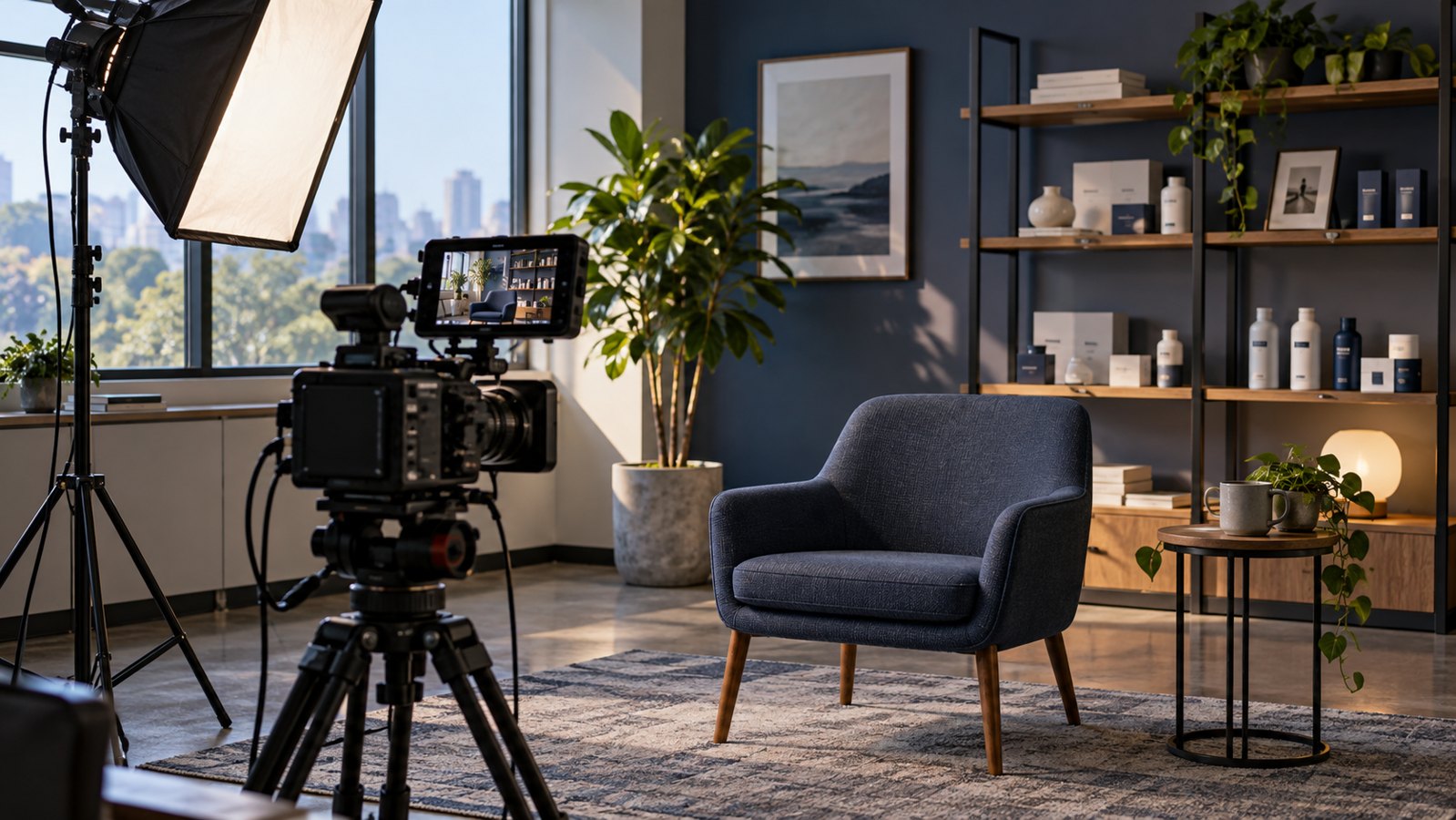
Company profile video production turns a business introduction into a clear explanation of what your company does, who it serves, and how its work supports a customer’s needs. A useful profile gives viewers enough evidence to decide whether a conversation with your team is worthwhile.
A buyer rarely needs every milestone, department, or service in the opening film. They need a coherent view of your capabilities and the people responsible for delivering them. Austin Visuals offers company profile videos within its corporate video production services, with filming, editing, and animation options for explaining work that is difficult to show.
To discuss the audience, filming requirements, and scope of your company introduction, share your brief with Austin Visuals.
What should company profile video production accomplish?
A company profile should answer the questions a new audience asks before contacting a business. Its role is to establish relevance: what you provide, which problems you handle, and what viewers can reasonably expect from working with you.
Choose a primary audience before gathering footage. Procurement staff evaluating a manufacturing supplier need different information from applicants exploring an employer. A business overview video aimed at prospective customers can introduce your team without becoming a recruiting film.
Write a simple viewing objective. For an illustrative engineering supplier, it might be: “A project manager should understand our design-to-delivery process and know which project details to send for an initial review.” That objective helps the team decide what belongs in the film.
Define where the video will appear as well. An About page gives viewers supporting text and navigation. A sales presentation may need an introduction that stands alone. A muted trade show display requires a different treatment of on-screen information.
When several audiences are important, agree on a main version and purposeful variations. Trying to answer every stakeholder’s question in one edit often produces a list of statements with no clear order.
Select information that helps buyers evaluate your company
The strongest material connects a relevant claim to something the viewer can see or understand. A capability statement becomes more useful when the film shows the process, people, or approved example behind it.
| Buyer question | Useful content | Material to verify |
|---|---|---|
| What do you provide? | A plain explanation of the main service or product | Current scope and approved terminology |
| Who is the service designed for? | A recognizable customer situation | Actual industries served and permitted examples |
| How is the work delivered? | A short sequence showing important handoffs | The process as it operates today |
| Why should we consider you? | Specific capabilities and attributable evidence | Permission and source records for claims |
| What happens next? | A clear invitation to discuss a relevant project | The correct contact route and requested information |
Keep an evidence sheet beside the script. Record who confirmed each claim, where supporting material is stored, and whether anything needs permission before release. Review descriptions such as “in-house,” “nationwide,” or “certified” against the actual scope they describe.
A company can explain its experience without inventing results. If an approved customer case is unavailable, show a real workflow or a clearly labeled illustrative process. Do not present stock footage or generated imagery as a record of your own facilities or completed projects.
Build a script around the customer’s questions
A company introduction video works best when its sequence follows the viewer’s need for information. Establish what the business does before adding background that explains why its approach matters.
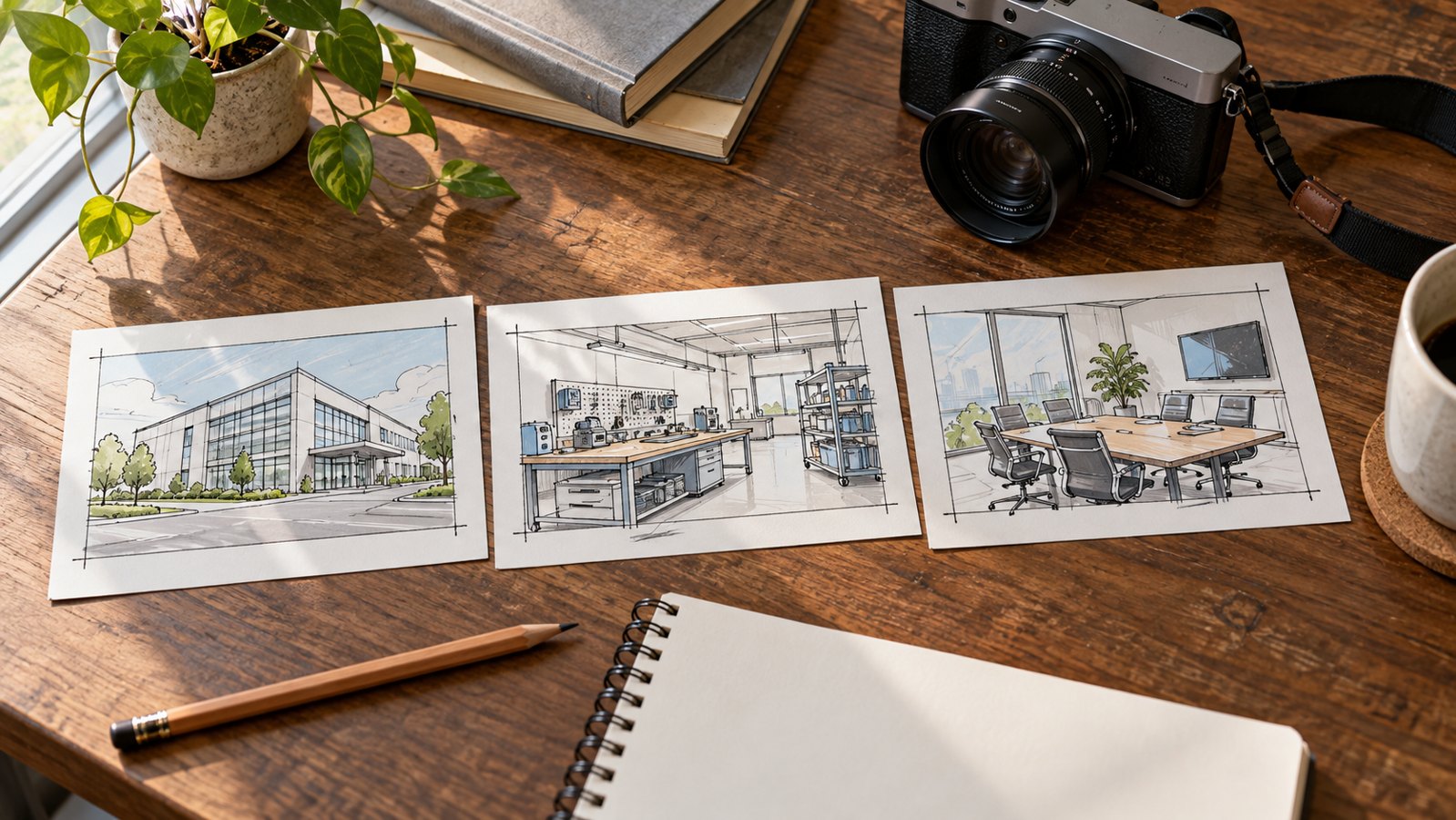
A practical structure begins with a relevant customer situation, introduces the company’s role, shows how work moves through the organization, and ends with a suitable next step. History belongs where it explains a capability or choice, rather than automatically occupying the opening.
For the fictional engineering supplier, a sequence could follow a sample component from a design discussion to inspection and delivery preparation. A short explanation from an engineer can identify the decisions involved. A company-wide aerial shot cannot communicate those decisions on its own.
Write spoken language rather than copying a brochure. Read the script aloud to catch long sentences, unexplained acronyms, and claims that sound stronger than their evidence. Replace “comprehensive solutions” with the work you actually perform.
Separate narration from visual direction in the working document. If a sentence describes a review stage, specify whether the viewer will see a meeting, a document detail, or a simple process graphic. This gives the production team a concrete basis for planning coverage.
Keep the closing action specific to the audience. A buyer might be invited to submit project requirements, while a potential partner may need a different contact route. Avoid asking for several unrelated actions in the same ending.
Choose the right mix of interviews, footage, and animation
Live footage establishes the people and working environment behind a business. Interviews explain decisions in an individual’s voice. Animation can clarify an internal process, service relationship, or technical feature that cannot be filmed effectively.
For corporate profile video production, choose interview participants for their knowledge of the work. A founder can explain the original problem the company set out to address. A project lead may be better placed to explain what happens after a customer sends a brief.
Prepare topics and relevant facts before recording, but leave room for natural answers. Ask for concrete examples: what information is checked, what causes a project to change direction, and how teams resolve a handoff. Select the material that answers the viewer’s question.
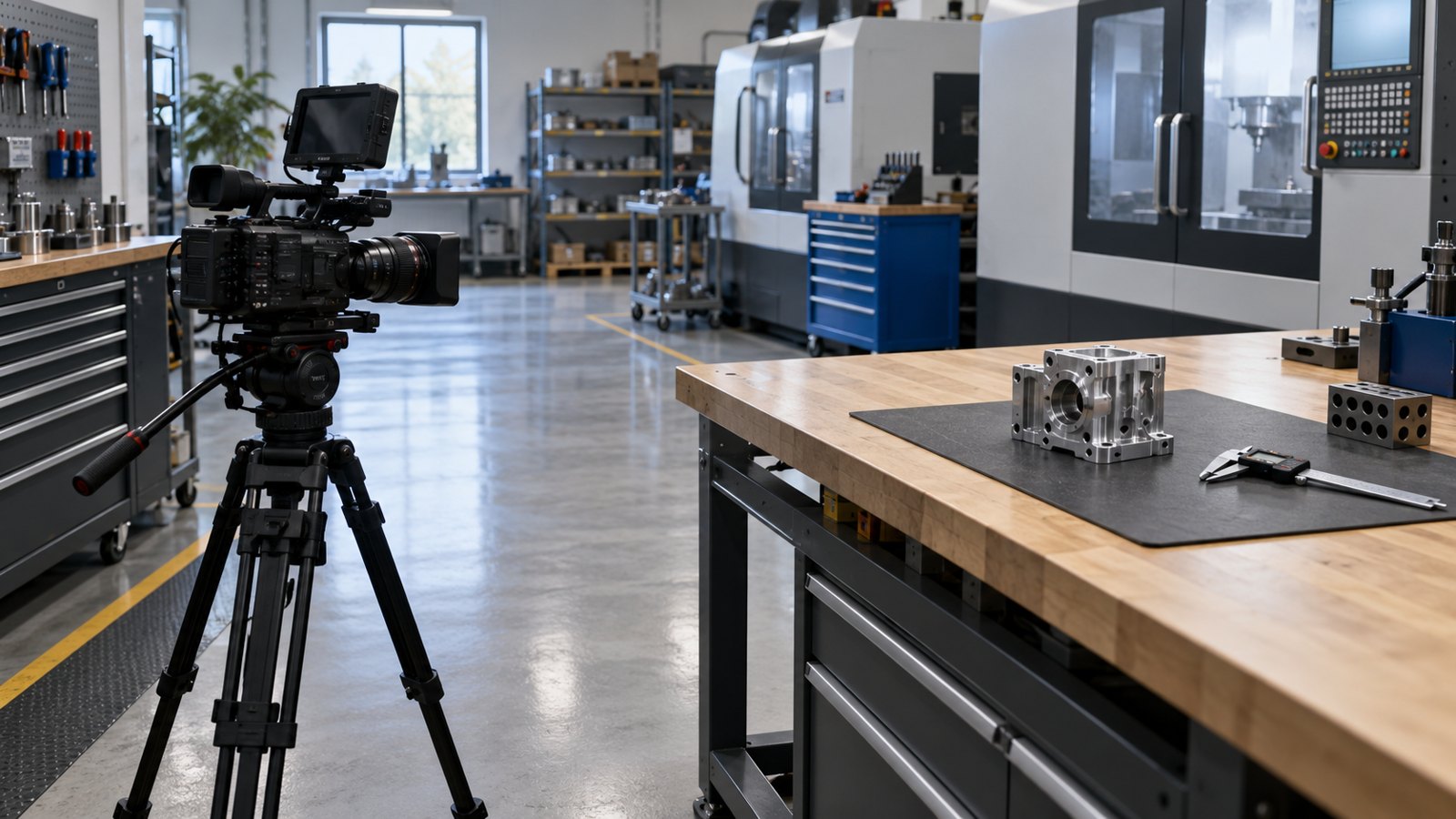
Plan supporting footage around those answers. If someone describes inspection, show the relevant activity under approved filming conditions. Avoid pairing an unrelated machine with a statement about a process it does not perform.
Graphics should have a defined purpose. A diagram can explain how several locations work together or how a customer moves through a service. An animated product view can establish a scale or relationship that is difficult to capture with a camera. Austin Visuals’ video production services provide a starting point for discussing these combinations.
Prepare the workplace before the filming day
A useful filming plan identifies the people, locations, and real activities needed for the approved story. It also specifies what the crew can access and what must remain out of view.
Walk through the site with the responsible contact. Check interview spaces for background noise, reflections, and interruptions. Confirm whether equipment or processes will be operating during the scheduled visit, and identify quieter periods for spoken material.
Ask the site team to manage safety requirements and restricted areas. The production plan should accommodate normal operating rules rather than asking employees to perform unsafe or unrepresentative tasks for a better shot.
Review screens, whiteboards, labels, and paperwork before recording. Confidential customer details can appear in the background even when the main subject is approved. Use suitable demonstration materials where a real document cannot be shown.
Give employees clear information about their role in filming and the planned use of the footage. Coordinate participation and approvals through the appropriate company contact. A schedule with named participants is more reliable than hoping the right people will be available when the crew arrives.
Define cost and timeline through a complete brief
The scope of company profile video production depends on the material that must be created and the approvals needed to release it. Location count, recording access, animation, and output versions can matter more than the finished running time.
- Identify the main audience, viewing objective, and intended placement.
- List available footage, brand assets, approved examples, and missing material.
- Specify locations, participants, travel needs, and filming restrictions.
- Agree on the main edit, additional versions, captions, and language requirements.
- Name the reviewers and establish when consolidated feedback is due.
Ask proposals to separate agreed deliverables from optional work. Clarify how additional filming, changed scripts, and revisions after approval are handled. This makes quotes easier to compare without assuming every provider included the same work.
Work backward from the intended launch, allowing time for preparation and review. If a required interview or facility visit cannot happen in that period, adjust the scope before promising a release date. Existing footage may help, but only if its quality, permissions, and content suit the new story.
Our guide to selecting a B2B video production agency covers additional questions about project responsibilities and deliverables.
Review the finished profile for accuracy and usability
The final review should check what viewers will understand, as well as how the film looks. Ask someone unfamiliar with the project to describe the company’s service, intended customer, and next step after watching.
Check names, job titles, facility descriptions, and any numerical claims against approved records. Review the relationship between images and narration. A correct sentence can still mislead when the surrounding footage implies a different location or capability.
Plan accessible delivery before export. W3C’s accessible media guidance covers captions, transcripts, and descriptions of important visual information. For a company profile, names and essential process details should remain understandable to people who cannot rely on every visual or audio cue.
Test captions and on-screen text at the size the audience will use. Keep important information away from interface overlays or likely crops. Where several versions are required, review each one rather than assuming the shorter edit preserves the main video’s meaning.
Assign a future owner for updates. Changes to services, leadership, facilities, or contact information can make a profile inaccurate. Keep source assets organized so the next revision does not require rebuilding the entire project.
How Austin Visuals helps with company profile videos
Austin Visuals includes company profiles, remote and location shoots, and external audience videos in its corporate video production services. Its production process covers purpose, scripting, recording, editing, sound, and review.
Start a project discussion with the question your audience needs answered. Share existing brand materials, the facilities or people you can film, and examples that are approved for public use. Flag technical topics that may benefit from an animated explanation.
For a manufacturer, that discussion might focus on showing how an inquiry becomes an inspected component. For a service business, it could explain how different specialists contribute to a customer engagement. The filming and graphics should follow that specific communication need.
Our Clients include:

Give prospective customers a useful introduction
Company profile video production is most useful when the finished film helps viewers understand your business and judge its relevance. Choose evidence your team can stand behind, keep the story focused, and make the next conversation easy to start.
Planning a company profile video?
Share your audience, available footage, and filming requirements with Austin Visuals to discuss a production approach.
Email info@austinvisuals.com or call (512) 591-8024.
Frequently Asked Questions
What should a company profile video include?
Include what the company does, who it serves, relevant capabilities, and a clear next step. Support important statements with approved footage, interviews, or examples instead of trying to include every company fact.
How long should a company profile video be?
Its length should follow the viewing purpose and the information the audience needs. Plan separate versions when a website introduction, sales presentation, and event display require different depth or formats.
Do we need our CEO on camera?
A CEO interview is optional. Choose speakers whose experience answers the audience’s questions. A project lead, engineer, or customer-facing employee may provide the most relevant explanation of a particular capability.
Can a company profile combine animation and live footage?
Yes. Live footage can establish the company and its people, while animation explains processes or technical relationships. Keep the distinction clear when an animated view represents a simplified or conceptual example.
What affects the price of a company profile video?
Price depends on filming locations, crew requirements, source assets, animation, output versions, and review scope. Provide the same brief to each production partner so proposals describe comparable work.
When should we update our company profile video?
Review the video when services, facilities, leadership, or other important facts change. Assign an owner to check accuracy and retain source assets so necessary updates can be planned efficiently.
Related Articles
- Corporate video production services and planning
- Choosing a B2B video production agency
- Video production options for your business