B2B video production agency selection starts with finding a team that can turn your product knowledge into clear, credible content for the people involved in a purchase. For complex products, that requires technical discovery, purposeful storytelling, and a review process that keeps claims accurate. Austin Visuals provides animation and video services for businesses that need to explain what their products do and why the details matter.
A strong portfolio is useful, but the buying decision goes beyond visual style. Your partner needs to understand the audience, identify the evidence the video should show, and define deliverables your sales and marketing teams can actually use.
Planning a video for a complex product? Discuss your project with Austin Visuals.
Define the Buying Question Before the Video Format
Start with the question your customer needs answered. An engineer may want to understand how a mechanism works. An operations manager may need to see where the product fits in an existing process. A purchasing stakeholder may need a clearer picture of implementation requirements before arranging a detailed conversation.
Those questions can belong to the same purchase, but they do not necessarily belong in the same video. Identify the primary viewer, the decision they are making, and the information they already have. This gives the agency a specific communication problem to solve.
A product overview might establish the application and main operating principle. A technical product video might then explain a particular subsystem. A customer story could provide experience-based evidence when the customer has approved the claims and participation. Choose the format after defining its job.
Look for Evidence of Technical Discovery
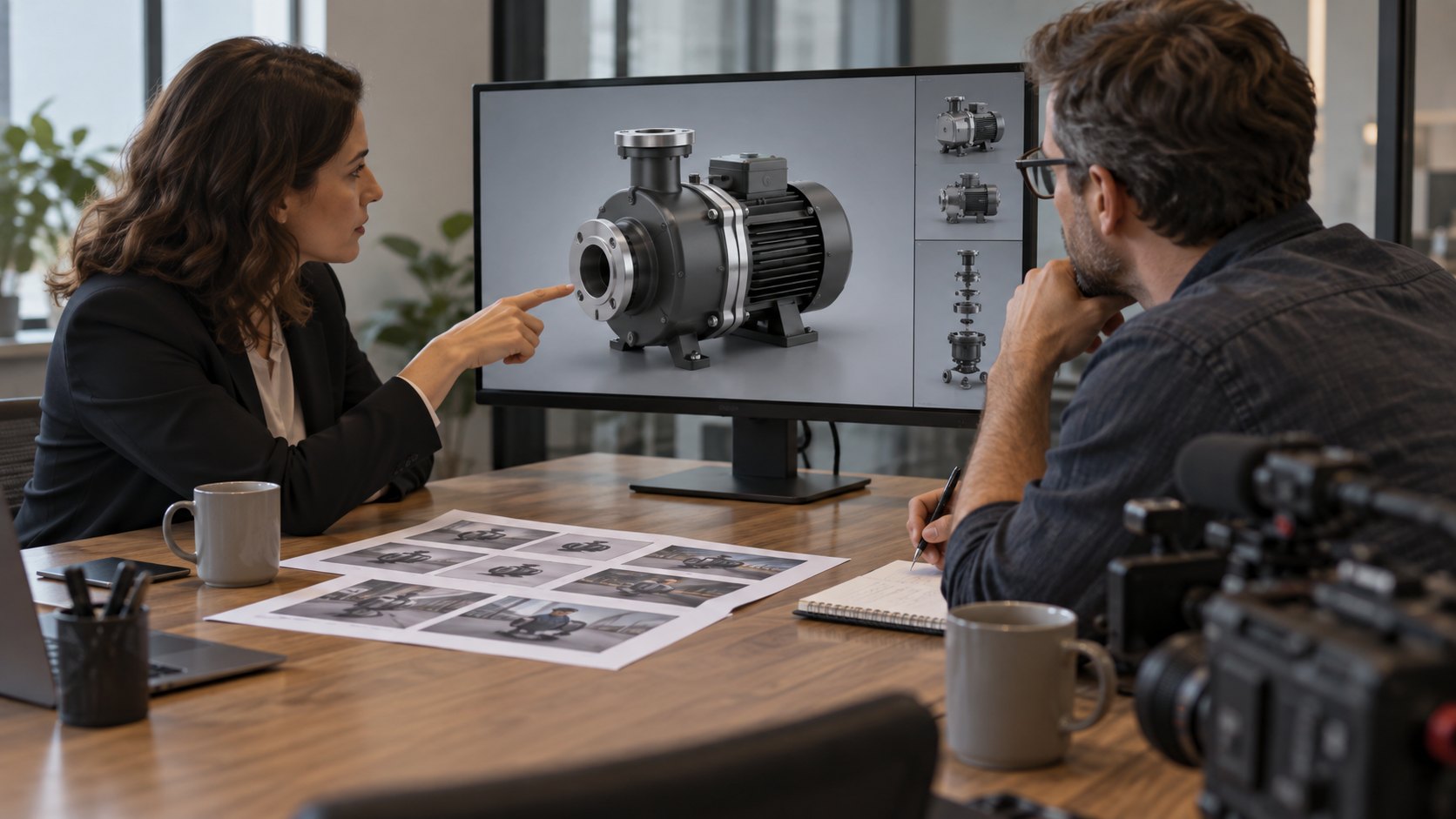
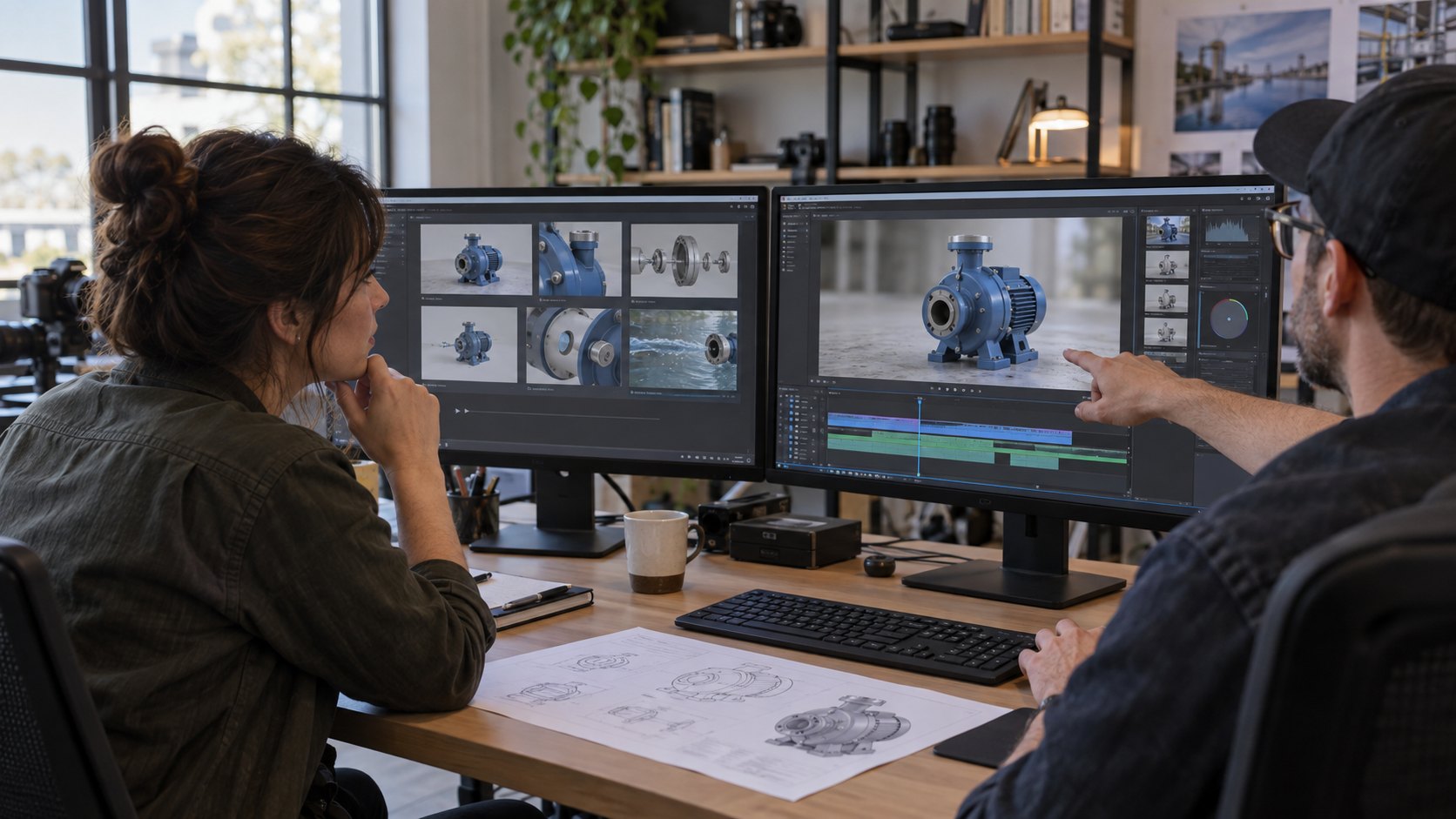
An agency should be able to explain how it learns about an unfamiliar product. Useful inputs can include CAD files, approved specifications, application diagrams, existing demonstrations, and interviews with subject experts. The exact materials depend on what the audience needs to see.
Ask who converts those inputs into the script and storyboard. A clear discovery process distinguishes verified facts from assumptions that still need confirmation. It also identifies which details can be simplified without changing the meaning of the explanation.
Consider a fictional industrial pump manufacturer. An exterior product shot may introduce the equipment, while an approved cutaway explains an internal relationship. If the story involves performance, the relevant claim needs a defined source and operating conditions. An attractive animation cannot establish a performance claim on its own.

For proprietary products, establish how reference files will be shared and who needs access. Discuss confidentiality and approved uses of the material before handing over sensitive assets. A practical workflow should support technical collaboration without leaving file handling undefined.
Review Complete Videos, Not Only a Highlight Reel
A reel can reveal production style, lighting, animation quality, and editing rhythm. A complete video shows whether the team can sustain a clear explanation from the opening problem to the final takeaway. Both are useful, but they answer different evaluation questions.
When reviewing examples, ask what the agency actually delivered. Did it develop the script, create the animation, capture footage, or edit material supplied by another team? Understanding the contribution makes the example more meaningful when comparing capabilities.
Look for work with similar communication challenges even when the industry differs. Explaining an invisible process, demonstrating a sequence, or simplifying a complicated interface can be more relevant than matching the color palette of your product category.
Review Austin Visuals video examples with those questions in mind. Discuss the specific type of explanation your project requires rather than assuming that every production style is equally suitable for every brief.
Match the Production Method to the Evidence
Live-action footage is useful when the audience needs to see real people, facilities, equipment, or an observable demonstration. It can establish physical context and show an actual workflow. Planning must account for access, scheduling, location conditions, and the availability of the people involved.
Animation can clarify relationships that cameras cannot easily show, including internal components, process flow, scale changes, and future configurations. For technical product videos, the team needs to distinguish a conceptual illustration from a faithful representation of the supplied design.
Motion graphics can organize information, label important details, and connect scenes. They work best when the design supports the explanation. Too many moving labels or simultaneous messages can make a complex subject harder to follow.
A mixed production may be the appropriate choice: filmed context, a controlled 3D sequence, and concise graphic explanations. Ask the agency why it recommends each method and which buyer question that method answers. The justification should be more specific than visual novelty.
Compare B2B Video Production Services on the Same Scope
Two quotes for a video of the same duration may cover very different work. One may include research, script development, original modeling, narration, captions, and multiple versions. Another may assume those assets already exist. Duration alone is an incomplete basis for comparison.
Create a shared scope for shortlisted agencies. Include the main objective, approximate content length, required production methods, expected source materials, intended channels, and delivery date. Ask each provider to identify assumptions and exclusions rather than burying them in a broad package description.
- Creative development: discovery, messaging, script, storyboard, and design exploration.
- Production: filming, modeling, animation, voice recording, music, and editing.
- Review: approval stages, included revision rounds, and treatment of scope changes.
- Delivery: aspect ratios, captions, language versions, cutdowns, stills, and file specifications.
- Rights and updates: usage permissions, editable assets where included, and future revision arrangements.
Ask how a change will be priced after an approval milestone. A rewritten product claim may affect narration, graphics, timing, and animation together. Knowing the process in advance makes it easier to distinguish a correction from a new request and keep the project predictable.
Set Approval Responsibilities Before Production
Complex products often involve several reviewers. Marketing checks the message and brand presentation. Engineering checks technical relationships. Product management checks feature availability. Other stakeholders may review claims, customer permissions, or distribution requirements where relevant.
Assign one person to consolidate feedback. Sending the agency conflicting comments from separate teams creates uncertainty about which direction is approved. A consolidated response should identify the required change, explain the reason, and resolve internal disagreements before production continues.
Use staged approvals: script for message and claims, storyboard for scene logic, visual development for appearance, and production reviews for movement and timing. Review each stage for the decisions it is designed to settle. Delaying script approval until final animation makes revisions unnecessarily expensive.
Put review time into the schedule. A delivery date depends on client inputs and approvals as well as production labor. Ask what happens when a critical reference file arrives late or an approver is unavailable. A credible timeline makes those dependencies visible.
Plan Versions for Sales, Websites, and Events
A single master video can support several uses, but each setting has different requirements. A website viewer may arrive with a specific question. A sales representative may need a short segment during a conversation. A trade show visitor may see only a few seconds and hear none of the audio.
Decide which versions matter before production. A silent event loop needs understandable on-screen information and a sequence that remains useful when viewed midway through. A sales clip needs a clear topic and an easy way for the representative to find it.
Plan framing for the intended aspect ratios rather than assuming every shot can be cropped later. Detailed technical diagrams may need redesigned labels or a different camera view for a narrow format. Treat those adaptations as defined deliverables.
For corporate video production, also consider the needs of internal users who distribute the content. Use clear filenames, approved descriptions, and a simple record of where each version belongs. A well-organized handoff helps the finished assets get used consistently.
Evaluate the Video Against Its Intended Job
Choose success measures that match the original communication problem. For an introductory page, engagement and relevant next-step actions may be useful signals. For sales support, ask whether representatives use the video and whether it helps answer the intended customer question.
Qualitative feedback can reveal problems that a view count misses. If prospects repeatedly ask about a detail the video was supposed to explain, review that section. It may need clearer context, a more useful visual, or a narrower scope.
Avoid attributing every sales outcome to one asset. Complex purchases involve many interactions. Where practical, compare performance in a defined placement and gather feedback from the people using the content. Treat the findings as guidance for improvement rather than a guarantee of revenue.
Working with Austin Visuals on B2B Video Production
Austin Visuals offers B2B 3D animation services for businesses that need to explain products and technical concepts visually. The production discussion can begin with the buyer question, the available references, and the type of evidence the audience needs.
For an overview that introduces a product or service, explainer video services can help structure the message. For a product that needs internal views or controlled demonstrations, 3D product animation can support a more detailed visual approach.
Prepare a brief with your audience, product materials, intended channels, required versions, review team, and launch constraints. Those details make the conversation more concrete and help establish what the project needs before a production scope is finalized.
Our Clients include:
Choose a Partner with a Clear Production Process
The right B2B video production agency should connect creative choices to buyer understanding and make technical review, scope, and delivery expectations clear. Evaluate the explanation behind the work as carefully as the finished visuals.
Ready to plan your B2B video? Contact Austin Visuals with your product, audience, and production goals. Call (512) 591-8024 or email info@austinvisuals.com to discuss the scope.
Frequently Asked Questions
What does a B2B video production agency do?
A B2B video production agency develops video content for business audiences. Its scope may include discovery, scripting, storyboards, filming, animation, editing, and delivery. Confirm which services and review stages are included in the proposal.
How do I choose an agency for a complex product?
Review complete videos, ask how technical information is verified, and examine the proposed approval process. Choose a team that can connect the product explanation to a specific buyer question and define scope, responsibilities, and deliverables clearly.
How much does B2B video production cost?
Pricing depends on creative development, filming needs, animation complexity, source assets, revisions, and deliverable versions. Request an estimate based on a shared brief so competing proposals can be compared on equivalent work.
How long does a B2B video project take?
The schedule depends on production complexity, reference readiness, and approval turnaround. Ask for milestones covering discovery, script, storyboard, production, review, and delivery, with client responsibilities and timing dependencies identified.
Should a B2B product video use animation or live action?
Use live action to show real people, environments, or observable demonstrations. Use animation to explain internal relationships or processes that are difficult to film. Many projects benefit from a combination selected around the buyer’s information needs.
What should I prepare before contacting an agency?
Prepare your audience definition, communication objective, product references, intended channels, required versions, target date, and review contacts. Existing scripts, CAD files, demonstrations, and approved claims can help the agency assess scope.
Related Articles
- Industrial Advertising Animation
- How to Create Accurate Technical Animations
- Elevate Your Trade Show with 3D Animation