
Most industrial companies do not have a visibility problem. They have a clarity problem. Their products are capable, their engineering is solid, and their teams know what makes the offering better. But when it is time to market that value, too much of the message gets buried in jargon, static diagrams, dense PDFs, or booth conversations that depend on the right salesperson saying the right thing at the right moment. Advertising animation for industrial companies solves that communication gap by turning complex products, systems, and processes into visual stories people can understand quickly.
At Austin Visuals, we see this across manufacturing, heavy equipment, process engineering, industrial automation, energy, and technical B2B sales. Buyers are busy. They do not want a vague brand film that looks polished but says nothing. They want to understand how something works, why it matters, and what business result it creates. A strong industrial advertising animation helps them get there faster.
Want a clearer way to market complex industrial products or systems?
Austin Visuals creates industrial advertising animation for manufacturers that need stronger trade show content, product explainers, website videos, and B2B sales tools.
Email info@austinvisuals.com or call (512) 591-8024 to talk through your project.
What Is Industrial Advertising Animation?
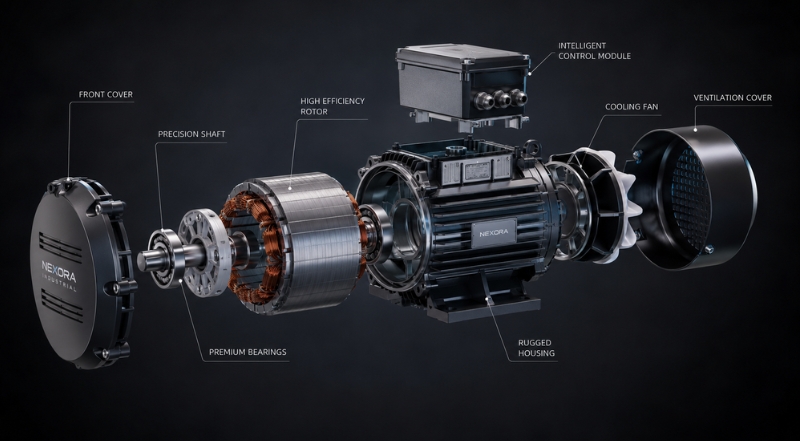
Industrial advertising animation is a category of visual marketing built specifically for technical products, services, machinery, and industrial systems. It can use 2D animation, 3D animation, motion graphics, live-action video combined with CG, or a mix of formats depending on the goal.
Unlike general consumer advertising, industrial marketing usually has to explain a more difficult value proposition. The audience may need to understand mechanical movement, process flow, product differentiation, system integration, safety benefits, energy savings, or lifecycle cost advantages. That means the animation has to do more than create attention. It has to teach, persuade, and support a sale.
Common use cases include:
- Product launch videos for machinery or industrial equipment
- Trade show animations for booth screens and LED walls
- Website hero videos and landing page explainers
- Sales presentation visuals for distributors and reps
- Campaign creative for new manufacturing capabilities or services
- Investor and stakeholder communications for technical businesses
For many companies, this overlaps with broader B2B video strategy. If you want to see how this plays out in a more traditional enterprise context, our article B2B Explainer Video Production in Austin: What Marketing Leaders Need to Know is a useful companion.
Why Industrial Companies Use Animation in Advertising
Industrial buyers are not casual shoppers. They are comparing specifications, evaluating risk, thinking about downtime, and trying to understand whether your solution will actually work in their environment. That makes visual clarity a serious competitive advantage.
Animation helps because it compresses time and complexity. It can show what happens inside a machine, how a workflow improves after installation, or how multiple system components interact. It can zoom into a process that is normally hidden, dangerous, microscopic, or too large to explain in person. That makes your value easier to communicate to engineers, purchasing teams, operations leaders, and executives at the same time.
Industrial brands usually invest in animation for five practical reasons:
- To explain difficult products faster. Buyers can understand a complex offering in under two minutes.
- To support sales conversations. Reps can use one video to deliver a more consistent pitch.
- To improve trade show performance. Movement attracts attention, but clear messaging keeps it.
- To differentiate from competitors. Most industrial websites still rely too heavily on text and stock visuals.
- To increase content reuse. One animation can support email campaigns, social posts, landing pages, proposal decks, and internal presentations.
That last point matters. Industrial marketing budgets are usually scrutinized. A good project should not live in one place. It should become a reusable asset library for multiple teams and campaigns. This idea connects closely with our post on The Future of Enterprise Marketing: Why Every Brand Needs a Visual Asset Library.
How Manufacturers Use 3D Video to Market Products and Capabilities
The title from your keyword sheet points to an important angle: manufacturers are not just using animation as decoration. They are using 3D video as a marketing tool that improves understanding and buyer confidence.
Showing the product in action
One of the biggest advantages of 3D video is that it can show product performance without the limits of live filming. If the machine is too large, still being manufactured, installed at a client site, or difficult to access, animation gives the marketing team a way to present it anyway. You can show internal mechanisms, section cuts, airflow, material movement, thermal behavior, or maintenance access points that no camera could capture cleanly.
Visualizing the before-and-after value
Industrial buyers often care less about the product itself than the operational result it creates. Better throughput. Less waste. Lower labor burden. Better safety. Faster setup. Reduced downtime. A good animation frames the message around outcomes, not just hardware. It can show the current-state workflow, the improved-state workflow, and the business impact of the change.
Supporting multi-stage sales cycles
Industrial purchases usually involve more than one stakeholder. Engineering may care about integration. Purchasing may care about cost and reliability. Leadership may care about ROI. Marketing may need to package the message for different channels. A 3D advertising animation can be edited into shorter or longer versions so each audience sees what matters most.
That is one reason industrial brands increasingly adopt visual storytelling strategies similar to other B2B sectors. We talk about that in How to Use Visual Storytelling to Drive More Enterprise Sales.
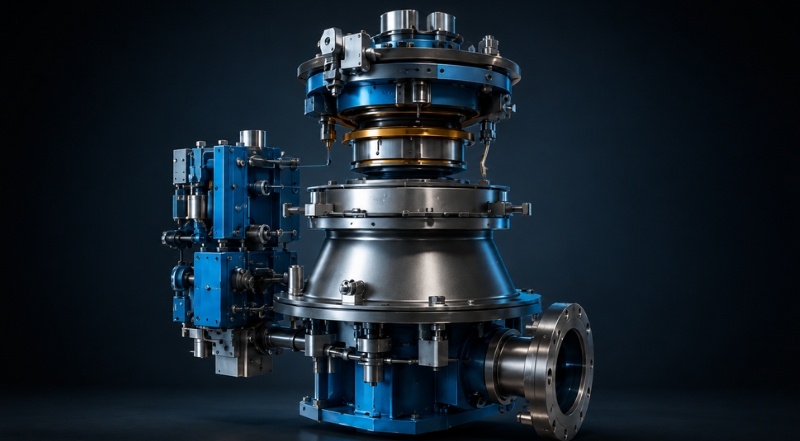
Industrial Valve 3D Product Animation Mechanical Assembly Visualization
Where Industrial Advertising Animation Works Best
Not every video belongs in the same place. The smartest industrial marketing teams think in terms of deployment, not just production.
Trade shows and events
Trade shows remain one of the best environments for industrial animation. A booth screen that shows your machine, process, or system in motion can do the job of a long verbal introduction before the rep even starts speaking. The key is to keep the message clear enough that people understand the value from a distance.
Website landing pages
A landing page for a technical product should answer three questions fast: what is it, who is it for, and why should the buyer care? Animation helps by reducing friction. Instead of forcing the visitor to decode paragraphs of technical copy, you can show the value visually and then let the text deepen the message.
Email campaigns and outbound sales
Short clips or thumbnail-linked videos can improve response rates when the message is relevant. Sales teams also use product animations in follow-up emails, distributor communications, and proposal support materials because it keeps the explanation consistent.
LinkedIn and paid B2B campaigns
Industrial audiences are spending more time in digital channels than many manufacturers assume. That does not mean the content should feel consumerish. It means the visuals should be concise, direct, and anchored in a clear business benefit.
Investor, partner, and channel presentations
For companies launching new equipment, plant capabilities, or industrial technology platforms, animation is often the fastest way to make a serious impression in a boardroom or pitch meeting.
If you are looking for adjacent examples of how technical visuals support operational and commercial messaging, see Elevating Manufacturing Process Efficiency Through 3D Animation.
What Makes Industrial Advertising Animation Effective?
There is a big difference between a nice-looking industrial video and an effective one. The best industrial advertising animation sits at the intersection of engineering clarity and marketing discipline.
Here is what strong work usually includes:
- A specific audience. The animation should be built for buyers, operators, investors, distributors, or some combination that is intentional.
- A real message hierarchy. Not every technical detail deserves equal attention. The story needs priorities.
- Visual accuracy. The product should look and behave credibly. That is especially important for industrial, medical, and engineering sectors.
- Business framing. Features should connect to outcomes like speed, safety, throughput, reliability, margin, or reduced downtime.
- Repurposable structure. A master animation should be easy to cut into shorter assets for campaigns and channels.
It also helps to decide what tone the piece should have. Some industrial brands need a sleek, premium look that supports brand perception. Others need a more direct and practical approach that feels grounded and technical. The right answer depends on the market, the sales cycle, and the brand personality.
Marketing teams that overcomplicate this often end up with content that looks expensive but does not convert. We see the same issue discussed from another angle in The Hidden Cost of Poor Technical Communication (And How Video Fixes It).

oil and gas safety training team inspecting industrial test separator equipment
Production Planning for Advertising Animation for Industrial Companies
Industrial marketers usually ask the same questions early: How long should it be? What assets do we need? Do we need CAD files? Can we mix animation with live footage? How long will production take?
The answer depends on the goal, but the planning framework is usually straightforward.
Start with the communication problem
Before discussing style, define the sales or marketing problem. Are people confused about how the product works? Is the booth underperforming? Are reps explaining the product differently? Are website visitors bouncing before they understand the offer? The problem should shape the script.
Gather the right source materials
Many industrial projects start with CAD files, spec sheets, product photography, engineering sketches, diagrams, or live footage. CAD is helpful when the product needs to be shown with a high degree of technical realism, but not every piece requires it. Sometimes a simplified model is better if the priority is speed and message clarity.
Write for the audience, not the internal team
This is where many industrial brands stumble. Internal teams know too much, so they try to say everything. Good scripting forces decisions. Which three ideas matter most? Which proof points support those ideas? Which visuals make the value obvious?
Plan for multiple outputs
If you are investing in one animation, think beyond the single hero piece. Build a package that includes cutdowns for email, social, trade show loops, and product page placement. That makes the spend work harder.
Expect a realistic timeline
A short, focused industrial marketing animation can move quickly. A more detailed 3D product film with multiple review rounds, CAD cleanup, and several versions may take several weeks. The key is making sure the process is organized from the start.
If you want a broader look at how a studio approaches this kind of work from concept through delivery, our article The Workflow of a Full-Service 3D Animation Studio: From Script to Final Render lays that out clearly.
Why Austin Visuals Is a Strong Fit for Industrial Marketing Content
Austin Visuals works with companies that need help explaining difficult ideas in a way that feels technically credible and commercially useful. That combination matters. Industrial companies do not just need pretty graphics. They need visual content that helps marketing, sales, and leadership communicate with less friction.
Our studio supports a wide range of services that often overlap in industrial campaigns:
- 2D animation for process explanations and service messaging
- 3D animation for products, machinery, and technical systems
- Industrial animation for plant operations, equipment, and workflow communication
- Engineering animation for process, assembly, and integration visuals
- Corporate video production for B2B marketing and presentations
- Training videos that can double as customer education tools
- AI-enhanced video production workflows for faster iteration and modular asset creation
We approach projects from a business communication standpoint. That means asking what the audience needs to understand, what objection needs to be removed, and what decision the video is supposed to support. Sometimes the answer is a polished 3D hero animation. Sometimes it is a tighter explainer with cleaner messaging. Sometimes it is a content system with multiple outputs built from one core production.
If your company sells complex industrial products or services, that kind of thinking usually matters more than flashy visuals alone.
Conclusion
Advertising animation for industrial companies is valuable because it helps technical brands explain what they do without losing the audience in complexity. When the product is difficult to describe, the sales cycle is long, and the stakes are high, strong visual communication can shorten the gap between interest and understanding.
For manufacturers, OEMs, engineering firms, automation providers, and industrial service companies, the right animation can support trade shows, websites, outbound sales, investor presentations, and brand positioning at the same time. The best projects do not just look polished. They make the message clearer, the team more aligned, and the marketing more useful.
Ready to improve your industrial marketing with animation that actually explains the value?
Austin Visuals helps industrial and manufacturing companies turn products, systems, and technical workflows into clear visual content for websites, trade shows, sales presentations, and digital campaigns. Whether you need a single 3D product animation or a broader advertising content package, we can help.
Contact us at info@austinvisuals.com or call (512) 591-8024.
FAQ
What is industrial advertising animation?
It is animated marketing content created for manufacturers, industrial brands, engineering firms, and technical B2B companies. It is used to explain products, systems, workflows, and value propositions more clearly.
Why is animation useful for industrial marketing?
Animation helps industrial companies show what cannot be filmed easily, including internal mechanisms, process flows, before-and-after outcomes, and technical product benefits. It also makes dense sales messaging easier to understand quickly.
Can industrial advertising animation be used beyond a website?
Yes. It is commonly used in trade shows, sales presentations, email campaigns, LinkedIn ads, landing pages, distributor training, investor decks, and product launch materials.
Do we need CAD files to create a 3D industrial marketing video?
Not always. CAD files are helpful when technical realism matters, but strong animation can also be created from product photos, engineering references, sketches, diagrams, and live footage depending on the objective.
How long should an industrial advertising animation be?
Many industrial marketing videos work best in the 60 to 120 second range, but the ideal length depends on the audience, placement, and complexity of the message.
Can one animation be repurposed into multiple campaign assets?
Yes. A master animation can usually be cut into shorter social clips, booth loops, email assets, product-page videos, and presentation visuals, which improves ROI.
Suggested Image Ideas or AI Prompts for Each Major H2
- What Is Industrial Advertising Animation? Prompt: “High-end 3D industrial marketing scene showing a complex machine floating in exploded view with clean labels, premium studio lighting, B2B advertising style.”
- Why Industrial Companies Use Animation in Advertising Prompt: “Industrial buyer presentation with animated machine demo on large screen, engineers and executives reviewing product visuals, realistic corporate manufacturing setting.”
- How Manufacturers Use 3D Video to Market Products and Capabilities Prompt: “3D cutaway animation of manufacturing equipment in operation, internal components visible, material flow highlighted, polished advertising look.”
- Where Industrial Advertising Animation Works Best Prompt: “Split-scene showing trade show booth screen, website landing page video, sales presentation, and LinkedIn ad using the same industrial animation asset.”
- What Makes Industrial Advertising Animation Effective? Prompt: “Creative team and engineer reviewing storyboard, CAD model, and marketing video frames on dual monitors, premium production studio setting.”
- Production Planning for Advertising Animation for Industrial Companies Prompt: “Workflow diagram for industrial animation project showing script, CAD assets, modeling, animation, review, and multi-channel delivery.”
- Why Austin Visuals Is a Strong Fit for Industrial Marketing Content Prompt: “Professional animation studio team presenting industrial product visuals to a manufacturing client, high-end collaborative business environment.”
Related Blog Posts
- How Animated Promo Videos Drive Real Business Growth
- How to Use Visual Storytelling to Drive More Enterprise Sales
- Elevating Manufacturing Process Efficiency Through 3D Animation
- Why Technical Industries Need More 3D Animation Than Ever
- The Hidden Cost of Poor Technical Communication (And How Video Fixes It)