

LNG facility animation training helps operators understand how cryogenic process equipment, control systems, transfer operations, safety layers, shutdown logic, and emergency roles connect across a liquefied natural gas facility. It can reveal equipment interiors and process relationships that are difficult to see during normal work, while allowing important sequences to be paused, repeated, and reviewed without exposing learners to an active hazard.
A useful animation must be built from the operator’s current procedures, engineering references, facility configuration, and designated subject-matter review. It is a training aid, not an operating authority, and it should never replace approved procedures, site orientation, drills, competent supervision, operator qualification, or hands-on practice.
Planning LNG training content for operators or contractors?
Austin Visuals helps energy companies turn facility layouts, process flows, equipment, controls, hazards, and approved procedures into clear 2D and 3D training visuals. We can build one focused module or a reusable visual library for several roles.
Contact us at info@austinvisuals.com or call (512) 591-8024.
What Is LNG Facility Animation Training?
LNG facility animation training uses reviewed 2D or 3D sequences to explain the systems, tasks, conditions, and response roles associated with LNG operations. A module may move from a complete facility overview to a single valve, cut through a storage tank or transfer line, trace a process stream, show an alarm state, or compare the approved sequence with a recognizable error condition.
The goal is not cinematic realism for its own sake. The goal is a correct mental model. Operators should understand where equipment is located, how systems interact, which values or indications matter, what conditions require attention, and where their assigned responsibilities begin and end.
PHMSA explains that LNG facility personnel require training in operations and maintenance, security, firefighting, and emergency duties. Animation can support these programs by giving learners a common visual reference before they move into procedures, simulator work, field verification, drills, and supervised performance.
Why LNG Facilities Are Difficult to Explain With Static Material
Important Conditions Are Often Invisible
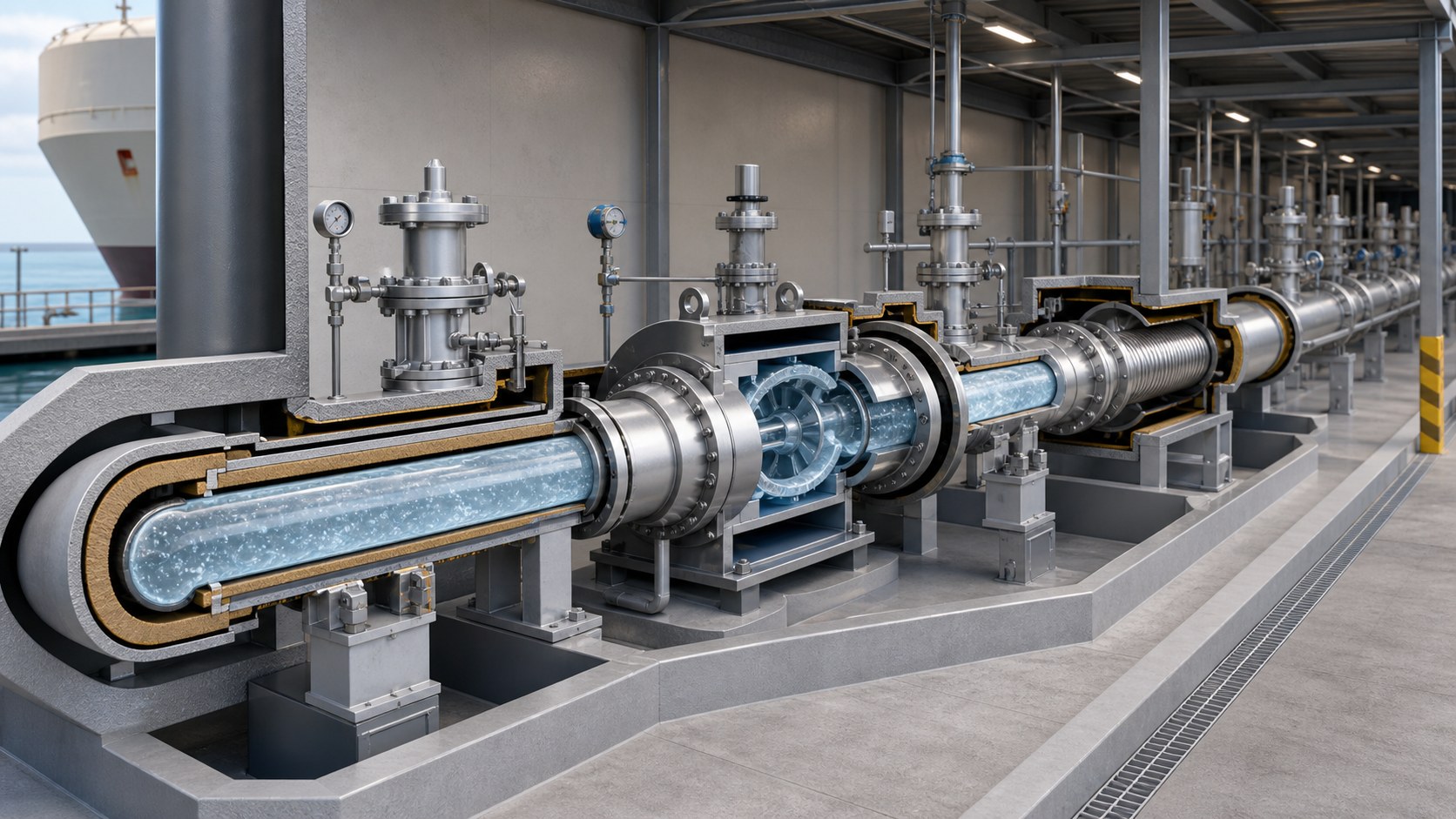
Operators monitor temperature, pressure, level, flow, composition, valve position, equipment status, and alarm state, but the physical process behind those indications may be hidden inside insulated lines, vessels, compressors, vaporizers, and storage systems. A technically reviewed cutaway can connect the instrument reading to the process condition without suggesting that the visual replaces the actual control-system display.
The Facility Is a Connected System
An action at one location can influence equipment somewhere else. Feed-gas treatment affects the liquefaction train. Refrigeration performance affects production. Tank conditions influence boil-off-gas management. Transfer operations depend on coordinated valves, pumps, communications, and shutdown protection. Animation can show those relationships at a scale that a photograph or isolated equipment diagram cannot.
Rare Events Are Hard to Demonstrate Safely
Training must prepare personnel for abnormal and emergency conditions, yet those conditions cannot be created casually in an operating facility. Animation can present the sequence of indications, notifications, boundaries, and assigned actions for discussion. The depiction must remain within the approved plan and should avoid giving viewers false confidence that watching a scenario is equivalent to performing a drill.
Core Topics for an LNG Operator Training Animation
LNG Characteristics and Cryogenic Hazards
Liquefied natural gas training should begin with the properties that influence the work. LNG is primarily methane cooled to a cryogenic liquid state. Contact with cryogenic liquid or cold equipment can injure tissue and affect materials. Vapor can displace oxygen in enclosed or poorly ventilated locations, and a flammable mixture can develop when natural-gas vapor mixes with air within the applicable range.
A scientifically plausible animation can show liquid containment, vapor formation, dispersion at an appropriate conceptual level, ventilation, ignition-source control, personal-protection boundaries, and the difference between visible condensation and the gas itself. It should not invent a universal vapor-cloud shape or promise that every release behaves the same way; site conditions and qualified analysis control those conclusions.
Facility Orientation and Process Flow
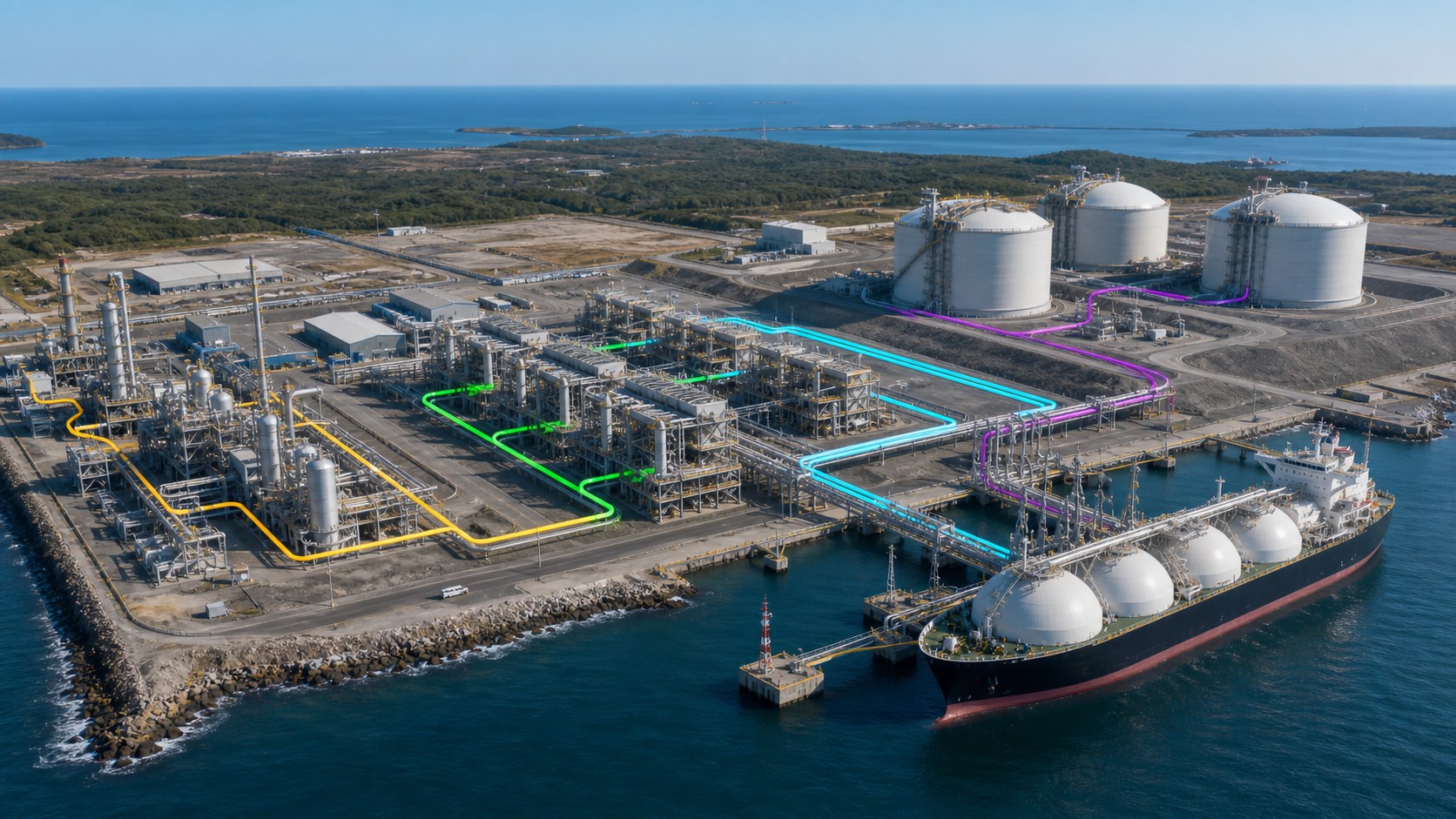
An orientation module can identify the major process areas, access routes, muster points, control room, firewater equipment, transfer systems, storage, boil-off-gas handling, utility systems, and restricted zones. It can then trace the approved high-level process from incoming gas through treatment, liquefaction, storage, and transfer or sendout.
The visual should use consistent colors and camera directions, but color must not conflict with the facility’s established conventions. Labels, legends, and simplified flow paths should be approved by operations and engineering before final production.
Normal Operations, Startup, and Shutdown
An LNG operator training animation can divide a procedure into visible stages: prerequisites, lineup verification, communications, permissives, equipment start, stabilization, monitoring, and completion. The narration should identify why a checkpoint exists without turning the animation into an uncontrolled substitute for the current written procedure.
Startup and shutdown content is especially sensitive to configuration. The animation should reference document numbers and revision controls where practical, and the owner should define a change-management process so the module is reviewed when equipment or procedures change.
Control Room Displays and Alarm Response
Interface animation can show how a normal state changes into an abnormal state, which indications appear, and how the operator navigates to supporting information. Screens should be recreated only from approved captures or interface files, with sensitive information removed and alarm priorities represented accurately.
The video should distinguish recognition, verification, communication, and authorized action. It should not encourage operators to diagnose a complex condition from one animation or bypass the decision rules in the operating procedure.
Emergency Shutdown Systems
An LNG emergency shutdown animation can explain the purpose and scope of shutdown layers, the initiating conditions selected for the module, the equipment affected, valve movement, process isolation, alarms, and required communications. PHMSA notes that emergency shutdown devices activate when operating parameters move beyond the normal range, but the exact cause-and-effect logic is facility-specific.
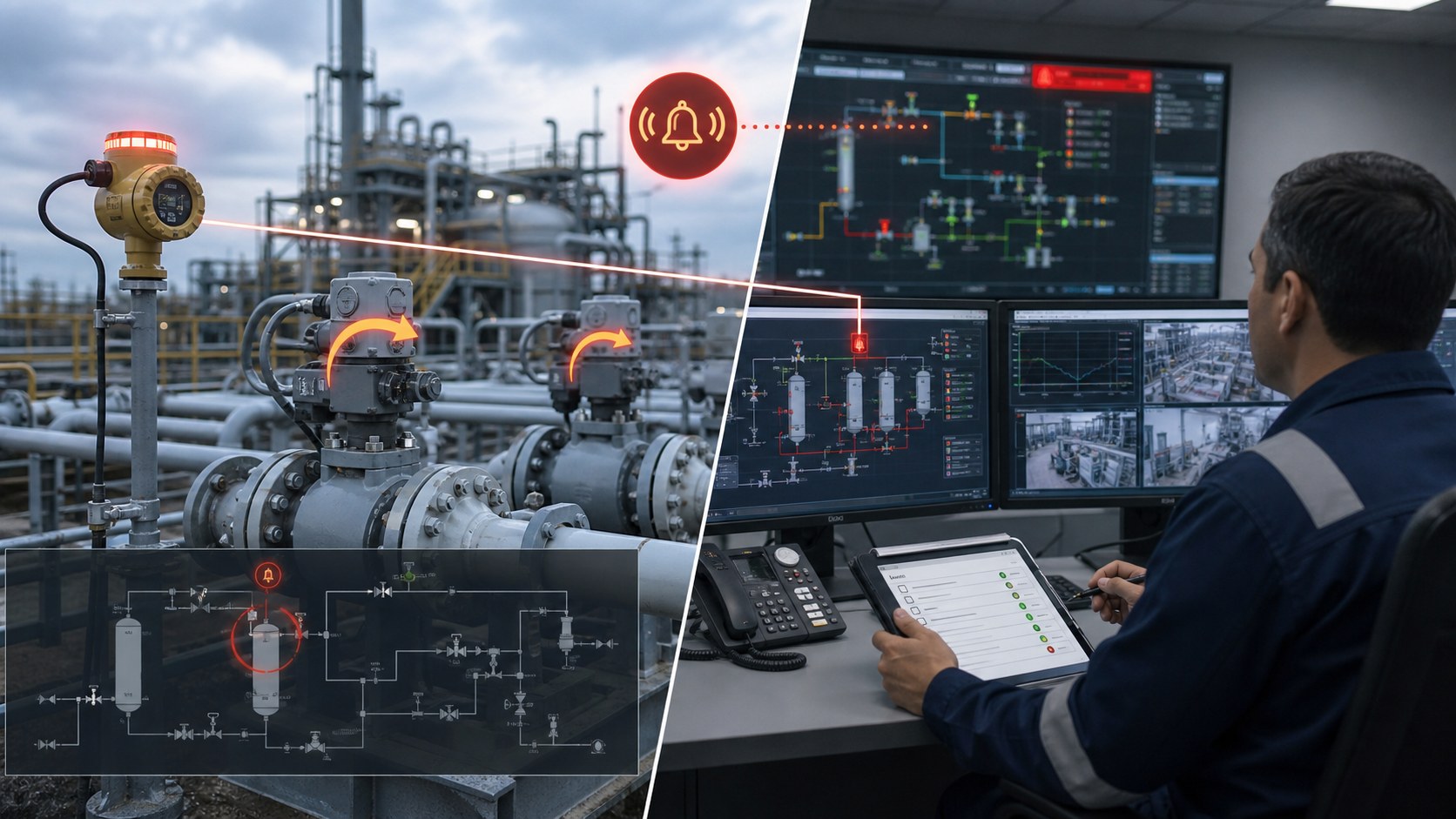
For that reason, the production team should work from controlled cause-and-effect documentation and obtain review from operations, process control, safety, and engineering. Visual emphasis can help learners understand the sequence, but it must not expose restricted details or simplify independent protection layers into one fictional control.
Loading, Unloading, and Marine or Truck Transfer
Transfer training can show pre-transfer communication, equipment inspection, connection, cooldown, valve alignment, pump operation, monitoring, vapor management, shutdown, draining or purging where applicable, disconnection, and documentation. The animation should reflect the site’s actual transfer mode and avoid combining marine, truck, rail, and pipeline details into one generic procedure.
Useful viewpoints include an overhead zone map, close equipment view, control-room indication, and worker eye-level view. These perspectives can clarify simultaneous responsibilities among field operators, control-room personnel, vessel or vehicle representatives, and supervisors.
Maintenance and Permit-to-Work Awareness
Animation can explain isolation boundaries, stored energy, depressurization, purging concepts, access limitations, equipment internals, line-of-fire exposures, and restoration sequence. It should support the employer’s lockout, permit, gas-testing, confined-space, hot-work, and maintenance procedures rather than create a parallel set of instructions.
Emergency Response and Coordination
PHMSA requires LNG operators to coordinate with local officials regarding emergency plans, mutual assistance, fire-control equipment, potential hazards, and communication capabilities. An animation can support a shared orientation by showing access routes, command locations, isolation zones, water or fire-control resources, communications, and role boundaries.
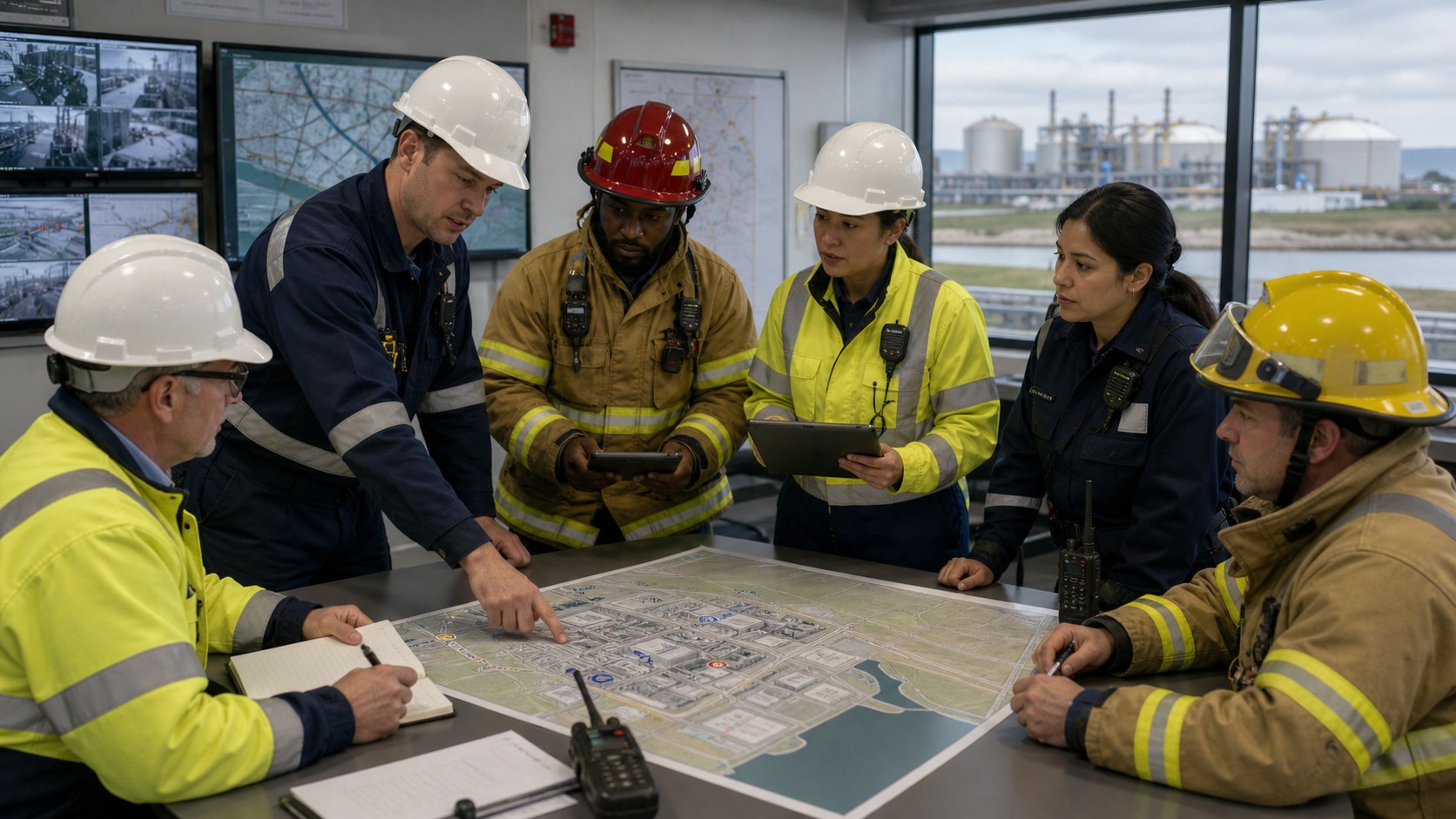
Response content should be audience-specific. A plant operator, security officer, municipal firefighter, medical responder, and public official need different levels of information. Critical Energy Infrastructure Information and other sensitive material must be protected throughout production and distribution.
How to Build an Accurate LNG Training Animation
1. Define a Measurable Learning Objective
Start with what the learner must be able to identify, explain, verify, communicate, or perform after training. “Understand the LNG plant” is too broad. “Trace the approved transfer path and identify the operator’s verification points” is a usable objective.
2. Collect Controlled Technical References
Depending on the module, references may include plot plans, PFDs, selected P&IDs, equipment drawings, CAD, photographs, operating procedures, cause-and-effect charts, interface captures, training matrices, emergency plans, and terminology standards. The operator must decide what may be shared with the animation team and what may appear in the final asset.
3. Create an Accuracy Hierarchy
Not every bolt and cable requires equal detail. Define which geometry, sequence, labels, indications, distances, personal protective equipment, and actions must remain exact. Less important background detail can be simplified so it does not distract from the learning objective.
4. Review the Sequence Before Final Rendering
Approve the script, storyboard, simplified 3D layout, and animatic before photoreal rendering. This is the most efficient point for operators and engineers to correct valve order, camera location, timing, alarm behavior, or worker position.
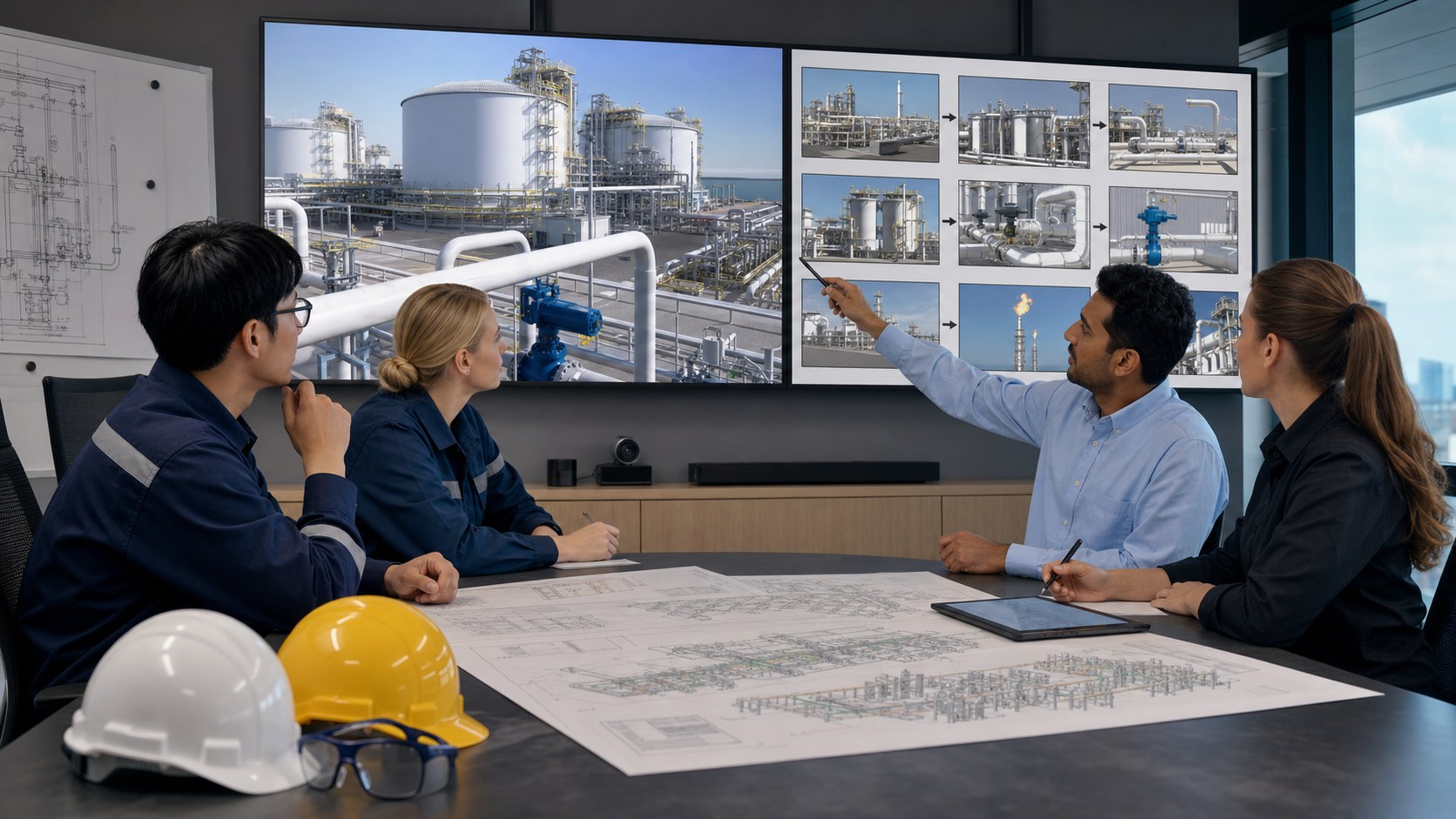
5. Assign Reviewers by Discipline
Operations should verify the task sequence. Engineering should verify equipment and process relationships. Control specialists should review interface and shutdown logic. Safety and emergency personnel should review hazard communication and response roles. Training specialists should verify the objective, pacing, narration, and assessment.
6. Connect the Visual to Practice
Use the animation before a field walkdown, simulator exercise, tabletop discussion, drill, supervised task, or competency check. Add prompts that require learners to identify a condition or explain the next approved action. The animation becomes more useful when it prepares people to engage with the actual procedure and facility.
Delivery Formats and Reusable Training Assets
One approved visual foundation can support several deliverables:
- Short orientation modules for employees and contractors
- Role-specific operator lessons with narration and captions
- Silent control-room or classroom loops
- Instructor-led clips for pausing and discussion
- Emergency tabletop visuals for operators and responders
- Still images for procedures, presentations, and assessments
- Short refreshers for recurring training
- Multilingual versions built from the same approved scenes
Plan these uses before production. Text size, camera framing, narration, aspect ratios, interface detail, and scene length may need to change between a training-room display, learning-management system, tablet, and mobile device.
Why Choose Austin Visuals for LNG Facility Animation Training?

Austin Visuals develops technical animation for energy, industrial, manufacturing, engineering, and safety communication. The studio can combine facility visualization, equipment modeling, process-flow graphics, interface animation, narration, captions, and post-production within one managed project.
The workflow is designed around client-controlled accuracy. Austin Visuals can begin with approved drawings, CAD, photographs, procedures, screen captures, and expert interviews, then move through script, storyboard, model review, animatic, and final rendering. This gives designated reviewers opportunities to correct the information before expensive production stages are complete.
The team can also build a reusable asset system. An approved LNG storage model, transfer assembly, control-room treatment, or process-area environment can support orientation, equipment training, emergency communication, maintenance awareness, and stakeholder education without rebuilding every scene from the beginning.
Explore Austin Visuals’ oil and gas animation capabilities and safety and training animation services for related examples and production options.
Our Clients include:

Conclusion
LNG facility animation training can make cryogenic processes, hidden equipment relationships, controls, operating sequences, shutdown layers, and emergency roles easier to understand. Its value depends on a narrow learning objective, controlled technical sources, site-specific review, clear limits, and direct connection to approved procedures and practice.
The strongest program does not treat animation as a replacement for qualification. It uses animation to prepare learners for procedures, simulator work, field verification, tabletop exercises, drills, and supervised performance with a more accurate shared mental model.
Ready to make LNG operations and safety training easier to understand?
Austin Visuals can transform approved facility references, equipment, workflows, alarm states, and emergency roles into clear training animation. Whether you need one operator module or a coordinated visual training library, we can help.
Contact us at info@austinvisuals.com or call (512) 591-8024.
Frequently Asked Questions
What is LNG facility animation training?
LNG facility animation training uses reviewed 2D or 3D visuals to explain facility systems, equipment, operating sequences, controls, hazards, and assigned response roles. It supports approved instruction, drills, and practice but does not replace them.
Which LNG facility topics can animation explain?
Animation can explain facility orientation, gas treatment, liquefaction, storage, boil-off-gas handling, transfer, equipment internals, controls, alarms, shutdown systems, maintenance boundaries, and emergency coordination.
Can animation replace hands-on LNG operator training?
No. Animation is a supporting learning tool and cannot replace current procedures, site orientation, simulator work, drills, competent supervision, operator qualification, or hands-on performance.
What source material is needed for an LNG training animation?
Typical inputs include approved procedures, plot plans, selected process drawings, equipment documentation, CAD, photographs, interface captures, cause-and-effect information, emergency plans, and access to designated reviewers.
How does Austin Visuals protect technical accuracy?
Austin Visuals uses staged approval of the script, storyboard, models, animatic, and rendered sequence. The facility owner assigns operations, engineering, safety, control, security, and training reviewers according to the topic.
How long does an LNG facility animation project take?
A focused module may take several weeks, while a detailed facility model or multi-module training program may require several months. Reference readiness, scene complexity, review speed, and delivery formats have the greatest effect.
Can one LNG animation be adapted for several audiences?
Yes. Approved visual assets can be adapted into operator, contractor, responder, management, and public-information versions when each version uses the correct detail level and protects sensitive facility information.