
Introduction
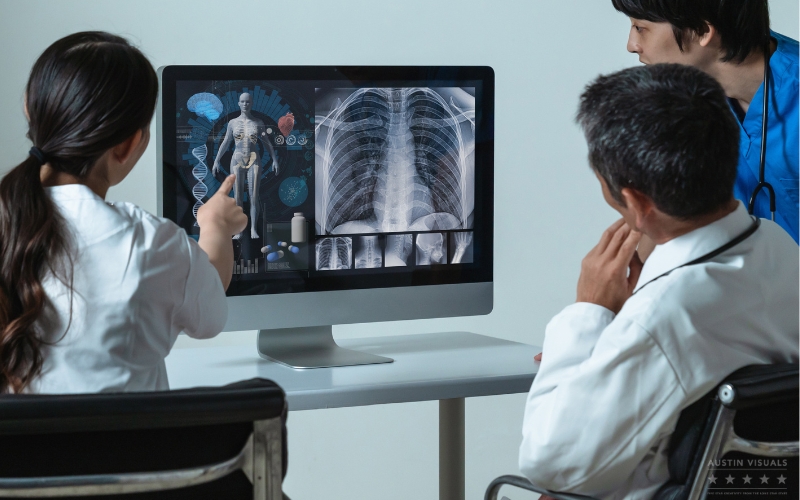
Medical communication doesn’t always come easy. Many patients struggle to grasp their diagnoses, procedures, or treatments during clinical consultations. With busy schedules, language differences, and complicated terms, health professionals often look for better ways to explain patient care. That’s where anatomical 3D animation comes in. These visual tools make it easier to break down complex subjects and give patients the information they need to make smart choices. For clinics, hospitals, and device companies, using precise animation helps bridge the gap between practitioner and patient. If you want to improve how you share medical information, now is the time to learn what anatomical animations can do for your practice.
Looking to improve your patient communication with visual support? Reach out to Austin Visuals today at info@austinvisuals.com or call +1-512-591-8024 for a free consultation.

What Is Anatomical 3D Animation and Why It Matters in Healthcare
Anatomical 3D animation refers to the creation of scientifically accurate visuals that represent human organs, systems, and functions in digital form. These animations are designed using advanced software to bring static medical images and textbook diagrams to life. They allow healthcare professionals to walk patients through what’s happening inside the body with far more clarity than printed explanations or traditional 2D charts offer.
By converting terminology into engaging visuals, anatomical animation makes it easier for patients to grasp critical topics. Whether the subject is blood flow, joint replacement, or tumor development, a moving graphic offers an unmatched learning tool. Short explainer clips can show what a torn ligament looks like, how a heart pump works, or how a spinal implant fits into place. That type of clarity reduces confusion and builds trust during medical conversations.
Many branches of healthcare have adopted 3D visual tools. Providers in cardiology, dermatology, oncology, orthopedics, and plastic surgery use visual aids to improve patient understanding. Medical device manufacturers and pharmaceutical companies also depend on well-rendered graphics to demonstrate how their products interact with the body — both to patients and investors.
When Should Medical Professionals Use 3D Animation With Patients?
3D animation can be a helpful tool anytime medical information needs to be translated into visual learning. It’s especially useful when patients are receiving new or difficult information. If a procedure is routine for a physician but new to the patient, animation fills in the blanks. When a diagnosis is emotionally tough to explain — like cancer or chronic illness — showing a visual roadmap can support conversations with facts and compassion.
Some of the most effective uses of anatomical animation include treatment planning, surgical prep, or explaining post-op care. A short animation can replace lengthy paper instructions, helping people retain what they’ve heard. These visuals are also beneficial for pre-consultation education through telehealth platforms, websites, or waiting-room media.
Visuals are especially helpful when patients have a limited medical vocabulary. Even the most experienced doctor might misread how much a patient is truly following during a consultation. Adding visual tools normalizes the question process and gives patients confidence. It opens doors for honest discussion and active decision-making.
Overcoming Common Communication Challenges with Patients
Healthcare communication faces many setbacks. Time constraints, cognitive load, and information overwhelm can weaken even clear verbal explanations. For people who don’t speak the same language as their provider, or who aren’t fluent in medical terms, the experience can become even more distant. Misunderstanding directions can lead to missed appointments, incorrect medication use, and overall poor outcomes.
Anatomical animation helps eliminate some of this confusion. Instead of relying on repetition or printed visuals alone, animated content gives patients another memory anchor. Visual memory is strong, and having a consistent, accessible source of reference—like a patient education video—goes a long way. These assets are useful in a clinical setting or as part of a follow-up plan when patients return home.
Animated videos also relieve some of the emotional pressure. When facing major diagnoses, it’s easy for someone to freeze during the conversation and forget what was said. A short looped animation can be replayed on an app or patient portal. These materials help people take the time they need to review and prepare on their own terms.
Why High-Quality 3D Animation Makes a Difference
3D animations vary widely in quality. Some may use basic graphics or generic templates, while others provide detailed, custom-built renderings that mirror human anatomy closely. The difference lies in accuracy, design, and how well the visuals match the medical topic being discussed. In a clinical environment, precision is key — and that’s what sets professional animations apart from generic content.
Austin Visuals maintains scientific accuracy while crafting animations built for use in real-world conversations. Clean design matters. Vague shapes or recycled models don’t help much and can even distract from the message. Professional-quality visuals reflect the care and standards of the provider using them.
One real-world example is our work with LDR Spine, where we produced anatomical animation to explain spinal implant procedures. Based on MRI data and surgical protocols, our team created an animation that helped doctors guide patients through the process — clearly showing placement, healing, and recovery expectations.
Customization Is Key: How We Tailor Animation to Your Treatment Plans
Every healthcare provider operates differently. A one-size-fits-all video might be fine for general topics, but when trust matters most, customized content makes a stronger impact. At Austin Visuals, we work closely with you to build content that matches your exact treatment process or product pipeline.
The process begins with a simple discovery call. We ask about your goals, audience, and timeline. Then, our team of 29 artists, animators, and project managers work with healthcare consultants and your team to write, sketch, model, and animate every scene. Medical consultants ensure anatomical accuracy. You have full visibility, with options to request changes at each review point.
If you represent a software company or a med-tech brand, we also offer white-label solutions. These assets can be integrated into your training platforms, apps, or shown to investors. Localization for global audiences is available too, so your message reaches people no matter where they are or what language they speak.
Partnering With Austin Visuals: What Makes Us Stand Out

For over 20 years, Austin Visuals has delivered visuals for some of the most respected names in education, government, and research. Our clients include NASA, The University of Texas, and Discovery Channel. We’ve built that reputation by focusing on quality, service, and detail. For medical clients, that means accurate renderings, private collaboration channels, and project scalability.
We use secure servers and remote infrastructure to protect all work-in-progress files and client documents. Once your idea is mapped out, our streamlined production pipelines ensure your final visual doesn’t just look great—it arrives on time and with purpose. We also offer fair pricing models that fit clinic budgets, device startup goals, and enterprise workflows.
Whether you’re a single physician looking to launch a video for patient awareness or a health tech group feeding videos into apps or portals, we adapt. Many of our clients return over the years with updated content requests as their teams grow and services advance.
Our Clients include:

Ready to Elevate Your Patient Communication? Let’s Talk
If your team is ready to improve conversations with patients, staff, or partners using visual tools, we’re ready to help. Austin Visuals has the experience and the drive to deliver animation that informs, engages, and educates. With every project, we bring focus to clarity, trust, and vision — all backed by strong production and support.
Contact the Austin Visuals team today for a quote at info@austinvisuals.com or call +1-512-591-8024. Ask about our medical animation demo reel, service packages, or white-label solutions for your brand.
FAQs About Anatomical 3D Animation for Patient Communication
What makes anatomical 3D animation better than video or slideshows?
Unlike traditional media, 3D animation brings realism and motion to explanations. Anatomy is complex and hard to visualize in slides. Our animations make it easier to see exactly how medical devices, systems, or treatments work from the inside out.
How long does it take to create a custom animation?
Depending on scope and complexity, timelines usually range from 2 to 6 weeks. Key variables include script approval, number of animations, and review cycles. Our team helps map this out in advance to meet your needs.
Are the animations accurate to real anatomy?
Yes. All medical animations are reviewed by in-house specialists and outside medical consultants. We reference the latest anatomical data and clinical references to ensure visuals are correct and helpful for education.
Can videos be translated or adapted for different regions?
Absolutely. We offer multiple voice narration, localization, and cultural adaptation services so you can reach global patients and users without starting from scratch.
Have a Project to discuss? Use this form to Contact Austin Visuals