
Introduction
Trade shows move fast. Attendees walk by thousands of booths in a day, so capturing attention is a challenge—especially for medical device companies with detailed products. Many professionals in the healthcare and medtech space are visually driven, technical thinkers. You only have a few seconds to communicate what your product does and why someone should care. Using animation at trade shows gives you a cleaner, more accurate way to show what your product does in just moments.
At Austin Visuals, we’ve helped hundreds of companies in biotech, orthopedics, diagnostics, and surgical tools connect with trade show audiences. If your goal is to make your medical device clear and memorable, animation can translate complex ideas into visual clarity—without needing a salesperson to explain every detail. Want to build content that supports your sales staff and stays with potential buyers long after the show ends? Let’s break down what works, what doesn’t, and how to start.
Need to stand out at your next medical trade show? Contact us today at info@austinvisuals.com or call +1-512-591-8024 to schedule a discovery call.
Why Medical Device Companies Need Animation at Trade Shows
Trade show booths are loud, busy, and packed with competitors. Most attendees are looking for quick answers. Animation gives you the tools to communicate fast and effectively. For medical device companies, a strong animation strategy means showing how your product works without forcing visitors to read long brochures or interpret static images.
If your product goes inside the body or involves hand-held operation, animation can reveal details that can’t be seen in real time or through physical demos. For example, showing how an orthopedic implant seats itself within a joint or how a diagnostic device workflows through patient care offers a real-time advantage during pitch moments on the floor. The right visuals keep prospects watching—and returning to your booth later in the day with questions.
Clear animation also supports your brand’s reputation. A medical company seen using professional, custom visuals demonstrates attention to science, engineering, and quality. Visitors at trade shows often equate visual precision with product reliability.

What Kind of Trade Show Animation Works Best for Buyers?
Not all animation performs the same way. The best-performing trade show content fits within the attention window of 15 to 30 seconds and tells a tight visual story. Buyers respond most to content that shows them value early. Whether your device helps save time in surgery or avoids diagnostic delays, animation can show that benefit in action.
3D Product Demonstrations
This format shows your product from inside and out. You can rotate, explode, and show placement—ideal for implants, portable devices, imaging tools, and surgical instruments. These keep attention on your booth and are often the most replayed type at events.
Procedural Animation
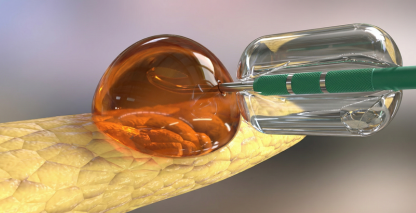
These help illustrate step-by-step use in a surgical or procedural setting. Showing a catheter placement through a vessel or a robotic tool in action during a mock procedure works well here. When selling to surgeons, this is especially useful.
Touchscreen Demonstrations
Running animations on touchscreens invites interaction, making it less passive. Surgeons and doctors can tap through sequences, like different surgery paths or device conditions. It also increases dwell time, which is critical for lead generation.
Motion Graphics with Data
If you’ve passed FDA review or have published studies backing your device, support that proof with motion graphics. Move through charts, display success rates, or timeline your clearance process. This gives credibility without bogging the viewer down.
Common Mistakes in Trade Show Animation — and How to Avoid Them
Animation should clarify your product, not confuse people. Many companies fall into traps that cost attention and slow down sales conversations.
Too Much Technical Detail
People don’t stop at your booth to dissect a textbook. Overloading your video with stats, terminology, and diagrams weakens your impact. Save deep details for follow-up meetings. Trade show animations work best when they highlight just the anchor points.
Generic Templates or Low-Quality Graphics
Medical buyers know quality. Using recycled templates or low-res graphics tells the wrong story about your product’s engineering. It’s worth investing in a custom-built animation that reflects your standards.
Overly Long Videos
Many booths run animation loops that are 3-5 minutes long. At crowded shows, that’s too much. Focus on 30- to 60-second loops that repeat and still deliver value. Make the story easy to understand even if someone watches from the middle.
No Sound Optimization
Trade show noise makes sound irrelevant. Your animation should be viewable and understandable with no audio at all. Plan for captions or animated explanations baked into the visual sequence.

When to Start Planning Your Animation for a Trade Show
Planning ahead gives your team space to lock in approvals, changes, and long-term use. Most animations for trade shows take 6 to 12 weeks to complete, depending on length and complexity. Rushing the process not only limits quality but also stresses your team right before a major marketing effort.
Start the animation process as soon as you book your booth. That way, your team has time to write the script, review storyboard designs, and give feedback without delay. You’ll stay in control of budget and meet your internal deadlines.
Last-minute tradeshow projects often skip review stages, which results in visuals that don’t hit the right note. Good planning also frees you to repurpose the animation later for medical sales, onboarding, or investor pitches.
How Austin Visuals Helps Medical Device Brands Stand Out Globally
With over two decades of animation experience in the medical and scientific fields, Austin Visuals understands how to communicate product value without slowing down your viewer. Our team of 29 U.S.-based artists work in both 2D and 3D, collaborating closely with internal teams at companies large and small.
We’ve worked with renowned clients like LDR Spine, NASA, Discovery Channel, and international surgical brands. Nothing we create is templated or recycled—every medical animation is built from the ground up, reflecting your science, your design, and your story. Our team scales to meet tight schedules and delivers export-ready formats suited for LED walls, kiosks, or laptops at your booth.
Whether you’re launching a cardiology tool, orthopedic implant, diagnostic solution, or digital health platform, we translate your ideas into strategic visuals that hold attention. Even for clients across different time zones, we offer remote syncing, screen-share walk-throughs, and support long after delivery.
Our Clients include:

Success Metrics — How to Know If Your Animation Worked
Animation should not only attract a crowd—it should support better conversations. Here are ways to track whether your content achieved results during your trade show marketing campaign:
Increased Booth Traffic
If viewers stop, stay longer, or return with colleagues to watch your loop again, your video is working. Count total views if your booth setup allows video tracking analytics.
More Engaged Conversations
Sales reps will notice warmer leads. Animation opens the conversation naturally, letting staff focus on qualified visitors. Fewer people saying “so what does it do?” is a clear sign your animation delivers value.
Better Lead Quality
Smart visuals attract smart questions. If your audience shifts from general passersby to practitioners or procurement teams asking product-specific questions, you’ve dialed in the right story.
Improved Post-Show Response
When your follow-up materials include animated clips, receivers are more likely to remember and engage. Tracking view-through rates on post-show emails or digital cards can confirm long-term recall.
Get Started with Austin Visuals – Your Medical Animation Experts
If you’re preparing for an upcoming conference or industry showcase, now is the time to reach out. We help medical companies worldwide tell better stories through scientific animation tailored for trade show performance. Whether you’re a marketing director, R&D head, or sales engineer, we’ll walk you through our easy content planning process—so you can focus on results.
Need a custom quote for your product or brand? Reach out directly to info@austinvisuals.com or speak to one of our animation producers at +1-512-591-8024. We also offer white-label production for medical marketing firms or consultants who want to integrate video services without building their own team.
Make your next medical trade show count. Let your animation sell for you—24/7, sound-off, and stress-free.
Frequently Asked Questions
What’s the best length for trade show animation?
Thirty to sixty seconds is the sweet spot. Keep your content engaging and repeatable—it should work even if someone watches from the middle of the loop.
Can trade show animation also be used online?
Yes—and it should be. High-quality medical trade show animations are commonly repurposed for websites, sales presentations, email follow-ups, investor decks, and training content. Designing with multi-use in mind increases ROI.
Do animations need sound at trade shows?
No. In fact, most trade show animations perform better without sound. Visual clarity is critical in noisy environments, so animations should communicate fully through motion, pacing, and visual storytelling alone.
How technical should a trade show animation be?
It depends on the audience, but clarity should always come first. Trade show animations work best when they highlight core benefits and functionality, leaving deep technical detail for follow-up meetings or private demos.
How long does it take to create a medical trade show animation?
Most projects take between 6 and 12 weeks depending on complexity, review cycles, and whether CAD or clinical data is provided. Starting early allows time for refinement and ensures the animation aligns with booth design and messaging.
Have a Project to discuss? Use this form to Contact Austin Visuals