
Introduction: Turning Complex Accidents into Clear Evidence
In personal injury litigation, clarity can determine the outcome of a case. When testimony becomes technical or conflicting, jurors rely on visuals to understand what really happened. A 3D forensic animation company brings those events to life—turning raw data, reports, and expert opinions into accurate, visual reconstructions that explain every movement and impact.
These animations are built on precision. They help attorneys demonstrate evidence in a way that words and diagrams can’t—showing motion, timing, and perspective with scientific accuracy. From vehicle collisions to workplace injuries, 3D forensic animation services reveal the truth clearly and professionally.
At Austin Visuals 3D Animation Studio, we help law firms, expert witnesses, and litigation teams create visuals that make complex facts understandable. If your next case demands visual clarity and precision, contact our team at info@austinvisuals.com or call +1-512-591-8024 to discuss your project today.

The Role of Visual Evidence in Personal Injury Litigation
In every personal injury case, the goal is to communicate facts convincingly. Lawyers must explain what happened, why it happened, and how it caused harm. Yet juries often struggle to visualize events described through technical language or conflicting witness accounts. That’s where visual evidence becomes essential.
When attorneys use forensic animation in trial presentations, they give jurors something concrete to interpret. The visuals show movement, speed, distance, and cause—all grounded in evidence. A witness can describe how a vehicle hit a pedestrian, but a 3D animation shows it precisely. The angle of impact, reaction time, and visibility become clear within seconds.
Animations are especially valuable when expert witnesses testify. Engineers and medical professionals often rely on technical data—numbers, diagrams, and scientific terms. When their insights are visualized in motion, the information becomes accessible to everyone in the courtroom. A well-constructed forensic animation for personal injury cases helps the jury understand and retain key details, increasing the overall impact of testimony.
What Are 3D Forensic Animation Services?
A forensic animation is more than just a visual depiction of an accident—it’s a data-driven reconstruction built from verified evidence. The process combines engineering, physics, and visual design to recreate real-world events with accuracy. Every movement in the animation is guided by measurable data: impact speed, weight, distance, and time.
Professional 3D forensic animation services start with collaboration. Animators work alongside legal teams, engineers, and reconstruction experts to understand the case. They analyze reports, photographs, scene measurements, and video footage to build a digital environment that mirrors reality. The final product is a visual representation that can withstand scrutiny in court.
These animations are often admitted as demonstrative evidence. They do not replace expert testimony; they support it. Each sequence reflects the findings of qualified experts, showing what those experts explain in visual form. By connecting technical data to real-world visuals, attorneys can present their case with confidence and precision.
Why Attorneys Use 3D Animation in Personal Injury Cases
Legal teams turn to animation for one key reason—it helps people understand complex evidence quickly. Trials often involve technical subjects such as biomechanics, vehicle motion, or mechanical failure. Even the most skilled attorney can find it challenging to describe those details with words alone.
A realistic 3D animation solves that problem. It transforms abstract information into something the jury can see. Whether the case involves a car crash, an industrial accident, or a medical injury, the animation shows events exactly as the evidence supports them.
Animations also strengthen expert testimony. When an engineer or accident reconstructionist testifies, the animation can visually confirm their explanation. Instead of describing motion paths or angles, they can point to them. This reinforces credibility and helps jurors remember key points.
In mediation and settlement discussions, animations can also be persuasive. Seeing an incident unfold visually often leads to faster resolutions and stronger negotiation outcomes. For law firms, this makes forensic animation services an effective tool both inside and outside the courtroom.
Common Types of Forensic Animations Used in Injury Cases
Forensic animation applies to many kinds of personal injury cases, each requiring a specific technical approach.
In vehicle accident reconstructions, animations demonstrate the movements of cars, trucks, or motorcycles before, during, and after impact. They use scene data, black box information, and speed analysis to illustrate collision dynamics.
In workplace injury cases, animations show how equipment operates and how an incident occurred. This might involve demonstrating a machine malfunction, a safety procedure failure, or an employee’s motion at the moment of injury.
For slip-and-fall incidents, realistic animations depict the surface conditions, visibility, and body movement of the injured party. Attorneys use these to clarify whether negligence or environmental hazards caused the accident.
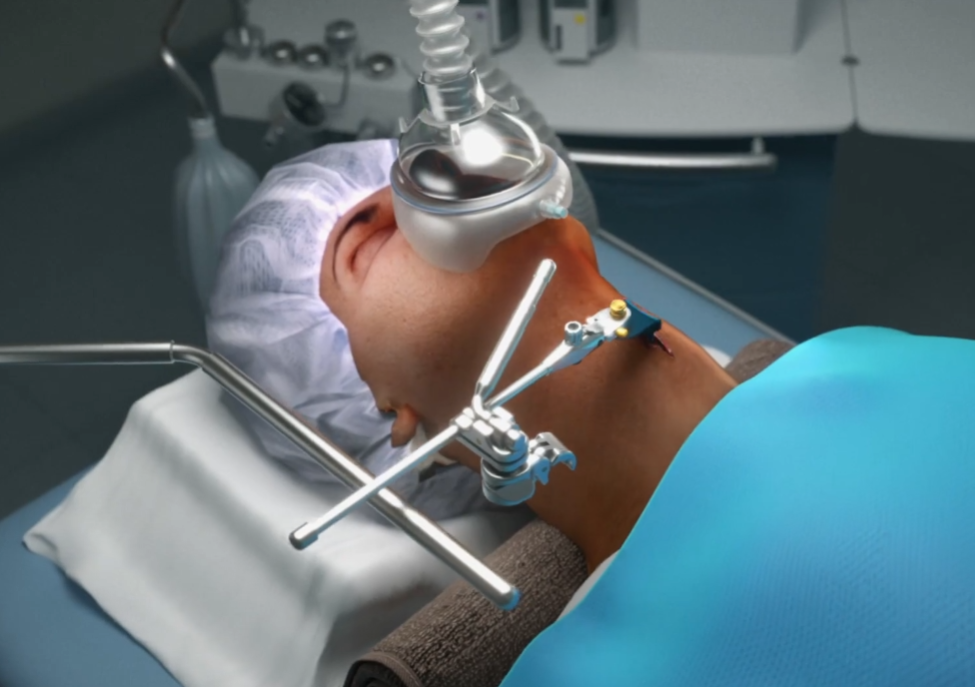
Medical and anatomical animations are used to visualize injuries inside the body. They help juries see the mechanism of trauma—such as bone fractures, ligament tears, or surgical procedures—without confusion.
Finally, construction and industrial accident animations recreate environments where multiple systems interact. These can show how a scaffold collapsed, a crane tipped, or a safety system failed.
Each of these applications shares one goal: to present accurate, unbiased visuals that clarify what happened.

The Process Behind Creating a Forensic Animation
Building a courtroom-ready animation requires accuracy, transparency, and collaboration. The process begins with evidence collection. The animation team reviews photographs, reports, police documents, and witness statements. They work closely with experts to ensure every measurement and assumption matches the factual record.
Next, animators construct detailed 3D models of the environment. For a car crash, this might include roads, vehicles, and surrounding objects. For a workplace injury, it could include machinery, safety barriers, and lighting conditions. Each element is modeled to scale.
Then comes motion simulation. Using physics engines and timing data, animators recreate movements that align with real-world forces. Every turn, collision, or fall is based on measurable parameters. Nothing is exaggerated or speculative.
Once the animation is complete, it goes through multiple reviews with the attorney and expert witness. Adjustments are made until the visuals match both the testimony and the evidence record.
At Austin Visuals, this process is handled with precision and professionalism. Every animation we produce is designed to meet evidentiary standards while maintaining visual clarity that makes sense to jurors.
How Forensic Animation Strengthens Legal Arguments
A well-constructed animation helps attorneys do more than show an event—it helps them tell a story backed by facts. Jurors can see how small details lead to large consequences. Timing, visibility, and human reaction become easier to grasp when displayed visually.
For instance, an accident reconstruction may reveal that a driver had less than one second to react to a hazard. A 3D animation showing that time frame makes the argument powerful and concrete. Similarly, an injury animation can highlight how force traveled through the body, aligning with medical reports and expert analysis.
Visuals also eliminate doubt. When jurors can see evidence unfold in real time, the chance of misinterpretation decreases. This builds credibility for the presenting attorney and confidence in the case narrative.
In many cases, the clarity provided by 3D forensic animation can influence settlement decisions before a trial even begins. Clear evidence leads to faster understanding—and stronger results.
The Difference Between Demonstrative and Substantive Evidence
Legal animations are usually classified as demonstrative evidence, meaning they illustrate facts already supported by testimony or documentation. They are not used to introduce new facts but to help explain existing ones.
For example, if an expert witness determines that a car was traveling 45 miles per hour before impact, the animation will show that exact movement—not a hypothetical version. The animation becomes a visual aid for the expert’s testimony.
To be admissible in court, animations must meet legal standards. They need to be fair, accurate, and consistent with verified evidence. At Austin Visuals, we adhere to these requirements strictly, ensuring that every project we deliver can stand up to courtroom review. Each animation is produced under expert oversight and documented thoroughly, creating a clear chain of evidence.
This level of accuracy not only makes animations admissible but also trusted by judges and juries.
Why Law Firms and Experts Choose Austin Visuals
Attorneys and expert witnesses across the U.S. choose Austin Visuals because of our reputation for precision, professionalism, and discretion. We’ve built a team that understands both the technical and legal sides of visualization.
Our animators work with engineers, medical illustrators, and reconstruction specialists to ensure every project reflects scientific accuracy. We know how to balance storytelling with evidence so that visuals are persuasive yet factual.
Austin Visuals has produced animations for car accidents, product liability cases, construction injuries, and medical malpractice trials. We serve both plaintiff and defense firms, always maintaining neutrality and respect for the evidence.
Our clients trust us because we communicate openly, deliver on time, and treat every case with confidentiality. Every project, whether for mediation or trial, is designed to help legal teams present facts with clarity and confidence.
Our clients include:

Case Example: Clarity That Helped Win a Case
A law firm handling a serious workplace injury case partnered with Austin Visuals to create an animation for trial. The case involved a factory worker injured by a mechanical arm on an assembly line. The challenge was explaining how the machine’s timing led to the accident.
Using engineering schematics and security footage, our team built a precise 3D model of the machine. We simulated its movements in real time, showing exactly when the safety sensor failed to detect the worker’s position.
During trial, the animation played alongside the expert’s testimony. The jury could see the moment of failure clearly. The visual evidence supported the expert’s explanation perfectly.
The firm later reported that the animation was a key factor in securing a favorable verdict. The jurors understood the technical details quickly and remembered them during deliberation.
This case showed how visual precision can bridge the gap between expert knowledge and jury comprehension.
The Future of Forensic Visualization in Litigation
Technology continues to reshape how evidence is presented in court. Modern forensic animations now integrate with virtual reality and simulation tools, allowing experts to demonstrate evidence interactively.
Motion capture can record real human movements to simulate events more accurately. Physics-based rendering produces lifelike motion and lighting, giving animations an authentic, real-world feel.
As technology improves, the demand for scientifically grounded visuals continues to grow. Attorneys want visuals that are both persuasive and verifiable.
At Austin Visuals, we stay at the forefront of these innovations. Our commitment to accuracy, reliability, and ethics ensures that every project aligns with the evolving standards of modern litigation.
Conclusion: Visualizing Truth with Precision
In personal injury litigation, visuals make facts undeniable. When evidence is complex, clear visuals help juries understand, remember, and trust what they see. That’s why 3D forensic animation services have become an essential tool for attorneys and expert witnesses across the country.
At Austin Visuals 3D Animation Studio, we transform technical data into courtroom-ready visuals that reveal truth with scientific accuracy. Whether you’re presenting a car accident reconstruction, a workplace injury, or a medical case, our team helps you show every detail with confidence and credibility.
If your next case demands clarity, connect with Austin Visuals at info@austinvisuals.com, call +1-512-591-8024, or visit AustinVisuals.com to get started.
When truth needs to be seen, we make it visible.
Frequently Asked Questions
Are forensic animations admissible in court?
Yes. When created using verified data and expert validation, animations can be used as demonstrative evidence to support testimony.
How accurate are 3D forensic reconstructions?
They’re based on real measurements, physics simulations, and expert analysis. Each movement and dimension reflects factual data.
How long does it take to produce a forensic animation?
Production time depends on complexity. Simple cases may take a few weeks, while multi-scene reconstructions can take several months.
Can animations be used outside the courtroom?
Yes. Many law firms use them in mediation, depositions, and insurance negotiations to explain events clearly.
Why should law firms choose Austin Visuals?
Because we combine engineering knowledge, legal experience, and visual expertise to create animations that communicate evidence with clarity and professionalism.
Have a Project to discuss? Use this form to Contact Austin Visuals