

Introduction
Offshore drilling sits at the intersection of precision, safety, and innovation. Every movement on a rig — from drilling operations to blowout prevention — carries enormous risk and cost. When even a minor procedural error can lead to safety incidents or downtime, training must be more than informative; it must be immersive, consistent, and measurable.
Traditional offshore training methods—manuals, classroom presentations, and live equipment demonstrations—have served the industry for decades. Yet they struggle to communicate the dynamic, multi-layered systems of offshore rigs. Complex subsurface mechanisms, pressure control systems, and coordinated team operations are difficult to explain through static visuals alone.
That’s where 3D visualization transforms learning. By creating lifelike, interactive visual models of drilling systems, 3D animation for oil and gas helps trainees see how each component behaves under real conditions. It allows them to explore systems virtually, understand cause and effect, and repeat scenarios safely until mastery is achieved.
For high-risk offshore environments, 3D visualization provides clarity that written procedures simply can’t — enabling safer, smarter, and faster crew development.
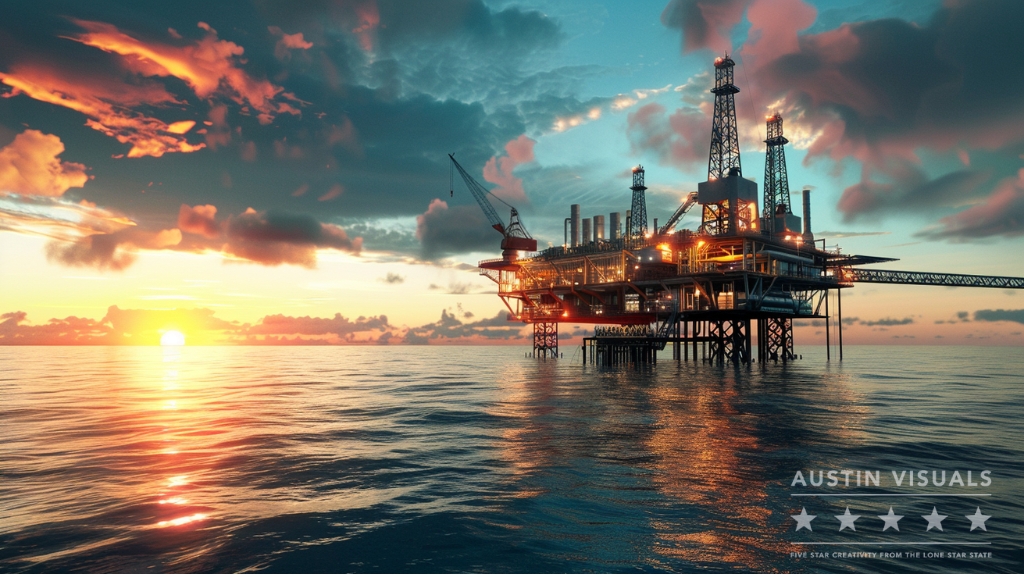
How 3D Visualization Strengthens Crew Competence and Safety
The offshore oil and gas sector operates in some of the harshest environments on earth. From arctic platforms to deepwater rigs, every operator, technician, and engineer must be trained to respond decisively in high-pressure situations.
A 3D visualization company for offshore drilling training creates digital simulations that replicate real-world rig operations. These aren’t cartoons or marketing animations — they are technically accurate digital representations built from CAD models, engineering data, and real-world physics.
Here’s how this approach directly improves performance and safety:
1. Realistic, risk-free practice
Through simulated drilling and BOP (Blowout Preventer) scenarios, teams can train without exposing themselves to real hazards. They can practice responses to pressure changes, equipment failures, or emergency shutdowns within a safe virtual environment.
2. Reinforced understanding through visual repetition
Complex systems such as mud circulation, riser connections, or casing operations can be repeated visually until the trainee grasps the process fully. This leads to higher retention rates compared to traditional instruction.
3. Faster onboarding
New personnel often require weeks to understand offshore operations. Interactive 3D modules accelerate this learning curve by providing a visual map of every process — from drilling sequences to safety protocols.
4. Improved communication between teams
Visual training eliminates the ambiguity that sometimes arises between departments or languages. With 3D animation, everyone sees the same process unfold — clearly, consistently, and in context.
By replacing guesswork with visual clarity, companies using 3D visualization for offshore safety training have documented measurable improvements in crew competence and incident reduction.
The Core Components of Effective Offshore Training Visualization
Not all 3D animations are created equal. The most effective offshore training visualizations combine engineering precision, visual storytelling, and realistic simulation to deliver both comprehension and engagement.
Here’s what defines a world-class 3D visualization for drilling and safety training:
Engineering Accuracy
At the foundation of every Austin Visuals project lies technical accuracy. Models are developed using CAD files, schematics, and manufacturer data to ensure each pipe, valve, and mechanical assembly behaves like its real-world counterpart. This level of precision ensures that visual training reinforces — not replaces — technical correctness.
Realistic Physics and Motion
Authentic animation of fluids, pressure, rotation, and torque helps trainees understand system interactions. Whether it’s the pulsing of a mud pump or the closing of a blowout preventer, each motion is timed to real engineering behavior.
Procedural Storytelling
Rather than overwhelming viewers with data, effective 3D visualization walks them through sequences step-by-step — startup, drilling, circulation, or safety shutdown — making the information intuitive to absorb.
Environmental Realism
Simulated ocean waves, lighting, and rig movement help trainees experience the subtle challenges of offshore work. Shadows shift realistically, and underwater visuals reveal equipment that’s otherwise invisible during real operations.
Interactivity and Scenario Control
The next generation of training uses VR oilfield simulation and interactive 3D viewers where trainees can trigger events — pressure spikes, equipment malfunctions, or safety alerts — and test their response in real time.
When all these elements come together, 3D visualization becomes more than a training tool; it becomes a visual operating manual for the entire offshore system.
The 3D Visualization Production Process
Creating a high-quality offshore drilling training visualization requires a disciplined process. At Austin Visuals 3D Animation Studio, every project follows a proven, collaborative workflow designed for technical accuracy, visual quality, and client satisfaction.
1. Discovery and Goal Definition
Every training project begins by defining its purpose — whether it’s safety training, technical certification, or internal communication. This ensures the visualization directly supports measurable learning outcomes.
2. Data Collection and Research
Our team collaborates with engineers and offshore specialists to gather CAD models, technical documentation, and reference footage. This phase ensures that every component — from drill string to riser — is represented accurately.
3. Storyboarding and Scene Planning
Before production begins, Austin Visuals builds a visual map outlining each camera angle, sequence, and message. This step guarantees logical flow and technical precision in every frame.
4. 3D Modeling and Environment Design
Using advanced 3D software, we recreate the rig, drilling systems, subsea equipment, and environmental conditions. Models are built to scale with physically accurate materials and textures.
5. Animation and Simulation
We then animate the process: the drill rotating, fluid circulation, pressure control, and tool operations. Our team incorporates fluid dynamics and particle simulation to mimic mud flow and gas dispersion.
6. Rendering and Review
Lighting and rendering bring realism — reflections on steel, underwater volumetric light, or subtle vibrations. Every animation undergoes internal and client review for accuracy and clarity.
7. Final Delivery and Integration
Training visuals are delivered in multiple formats: HD video, interactive desktop modules, VR simulations, or embedded content for learning management systems (LMS). This makes integration seamless across training platforms.
Through this structured approach, Austin Visuals transforms complex technical concepts into precise visual training tools — ready for deployment anywhere in the world.
Key Benefits of Partnering with a 3D Visualization Company
Working with a professional visualization partner delivers measurable returns for offshore drilling companies. The value extends beyond training — it influences safety culture, cost control, and operational readiness.
1. Enhanced Safety
Virtual drills let teams experience emergency conditions and learn correct responses without real-world exposure. This visual preparedness directly reduces human error during critical operations.
2. Consistent Global Training
For international oilfield operators, consistent messaging is vital. 3D visualization ensures every trainee — whether in Houston or Singapore — receives the same accurate instruction.
3. Reduced Costs
Once developed, training modules can be reused indefinitely, minimizing travel, logistics, and equipment wear associated with physical training setups.
4. Faster Learning
Visual simulations engage multiple senses, accelerating comprehension and reducing onboarding time for new personnel.
5. Improved Stakeholder Communication
Beyond training, 3D visualization serves as a powerful communication tool for investors, partners, and regulators — turning complex offshore systems into clear, accessible visuals.
By integrating 3D visualization into offshore safety training, companies build stronger, more confident teams capable of performing with precision under pressure.
Why Choose Austin Visuals for Offshore Drilling Visualization

Austin Visuals isn’t just a 3D animation studio — it’s a visualization partner that understands the technical demands of the oil and gas sector. Our work merges artistic craftsmanship with engineering precision.
Here’s why leading energy companies trust us:
Technical and Creative Integration
We combine mechanical modeling expertise with cinematic storytelling to make every animation both accurate and engaging.
Experience in Oil and Gas Visualization
Austin Visuals has worked with offshore contractors, drilling tool manufacturers, and energy operators to visualize everything from subsea installations to refinery operations.
Custom Solutions
Each project is built around your equipment, processes, and training goals. Whether you need a detailed BOP simulation or a full rig visualization, our approach is tailored, not templated.
Advanced Capabilities
From VR oilfield simulation to high-fidelity digital twins, we can deliver immersive environments that support interactive learning, safety testing, and procedural visualization.
Commitment to Quality
Every frame is reviewed by engineers and visual directors for clarity, accuracy, and impact. The result: visuals that elevate understanding and reinforce credibility.
When precision matters — and in offshore drilling, it always does — Austin Visuals delivers clarity through visualization.
Our Clients include:

The Future of Offshore Drilling Training — Immersive Visualization and Digital Twins
The next frontier of offshore training lies in digital twin technology and immersive simulation. These tools connect real-time data from equipment sensors with 3D visual environments, allowing trainees to interact with live systems virtually.
Imagine a VR headset that places your crew inside a digital replica of your rig. They can practice startup sequences, troubleshoot pressure anomalies, or run emergency shut-in procedures with real feedback from operational data. This isn’t the future — it’s happening now.
Digital twins for drilling are being integrated into training, maintenance, and predictive safety programs. They allow teams to see how the rig behaves before it’s even built — turning reactive learning into proactive decision-making.
As energy companies continue digital transformation, 3D visualization will form the foundation of safer, more intelligent offshore operations. From training to planning, the visual layer connects knowledge, data, and performance.
FAQ Section
What is 3D visualization in offshore drilling training?
It’s the creation of realistic 3D animations and simulations that replicate drilling systems, equipment operations, and safety procedures, used for immersive crew training.
How does 3D visualization improve safety?
It allows teams to train for critical procedures and emergency events virtually, minimizing real-world risk and reinforcing correct responses.
Can 3D visualization replace hands-on offshore training?
It complements, not replaces, hands-on training — preparing crews visually and mentally before they encounter actual rig operations.
How accurate are these visualizations?
Austin Visuals uses CAD files, engineering schematics, and field references to ensure equipment behavior and motion match real conditions.
Can 3D visualization include interactive training?
Yes. We develop VR oilfield simulations and desktop modules that let trainees explore systems, trigger events, and test decision-making.
How long does a project take?
Depending on complexity, a full training animation can take 4–8 weeks, including data collection, modeling, animation, and validation.
What’s the ROI of investing in 3D visualization?
Reduced safety incidents, faster onboarding, lower training costs, and higher retention — measurable gains in both safety and efficiency.
Conclusion
In the offshore oil and gas sector, precision isn’t optional — it’s essential. Training that once depended on lectures and static diagrams has evolved into immersive, data-driven 3D environments that engage, educate, and protect.
A 3D visualization company for offshore drilling training doesn’t just create animations — it creates understanding. It allows your teams to rehearse the unseen, anticipate challenges, and perform with confidence when it matters most.
At Austin Visuals 3D Animation Studio, we combine engineering precision with cinematic storytelling to deliver training visuals that inform, engage, and drive results. From offshore safety training to digital twin for drilling, we help the energy industry see its operations clearly — before they happen.
To discuss your next 3D visualization project or explore how Austin Visuals can enhance your offshore training programs, contact our team today at info@austinvisuals.com or call 512-591-8024. Partner with Austin Visuals — where innovation meets precision, and every frame brings your offshore operations to life.
Have a Project to discuss? Use this form to Contact Austin Visuals