
Introduction
Explaining medical devices and how they work can be complicated. Healthcare professionals, investors, and patients all have different levels of understanding—and they each need information that’s clear, fast, and accurate. Animation helps simplify the communication process. Whether for marketing, investor pitches, or training, medical animation provides a scientific and visual way to explain even the most complex technology. For companies developing or marketing medical devices, animation isn’t a luxury—it’s one of the most effective tools available to strengthen both sales and clinical education.
If your company is developing a new medical device or needs to stand out in a competitive market, our team at Austin Visuals can help. Contact us at info@austinvisuals.com or +1-512-591-8024 to schedule a free consultation and see how custom medical animations can improve your business outcomes.
Why Animation is a Game-Changer for Medical Device Companies
Medical devices need to deliver real-life outcomes, but that message often gets buried in technical descriptions and product specs. Animation removes those barriers by turning data into clear motion visuals. That shift from passive explanation to active demonstration is where the impact starts.
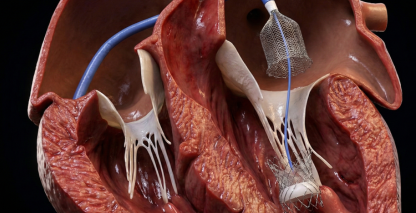
Many devices involve hidden mechanisms, micro-scale movements, or internal processes that can’t be shown physically. Animation displays these in a precise, scientific format tailored to your audience. Our work with LDR Spine, for example, showed spinal implants in motion, giving surgeons a clear view of how the product operated in the body. That one animation helped reduce explanation time and boosted investor interest.
If your device is hard to describe, it’s probably the right time to illustrate it through animation.
How Animation Helps Increase Sales for Medical Devices
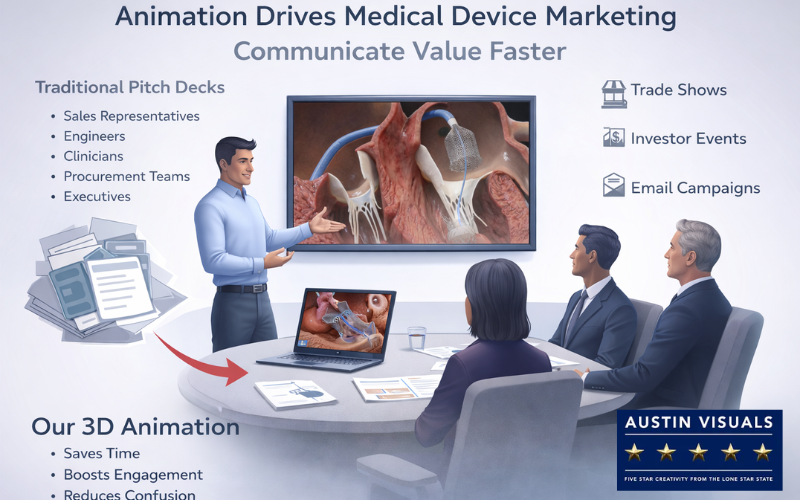
The sales cycle for medical devices involves multiple steps—engineers, sales reps, clinicians, procurement teams, and executives all need to sign off. Each of them requires understanding the value behind your technology fast. Traditional pitch decks often fall short because they rely on still images and a lot of copy.
Animation speeds this process by offering a clean, accurate presentation in under 2 minutes. A 3D animation of your medical device can show not only how it works but why it matters. Imagine a sales representative opening with a short animation instead of a stack of pamphlets. It saves time, prompts better questions, and reduces confusion further down the line.
Animations are also useful for trade shows, investor events, and email campaigns. They draw attention at booths, build interest with visuals, and create content that can be shared across platforms. Our team at Austin Visuals has produced high-performing content for launch events, startup investments, and VC presentations. Clients regularly report higher engagement when using our media compared to traditional sales tools.
Using 3D Medical Animation for Clinical Training
Training protocols often rely on dense manuals, formal classroom sessions, or instructor-led instruction. These take time and resources to deploy, especially when device operation needs to be consistent across dozens of clinics or countries.
With medical animation, you reduce those dependencies. 3D visuals allow for repeatable, consistent education experiences anywhere in the world. You can demonstrate correct device usage, show procedural steps for implantation, and simulate common errors without needing live equipment or staff on site.
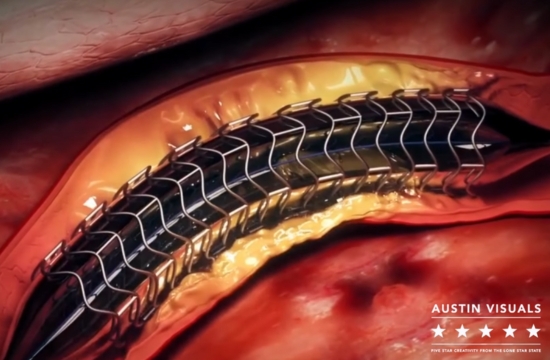
When we created training animations for catheter-based systems, for instance, healthcare professionals could study scene-by-scene procedures and rehearse virtually before hands-on time. That cut down on mistakes and allowed clinical teams to get comfortable with the device faster. We also develop AR- and VR-compatible models for clients who have immersive simulation centers, which reinforces learning even further.
Animation turns training into something portable, visual, and standard—no matter where your offices operate.
When Should You Consider Using Animation?
Timing can make or break product momentum. Waiting too long to demonstrate your device visually might cause you to lose attention in the press, at conferences, or with buyers. Medical device creators typically use animation in the following moments:
• Launching a product: An explainer animation helps your audience understand the tech without technical knowledge. Short videos are great for announcements and press kits.
• Building a training program: A new device needs trusted instruction. Animation provides repeatable, standardized procedures for healthcare teams around the country or overseas.
• Preparing for trade shows: When you need to compete with other booths or vendors for attention, a 3D product demo on a screen offers a clear advantage and attracts crowds.
• Educating participants in clinical trials: Complex concepts such as mechanism of action, anticipated results, and safety protocols can be clarified visually for doctors and participants.
Austin Visuals adapts to your schedule—whether your window is three weeks or three months. Our workflow is flexible, and we scale our production team to meet your deadlines.
2D vs. 3D vs. Motion Graphics – What Kind of Animation Works Best?
Not all styles of animation work for every goal, and picking the right one depends on what you need to say and who needs to understand it.
2D Animation
This style keeps things simple and effective. If you’re creating a patient-facing explainer about how a monitoring device works at home, or notices for consumer use, 2D animation works well. It emphasizes icons, diagrams, and step-by-step overview content that’s easier for the general audience to absorb.
3D Animation
For technical buyers, training teams, or investors, showing the device in realistic 3D can be essential. You get rotational views, cross-sections, and internal mechanisms. Our team at Austin Visuals offers advanced 3D rendering that can be used across platforms, including mobile and immersive headsets.
Motion Graphics
This approach uses animated typography, icons, charts, and graphs. If you need to highlight comparative data, compliance results, or market positioning visually, motion graphics are the tool to use. They often work well for pre-roll video ads or parts of product presentations.
We’ve used all three formats for various stages of the product cycle—from awareness to sales support to training—and advise our clients based on their goals rather than pushing just one solution.
Overcoming Common Challenges in Medical Device Marketing with Animation
Medical device companies often face similar roadblocks when deciding how to create marketing or training content. Here’s how we help.
“Our device is too complex to explain simply.”
That’s exactly what animation is made to solve. We translate micro-level processes or data flows into clear, visual language. Our scientific animators collaborate with your engineering or medical teams to ensure accuracy and clarity.
“We’re in a hurry.”
Our remote production model allows us to finish concept-to-video projects in a short time frame. Whether your deadline is a few weeks or a few months, we build project plans that match.
“Creating professional content is expensive.”
Our team was designed for efficiency. With distributed artists and producers in place across the globe, we pass the savings on to clients—without cutting corners. That’s how we’ve delivered for NASA, The Discovery Channel, and hospital groups nationwide.
These are barriers that animation—and the right team—can help you get past.
Why Choose Austin Visuals for Your Medical Animation Needs

For over 20 years, Austin Visuals has worked with healthcare startups, global research firms, medical device manufacturers, and top-tier consultants. Our full-time animation artists, producers, and developers work across every stage of a project—from concept sketches through rendering, voiceover, and final editing.
When you work with us, you get:
• A dedicated production manager
• Custom storyboards, voiceover, and animation styles to fit your audience
• End-to-end support with transparent project tracking
• Competitive prices thanks to smart workflow design
We’re based in Texas, with clients across the U.S. and internationally. Whether you need production from scratch or want to update your current content with better visuals, we’re ready to help.
Our Clients include:

How to Get Started with a Custom Medical Animation Today
Getting started is simple. We begin with a discovery call to understand your goals and audience. From there, we create a concept for your project, build a timeline that works for you, and get to work on scripting and visuals. You’ll approve each step along the way.
We also offer a free consultation to help you decide if animation is right for your project. You can view samples of our medical animation work, ask questions about production, and get an estimate tailored to your timeline and budget.
Contact us now at info@austinvisuals.com or call +1-512-591-8024 to speak with a member of our team. Let’s turn your medical device into a clear, accurate visual that supports sales, training, and long-term adoption.