

Engineering failure cases often involve a difficult mix of technical evidence and legal persuasion. A structural collapse, machine failure, product defect, construction incident, equipment malfunction, or industrial accident may depend on details that are invisible to a jury: load paths, fracture progression, stress concentration, material fatigue, maintenance history, component alignment, or sequence timing. Forensic animation helps organize those details into a visual explanation that can be reviewed, challenged, corrected, and presented with discipline.
Forensic animation for engineering failure cases is not about creating drama. It is about making expert analysis easier to understand while respecting the evidence. When done properly, animation can show what is known, what is inferred, what sequence is being explained, and where an expert opinion begins. Austin Visuals helps legal and technical teams turn complex engineering information into clear visuals for mediation, settlement discussions, deposition preparation, arbitration, and trial. If your team needs a litigation-ready visual, reach Austin Visuals at info@austinvisuals.com or (512) 591-8024.
What Is Forensic Animation for Engineering Failure Cases?
Forensic animation for engineering failure cases is the use of animation, 3D models, diagrams, motion graphics, and evidence-based visual sequences to explain how an engineered system failed. The subject may be a building component, bridge connection, industrial machine, vehicle part, medical device, pipeline component, construction assembly, consumer product, or manufacturing process.
The animation is typically built from case materials. These may include expert reports, photographs, CAD files, inspection records, accident scene data, product drawings, maintenance logs, deposition testimony, testing results, engineering calculations, and physical evidence. The animation team works with attorneys and experts to translate that material into a visual sequence that supports the expert’s opinion without adding unsupported assumptions.
The result may be a short courtroom animation, a mediation video, an interactive exhibit, a technical explainer, a demonstrative sequence, or a set of trial graphics. In many matters, the animation is used first as an internal communication tool. It helps the legal team understand the engineering theory before deciding how to present the case.
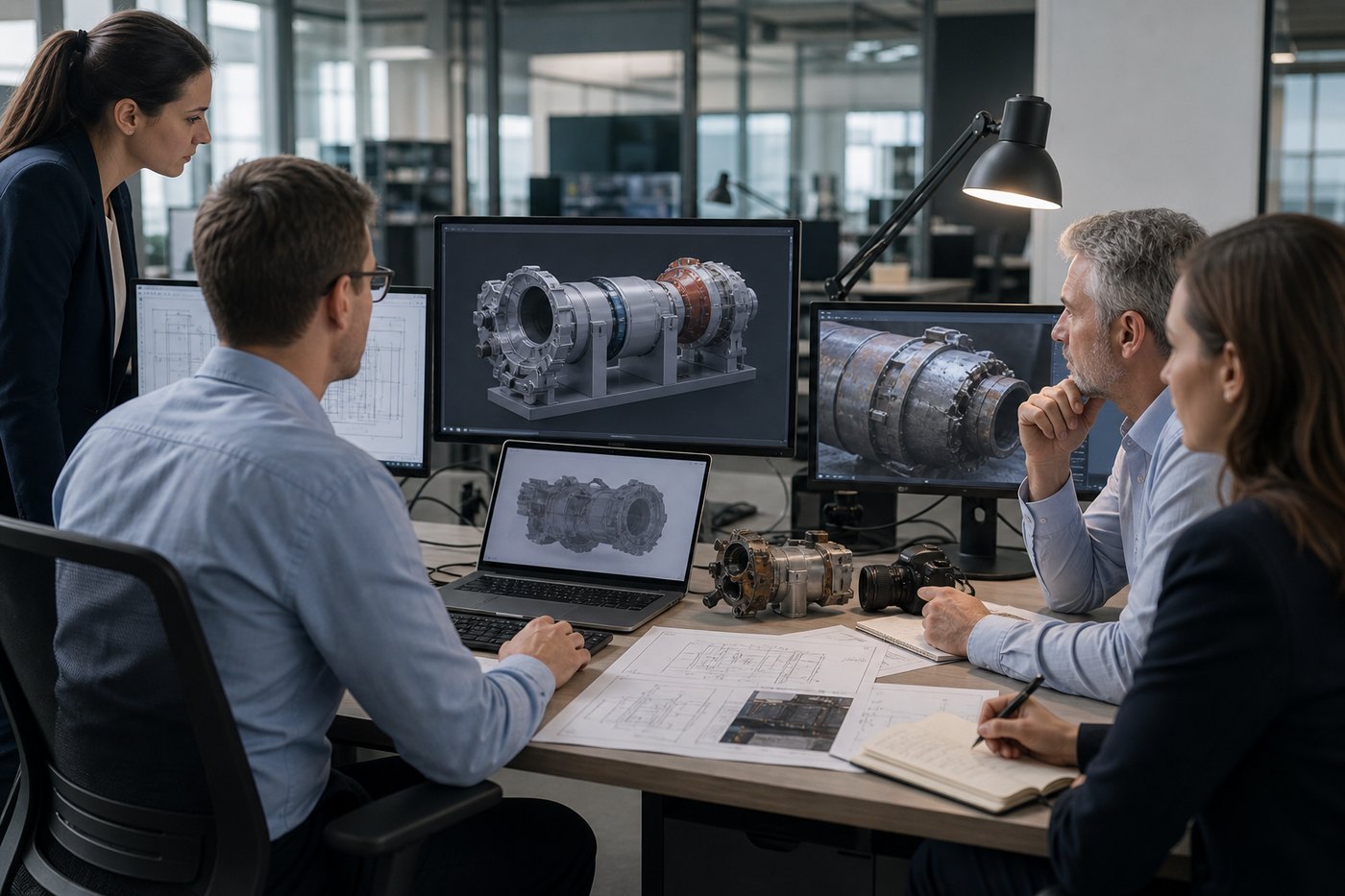
Why Engineering Failure Litigation Is Hard to Explain
Engineering failure cases are difficult because the key issue is rarely visible in one photograph. A damaged component may show the final result, but not the full chain of events that led there. Jurors, mediators, claims teams, and even attorneys may need help understanding how one small technical detail can change the entire failure analysis.
Consider a steel connection failure. The final photo may show a fractured plate or deformed bolts. But the legal dispute may involve load direction, weld quality, fatigue history, installation sequence, design assumptions, inspection access, or whether a later event caused the damage. Static exhibits can support that explanation, but they may require the viewer to mentally assemble several pieces at once.
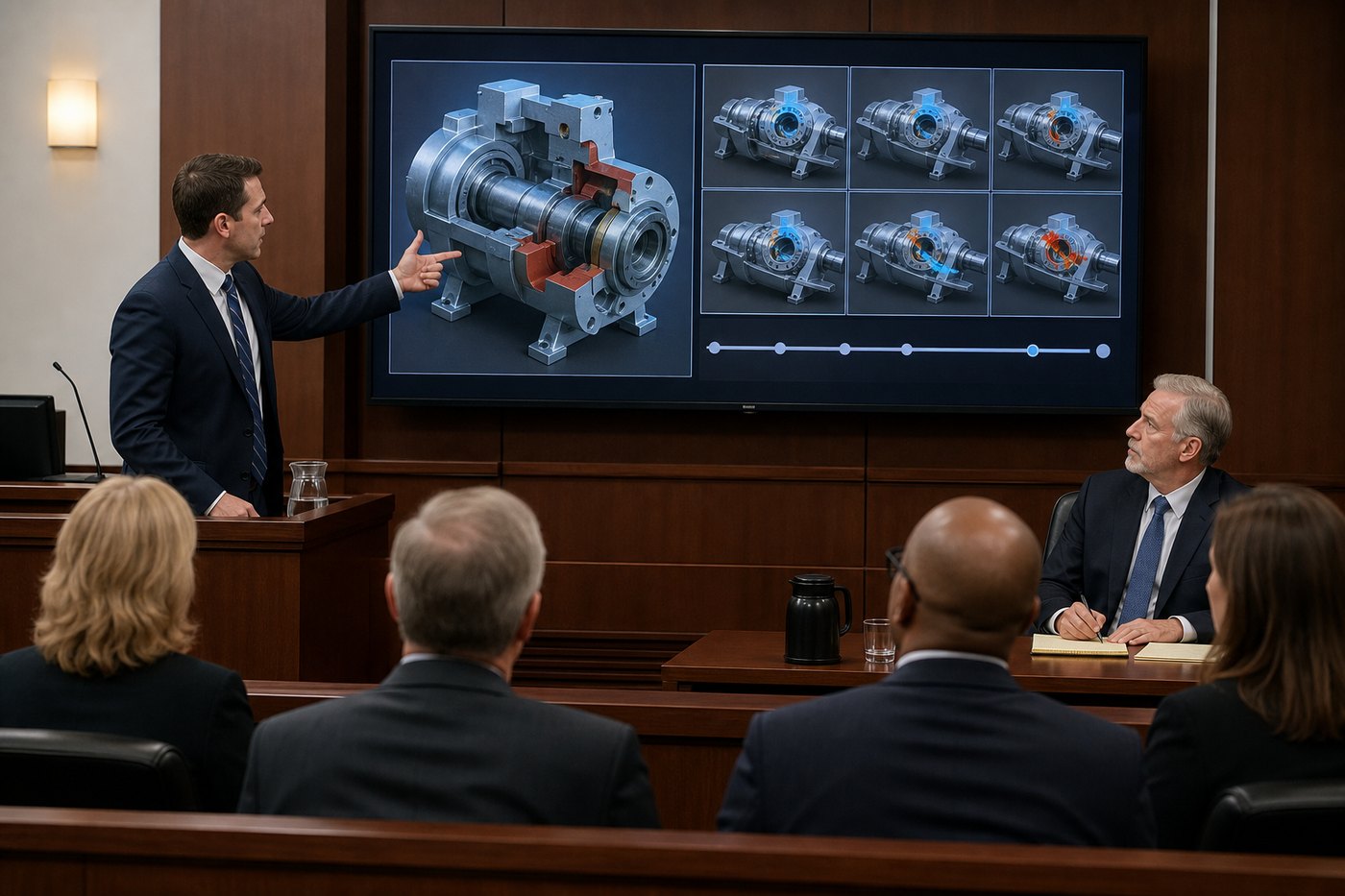
Animation reduces that burden. It can show the component before failure, identify the relevant forces, move through the failure sequence, and pause on the expert’s key conclusion. The viewer sees the relationship between evidence and opinion, instead of trying to connect it from separate documents.
This is why legal forensic animation is valuable in technical disputes. It helps convert complex evidence into a format that a non-engineer can follow, while still giving experts and opposing counsel something specific to review.
What Types of Failure Cases Can Use Forensic Animation?
Forensic animation can support many engineering failure disputes. It is especially useful when the case depends on motion, sequence, internal components, hidden forces, or competing explanations of how damage occurred.
Structural failures may involve beams, columns, welds, bolts, foundations, retaining walls, scaffolding, cranes, platforms, roof systems, or temporary works. Animation can show load paths, connection behavior, progressive failure, or the difference between design intent and actual installation.
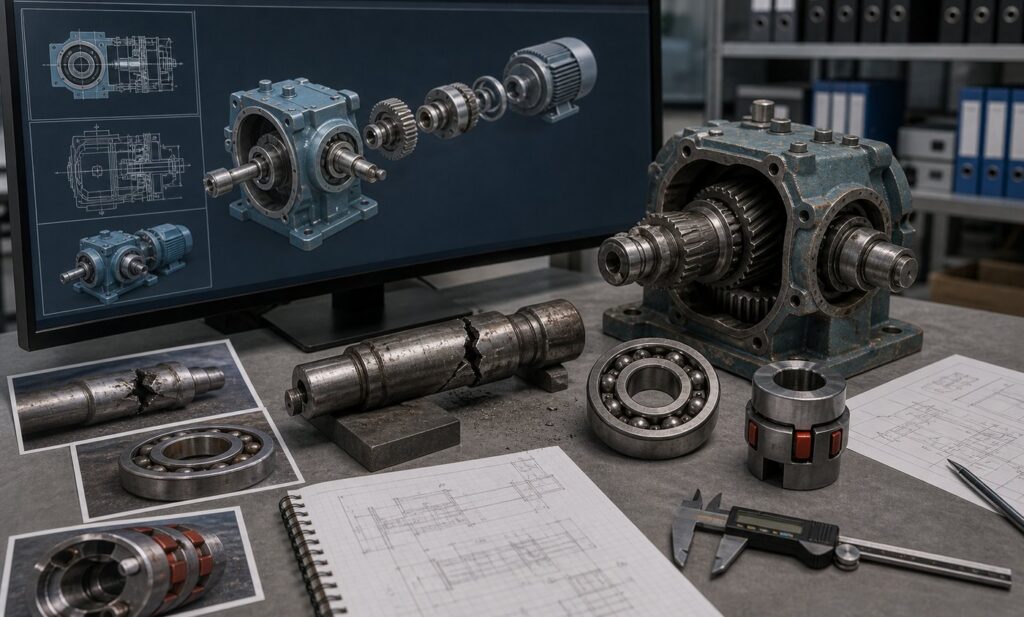
Mechanical failures may involve shafts, bearings, gears, pumps, motors, conveyors, valves, couplings, lifting devices, or rotating equipment. Animation can show how wear, misalignment, overload, lubrication failure, manufacturing defect, or improper maintenance may have contributed to a breakdown.
Product liability matters may involve consumer products, industrial products, medical devices, tools, machinery, safety systems, or component assemblies. Animation can clarify product operation, guard placement, user interaction, failure mode, and alternative design concepts.
Construction and industrial incidents often involve multiple parties and a timeline of decisions. Animation can show staging, site layout, equipment movement, work sequencing, safety zones, and the physical relationship between people, machines, and structures.
Animation vs. Simulation in Legal Contexts
One important distinction is the difference between animation and simulation. A demonstrative animation usually illustrates an expert’s opinion using case evidence and assumptions supplied by the expert. A simulation may use mathematical modeling, physics calculations, finite element analysis, motion analysis, or other computational methods to produce a result.
This distinction matters because courts and opposing counsel may ask how the visual was created and what it represents. A demonstrative animation should not imply that it independently proves the event unless that is actually true. It should be clear whether the visual is illustrating an expert conclusion, showing a possible sequence, comparing two theories, or displaying the output of a validated calculation.
For engineering failure cases, a clean workflow helps prevent confusion. The attorney and expert should define the purpose of the visual before production begins. Is the animation meant to explain a report, demonstrate a mechanism, compare failure theories, support deposition preparation, or help a mediator understand damages? That purpose affects the style, pacing, detail level, and review process.
Accurate visuals also require restraint. A good forensic animation does not add dramatic debris, unrealistic sparks, exaggerated motion, or unsupported damage. It should make the expert’s reasoning clearer, not make the event look more emotional than the evidence supports.
How Forensic Animation Supports Expert Witness Testimony
Expert testimony often contains technical terms that are familiar to engineers but unfamiliar to jurors. Stress riser, fatigue crack initiation, buckling, shear, torsion, misalignment, bearing seizure, and progressive collapse may all be important, but they can become abstract quickly. Animation gives the expert a visual reference while explaining those concepts.
A forensic animation can show the subject in layers. First, it can orient the viewer to the site, product, or assembly. Then it can identify the relevant component. Next, it can show the force, motion, defect, or condition at issue. Finally, it can connect that technical point to the expert’s opinion.
This structure helps the expert avoid jumping too quickly into advanced details. It also helps the legal team keep the explanation aligned with the case theme. When an animation is reviewed carefully, it becomes a shared communication tool between the attorney, expert, and audience.
Animation may also help during deposition preparation. Attorneys can use the visual to test whether an expert explanation is clear, whether the sequence needs simplification, and where opposing counsel might challenge assumptions. A visual that is useful internally is often easier to refine for mediation or trial.
Building an Evidence-Based Animation Workflow
A reliable forensic animation workflow begins with evidence organization. Before animators build scenes, the team should identify which documents, measurements, photos, reports, and expert assumptions control the visual. Every major visual decision should be traceable to the record or to expert direction.
The next step is script and storyboard development. The script defines what the animation says. The storyboard defines what the viewer sees. In engineering failure litigation, storyboards are especially important because they allow attorneys and experts to catch problems early. A storyboard can reveal whether an assumption is unsupported, whether a sequence is too fast, or whether a camera angle might create confusion.
After storyboard approval, the animation team can build or refine the 3D assets. These assets may come from CAD files, point clouds, engineering drawings, inspection photos, or custom modeling. The level of detail should match the purpose of the exhibit. A high-detail model may be necessary for a component failure, while a simplified model may be better for a timeline or overview.
Throughout production, review cycles matter. The expert should review technical accuracy. The legal team should review admissibility concerns, clarity, and case strategy. The animation team should review pacing, camera angles, labeling, and visual hierarchy. This is similar to the discipline required for accurate technical animations, where clarity depends on both creative execution and subject matter review.
Using 3D Models to Show Hidden Failure Mechanisms
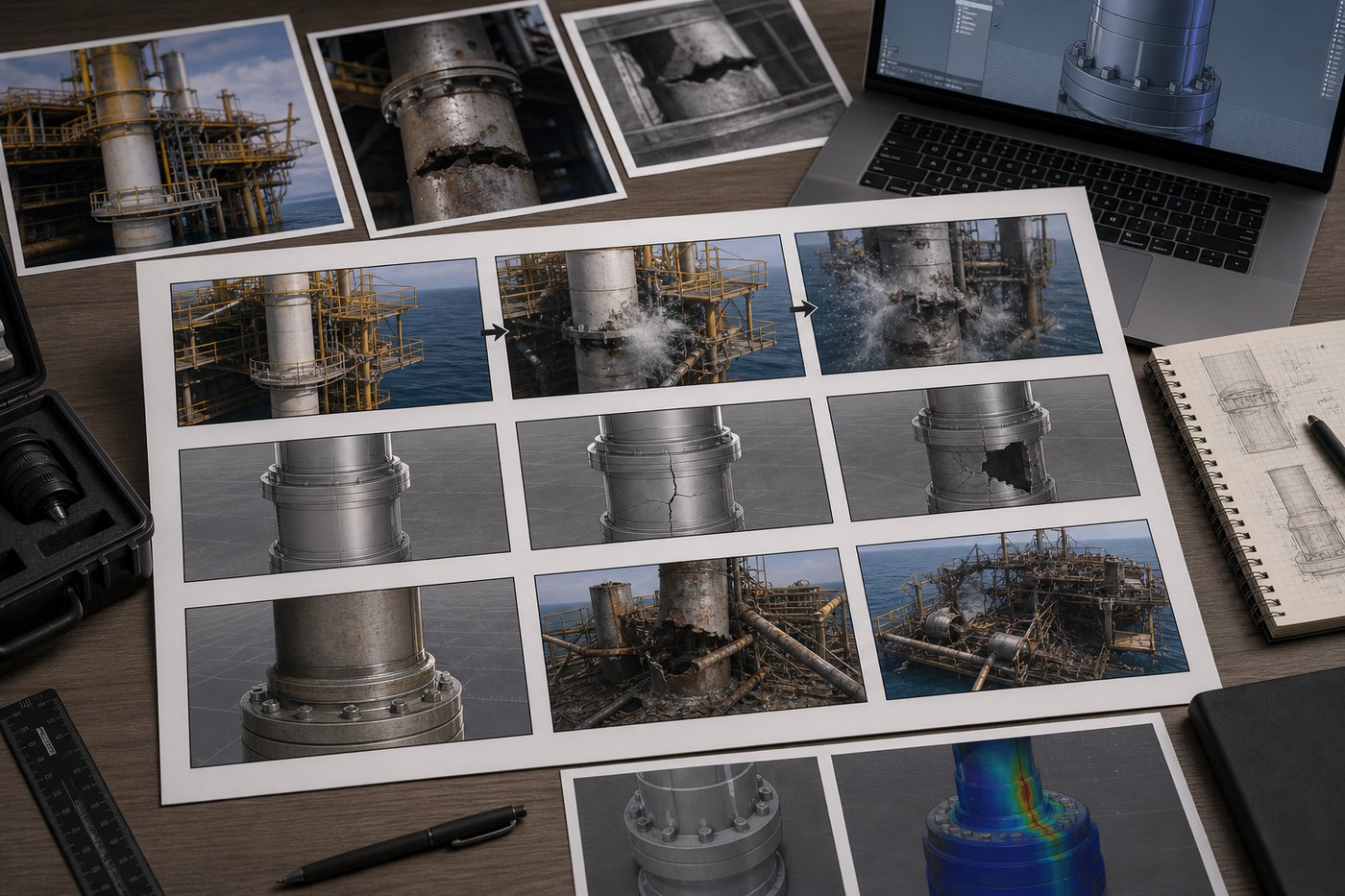
One of the strongest uses of forensic animation is showing what cannot be seen directly. A component may fail internally before visible damage appears. A structure may redistribute load before a final collapse. A machine may run out of tolerance before a shaft breaks. A product may fail because of a small interaction between parts that is hard to explain in still images.
3D animation can use cutaways, transparent views, exploded views, section views, and controlled camera movement to reveal those hidden mechanisms. For example, a bearing failure can be shown from the outside, then inside the housing, then as a sequence of misalignment, heat, wear, and seizure. A structural failure can show a connection in normal condition, under increased load, and at the moment a fracture initiates.
The key is to keep these visual tools honest. A cutaway should not imply that the evidence was visible at the time of the event. A color overlay should be explained as an illustration, not a measured stress map unless it comes from validated analysis. A transparent view should clarify, not decorate.
This is where engineering-grade 3D visualization becomes useful. The goal is not simply to make a polished animation. The goal is to communicate technical relationships with enough accuracy that engineers, attorneys, and decision-makers can rely on the visual discussion.
How Austin Visuals Helps With Forensic Engineering Animation
Austin Visuals helps legal teams, expert witnesses, engineering firms, insurers, and corporate clients create forensic animation for engineering failure cases. Our work combines technical visualization, 3D animation, legal graphics, editing, and clear visual storytelling.
For a forensic engineering matter, Austin Visuals can help organize the visual plan, create 3D models, build demonstrative animations, design trial graphics, prepare mediation visuals, and adapt technical content for different audiences. We can work from engineering drawings, CAD files, expert reports, photographs, deposition exhibits, and attorney direction. When needed, we can create separate versions for internal review, mediation, and courtroom presentation.
Our role is to make the technical issue understandable while staying within the boundaries of the evidence and expert opinion. That means avoiding unsupported drama, unrealistic visuals, and confusing creative choices. It also means building review checkpoints so the expert and legal team can correct details before the animation is used.
Because Austin Visuals also produces legal visuals, technical animation, industrial animation, medical animation, product animation, and training content, we are comfortable with cases that cross disciplines. A case may involve engineering, safety, product design, manufacturing, medicine, construction, or complex equipment. We help translate that complexity into visuals that can be reviewed and understood.
Trial Graphics, Mediation Visuals, and Settlement Support
Not every engineering failure visual needs to be a full courtroom animation. Many cases benefit from a practical set of exhibits: a short sequence, a few 3D stills, a timeline, a component diagram, a site orientation graphic, or a comparison between competing theories.
For mediation, the visual may need to communicate the core theory quickly to a claims representative, mediator, or opposing party. For trial, the visual may need to support a more formal expert explanation. For deposition, the visual may help attorneys prepare questions, identify weak points, or clarify the sequence before testimony.
Legal graphics and trial graphics can also work alongside animation. A still exhibit may be easier to cite during testimony. A timeline may help structure the case. A diagram may be better than animation when the point is a static relationship between parts. The best visual strategy often combines several formats.
Good visual planning starts by asking what the audience needs to understand. If the answer is sequence, animation may be best. If the answer is comparison, a side-by-side graphic may work better. If the answer is orientation, a 3D still or site diagram may be enough. The right choice keeps the presentation efficient and credible.
Common Mistakes to Avoid
The first mistake is creating animation before the expert theory is stable. If the theory changes late, the animation may need major revisions. It is better to start with a rough storyboard or animatic, then refine once the expert, attorney, and animation team agree on the sequence.
The second mistake is overloading the animation with too much information. Engineering cases often contain many details, but the viewer can only process so much at once. A strong animation uses pacing, staging, and visual hierarchy to focus attention on the key issue.
The third mistake is using visuals that look too dramatic or speculative. If the animation adds unsupported motion, damage, lighting, or environmental conditions, it may weaken credibility. The visual should be persuasive because it is clear and grounded, not because it looks cinematic.
The fourth mistake is failing to distinguish evidence from explanation. If a color overlay, cutaway, or reconstruction is illustrative, the team should understand that before presenting it. Clear labeling and careful narration can help, but the deeper solution is a disciplined production process.
What to Prepare Before Starting a Forensic Animation
Before production begins, gather the materials that will guide the animation. Useful inputs include expert reports, photographs, inspection records, drawings, CAD files, physical evidence photos, deposition excerpts, site measurements, testing reports, maintenance history, and any prior demonstratives used in the case.
It also helps to define the audience and venue. Is the animation for mediation, trial, settlement discussion, internal case strategy, deposition preparation, arbitration, or insurance review? Each use case may require different pacing, detail, and polish.
Finally, identify the review team. A forensic animation should have a technical reviewer and a legal reviewer. The technical reviewer checks the engineering. The legal reviewer checks case fit, foundation, tone, and risk. The animation team then adjusts the visual so it is understandable without drifting away from the evidence.
FAQ: Forensic Animation for Engineering Failure Cases
What is forensic animation for engineering failure cases?
It is an evidence-based visual reconstruction or explanation of how an engineered system, product, structure, or machine may have failed. It is used to help attorneys, experts, mediators, jurors, and claims teams understand technical failure issues.
Is forensic animation admissible in court?
Admissibility depends on jurisdiction, foundation, purpose, expert support, and whether the animation fairly represents the evidence or expert opinion. Attorneys should review admissibility strategy before using any animation in court.
What is the difference between a forensic animation and a simulation?
A forensic animation often illustrates an expert opinion or case theory. A simulation may calculate an outcome using physics, engineering data, or mathematical modeling. The distinction should be clear so the visual is not misunderstood.
What materials are needed to create an engineering failure animation?
Helpful materials include expert reports, CAD files, engineering drawings, photographs, measurements, inspection records, testing results, deposition testimony, maintenance records, and physical evidence references.
Can animation show hidden internal failures?
Yes. Animation can use cutaways, exploded views, transparent sections, and controlled camera movement to explain hidden mechanisms such as bearing wear, crack propagation, internal deformation, fluid flow, or component interaction.
How long should a forensic engineering animation be?
Many effective forensic animations are one to four minutes long, depending on the issue. Complex matters may use several short modules rather than one long video so each exhibit explains one point clearly.
How can Austin Visuals help with engineering failure litigation?
Austin Visuals can create forensic animation, legal graphics, 3D models, technical diagrams, mediation visuals, and courtroom presentation assets for engineering failure disputes. We work with attorneys and experts to keep visuals clear, accurate, and case-focused.
Conclusion
Forensic animation for engineering failure cases helps legal and technical teams explain complicated evidence without asking the audience to become engineers. It can show sequence, structure, internal mechanisms, product operation, field conditions, and competing theories in a way that is easier to review and understand.
The most effective forensic animations are grounded in evidence, reviewed by experts, and designed with legal purpose in mind. They do not exaggerate. They clarify. For engineering failure litigation, that clarity can support better preparation, stronger mediation presentations, and more understandable expert testimony.
Austin Visuals helps companies turn equipment, workflows, safety procedures, products, and technical processes into clear visual content that teams and customers can understand.
Contact us at info@austinvisuals.com or call (512) 591-8024.