

Introduction
Video content is growing faster than production teams can keep up. With tighter deadlines, rising costs, and increasing demand for high-quality results, today’s methods fall short. But now, with artificial intelligence enhancing human creativity, a new workflow is picking up speed. It’s not just theory—by 2026, AI and human video production pipelines will reshape how brands create content.
Mixing automation with human thinking means quicker results without reducing quality. In this article, we’ll show how this hybrid system works and what it means for your business. If you’re producing animations, commercials, corporate explainers, or 3D visualizations, what’s coming next will help you scale smarter.
Want to cut costs but raise quality on your next video? Reach out to us at info@austinvisuals.com or call +1-512-591-8024 for a free consultation.

What Are AI + Human Production Pipelines in 2026?
The phrase “AI + human production pipeline” describes a system where artificial intelligence helps creators produce videos faster, with fewer errors, and less back-and-forth. This setup combines the processing power of machines with the decision-making and emotional sense of human artists. It’s not about handing control over to AI—it’s about removing repetitive steps that eat up time.
In 2026, this workflow isn’t futuristic anymore. Cameras can sync visuals to sound automatically. Editing apps can suggest cuts before the editor watches footage. 3D modeling software can generate textured assets from a single sketch. Even scriptwriters use tools that scan data to build outlines in seconds, which human writers then refine.
This model doesn’t replace creative judgment—it supports it. Teams can test dozens of creative options in days instead of weeks. It also brings in flexibility across projects: animators handle character movement while AI tracks camera angles and lighting. The result: fewer manual errors, more rapid iterations, and stronger results from the start.
Why Knowing This Matters for Your Business Videos
Marketing videos used to take months to complete. That’s no longer practical. Product launches, training materials, branded explainers, and investor reels now need quick turnaround—without losing visual appeal. Whether you’re building campaigns across platforms or producing dozens of video ads per quarter, the success of your videos depends on speed and clarity.
Businesses are now expected to post weekly content while also launching quarterly campaigns. Traditional video pipelines weren’t built for this. You need something more adaptive. That’s why combining AI and human creators is especially useful. It cuts production time while keeping the creative quality customers expect.
When videos are delivered faster, your team can improve campaign timelines and boost conversions. Shorter delivery time also cuts back on project costs. Marketing managers can split budgets across more assets without increasing spending. That kind of return isn’t just convenient—it’s necessary in digital marketing today.

Top 5 Challenges Companies Face in Video Creation Today
Most marketing teams struggle with one or more of the same problems when creating new content. Whether you’re building an internal video team or hiring outside help, these are the most common roadblocks.
1. Delays in Turnaround Time
Waiting weeks for video edits or animation updates doesn’t work anymore. Businesses risk missing launch windows or falling behind on content calendars when production lags.
2. Limited Creative Resources
In-house designers often wear too many hats. They might know motion graphics but lack experience with 3D modeling or voiceover management. Outsourcing helps, but without an efficient process, coordination becomes messy.
3. Gaps in Post-Production
Post-production often stretches deadlines. Adjusting color, replacing narration, or adding new effects can throw off delivery dates. Without tools to speed this up, revisions cause delay after delay.
4. Budget Restrictions
High-end video work used to require big in-house teams or large production budgets. That’s not sustainable for many. There’s growing pressure to deliver more content with smaller financial investments.
5. Lack of Technical Expertise
While animation, 3D rendering, and VFX are powerful tools, many business teams don’t know how to use them. Even if they contract this work out, without guidance, the results don’t match the campaign goal.
This is where studios like Austin Visuals make the difference—combining real creative teams with the best tech built into the process itself.
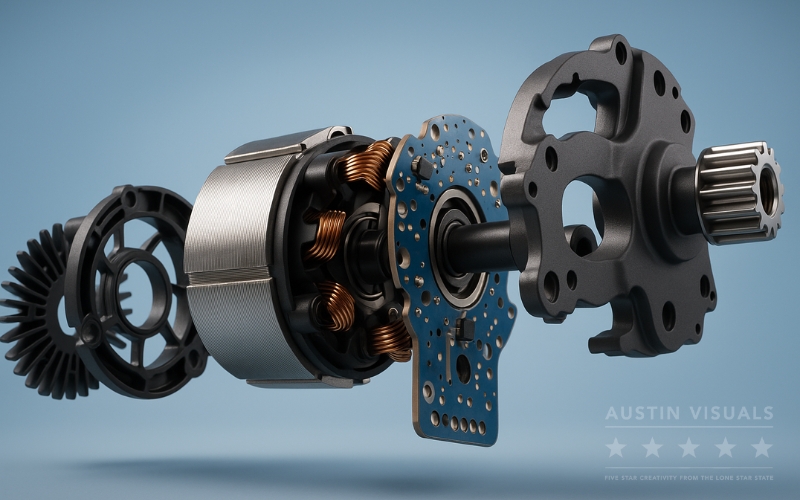
How Austin Visuals Combines AI + Human Teams
Since 2007, Austin Visuals has looked beyond traditional work setups. By 2026, the studio’s workflow will have evolved into a remote-first, AI-supported pipeline built to run fast and scale high. The current structure splits design, planning, production, and delivery across 29 remote experts—all using aligned collaboration tools from the start.
Using secure servers, project files stay protected and updates move quickly from draft to revision. AI tools handle repetitive technical tasks—motion tracking, frame syncing, model rigging—which means the human team spends that time refining the script, building key visuals, and tuning the final animation. This focus leads to higher artistic quality without lengthening the project schedule.
Compare this to older systems—where the same team might animate, handle client edits, and manage all project files manually—you’ll notice right away why businesses prefer the hybrid solution.
Our Clients include:

From Script to Screen: A Sample 2026 AI-Human Pipeline
Let’s say your business needs a 60-second explainer video in five weeks. With a combined pipeline, the steps run fast—and in parallel.
First, AI builds the first draft of your video script based on keywords, competitor data, and your product summary. Then a human copywriter cleans the tone, makes the messaging clear, and customizes for your brand voice.
Next, 3D modeling software creates draft characters and props using drawings or references. AI applies early textures, shading, and lighting, saving hours of manual work.
Animation begins with base motions built by automated rigs. Animators step in to adjust gestures, timing, and facial movements to match the message. Voiceover is synced with lip movements using voice recognition software to cut re-record time.
Post-production handles cleanup and FX overlays quickly with help from AI filters for correction and stylization. Every stage moves back through a secure file system, where clients review scene-by-scene and give timestamped notes right within the viewer.
This flow removes unnecessary wait time without replacing skilled craft—it simply keeps things moving faster and more accurately.
When to Upgrade to an AI + Human Studio for Your Brand
Here’s how to know it’s time to outsource your video production to a studio like Austin Visuals. If you’ve ever missed a product launch deadline waiting on content, that’s a clear sign. If your creative team often feels burned out by making six versions of the same ad, that’s another. If peers in the industry are producing higher-quality videos with more pieces per campaign, it’s time to rethink your workflow.
Building a full team in-house isn’t practical for most businesses. Equipment, software licensing, and hiring costs add up fast. Upgrading to a studio already using advanced tools means you instantly access premium animation, 3D rendering, motion graphics, and AI-powered editing—all without needing to build the system yourself.
Using Austin Visuals also means your budget stays simple. Whether you need one video or a full launch playbook, project packages are built to match your company’s size and goals.
Why Companies Trust Austin Visuals Since 2007
For over 15 years, Austin Visuals has worked with brands across dozens of industries. Companies like NASA, Discovery Channel, and John Deere trust our team not only for the technology but for creative leadership. We build every animation based on the goals of the client—not off templates or shortcut scripts.
Our system works across time zones and industries because it’s designed to adapt. Clients appreciate our clarity, our revision process, and our consistency. From medical visualization to startup product demos, everything we produce meets strict quality checks. Because our entire team is U.S.-based, communication is straightforward and meetings are always on your schedule.
And as your brand grows, you won’t need to switch providers. We can support long-term campaigns, one-off visual pieces, and full branding content—all from inside the same organized system.
Our Demo Reel 2025
FAQs About AI & Human Video Production
How secure is the AI-driven production process?
All project files are stored on encrypted servers with access limited to your assigned team members. Feedback software uses secure logins, and client content never passes through public platforms once in production.
Can I request changes during the process?
Yes. We offer staged reviews during scripting, animation, and final rendering. Our process includes viewer tools that let you comment directly on visuals, saving time and making feedback clearer.
Will AI take over creative decisions?
No. AI supports efficiency but does not decide branding, tone, or story arc. Our creative leads guide all decisions backed by market experience and ensure every project aligns with your company’s vision and message. The human team remains in control of storytelling, emotion, and strategy, while AI simply speeds up repetitive or technical steps.
How much faster is production with AI-assisted workflows?
On average, projects move 30–50% faster than traditional timelines. Automated systems handle rendering, syncing, and base animation setups, allowing human artists to focus on polishing visuals and enhancing creative details without bottlenecks.
Can AI improve quality as well as speed?
Yes. AI tools increase precision in lighting, color correction, and modeling accuracy while maintaining consistency across multiple videos. The result is cleaner, sharper visuals delivered in less time.
How does Austin Visuals ensure the right balance between automation and creativity?
Every project goes through human-led quality control. Our directors and animators oversee each AI-assisted stage to make sure tone, pacing, and emotion match your brand’s intent. You get the benefits of AI speed without losing the human touch that makes your message connect.
Conclusion
As 2026 approaches, the companies that will win are those embracing smarter, faster, and more adaptive production methods. AI + human video production pipelines aren’t just a glimpse of the future—they’re the new standard for efficient, high-quality visual storytelling. By blending automation with human creativity, brands can shorten timelines, cut costs, and elevate the impact of every video they release.
If your business is ready to modernize its content strategy and produce videos that perform at the pace of innovation, Austin Visuals is here to help. Our team combines advanced AI tools with expert human direction to deliver polished, on-brand results every time.
Let’s streamline your next campaign and bring your message to life. Contact us today at info@austinvisuals.com or call +1-512-591-8024 to start building your 2026-ready video production strategy.