
Understanding the Full Explainer Video Production Workflow
Creating an effective explainer video requires more than technical skill—it demands a structured production process that transforms complex ideas into clear, engaging visual narratives. Whether you’re introducing a new software platform, explaining a medical device, or simplifying an industrial process, understanding how professional animation studios approach production helps you set realistic expectations, allocate resources appropriately, and collaborate more effectively throughout the project.
At Austin Visuals, our animation and video production team in Austin, Texas has refined the explainer video production process through hundreds of projects across healthcare, technology, manufacturing, and corporate sectors. We’ve learned that transparency about workflow not only builds trust—it produces better outcomes. If you’re ready to discuss your project, reach us at 512-591-8024 or info@austinvisuals.com to start the conversation.
This guide walks through each phase of professional explainer video production, explaining what happens at every stage, why each step matters, and how to prepare your team for a smooth, successful project.

What Is an Explainer Video?
An explainer video is a short-form video—typically 60 to 90 seconds—that communicates what a company does, how a product works, or why a service matters. These videos distill complex information into digestible visual stories that audiences can understand quickly.
Explainer videos come in several formats:
- 2D animated explainers using motion graphics and illustration
- 3D animated videos showing products, processes, or technical systems
- Live-action videos with real people and environments
- Hybrid productions combining live footage with animated elements
- Whiteboard or screencast-style videos for educational content
The format you choose depends on your message, audience, budget, and brand identity. Software companies often prefer clean 2D animation that matches their digital interfaces. Medical device manufacturers may need anatomically accurate 3D animation. Industrial companies might require photorealistic renders of machinery.
Regardless of style, effective explainer videos share common qualities: they identify a problem, present a solution, explain how it works, and include a clear call to action. The production process ensures all these elements work together cohesively.
Why the Production Process Matters
A defined animation production process prevents costly mistakes, reduces revision cycles, and ensures everyone—from your marketing team to company executives—stays aligned throughout the project.
Without structure, video projects drift. Scope creeps beyond the original brief. Stakeholders request changes late in production when modifications are expensive and time-consuming. The final video misses the mark because foundational decisions about messaging and audience were never properly addressed.
Professional studios follow established workflows not because of rigid bureaucracy, but because experience has taught us where projects typically encounter problems. Each step in the explainer video workflow serves a specific purpose:
- Early stages establish strategic clarity before creative work begins
- Middle phases translate concepts into tangible visual assets with defined approval points
- Final stages polish the production and prepare deliverables for deployment
This structure protects both the client’s investment and the creative team’s ability to deliver quality work efficiently. When everyone understands what happens when, collaboration becomes smoother and outcomes improve measurably.
The Explainer Video Production Process: Step by Step
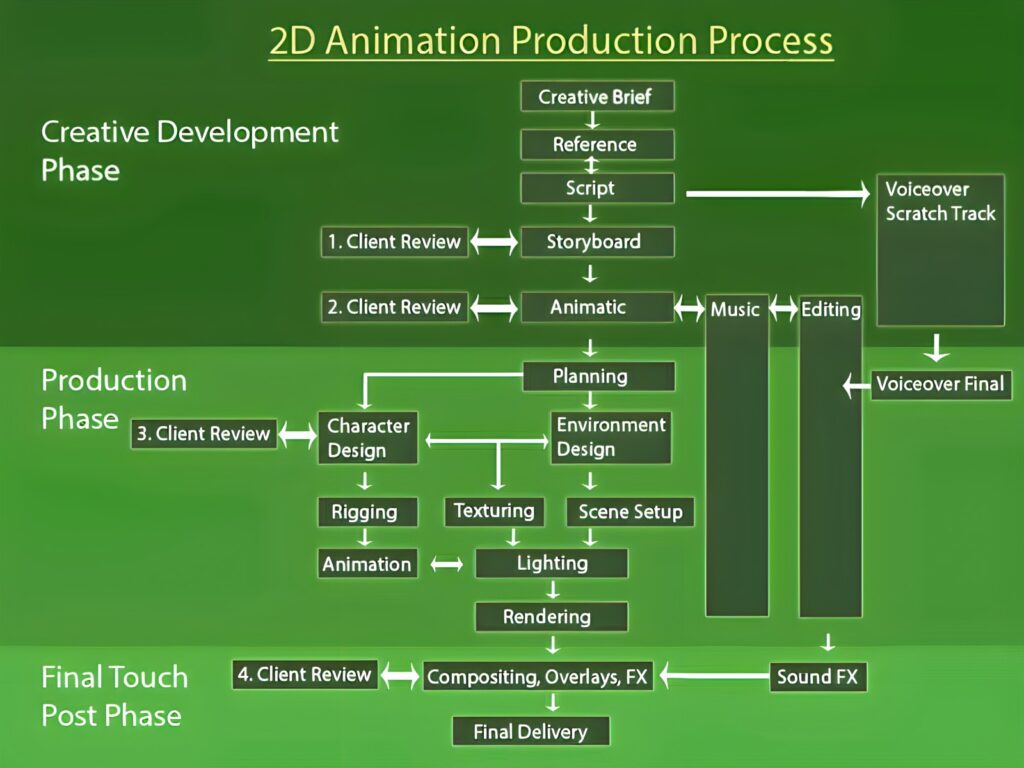
Professional explainer video production typically follows eight distinct phases. While timelines and specific techniques vary by project scope and style, these core stages apply whether you’re creating a simple 2D animation or a complex medical visualization.
Discovery and Strategy
Every successful explainer video starts with strategic questions, not creative concepts. During discovery, the production team learns about your business, product, audience, and objectives.
Key discovery activities include:
- Understanding your product or service in detail
- Identifying your target audience and their knowledge level
- Clarifying the primary message and secondary supporting points
- Determining where and how the video will be used
- Reviewing existing brand guidelines, marketing materials, and competitive videos
- Establishing success metrics—what does this video need to accomplish?
This phase typically involves a kickoff meeting or creative brief intake. The more information you provide upfront, the more aligned the final video will be with your business goals. Discovery prevents the common mistake of jumping straight to animation style without first clarifying what the video needs to communicate.
Strategic clarity at this stage saves weeks of potential revisions later.

Creative branding and product animation preproduction workspace with storyboards color palettes and marketing planning documents
Script Writing
The script is the foundation of your explainer video. Before any visual work begins, the narrative must be clear, concise, and structured for maximum impact.
Professional scriptwriting for explainer videos differs from other writing forms. Scripts must be:
- Written for the ear, not the eye—sentences should sound natural when spoken
- Precisely timed—typically 140-160 words per minute of video
- Structured around a clear problem-solution framework
- Free of jargon unless your audience expects technical language
- Focused on benefits and outcomes, not just features
At Austin Visuals, we collaborate with clients during scriptwriting, often going through two to three revision rounds. This ensures the script accurately represents your product while remaining accessible to your audience.
The script also serves as a planning document for the visual team. Understanding the power of original scripting in business videos means recognizing how writers indicate where specific visuals, transitions, or on-screen text should appear, creating a blueprint for subsequent production phases.
Approval of the script is a critical milestone. Once locked, the script guides all downstream creative decisions.
Storyboarding
Storyboarding translates the approved script into a visual sequence. Each scene is sketched out frame by frame, showing what viewers will see as the narration plays.
Storyboards serve several important functions:
- They help clients visualize the video before animation begins
- They identify pacing issues—scenes that move too quickly or linger too long
- They reveal gaps where additional visual explanation is needed
- They allow stakeholders to provide feedback when changes are still easy to implement
Professional storyboards don’t need to be artistic masterpieces. They’re working documents that communicate composition, movement, transitions, and key visual elements. Simple sketches with annotations are often sufficient, though some studios provide more polished boards depending on project requirements.
This phase is your last opportunity to make significant structural changes before the production team invests substantial time in animation. Review storyboards carefully with all key stakeholders, considering not just what looks good, but whether the visual sequence effectively supports your message.
The Explainer Video Production Process Buyers Should Expect
Style Frames and Visual Design
While storyboards show what happens, style frames establish how it looks. This phase defines the visual identity of your video—color palette, typography, character design, iconography, and overall aesthetic.
The production team creates several polished frames representing key moments in the video. These high-fidelity mockups demonstrate:
- Visual style—flat design, gradient-rich, illustrative, photorealistic, minimalist
- Color schemes aligned with your brand or chosen for specific emotional impact
- Character design if the video includes people or mascots
- Typography and how on-screen text will be integrated
- Lighting and depth if working in 3D
Style frames ensure visual alignment before animation production begins in earnest. This approval checkpoint prevents situations where clients see the first animated draft and realize the look doesn’t match their expectations.
For companies with established brand guidelines, style frames demonstrate how those standards translate into motion. For newer companies still developing their visual identity, this phase can help define brand aesthetics that extend beyond the video into other marketing materials.
Voice Over Recording
The voice over brings your script to life. Professional voice talent adds personality, pacing, and emotional resonance that text alone cannot convey.
Voice over selection involves several considerations:
- Vocal tone—authoritative, friendly, energetic, calm, technical
- Demographic fit—age, gender, accent, cultural background
- Delivery style—conversational versus presentational
- Language requirements if producing multiple versions
Production studios typically provide several voice samples for client selection. Once approved, the talent records the script in a professional studio environment with direction from the production team to ensure proper pacing, emphasis, and emotional delivery.
The completed voice over serves as the timing reference for animation. Animators work to the recorded audio, synchronizing visual transitions, character movements, and on-screen text to match the narration perfectly.
Some projects skip voice over entirely, relying instead on on-screen text and music. This approach works for social media content often viewed without sound, though it limits storytelling options compared to narrated videos.

Animation and Motion Graphics
This is where your explainer video truly comes to life. Using the approved storyboard, style frames, and voice over as guides, animators create the movement, transitions, and visual sequences that comprise the final video.
Animation complexity varies widely based on style:
- Simple 2D animation might involve basic movements, transitions, and kinetic typography
- Complex motion graphics combine multiple layers, intricate transitions, and detailed character animation
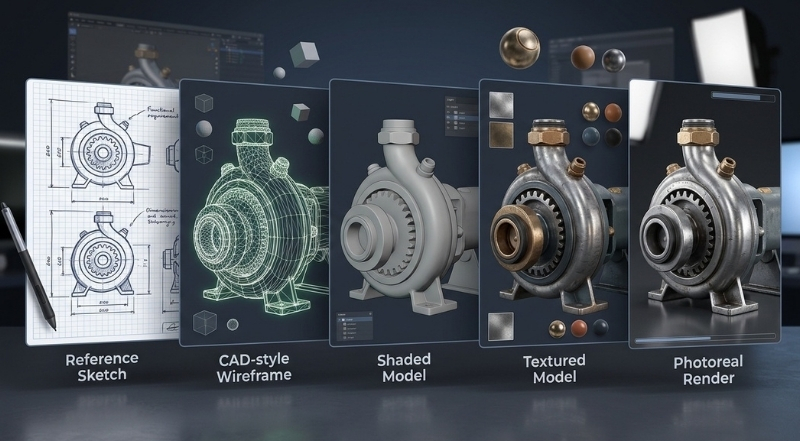
- 3D animation requires modeling, texturing, lighting, and rendering—a more time-intensive process
- Product animations often need photorealistic materials, accurate physics, and detailed environments
Professional animation isn’t just about making things move—it’s about using movement to direct attention, clarify relationships, demonstrate processes, and maintain viewer engagement. Experienced animators understand pacing, composition, and how visual hierarchy guides the eye through complex information.
This phase typically includes an initial animation draft for client review. Feedback at this stage should focus on timing, movement, and whether the animation effectively communicates key concepts. Minor adjustments are normal; major changes may indicate earlier approval stages were rushed.

Sound Design and Music
Audio completes the sensory experience of your explainer video. Sound design and music selection happen in parallel with animation, with final mixing occurring after animation is locked.
Professional audio includes several layers:
- Background music that sets emotional tone without overpowering narration
- Sound effects that emphasize transitions, actions, or key moments
- Audio mixing that balances voice, music, and effects at appropriate levels
Music selection significantly impacts how viewers perceive your message. Upbeat music creates energy and optimism. Ambient soundscapes suggest innovation and sophistication. Corporate music libraries offer thousands of licensed tracks, though custom composition provides unique audio branding.
Sound effects—whooshes, clicks, tones—might seem like small details, but they enhance professionalism and help transition between scenes or emphasize important visual moments. Subtle audio cues make videos feel more polished and intentional.
Review, Revisions, and Final Delivery
The final production phase involves client review of the complete video with all elements integrated. Most production agreements include a specific number of revision rounds—typically two or three—to refine the video before final delivery.
Effective feedback at this stage is:
- Specific—identify exact timestamps rather than general impressions
- Consolidated—gather input from all stakeholders before submitting feedback
- Focused on genuinely necessary changes versus personal preferences
- Mindful of what was previously approved in earlier phases
Once final revisions are complete, the production team renders the video in required formats and resolutions. Standard deliverables often include:
- High-resolution master file for future editing or reformatting
- Web-optimized versions for different platforms
- Social media cuts in platform-specific aspect ratios
- Versions with and without text if creating multilingual content
- Closed caption files for accessibility
Professional studios also provide usage guidance—recommended platforms, embedding instructions, and optimization tips to help you deploy the video effectively.
How Long Does the Process Take?
Timeline is one of the first questions clients ask about explainer video production. The honest answer: it depends on project complexity, revision rounds, and client responsiveness.
Typical timelines for a 60-90 second explainer video:
- Simple 2D animation: 4-6 weeks
- Standard motion graphics explainer: 6-8 weeks
- Complex 3D animation: 8-12 weeks
- Medical or technical visualization: 10-14 weeks
These estimates assume normal revision cycles and reasonably prompt client feedback. Projects can accelerate with rush production—though this typically involves additional costs—or extend if multiple stakeholder approval layers cause delays.
Breaking down a typical six-week timeline:
- Week 1: Discovery, strategy, and script development
- Week 2: Script revisions, storyboard creation
- Week 3: Style frame development, voice over recording
- Week 4-5: Animation production
- Week 6: Sound design, client review, revisions, final delivery
Client responsiveness significantly impacts timeline. Quick turnaround on approvals keeps projects moving forward. Delays in feedback can extend production by weeks, especially if the production team has scheduled subsequent projects.
For companies with firm deadlines—product launches, trade shows, board presentations—communicate these constraints during discovery. Professional studios can often accommodate fixed deadlines with advance planning.
What You Need to Prepare Before Production Starts
Clients who come prepared accelerate the production process and achieve better outcomes. Before kickoff, gather these materials and information:
- Clear project objectives—what should this video accomplish?
- Target audience description—who will watch this and what do they already know?
- Key messages—the three to five main points the video must communicate
- Brand guidelines—logos, color codes, fonts, visual style documentation
- Existing marketing materials—website copy, brochures, previous videos
- Product documentation—technical specifications, user guides, demo access if applicable
- Competitive examples—other explainer videos you admire or want to differentiate from
- Distribution plans—where will this video be used?
- Decision-maker identification—who needs to approve what, and when?
The more complete your preparation, the more focused and strategic the discovery conversation becomes. Rather than spending time on basic information gathering, the production team can dive into creative strategy and differentiation.
Also establish internal processes for providing feedback. Videos reviewed by committee often receive contradictory input that stalls progress. Designate a single point of contact who can consolidate stakeholder feedback into coherent, prioritized revision requests.
Common Mistakes Companies Make During Production
Even experienced marketing teams encounter predictable challenges during video production. Awareness of common pitfalls helps you avoid them.
Trying to communicate too much. Explainer videos work because they focus on one core message supported by a few key points. Clients often want to include every feature, benefit, and differentiator. This creates cluttered, unfocused videos that confuse rather than clarify. Discipline about what to include—and what to save for other content—produces stronger videos.
Skipping script approval. Some teams rush through script review, eager to see visual development. But animation built on an unclear or unapproved script leads to expensive revisions when stakeholders realize the narrative doesn’t work. Take time to get the script right. Everything else builds from this foundation.
Requesting major changes late in production. Deciding you want to target a different audience or emphasize different product features after animation begins causes significant rework. Professional studios accommodate reasonable revisions, but wholesale changes after storyboard approval indicate earlier phases were rushed.
Design by committee without coordination. When multiple stakeholders provide feedback independently, revision requests often conflict. One executive wants the pace faster while another wants more explanation. Successful projects designate a creative lead who synthesizes input and provides unified feedback.
Underestimating review time. Companies sometimes fail to account for internal approval processes in timeline planning. If your legal team needs to review claims, your executive team requires sign-off, and your subject matter experts must verify technical accuracy, build this time into the schedule.
Neglecting distribution planning. Production teams optimize videos differently for website heroes, social media, email campaigns, or trade show displays. Mentioning distribution plans during discovery ensures you receive properly formatted deliverables.
Our Demo Reel
Industries That Rely on Explainer Videos
While virtually any business can benefit from explainer videos, certain industries depend on them particularly heavily due to the complexity of their offerings.
Software and SaaS companies use explainer videos to demonstrate platform functionality, explain complex features, onboard new users, and differentiate in crowded markets. When your product lives entirely in the digital realm, animation helps potential customers visualize workflows and understand value before committing to trials.
Healthcare and medical device companies require explainer videos that translate clinical information for various audiences—from patients to physicians to investors. Medical animation demonstrates mechanisms of action, explains procedures, and visualizes internal body processes that would otherwise require imagination.
Manufacturing and industrial companies showcase equipment, explain processes, demonstrate safety protocols, and provide technical training through video. When products are large, dangerous, or complex, product animations allow detailed exploration without physical access.
Financial services firms simplify investment strategies, explain products, clarify processes, and build trust through video. Animation helps demystify topics many consumers find intimidating or confusing.
Biotechnology and pharmaceutical companies communicate research findings, explain drug development processes, visualize molecular interactions, and present clinical data through animation that makes complex science accessible.
Technology startups often operate in emerging categories where potential customers lack reference points for what the product does. Learning why your business needs a product explainer video helps establish category context while positioning the specific solution.
Professional services firms—consulting, legal, accounting—use explainer videos to clarify their approach, differentiate their methodology, and make intangible services more concrete.
Why Work with Austin Visuals for Your Explainer Video?

Austin Visuals brings specialized capabilities that serve companies with complex communication challenges. Our team combines animation expertise with business communication understanding—we’re not just animators, we’re translators who convert technical complexity into clear visual narratives.
Our production capabilities span formats and styles. We produce 2D animation for clean, contemporary explainers that work across digital platforms. Our 3D animation serves clients who need photorealistic product visualization, architectural walkthroughs, or technical demonstrations requiring dimensional accuracy. For SaaS explainer projects, we understand software interfaces, user experience design, and how to visualize digital workflows effectively.
Product animation showcases physical or digital products with attention to detail that highlights design, functionality, and benefits. Corporate video production supports internal communications, training, and investor relations with professional polish that reflects well on your organization.
We’ve also integrated AI-enhanced production techniques that improve efficiency without sacrificing creative quality. This allows us to deliver professional animation at competitive pricing while maintaining the craftsmanship that separates effective explainer videos from generic content.
Based in Austin, Texas, we serve clients nationally and internationally, with particular strength in technology, healthcare, and industrial sectors that require both creative and technical precision. When you’re considering choosing the right animation studio for your business, our process emphasizes collaboration—your team’s subject matter expertise combined with our visual storytelling capability produces videos that are both accurate and engaging.
What differentiates our approach is focus on business outcomes, not just attractive animation. We ask about your audience, your competitive landscape, and your objectives because explainer videos that drive conversions serve strategic purposes. Pretty animation that fails to communicate clearly or motivate action represents wasted investment.
Our Clients include:

Frequently Asked Questions
How much does an explainer video cost?
Professional explainer video production typically ranges from $5,000 to $25,000 depending on length, animation complexity, and production requirements. Simple 2D videos cost less than photorealistic 3D animation. Sixty-second videos cost less than longer formats. Videos requiring extensive research, technical accuracy, or custom illustration command higher investment. Most studios provide detailed quotes after understanding project scope during discovery.
Can we provide our own script?
Yes, though professional studios typically recommend at least reviewing client-written scripts before production begins. Scripts written by subject matter experts often contain excellent information but may need adaptation for spoken delivery, pacing, or visual translation. Many studios offer script review and optimization as a standalone service if you prefer to maintain creative control over messaging while benefiting from production expertise.
What if we need revisions after final delivery?
Most production agreements include defined revision rounds before final delivery. Changes requested after project completion typically incur additional fees since the production team has moved to other projects. However, studios can usually accommodate post-delivery changes—updating statistics, revising product names, or making minor edits—with reasonable turnaround if scheduled appropriately. Discuss post-delivery revision policies during contract negotiation.
Should we choose 2D or 3D animation?
The choice depends on what you’re communicating and your brand identity. Choose 2D animation for conceptual explanations, service descriptions, software interfaces, or when you want contemporary, illustration-based style. Choose 3D animation when showing physical products, demonstrating spatial relationships, requiring photorealism, or visualizing architecture, medical devices, or industrial equipment. Many effective explainers combine both—2D for concepts and 3D for product shots.
How do we measure explainer video success?
Measurement depends on distribution channel and objectives. Website videos can be tracked through engagement metrics—view duration, completion rate, conversion impact on pages where deployed. Social media videos generate impressions, shares, and engagement data. Sales team videos might be measured through deal velocity or reduction in explanation time. Email videos impact click-through and conversion rates. Define success metrics during discovery so the video and its deployment strategy align with measurement goals.
Start Your Explainer Video Project Today
Understanding the explainer video production process helps you approach video projects with realistic expectations and appropriate preparation. Whether you’re introducing a new product, explaining complex technology, or clarifying your company’s value proposition, professional animation transforms complicated ideas into compelling visual stories that audiences understand and remember.
Austin Visuals has guided hundreds of companies through this production process, from initial strategy through final delivery and deployment. Our team brings both creative capability and business understanding to every project, ensuring your video serves strategic objectives while meeting the highest production standards.
If you’re ready to explore how an explainer video might serve your business, we’d welcome the conversation. Reach our team at 512-591-8024 or email info@austinvisuals.com to discuss your project, timeline, and objectives. We’ll walk through your specific needs and outline how our animation production process steps would apply to your situation.
Great explainer videos start with clear communication between client and production partner. Let’s start that conversation today.