
Introduction
In technical fields like aerospace, medical devices, and complex manufacturing, conveying ideas clearly is more than a communication preference — it’s often critical to performance, timelines, and safety. When high stakes and detailed systems meet, there’s little room for visual guessing games. Accurate, precision-driven 3D animation transforms abstract, complex information into visuals people can quickly understand and act on. Today, businesses in technical industries are realizing that animation isn’t just for marketing — it’s a key tool for reducing cost, speeding up decisions, and improving user engagement.
If your company designs cutting-edge products, provides technical services, or operates in regulated sectors, then visually clear, scientifically accurate animation may be one of the smartest investments you can make. At Austin Visuals, we help clients visualize truth with precision and effectiveness. Ready to see what precise 3D animation can do for your team? Call us at +1-512-591-8024 or email info@austinvisuals.com to schedule a consultation.
Why Precision Matters: The Stakes for Technical Industries
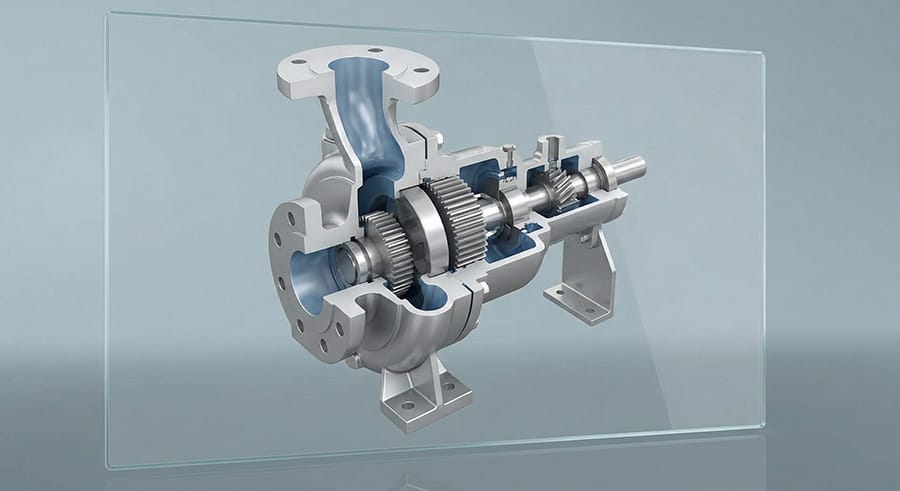
In technical fields like aerospace, medical devices, and complex manufacturing, conveying ideas clearly is more than a communication preference — it’s often critical to performance, timelines, and safety. When high stakes and detailed systems meet, there’s little room for visual guessing games. Accurate, precision-driven 3D animation transforms abstract, complex information into visuals people can quickly understand and act on. Today, businesses in technical industries are realizing that animation isn’t just for marketing — it’s a key tool for reducing cost, speeding up decisions, and improving user engagement.
If your company designs cutting-edge products, provides technical services, or operates in regulated sectors, then visually clear, scientifically accurate animation may be one of the smartest investments you can make. At Austin Visuals, we help clients visualize truth with precision and effectiveness. Ready to see what precise 3D animation can do for your team? Call us at +1-512-591-8024 or email info@austinvisuals.com to schedule a consultation.
Why Precision Matters: The Stakes for Technical Industries
In technical environments, a small visual error can have real consequences. Miscommunication leads to production delays, safety hazards, and design reworks that increase costs unnecessarily. While hand-drawn sketches or low-detail 3D may be fine for concept art, technical industries often require accuracy down to the millimeter. Consider an orthopedic implant animation that doesn’t match the surgical application — a small deviation could confuse surgeons in training or lead to pushback from approval teams.
In aerospace, energy, and defense sectors, any ambiguity in understanding how parts move, function, or interact can cost market trust or delay regulatory approvals. For example, a client using generic CAD walk-throughs for investor relations might get passed over simply because the visuals failed to explain value clearly enough. The high fidelity and accuracy of proper 3D animation makes the complex easy to grasp, which protects both time and capital.
Companies in oil and gas, power generation, and infrastructure have seen firsthand how incorrect or rough visuals fail to meet contractor and team expectations. That’s why tech-driven industries can’t settle for generalized animation styles. They need visual content that mirrors the functionality and physics of what they’re actually building.

What Exactly Is High-Accuracy 3D Animation?
High-accuracy 3D animation goes beyond looking good — it’s about ensuring what’s on-screen reflects how real equipment, systems, and processes behave. Scale accuracy, realistic motion, technical compliance, and geometry precision all play a part. A medically accurate animation for a spinal implant requires anatomical detail, correct materials, and device mechanics that replicate the real product in both appearance and function.
While traditional animation might focus on making a scene visually appealing, technical animation needs to inform as much as impress. Whether it’s fluid dynamics for a mechanical valve or digital twin models of a robotic arm, high-accuracy animation allows teams to simulate outcomes before they build.
Sectors that rely on this kind of visual fidelity include robotics, biomechanics, chemical engineering, transportation manufacturing, and architectural engineering. In many of these, static renders or low-detail 3D mockups fall short during client demos, proposals, or technical training — making accurate animation a far better use of resources in both pre- and post-production settings.
The ROI Equation: How Quality Animation Drives Results
When done correctly, quality animation becomes more than an expense — it becomes an asset that delivers value across different departments. Companies that invest in high-accuracy 3D animation reduce their need for repeated prototyping, avoid missteps in development, and strengthen training materials across locations. These savings may not be attached to just one project — reusable animated assets can reduce cost across product lines and verticals.
For internal communication, animation helps leadership understand complex problems much faster. For client sales, it offers crystal-clear messaging that boosts confidence in what they’re buying. When explaining upcoming builds, medical procedures, or new software architectures, animation helps speed up decision-making. For investor relations, well-made visuals can increase perceived innovation by showing — not just telling — how systems work.
More companies today are tracking how visuals affect user behavior. Metrics like time-on-site, training effectiveness, knowledge retention, and proposal-to-closing speed get a direct boost when animation reduces misunderstandings. Product validation, onboarding documentation, and compliance visuals can all benefit directly from this investment. When you factor these into budgeting, the return on your animation budget ends up far outweighing its cost.

Common Challenges Companies Face When Creating Technical Animations
Many companies discover that reaching out to a general-purpose animation studio leaves them disappointed. Often, a disconnect exists between the way technicians explain items and the way creatives interpret that information. Engineering teams may give CAD models and datasets, but unless the animators deeply understand technical processes, results can lack realism and credibility.
This leads to longer back-and-forth cycles, missed deadlines, and needless corrections. Some agencies don’t have the quality control to check animations for technical accuracy, leading to work that may appear correct visually but contain foundational flaws.
Another common issue is lack of access to experts in regulation-heavy industries. Projects involving medical devices or regulated manufacturing require compliance knowledge, especially when materials must pass audits or public viewing during FDA reviews or stakeholder meetings.
Why Austin Visuals Delivers Serious ROI
At Austin Visuals, we combine visual storytelling with deep technical understanding. With two decades of experience working with brands such as NASA, LDR Spine, John Deere, and the U.S. Army, we’ve built a team that understands technical expectations and visual clarity. Whether it’s simulating robotics, demonstrating software, or creating surgical animations, we manage every step from concept to final polish with accuracy in mind.
Our distributed model allows us to deliver faster, lower-cost animation while not compromising on quality. We keep production agile, feedback loops clear, and use dedicated technical leads who speak both engineering and creative languages. That minimizes revision time and keeps your internal team focused on what they do best.
We’ve helped clients cut down training costs by turning long lecture-based sessions into animated tutorials. We’ve given startups a polished visual pitch that secured funding rounds by making innovation feel accessible. ROI often shows up within weeks of delivery, as high-detail visuals accelerate acceptances and decrease communication breakdowns with clients and regulators.

How to Measure the ROI of 3D Animation for Your Company
The easiest starting point is to look at where your company currently uses visuals — and which of those tools aren’t working. Sales teams may be relying on static slides when moving, immersive 3D would explain more in moments. Training departments may still be relying on PDFs and classroom settings, where visual modules help decrease time spent teaching.
Animation can serve several departments simultaneously. One well-made visual asset can be used in sales meetings, onboarding videos, tradeshow booths, internal documentation platforms, or investor presentations. It becomes a multi-use element rather than a one-time cost.
To measure your return, consider tracking time-to-approval, budget savings from shorter production feedback loops, and drop-off rates in training modules. Keep in mind that audience understanding, memory retention, and brand professionalism also improve when you present concepts visually with technical accuracy.
Getting Started with Austin Visuals: What You Can Expect
Working with our team means you won’t have to convert your technical drawings or datasets into layman’s terms. We’ll handle the translation. From your first consultation, we’ll assign a project lead to explore your objectives, regulatory requirements, and any source material like CAD models or design specs.
After creating a storyboard and draft script to show flow and structure, we move into modeling, animation, rendering, and final delivery. You get multiple touchpoints throughout, keeping your review process smooth and edits minimal.
Beyond animation, we also support clients with presentation prep, tradeshow displays, social media cut-downs, and email marketing tools. We make it easy to maximize the use of your animation across platforms — extending the value of every second of footage.
To learn more or see relevant samples, just reach out to our team. We’ll walk you through examples, projected timelines, and what kind of result you can expect based on your product’s complexity and industry standards.
Want a detailed proposal tailored to your animation goals? Reach out via email at info@austinvisuals.com or give us a call at +1-512-591-8024 today.
FAQs
How much does a technical 3D animation typically cost?
Prices vary based on length, complexity, and data provided. Most projects we handle fall between $5,000 and $35,000. We provide quotes once we understand your needs, timelines, audience, and goals.
Can you use our CAD files for the animation?
Absolutely. We routinely work with CAD, STL, OBJ, FBX and other technical file formats. We optimize the geometry and ensure it’s visually clean and performance-ready for animation rendering.
How long does a project usually take?
Standard technical animations take 3 to 6 weeks. Highly detailed or multi-scene projects could take up to 8 to 10 weeks. We provide schedules up-front and work with your deadlines in mind.
What industries do you specialize in?
We work across aerospace, medical devices, oil and gas, energy, manufacturing, robotics, infrastructure, and government sectors—anywhere accuracy matters.
Can animations be used beyond marketing?
Absolutely. Our animations are frequently used for training, safety, compliance, onboarding, investor presentations, and internal documentation.