

Virtual reality medical training during COVID-19 was explored as one way to continue parts of education when travel and in-person sessions were disrupted. This article discusses that 2021 context and the lessons it offers for training design. It is not a statement of current distancing rules. Austin Visuals creates medical animation and visual communication assets that can support an approved educational program.
Historical context: Originally published in September 2021. Pandemic-related conditions in this article refer to that period.
To discuss a visual communication project, contact Austin Visuals with your audience, approved source material and intended use.
Virtual reality medical training during COVID-19: the pandemic context of this article
The original article was published in September 2021, when COVID-19 affected the logistics of many educational activities. Its references to reduced room capacity and distancing belong to that period. They should not be treated as current instructions for hospitals or training providers.
On May 5, 2023, WHO determined that COVID-19 no longer constituted a Public Health Emergency of International Concern. WHO also described it as an ongoing health issue. Ending that emergency designation did not mean that COVID-19 had disappeared. Read WHO’s dated statement.
Updated October 14, 2026.
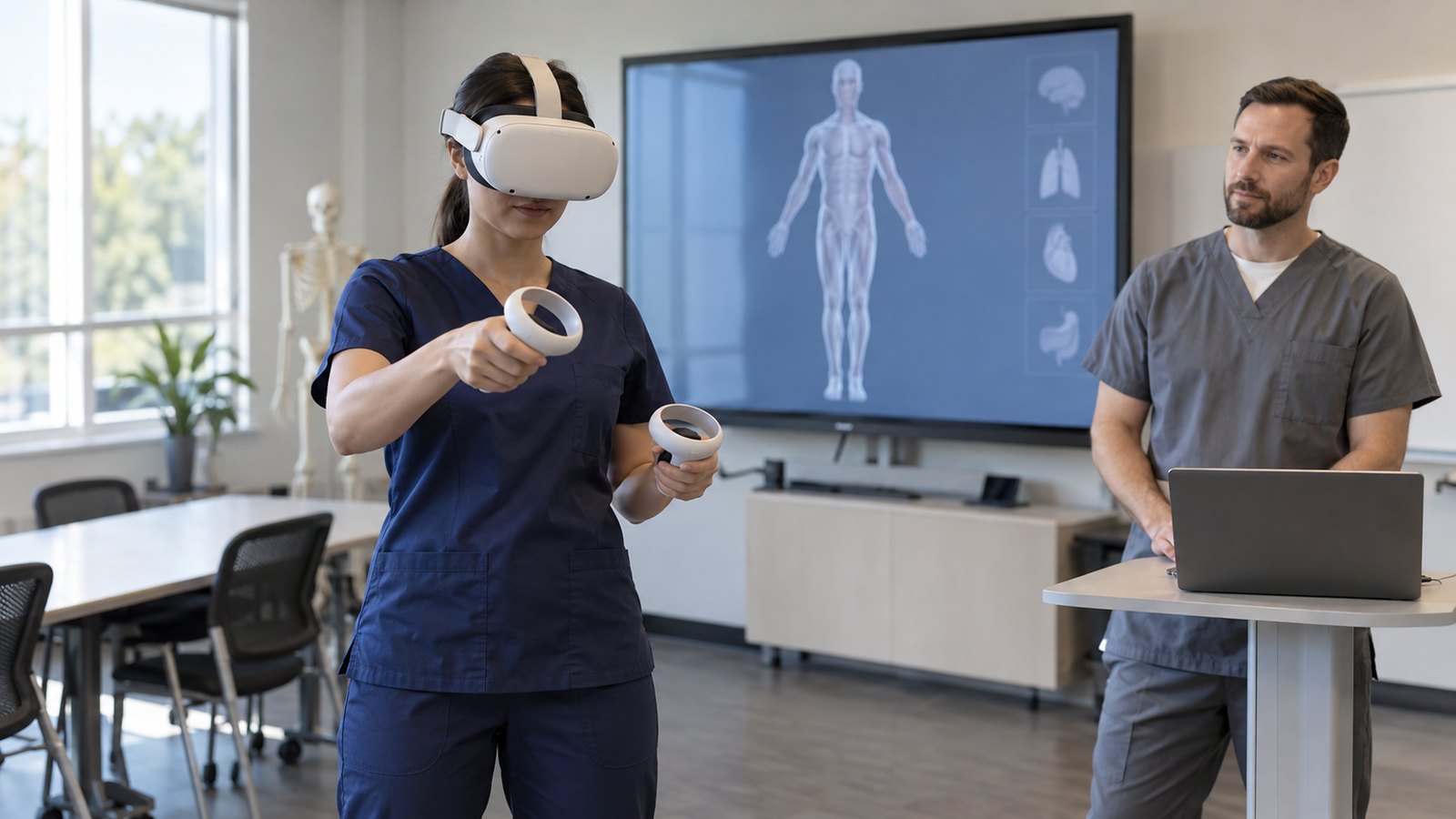
What remote simulation could support
A remote visual session could let an instructor explain a device, discuss anatomy, or guide learners through a scenario. Recorded animations could also support preparation before a live discussion. These functions could reduce some travel needs, but they did not remove every obstacle to training.
Programs still needed compatible equipment, reliable connectivity, accessible materials and instructor availability. Learners could require a desktop alternative, captions, or a separate hands-on session. A participant watching a demonstration should not automatically be counted as competent to perform a procedure.
Which learning claims need evidence?
Claims about fewer errors, faster surgery or improved patient care need evidence that matches the course and task. A 2002 randomized surgical training study found improvements in a specific assessed dissection task among residents. It does not validate every pandemic-era VR program. Read the procedure-specific study.
A 2019 review also distinguished education outcomes from patient outcomes. These distinctions remain useful when selecting a training format today. Read the review of VR health professions education.
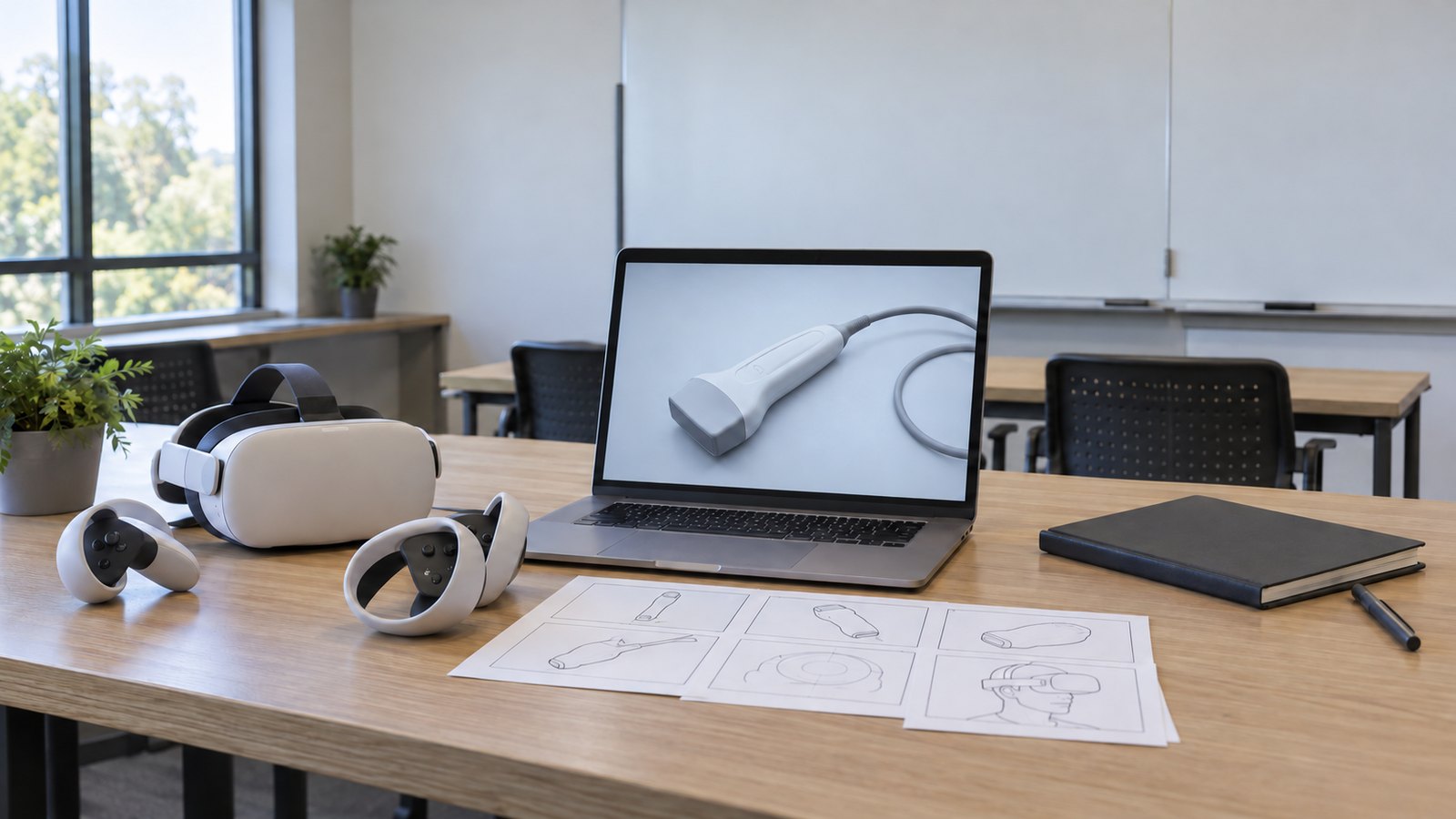
Lessons for a blended training program
- Use a recorded or interactive explanation to introduce the equipment and vocabulary.
- Schedule a facilitated session in which learners can ask questions and explain their decisions.
- Reserve appropriate supervised practice for tasks that require physical handling or patient contact.
- Assess the intended skill using criteria approved by the education team.
- Keep the scenario current as procedures, device versions and institutional policies change.
This is a planning example, not a report of an Austin Visuals clinical training deployment. A qualified education team should determine the mix of remote instruction, simulation and supervised practice.
How to present an animation in a training session
Explain the purpose of a clip before showing it. Identify which anatomy and movements are simplified and which details have been reviewed. Pause at decision points and invite discussion, instead of treating the video as a substitute for an instructor.
When material includes patient-derived information, the organization should approve what can be shared and how it is handled. Avoid showing identifiable records in a public webinar or marketing version. An animation asset can be adapted for different audiences, but each version needs its own content review.
What a historical account should preserve
A historical technology article should preserve the date and the problem people were addressing. In this case, the relevant problem was continuing parts of medical education while the pandemic disrupted ordinary logistics. That context explains why remote delivery attracted attention without presenting the restrictions as current policy.
Separate the original circumstances from lessons that remain useful. Equipment access, instructor support, accessibility and content approval are ongoing training-design questions. Statements about room limits or distancing should stay tied to the historical period and the relevant institution.
When reusing the article in a current presentation, explain its date before citing it. A 2021 discussion can be useful background, but it is not a current clinical policy source. Organizations should consult their responsible teams for present training arrangements rather than infer them from a legacy blog URL.
Illustrative remote-session plan
A hypothetical educator could divide an equipment-orientation lesson into a preparation video, a facilitated discussion and a later supervised practice session. The preparation asset would introduce the vocabulary and the components that learners will encounter. It would make no claim that viewing the clip qualifies a participant to use the device clinically.
During the facilitated session, the instructor could pause the explanation, ask learners to describe the sequence and collect questions. A desktop version and a transcript would help participants who cannot access the immersive version. The education team would choose the assessment and identify the practical activities that must occur in person.
After the session, the team would record misunderstood points and technical problems so the next version can be improved. This is an illustrative design for discussion. It is not a report of a course operated by Austin Visuals during COVID-19 or evidence that a remote session improved patient outcomes.
Document what a remote course does and does not cover
Give learners a clear description of the module’s scope. Identify whether it is orientation, conceptual education or an assessed part of a larger course. Explain how it connects to supervised instruction and which requirements remain outside the module.
Retain the version of the script, source documents and approval record used for each cohort. If equipment or institutional procedures change, an older recording may need revision. A course owner should check the video, onscreen labels and accompanying handouts together.
For evaluation, distinguish the ability to access remote instruction from learning success. Participation, comprehension and procedural competence require different measures. A program that solved a scheduling problem in 2021 may still need stronger evidence before making a claim about clinical performance today. Accurate historical reporting should preserve that distinction.
A recording from the original pandemic period may mention arrangements that no longer apply. When repurposing it, check introductions, captions and downloadable materials for those references. Keep a historical version clearly dated, or approve a revised version for a current course. Do not silently replace the date while leaving period-specific instructions in place. The course owner should document which version learners received and why it was suitable for that session. This provides a practical link between the historical discussion and current educational use without treating the older article as a source of present institutional policy.
Published medical animation examples from Austin Visuals
These published medical animation samples illustrate ways to explain anatomy and products visually. Their portfolio entries do not establish outcomes for a VR training program.
Plastic surgery animation
The published plastic-surgery animation shows a related medical visualization format. Use the sample to discuss presentation detail and audience needs; it does not establish fewer complications or predict an individual surgical result. View the published plastic surgery animation work sample.
Ultrasound-device explainer animation
Austin Visuals publishes an ultrasound-device explainer in its portfolio. It provides a relevant product-communication example. The entry is not used here to claim a validated training result, device effectiveness or increased sales. View the published ultrasound-device explainer animation work sample.
Adapting training visuals with Austin Visuals
Austin Visuals can produce medical animation assets for an approved preparation lesson or instructor-led explanation. A healthcare team adapting material from the pandemic period should first identify which references and instructions remain suitable for its current course.
Supply the intended learners, the reviewed script and the delivery conditions. Discuss a desktop or captioned version if the audience needs an alternative to immersive content. Keep the historical recording and current course assets clearly versioned. The education team should approve clinical details and determine how the visuals connect to discussion, assessment and supervised practice; the production brief should record those decisions before scenes are finalized.
Conclusion
Virtual reality medical training during COVID-19 belongs to the article's 2021 context. Its continuing lesson is to combine accessible visual preparation, instructor discussion and appropriate supervised practice.
Austin Visuals can help turn your approved material into a clear visual explanation. Email info@austinvisuals.com or call (512) 591-8024 to discuss your audience and production requirements.
Frequently asked questions
Is this article describing current COVID-19 rules?
No. It is a historical discussion of the 2021 training context, updated to clarify that scope.
Did WHO declare that COVID-19 no longer existed?
No. WHO ended the international emergency designation in May 2023 while describing COVID-19 as an ongoing health issue.
Can remote VR replace all hands-on medical training?
No. The education team must decide which skills need supervised physical practice and assessment.
Does a remote demonstration qualify a clinician to use a device?
A demonstration alone does not establish competency. Device-specific training and the institution's requirements still apply.
Can existing animation be reused in a course?
It may be reused when its content, rights and delivery format fit the course. Review it for the specific learners and current references.
How should a training module be evaluated?
Assess the defined learning objective and usability, and distinguish those results from patient outcomes.