
VR for medical device sales representatives can provide an interactive way to explain product components and demonstrate a proposed workflow. It should use the manufacturer’s approved information and stay within the demonstration’s purpose. It does not authorize clinical use, establish surgeon competency or guarantee faster sales. Austin Visuals produces medical-device animation and visual communication assets for such explanations.
To discuss a visual communication project, contact Austin Visuals with your audience, approved source material and intended use.
VR for medical device sales representatives: what problems can a product demonstration address?
A portable visualization can show an internal component, a spatial relationship or a sequence that is difficult to see in a physical sample. A representative can pause the explanation and answer product questions. Those are practical communication uses.
A headset may not be necessary. A tablet-based model or an ordinary animation can be easier to share with a purchasing team after a meeting. Choose the format by the audience’s needs, access and meeting environment, rather than assuming immersive hardware is always better.
Updated October 14, 2026.
Keep the demonstration aligned with product documentation
Use the correct device version and approved description. The visual should distinguish established functions from proposed future features. Any comparison or performance statement needs evidence that supports the exact claim.
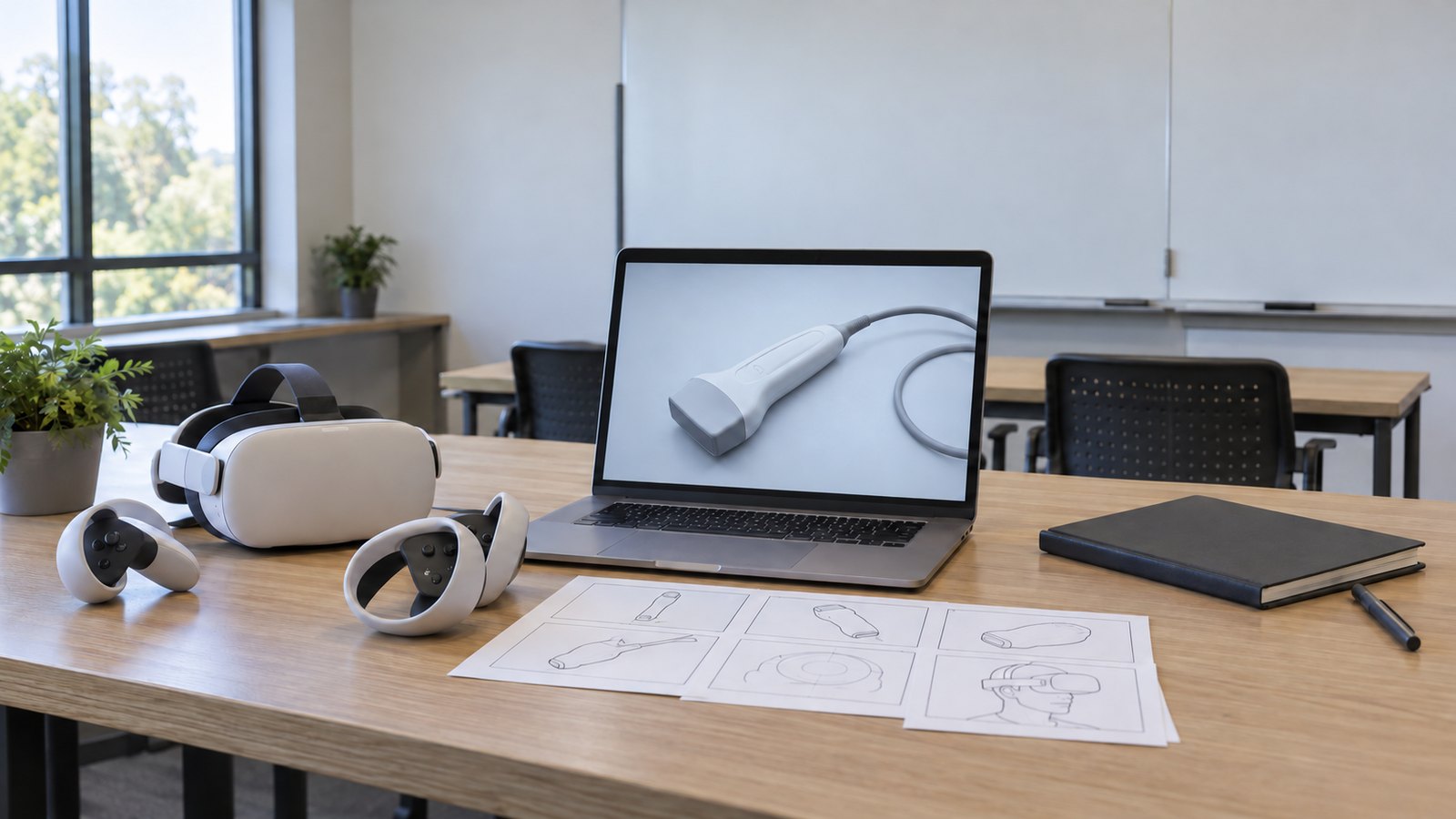
A useful review package includes CAD files or product drawings, the relevant instructions and a list of approved messages. Ask the manufacturer’s clinical and regulatory reviewers to approve both the narration and the onscreen sequence. A device moving realistically in an animation does not establish safety or effectiveness.
Separate sales explanation from clinical use
A sales demonstration can explain how a device is intended to function. Training a clinician to perform a procedure and using software during an operation are separate activities with different requirements. A general VR demo should not be repurposed as operative guidance.
The FDA discusses AR/VR medical devices and the risks associated with their hardware and displayed content. A proposed clinical application should be evaluated for its specific intended use. Read the FDA AR/VR medical-device overview.
Plan the meeting and a fallback version
- Ask which audience will attend and what product question they need answered.
- Show a short overview before opening a detailed interactive view.
- Let the representative pause, rotate or select a component when that interaction helps the explanation.
- Prepare a conventional video or desktop version for viewers who prefer not to use a headset.
- Provide an approved follow-up resource and record questions that need the manufacturer’s response.
Test setup, connectivity and handling before the meeting. Allow for cleaning and headset comfort according to the applicable equipment instructions and organizational policies.
How to measure commercial usefulness
Measure whether viewers understood the intended function and whether the meeting produced a qualified next step. Useful observations include repeated product questions, demonstration completion, follow-up requests and the time needed for a particular explanation.
To investigate a sales effect, compare suitable meetings or campaigns using a defined method and time window. Lead quality, price, purchasing processes and representative experience can influence the result. More demonstrations or a shorter viewing time should not automatically be reported as faster sales.
Build a demonstration the representative can control
A representative needs to respond to questions, not only play a fixed sequence. Decide which parts of the presentation can be paused, replayed or selected. A component selector may be useful when different visitors ask about different features; a short video may be sufficient for a consistent overview.
Keep the controls simple and the approved information easy to find. Avoid adding interactions solely because the software supports them. Each interaction should help the representative explain the product question without introducing unsupported clinical interpretation.
Agree on the follow-up asset before development. A buyer who wants to share the explanation with colleagues may need an ordinary video or accessible web page. The headset version can serve the meeting while a separate reviewed version supports distribution. Both should use the same approved product information.
Illustrative demonstration plan for a device team
A hypothetical manufacturer could brief a studio to explain an ultrasound probe’s visible components and approved functions. The source package would identify the product version, the labels that must be used and the topics the representative should refer to a clinical or product specialist.
The storyboard could begin with an exterior view, then show selected components when that helps the explanation. It would avoid fabricated diagnostic images or an implied patient result. A reviewed script would guide the representative’s introduction and provide a consistent answer to the main product question.
The team could test whether intended viewers can identify the components afterward and whether they request a relevant follow-up. Those observations would describe the demonstration’s communication performance. They would not prove that the device improves care or that VR increases sales. This is an illustrative planning scenario, not a reported Austin Visuals campaign.
Control versions and record useful feedback
Assign an owner to the approved demonstration files. Keep a version record that includes the product model, script and review date. When product information changes, review the corresponding visuals and all distributed versions instead of updating only the main presentation.
Collect questions that representatives encounter repeatedly. A recurring misunderstanding may indicate that the explanation needs revision, while a detailed clinical question may need a qualified specialist’s response. The feedback process should make that difference clear.
For commercial evaluation, agree on what counts as a qualified next step and who records it. A meeting request, purchasing discussion and completed sale are different events. Reporting them separately helps the team understand the demonstration’s role without claiming credit for outcomes that also depend on pricing, product fit and the wider sales process.
Prepare a short briefing for representatives who will use the finished asset. It should identify the approved product message, the current file version and the questions that need a specialist response. A demonstration can become misleading if the presenter adds unsupported claims even when the video itself is accurate. Review the meeting script and follow-up copy alongside the visuals. During the pilot, record where viewers need clarification and where representatives have difficulty finding the correct component view. Use that information to refine the presentation controls or explanation. The feedback should remain a record of usability and communication, not be relabeled as evidence of clinical training or a sales increase. That distinction makes the asset easier to maintain and evaluate honestly.
Published medical animation examples from Austin Visuals
These published medical animation samples illustrate ways to explain anatomy and products visually. Their portfolio entries do not establish outcomes for a VR training program.
Ultrasound-device explainer animation
Austin Visuals publishes an ultrasound-device explainer in its portfolio. It provides a relevant product-communication example. The entry is not used here to claim a validated training result, device effectiveness or increased sales. View the published ultrasound-device explainer animation work sample.
Angioplasty device animation
Austin Visuals publishes an angioplasty-device animation in its portfolio. It is a relevant example of presenting a medical-device topic visually. The portfolio entry does not provide a clinical outcome study or measured sales results. View the published angioplasty device animation work sample.
Medical-device sales visuals from Austin Visuals
Austin Visuals creates medical-device animation for product explanations. A sales brief should identify the approved function the representative needs to discuss and the component views that will help answer likely buyer questions.
Provide the product version, drawings or CAD files, approved labels and the review owners. Discuss a presenter-controlled explanation and an accessible follow-up video if both are useful. The manufacturer should approve product and clinical messages before release. Agree on source-file delivery, distribution rights and the process for revising the visual when product information changes. Commercial evaluation should use the meeting and follow-up measures defined by the sales team.
Conclusion
VR for medical device sales representatives should make an approved product explanation easier to inspect and discuss. Prepare a practical fallback video, control the product version and measure qualified follow-up using the sales team's agreed criteria.
Austin Visuals can help turn your approved material into a clear visual explanation. Email info@austinvisuals.com or call (512) 591-8024 to discuss your audience and production requirements.
Frequently asked questions
Can a representative use a VR demo during surgery?
A marketing demo should not be treated as operative guidance. Clinical use needs a system and workflow suitable for that purpose.
Will VR shorten every demonstration?
No. Setup, user comfort, the product and the questions asked affect meeting time. Measure the specific demonstration.
Does VR guarantee more sales?
No. Sales outcomes require actual commercial data and depend on many factors beyond the presentation format.
Do we need a headset to show internal components?
No. A conventional animation or interactive desktop model may communicate those components effectively for the intended meeting.
Who should approve device claims?
The manufacturer's appropriate clinical, product and regulatory reviewers should approve claims and device behavior before release.
What materials help production start?
Provide the device version, approved messages, product files, audience and distribution plan, along with the reviewers responsible for approval.