
AI video ads are advertisements made with AI-assisted imagery, video, or production tools, then shaped through scripting, editing, sound, and brand review. For a business, the useful question is whether that approach can communicate a specific offer clearly while keeping the product accurate.
A generated clip is only one ingredient in an advertisement. The finished asset needs an audience, a reason to pay attention, a credible message, and a next step. This guide explains how to plan those decisions, control production, and judge the result without assuming that an impressive visual automatically produces a sale.
Bring your product references, intended channels, and launch date to Austin Visuals at (512) 591-8024 or info@austinvisuals.com for a scope discussion before choosing a production method.
When AI Video Ads Fit a Brand Campaign
AI-assisted production is worth considering when a campaign needs original visual concepts, atmospheric settings, or a planned set of creative variations. It can support product introductions, service awareness, seasonal promotions, and short campaign stories. The opportunity depends on the actual shots, not simply the duration of the finished commercial.
Separate the parts of the image that can vary from the parts that must remain exact. A background may allow creative interpretation. A product’s controls, packaging, screen interface, or operating sequence may not. That distinction helps determine which shots can use generated material and which need photography, a controlled 3D model, or motion graphics.
For example, a fictional bottle launch could use a generated outdoor environment while preserving a photographed or rendered bottle. The ad can suggest a lifestyle without inventing an unsupported product feature. A demonstration of the lid mechanism, however, needs a source that reproduces the actual mechanism reliably.
Start With One Audience, One Offer, and One Action
A usable ad brief describes what the viewer should understand and do. “Make something cinematic” describes a look, but leaves the business purpose unresolved. A better brief might ask for a short introduction that shows a reusable bottle’s verified design features and sends interested viewers to the product page.
State whether the audience already knows the brand. A first-time viewer may need context before a product detail makes sense. A returning visitor may respond to an answer to a specific purchase question. These are different creative jobs, even when both ads use the same source assets.
- Audience: identify the buyer and the question holding back a decision.
- Message: select one supported benefit or proposition.
- Evidence: provide approved product facts and usable references.
- Action: choose the next step, such as viewing a demo or requesting a quote.
- Delivery: specify placements, versions, language, runtime, and launch dependencies.
This brief also defines success. An awareness asset and a sales inquiry asset should not be judged by the same single number. Agree on the business outcome before the production team starts making visually attractive alternatives.
Build a Storyboard Before Generating Scenes
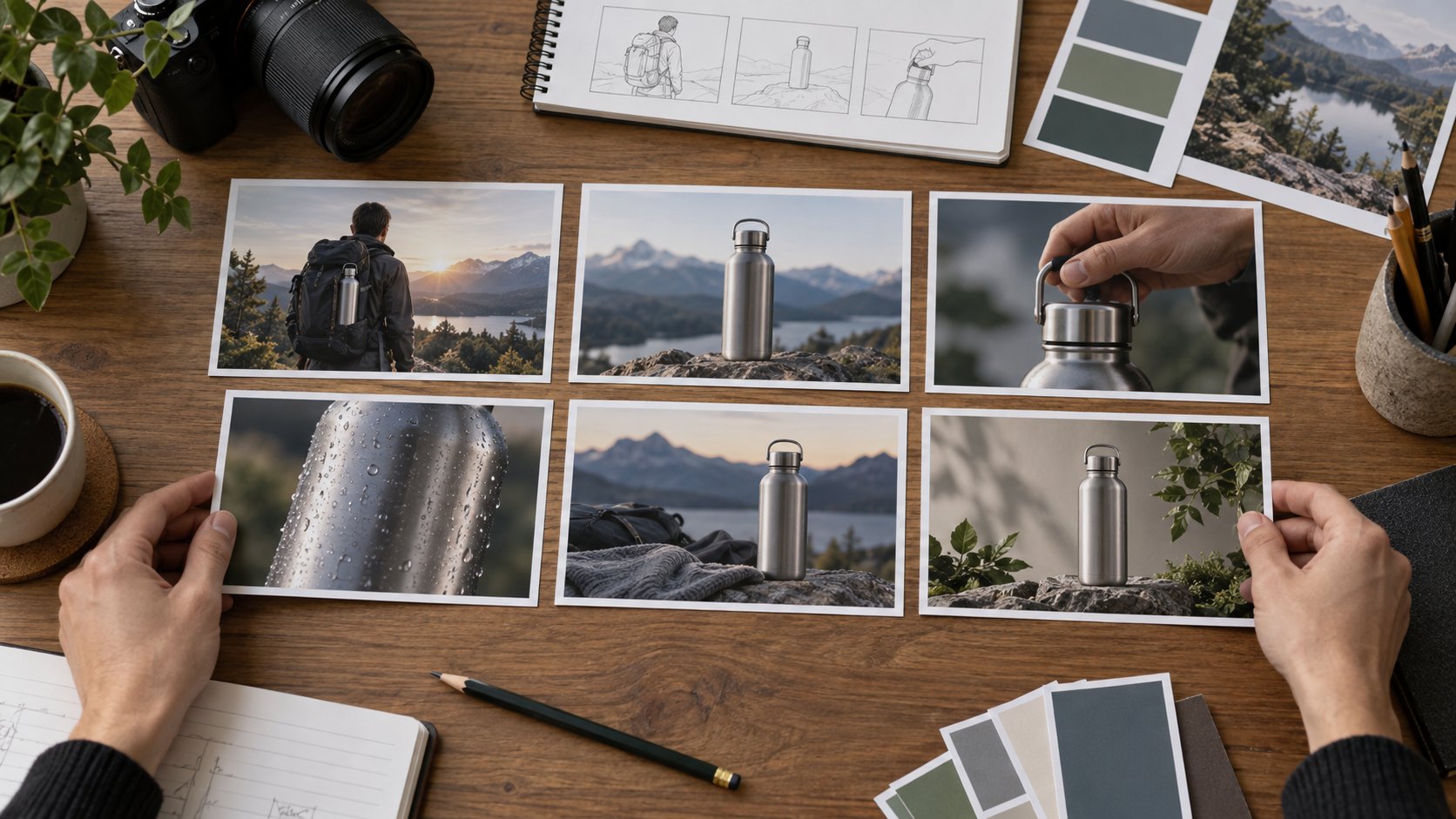
A storyboard makes the ad’s logic visible before expensive finishing work begins. Each frame should explain its role: introduce the situation, reveal the product, establish a benefit, show evidence, or present the next action. Frames that do not serve the message are candidates for removal.
Consider a hypothetical twenty-second commercial. The opening could establish the use case, the middle could present one verified product feature, and the ending could show the product with a clear invitation. Those timings are a planning example, not a platform rule. The right rhythm depends on how much the audience needs to understand.
Approve the script and rough timing together. A line that looks short on paper may take longer to speak naturally. A complex movement may need more screen time than a simple product shot. An early animatic, built from still frames and temporary audio, can expose that mismatch before final production.
For a deeper explanation of how creative and technical work connect, see our discussion of AI and human production pipelines. For an ad, apply that planning discipline to a specific message and deliverable list.
Protect Product Accuracy and Brand Consistency
AI ad creative should be reviewed as moving footage, not approved from a single attractive frame. Watch for changes in product proportions, surfaces, reflections, hands, background objects, and contact with the environment. A convincing opening image does not establish that the rest of the shot is usable.
Create a reference packet with approved product angles, color references, packaging artwork, and examples of acceptable lighting. Mark nonnegotiable details explicitly. If the product has three buttons, a generated fourth button is a defect rather than a creative variation.
Keep important logos, offer copy, and small product labels under direct production control. Compositing approved artwork or adding typography during editing can make corrections more predictable. For exact geometry or a technical demonstration, 3D product animation may be the better source for the central object.
Choose a small representative test shot before committing to a full visual treatment. Include the feature that will be hardest to maintain, such as a reflective surface or a distinctive silhouette. If it repeatedly breaks, change the production approach while the project is still flexible.
Plan Versions Around a Real Testing Question
Useful variations answer a question about the audience. One version might open with a product benefit; another might open with the problem it addresses. Keep the rest of the ad comparable so the difference is easier to interpret. Changing every element at once makes it harder to learn why one version performs differently.
Distinguish new creative concepts from delivery adaptations. A vertical crop, a shorter edit, and a different opening message are different tasks. List them separately in the scope so the production team can estimate work accurately and the marketing team knows what it will receive.
Build room for each intended composition at the storyboard stage. A horizontal shot cannot always become a useful vertical shot through cropping. Product placement, type, captions, and the closing card should be checked in each actual layout rather than assumed to transfer automatically.
What Determines AI Video Advertising Cost?
Cost depends on the complete production scope: concept development, number and complexity of shots, reference preparation, generated material, custom animation, editing, sound, review rounds, and final versions. A software subscription price does not represent the cost of a finished business advertisement.
Ask for an estimate that identifies the master asset and every variation. It should explain which changes are included after script approval and which changes reopen an earlier stage. Replacing a line of text is different from changing the product, setting, or central concept after scenes have been approved.
A sensible first project is a focused production test with a defined output and acceptance criteria. That can help reveal whether the proposed visual approach is practical before a larger campaign is commissioned. It does not guarantee a particular timeline, savings percentage, or advertising return.
Review the Finished Ad Before Launch
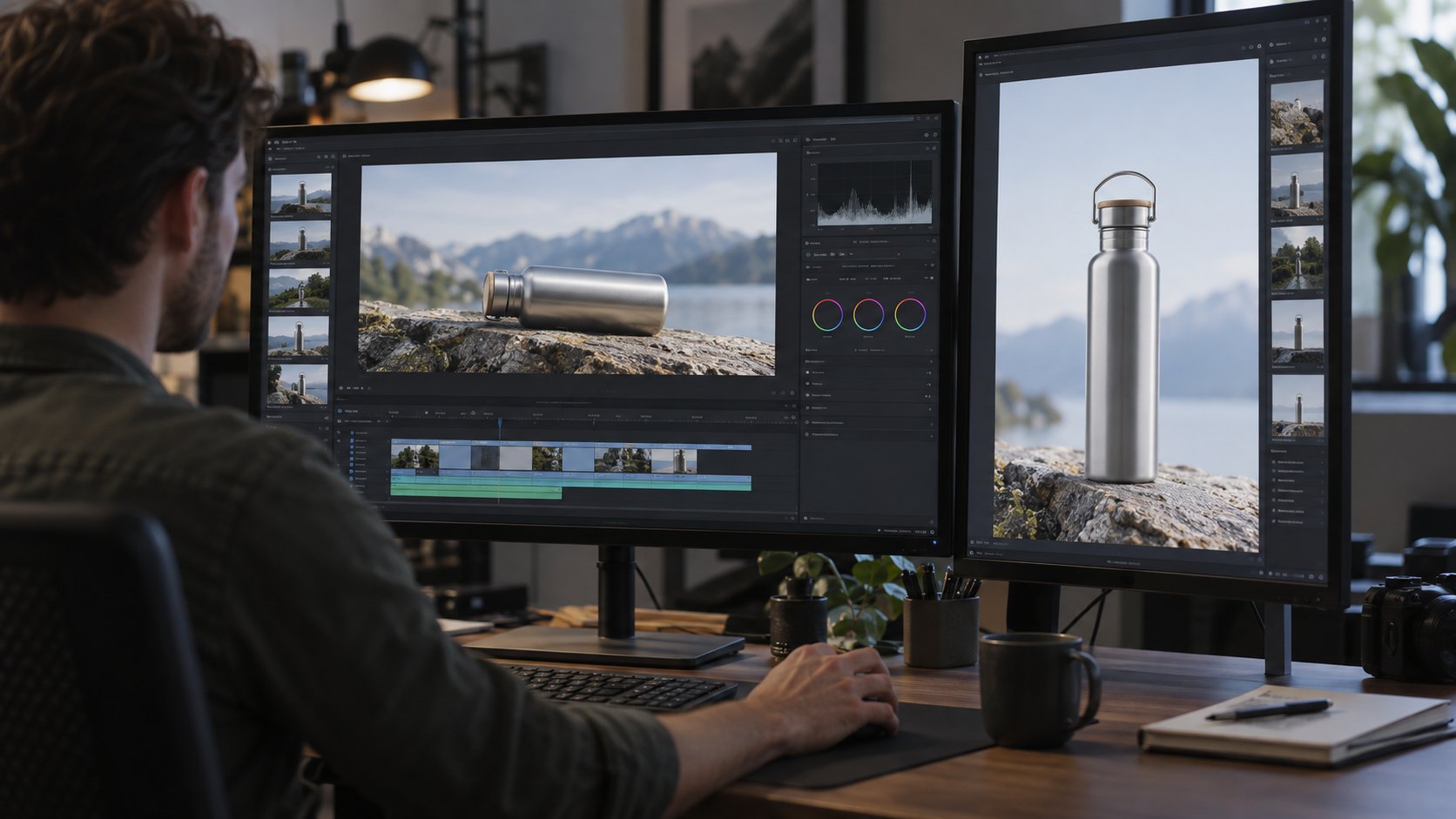
Review the actual delivery files for picture, sound, captions, spelling, product details, and calls to action. Watch once with sound and once without it. The message should remain understandable in the viewing conditions the campaign expects.
Ask the producer to document the source and permitted use of supplied footage, music, voice, likenesses, and generated elements. Have the responsible reviewers confirm the current tool terms, placement requirements, and any required disclosures for the planned campaign. Do not treat a general commercial-use claim about a tool as approval of every asset in your specific ad.
Keep a named final approver and a version register. A late edit should not accidentally restore an old offer, remove a correction, or substitute an unapproved product shot. Deliver a clear set of masters and placement versions so the media team can identify the right file without guessing.
How Austin Visuals Helps With AI Video Ads
Austin Visuals offers AI video production services alongside animation, motion graphics, and post-production. That combination allows the project discussion to begin with the message and the visual requirements rather than a requirement to generate every shot the same way.
Share the brief, product assets, intended placements, review responsibilities, and target delivery date. Ask which parts of the ad are suitable for AI-assisted production, which need controlled assets, and what will be delivered at each approval point. Relevant work in the Austin Visuals portfolio can provide a starting point for discussing treatment and scope.
Our Clients include:
Turn a Visual Concept Into a Usable Campaign Asset
Effective AI video ads connect a clear offer to a production method that can represent it accurately. Start with a focused brief, approve the story before finishing, protect the product details, and plan versions around a useful testing question. The goal is an advertisement your team can confidently deploy and evaluate.
Planning AI video ads for your next campaign?
Discuss the creative approach and production scope with Austin Visuals. Email info@austinvisuals.com or call (512) 591-8024.
Frequently Asked Questions About AI Video Ads
What are AI video ads?
AI video ads are advertisements that use AI-assisted material or production tools as part of a finished edit. They still need a clear message, accurate visuals, sound, and review.
Can AI video ads show my exact product?
Exact product representation may require photography, a controlled 3D model, or compositing alongside generated scenes. Test the most demanding shot before approving the full approach.
How much do AI video ads cost?
The cost depends on concept, shot complexity, custom assets, revisions, audio, and versions. Request a project estimate rather than using a generation tool’s subscription price as the budget.
Are AI-generated ads suitable for commercial use?
Commercial suitability depends on the specific assets, tool terms, permissions, and intended placement. Ask for a project-specific review of those items before launch.
How long should an AI video ad be?
It should be long enough to communicate one useful message and a next action within the intended placement’s requirements. Set the runtime after reviewing the script and audience need.
Do AI video ads perform better than traditional ads?
AI production alone does not establish better performance. Compare relevant campaign outcomes using a planned test, while accounting for audience, offer, placement, and spend.
Related Articles
- How AI and human production pipelines work together
- How tech companies scale video creation with AI-assisted production
- AI and creative video production in Austin
Have a project to discuss? Contact Austin Visuals below.