
When attorneys, insurance investigators, and legal teams need to present complex accident scenarios or event reconstructions in court, they face a challenge: how do you help a judge or jury understand what happened when the events are technical, the timelines are compressed, and the physics involved are difficult to visualize? This is where a forensic animation company becomes a critical partner in litigation strategy.
Teams comparing providers often also review 3D forensic animation services for personal injury cases and legal and litigation animation in Austin when planning visuals for trial.
Austin Visuals has worked with legal professionals since 2007 to create forensic animations that clarify complicated facts, support expert testimony, and help decision-makers understand the evidence. These are not courtroom theatrics—they are precise visual tools built from discovery materials, expert reports, and established scientific principles. If you’re considering forensic animation for an upcoming case, contact us at info@austinvisuals.com or 512-591-8024 to discuss your specific needs.
What a Forensic Animation Company Actually Does
A forensic animation company specializes in creating accurate, evidence-based visual reconstructions of events for use in legal proceedings. Unlike general animation studios that focus on entertainment or marketing, forensic animation requires a different skill set: the ability to work directly with expert witnesses, interpret technical data such as accident reconstruction reports or engineering analyses, and produce animations that meet the evidentiary standards required by courts.
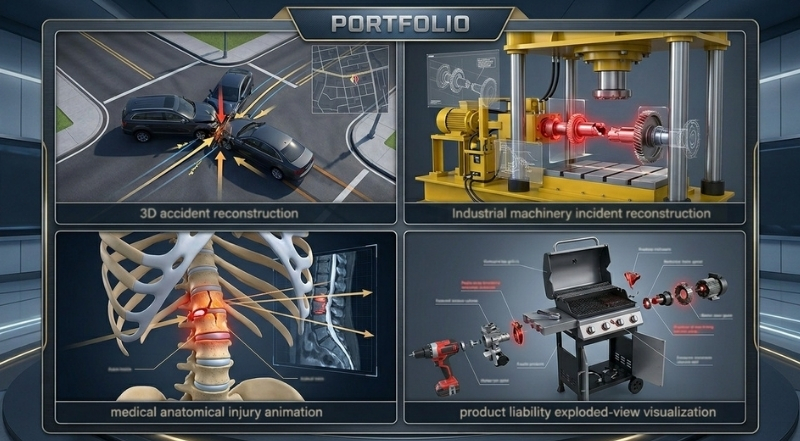
The work typically involves vehicle accidents, workplace injuries, product liability incidents, medical procedures, construction site accidents, and premises liability cases. The animation itself must be derived from factual evidence—witness statements, physical evidence, photographs, police reports, engineering calculations, and expert opinions. It cannot speculate or dramatize. The goal is to help jurors and judges understand what the evidence shows, not to persuade through emotional appeal.
This type of work demands collaboration. We work closely with accident reconstructionists, biomechanical engineers, medical experts, and attorneys to ensure every frame reflects the facts as they have been established through the legal discovery process. The animation must withstand scrutiny from opposing counsel and meet the standards set by precedents such as the Daubert standard for scientific evidence.
Why Legal Teams Use Forensic Animation
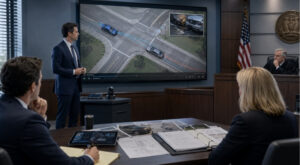
The human brain processes visual information faster and retains it longer than verbal or written descriptions. When an expert witness testifies about vehicle speeds, impact angles, sightlines, or the sequence of events in a multi-vehicle collision, jurors must construct mental images from words and numbers. This leaves room for confusion, misinterpretation, and incomplete understanding.
Forensic animation eliminates that gap. It provides a shared visual reference that all parties can see simultaneously. Instead of each juror imagining the accident differently, everyone watches the same reconstruction based on the same evidence. This consistency is valuable for both plaintiffs and defendants who want to ensure their version of events is clearly understood.
Legal teams also use forensic animation during settlement negotiations and mediation. When opposing parties can see a clear visual representation of what the evidence supports, it often leads to more productive discussions. Insurance adjusters, mediators, and opposing counsel can better evaluate the strength of a case when they see the reconstruction rather than just reading about it in reports.
The Process of Creating Forensic Animation
Initial Case Review and Planning
The process begins with a thorough review of the case materials. We work with the attorney and their expert witnesses to understand what needs to be shown and what evidence is available. This includes accident scene photographs, measurements, vehicle specifications, witness depositions, medical records, police reports, and any engineering or scientific analyses that have been completed.
During this phase, we identify what can be animated based on the available evidence and what the animation needs to demonstrate. For example, in a trucking accident case, the animation might need to show the driver’s line of sight, the braking sequence, and the point of impact. Each of these elements must be supported by specific evidence—sight distance calculations, brake system data from the truck’s ECM, and damage analysis from the accident reconstruction expert.
Building the Environment and Models
Once we understand what needs to be shown, we begin constructing the digital environment. This means creating accurate 3D models of the accident scene, vehicles, or other relevant objects. Accuracy matters here—road widths, intersection geometry, building locations, signage, lighting conditions, and vehicle dimensions must match the real-world measurements and conditions that existed at the time of the incident.
We use survey data, site photographs, and sometimes coordinate with investigators who have documented the scene. For vehicle accidents, we reference manufacturer specifications to ensure vehicle models are accurate in size and proportion. If the case involves a specific product or piece of equipment, we model that item based on photographs, technical drawings, or the actual object if available.
Animation Development and Expert Consultation
With the scene and objects modeled, we begin animating the sequence of events. This is done in close collaboration with the expert witness who will testify about the reconstruction. The expert provides the data—speeds, trajectories, timing, and physical interactions—and we translate that into motion.
This is an iterative process. We create draft animations and review them with the expert and the attorney. They check for accuracy, suggest adjustments, and confirm that the animation properly represents their opinions and the evidence. Multiple revisions are normal as we refine timing, camera angles, and details to ensure the final product is both accurate and clear.
Review, Revision, and Final Delivery
Before the animation is finalized, it undergoes a detailed review. The attorney and expert witness verify that every element is accurate and defensible. We document the sources for each aspect of the animation—where each measurement came from, how speeds were calculated, and what evidence supports the depicted sequence.
We deliver the final animation in formats suitable for courtroom presentation, including high-resolution video files that can be played on courtroom display systems. We also provide still frames that can be used in expert reports or as printed exhibits. If needed, we can prepare the animation in segments so specific portions can be shown independently during testimony.
Types of Cases That Benefit from Forensic Animation
Motor Vehicle Accidents
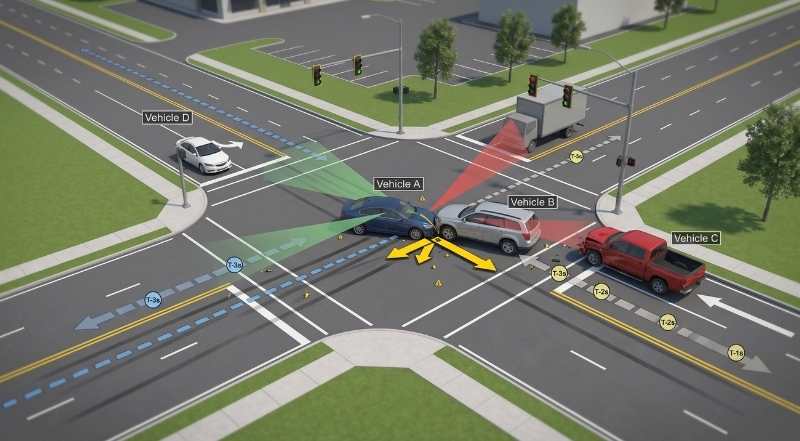
Vehicle collision cases are the most common application of forensic animation. These cases often involve disputes about fault, visibility, speed, or the sequence of events. Animation can show how a crash unfolded from multiple perspectives, demonstrate what a driver could or could not see at critical moments, and illustrate the forces involved in the collision.
In complex multi-vehicle accidents, animation helps sort out the sequence of impacts and show how each vehicle’s movements contributed to the overall incident. This is particularly valuable when witness accounts conflict or when the physical evidence must be interpreted to understand what happened.
Workplace and Industrial Accidents
Industrial accidents often involve machinery, equipment, and processes that are unfamiliar to jurors. Forensic animation can show how a piece of equipment was operating, where safety guards were positioned, what actions a worker took, and how an injury occurred. These animations help explain technical operations in a way that makes sense to non-technical audiences.
Construction site accidents, crane collapses, and manufacturing incidents all benefit from visual reconstruction. The animation can demonstrate proper procedures versus what actually occurred, making it easier to establish whether safety standards were followed.
Medical Malpractice and Personal Injury
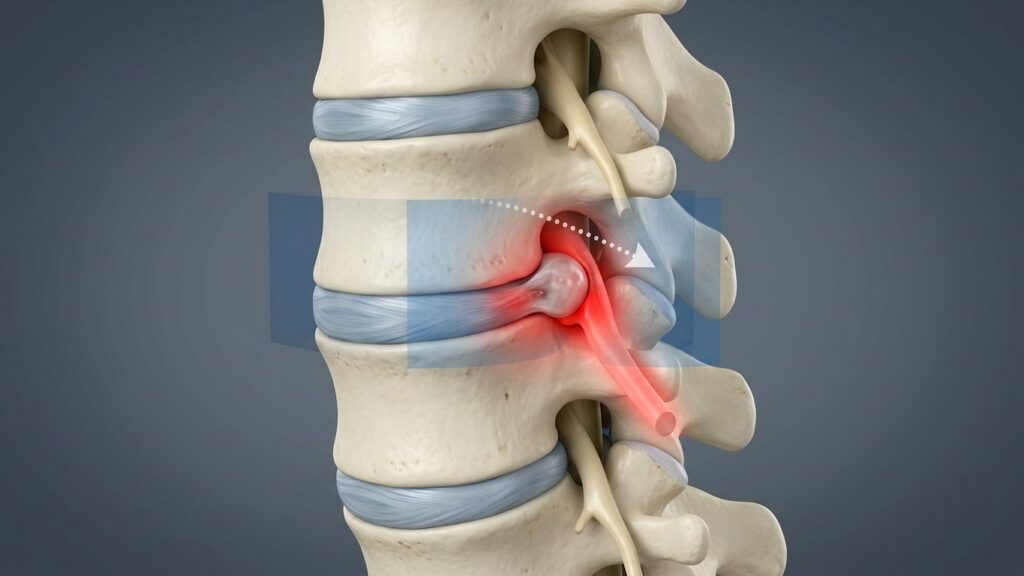
Medical cases often require explaining procedures, anatomy, and injuries to jurors who have no medical background. Forensic animation can show surgical procedures, how injuries occurred, the progression of an injury or medical condition, or how a device or implant failed.
These animations help bridge the gap between expert medical testimony and juror understanding. Instead of relying solely on verbal descriptions of surgical technique or anatomical relationships, the animation provides a visual reference that makes the testimony more accessible.
Premises Liability and Slip and Fall Cases
Premises liability cases often turn on visibility, lighting conditions, warning signage, and the condition of walking surfaces. Forensic animation can recreate the environment as it existed at the time of the incident, showing what was visible from the plaintiff’s perspective, where hazards were located, and whether warning signs were present and noticeable.
These animations are particularly useful when the conditions have changed since the incident occurred—when repairs have been made, lighting has been improved, or the scene has been otherwise altered.
Product Liability
Product liability cases benefit from animation that shows how a product was designed, how it was supposed to function, and how it actually behaved. This can include demonstrating design defects, manufacturing defects, or failures to warn about known hazards.
Animation can show internal mechanisms that aren’t visible from the outside, demonstrate how a product fails under certain conditions, and compare the actual product design to safer alternative designs that could have been used.
Admissibility and Legal Standards
For forensic animation to be used in court, it must meet the evidentiary standards that govern expert testimony and demonstrative evidence. The animation must be based on reliable principles and methods, applied reliably to the facts of the case, and relevant to helping the trier of fact understand the evidence.
Under the Daubert standard used in federal courts and many state courts, the court acts as a gatekeeper to ensure that expert evidence is both reliable and relevant. Forensic animation used to support expert testimony must be based on the expert’s analysis and opinions, which themselves must meet Daubert requirements.
The animation should be presented as a demonstrative exhibit that illustrates the expert’s testimony, not as independent evidence. The expert must be able to explain the basis for each element of the animation and defend the methods used to create it. This is why documentation is so important—we maintain records of all source materials, measurements, calculations, and expert input used in creating the animation.
Opposing counsel will have the opportunity to challenge the animation during Daubert hearings or other pre-trial motions. Common challenges include claims that the animation is speculative, that it is not based on sufficient evidence, or that it is more prejudicial than probative. A well-documented animation created in close collaboration with qualified experts can withstand these challenges.
Working with Austin Visuals as Your Forensic Animation Company
Our approach to forensic animation is built on communication and precision. We recognize that legal professionals know their cases better than we ever will, and our role is to translate the evidence and expert opinions into visual form—not to interpret or embellish.
We begin every project by listening. What are you trying to show? What evidence do you have? What does your expert say happened? What are the disputed facts? Understanding the legal strategy helps us create animations that serve the case rather than distract from it.
Throughout the production process, we maintain regular communication with the legal team and experts. You’ll see work-in-progress versions and have opportunities to request changes. We explain our process so you understand how the animation was created and can confidently present it in court.
We also provide litigation support beyond just delivering the animation file. This includes preparing the expert to present the animation during testimony, providing technical specifications and documentation for discovery responses, and being available to answer questions about the animation’s creation if challenges arise.
Our Clients include:

Technical Capabilities That Matter in Forensic Work
Forensic animation requires specific technical capabilities beyond general 3D animation skills. Accurate modeling demands precision measurement and attention to scale. Physics simulations must be based on real-world physics principles, not just what looks plausible. Camera placement must accurately represent human sight lines and perspective.
We use professional 3D modeling and animation software capable of accurate measurements and physics-based rendering. This allows us to create animations where distances, sizes, and movements match real-world specifications. When an animation shows a vehicle traveling at 45 miles per hour, the vehicle is actually covering 66 feet per second in the animation—the math matches reality.
Lighting in forensic animation must also be accurate. If an incident occurred at dusk, the animation needs to show the actual lighting conditions at that time, based on the date, time, weather conditions, and available artificial lighting. These details matter because visibility is often a disputed issue in accident cases.
We also have the capability to incorporate real-world data such as GPS information, event data recorder outputs from vehicles, surveillance video timestamps, and other technical data that provides precise information about the incident timeline and vehicle movements.
How Long Does Forensic Animation Take?
Timeline depends on case complexity, the amount of scene modeling required, and the availability of necessary information from experts and discovery. A straightforward single-vehicle accident with good documentation might be completed in 3-4 weeks. More complex cases involving multiple vehicles, detailed environment modeling, or technical mechanical animations may require 6-8 weeks or longer.
The critical path typically involves expert review and revision cycles. We can produce draft animations relatively quickly, but ensuring accuracy requires time for the expert to review, identify any needed corrections, and approve the final version. Building adequate time into trial preparation schedules is important.
We can accommodate rush timelines when necessary, but this requires that all case materials, expert reports, and measurements be immediately available and that the legal team and experts be available for quick turnaround on reviews.
Cost Considerations for Forensic Animation
Forensic animation is an investment in case presentation. Costs vary based on the scope of work—the amount of modeling required, animation length, number of shots or camera angles, complexity of the incident being depicted, and the number of revision rounds needed.
A simple animation might cost several thousand dollars, while complex multi-vehicle accidents or detailed technical animations can cost significantly more. We provide detailed quotes after reviewing the case materials and understanding what needs to be created.
Legal teams typically consider forensic animation for cases where the potential recovery or exposure justifies the investment, where the facts are complex enough that visual clarification adds significant value, or where there are conflicting accounts that need to be addressed with a clear reconstruction.
The cost should be weighed against the potential impact on jury comprehension and case outcomes. In cases involving serious injuries or significant damages, the ability to clearly communicate what happened can substantially affect verdict values or settlement negotiations.
Conclusion
Forensic animation serves a specific purpose in litigation: to help judges and jurors understand complex evidence by providing accurate visual reconstructions of events. It is not about creating dramatic presentations, but about clarity and precision in communicating what the evidence shows.
As a forensic animation company, Austin Visuals works directly with legal teams and expert witnesses to create animations that meet evidentiary standards and support effective advocacy. We focus on accuracy, documentation, and collaboration throughout the production process.
If you have a case that would benefit from forensic animation—whether it involves a vehicle accident, workplace injury, medical incident, or another complex event—we’re available to discuss how visual reconstruction could support your litigation strategy. Contact Austin Visuals at info@austinvisuals.com or call 512-591-8024 to talk about your specific case needs. We’ll review your materials, explain our process, and provide a clear proposal for how we can help present your evidence effectively.