If you are asking how much does 3D animation cost, you are probably not looking for a vague answer. You need a realistic number you can use for planning, budgeting, or getting internal approval.
The honest answer is that 3D animation pricing can range from the high four figures for a simple, short asset to tens of thousands for a custom piece with heavy modeling, simulation, review cycles, and polished rendering.
A short product animation built around clean existing assets costs far less than a medical, industrial, or legal animation that has to explain something technical with precision.
If you want a ballpark based on your actual project, email info@austinvisuals.com or call 512-591-8024. Austin Visuals can walk through scope, timeline, and production choices before you commit.

The short answer: typical 3D animation pricing ranges
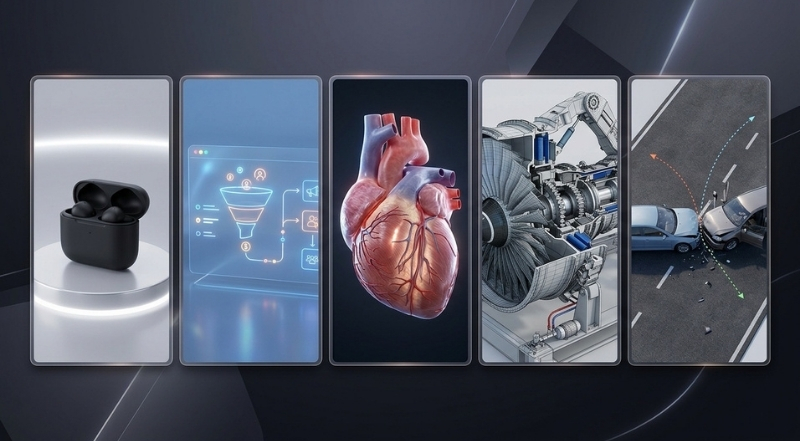
Most buyers ask for a cost per minute, but that is only one part of the equation. A more useful starting point is the type of animation you need and how much new work has to be created from scratch. Here are reasonable ballpark ranges for common B2B projects:
- Simple 30 to 60 second product visualization using existing CAD or reference assets: roughly $7,500 to $15,000
- Mid-level marketing or process animation with custom modeling and a voiceover-ready structure: roughly $15,000 to $35,000
- Medical 3D animation with anatomy accuracy, expert review, and polished scene development: roughly $20,000 to $60,000+
- Industrial or engineering animation with multiple steps, environments, or mechanisms: roughly $18,000 to $45,000+
- Legal or forensic animation built for clarity, sequence, and defensibility: roughly $12,000 to $40,000+
Those are not universal price sheets, and any studio that gives you a hard number before understanding your assets, timeline, and review process is guessing. Still, these ranges are useful because they show why two projects that are both called “3D animation” can land in very different budgets.
Why the same question gets so many different answers
The reason buyers get frustrated when researching 3D animation pricing is that the term covers too much territory. A 45 second product demo, a medical mechanism-of-action animation, a courtroom demonstrative, and a trade show loop are all technically 3D animation. They do not require the same pipeline, talent mix, or revision burden.
That is also why broad search results for 3D animation cost per minute can be misleading. Duration matters, but a one-minute animation with custom environments, character work, simulations, and compliance reviews can easily cost more than a longer piece built from existing models and a simple camera path. Buyers should think in terms of scope first and duration second.
What actually changes the price
If you want to understand how much does 3D animation cost for your project, focus on the factors below. These are the real levers behind 3D animation pricing.
1. Asset creation
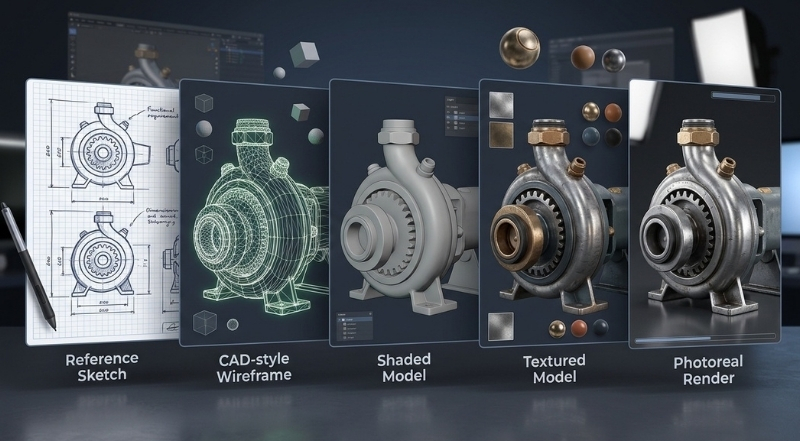
If the studio has to build everything from scratch, the budget goes up fast. Product housings, machinery, medical anatomy, environments, labels, textures, and lighting setups all take time. On the other hand, if you already have usable CAD files, engineering drawings, packaging references, or approved brand assets, your production team can often move faster and price more efficiently.
2. Technical complexity
A camera move around a static object is one thing. Showing fluid flow, internal mechanisms, surgical steps, exploded views, or a sequence of cause-and-effect events is something else. The more your animation has to teach, prove, or simulate, the more time goes into planning and execution.
3. Level of realism
Highly realistic rendering usually costs more than a stylized or simplified visual approach. Realistic materials, lighting, reflections, motion nuance, and compositing add labor. For some projects that polish is worth it. For others, a cleaner explanatory style communicates better at a lower cost.
4. Script clarity and review cycles
Unclear input creates expensive revisions. When a team starts with a solid brief, a defined audience, and a clear message, production is smoother. When multiple stakeholders want to “figure it out in revisions,” budgets stretch. A tight approval process often saves more money than negotiating a slightly lower line item.
5. Timeline pressure
Rush schedules usually increase cost because they compress planning, animation, rendering, and review into fewer days. That may require overtime, parallel workstreams, or reduced flexibility when new feedback appears late. If you have the option, buying more time is often cheaper than buying more speed.
6. Intended use
An internal sales tool, investor visual, trade show loop, and courtroom exhibit all carry different expectations. Some uses demand more precision, more polish, or more stakeholder confidence. That changes how carefully the project needs to be structured from day one.
How much does 3D animation cost by project type?
The best way to budget is to compare your project against similar work. Here is how Austin buyers usually think about it.
Product demo and marketing animation
Product demo work is often the most flexible category. If your team already has clean product references and the goal is to show benefits, features, or assembly in a straightforward way, the budget can stay fairly controlled. This kind of project might include a short script, a few hero shots, labeled callouts, and a polished end card. Many of these live in the $7,500 to $20,000 range, though more cinematic work can run higher.
If your company sells a technical offering and needs clearer positioning, it can help to pair a pricing conversation with a broader look at your B2B 3D animation strategy. Sometimes the right move is not simply “make a one-minute animation.” It is defining the sales use case first so the asset earns its keep.
Medical 3D animation
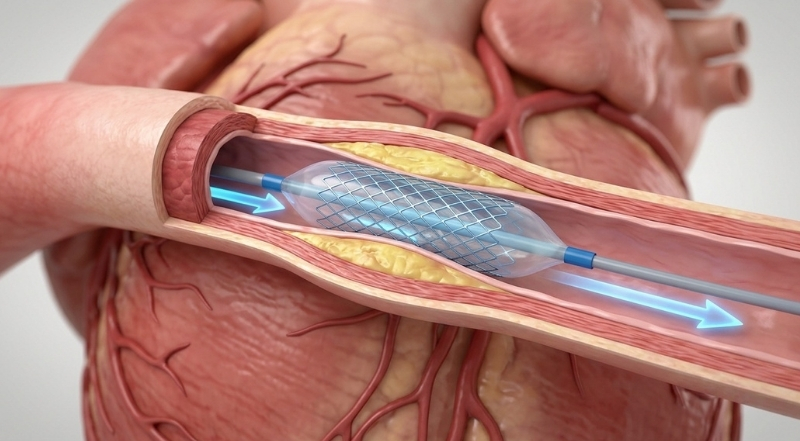
Medical work tends to sit higher because accuracy matters. Anatomy, device positioning, mechanism sequencing, patient comprehension, and expert feedback all add layers that general marketing animation does not always require. If the piece needs custom anatomy, scientific validation, or multiple audiences such as investors, physicians, and patients, costs rise accordingly. A serious medical animation often starts in the low five figures and can climb well beyond that.
Industrial and engineering animation
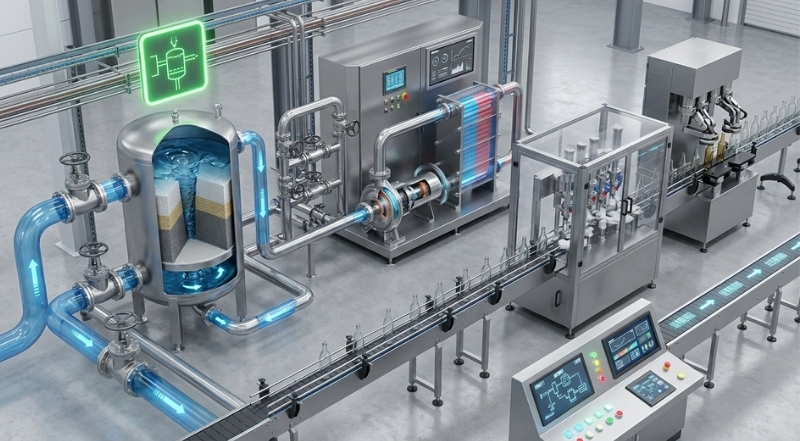
Industrial animations often look simple to the outside observer, but they can be labor-intensive under the hood. They may involve exploded views, cross-sections, process steps, safety messaging, or environment-specific details. Existing CAD files help, but they still need to be cleaned, lit, framed, and animated for communication rather than manufacturing. In this category, the largest cost drivers are usually technical detail, number of scenes, and how much the asset has to explain to a non-technical audience.
Legal and forensic animation
Legal animation pricing is shaped by a different kind of pressure. The work has to be clear, disciplined, and defensible. Sequence, timing, camera framing, evidence handling, and revision accountability matter more than flashy visuals. If the animation is tied to expert interpretation or case strategy, the review process can be more intensive than a typical marketing job. That is why legal projects often carry specialized pricing even when the runtime is short.
Is 3D animation cost per minute a useful way to budget?
Sometimes. The phrase 3D animation cost per minute is useful when you are comparing rough ranges across similar project types. It gives procurement teams a shorthand. But it becomes unhelpful when it hides the real work involved.
For example, one minute of animation might require:
- one product model and simple camera movement
- ten custom scenes with multiple materials and transitions
- medical or legal review from subject-matter experts
- voiceover timing, captions, and alternate cutdowns
- rush rendering for a trade show or investor deadline
Those are radically different jobs. So yes, use cost per minute as a comparison lens, but not as the only lens. Good 3D animation pricing comes from understanding the build, not just the runtime.
What buyers can do to control 3D animation pricing without hurting quality
Not every budget problem is solved by asking for a discount. Often the better move is tightening scope intelligently. Here are a few ways buyers reduce cost while still ending up with a strong result:
- Start with one priority audience. Trying to speak to investors, customers, distributors, and internal leadership in the same asset usually creates extra scenes and extra revisions.
- Bring your reference materials together early. CAD files, sketches, brand standards, product photos, expert notes, and scripts help the studio quote accurately and work faster.
- Cut scene count before cutting quality. Fewer scenes with better clarity usually perform better than too many rushed beats.
- Approve the script and storyboard carefully. Changes after animation begins are usually more expensive than changes during planning.
- Think in reusable assets. If the model or scene can support multiple sales, web, trade show, or training outputs, the project becomes easier to justify.
Questions to ask before you approve a 3D animation budget
If you are comparing vendors, ask questions that reveal how the quote was built:
- What assets are included, and what has to be created from scratch?
- How many review rounds are included?
- What assumptions are being made about script, voiceover, and stakeholder approvals?
- Are render revisions and alternate versions included?
- What part of the budget is driven by modeling, animation, or post-production?
- What will increase the budget after kickoff?
A strong vendor should be able to explain pricing in plain English. If the quote feels mysterious, you are more likely to get surprises later.
A practical way to think about cost before you reach out
Before asking for a proposal, write down four things: what the animation needs to explain, who needs to understand it, where it will be used, and what assets you already have. That short exercise does two useful things. First, it helps you estimate whether your project belongs closer to a lean product demo or a more involved technical animation. Second, it helps the studio give you a tighter range instead of a guess.
That is the real answer to the question how much does 3D animation cost. It is not one number. It is the cost of solving a communication problem with the right mix of accuracy, clarity, and production effort.
FAQ: common 3D animation pricing questions
What is a reasonable budget for a 60 second 3D animation?
For a professional B2B project, a 60 second animation often starts around $7,500 to $15,000 for simpler work and moves into the $15,000 to $35,000 range when custom modeling, multiple scenes, or technical storytelling are involved.
Why does medical 3D animation cost more than general marketing animation?
Because the standard for accuracy is higher. Medical work often requires precise anatomy, detailed review, and visuals that support trust, education, or compliance-sensitive communication.
Can existing CAD files reduce 3D animation pricing?
Yes, often significantly. Existing CAD or engineering files can shorten the modeling stage, although they still usually need optimization for animation, materials, lighting, and camera work.
Is it better to ask for a quote by runtime or by project scope?
Scope is the better starting point. Runtime matters, but scope determines most of the cost drivers. A short complex animation can cost more than a longer simple one.
How long does a 3D animation project usually take?
Many professional projects take a few weeks to a couple of months depending on complexity, review cycles, and whether assets already exist. Highly technical or highly reviewed work can take longer.
Conclusion
If you came here asking how much does 3D animation cost, the most useful answer is this: the right budget depends on what the animation needs to accomplish, how much has to be created, and how precise the communication has to be. Good 3D animation pricing should feel explainable, not mysterious. If you want a realistic range for a product demo, medical animation, industrial sequence, or legal visual, Austin Visuals can help you scope it clearly. Email info@austinvisuals.com or call 512-591-8024 and we can talk through your timeline, assets, and goals.