
Attorneys face a recurring challenge: explaining complex legal concepts to juries, clients, and insurance adjusters who lack legal training. Whether you’re reconstructing an accident scene, walking through corporate liability issues, or explaining medical malpractice, verbal explanations and static exhibits often fall short. A legal explainer video offers a solution—a visual tool that translates complicated information into something people can actually understand and remember.
Austin Visuals has worked with law firms and legal professionals since 2007 to create visual presentations that clarify rather than confuse. We produce 3D animations, motion graphics, and video content designed specifically for legal proceedings, client consultations, and settlement negotiations. If you need a legal explainer video attorney services can rely on in the courtroom or conference room, contact us at info@austinvisuals.com or call 512-591-8024 to discuss your case.
Why Verbal Explanations Fail in Legal Settings
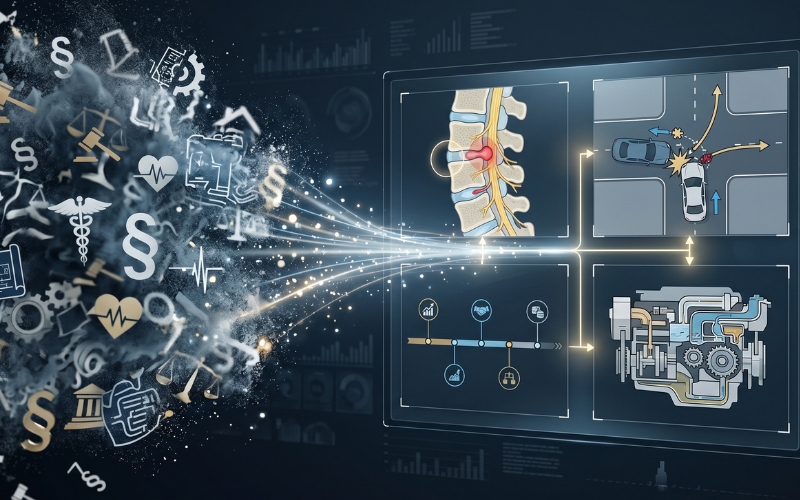
The legal system requires ordinary people—jurors, clients, opposing counsel—to absorb information that specialists spend years studying. An orthopedic surgeon testifying about spinal cord compression uses terminology developed over decades of medical education. A traffic engineer describing vehicle dynamics references physics principles most people haven’t thought about since high school. An intellectual property attorney explaining patent infringement needs to convey technical processes that require specialized knowledge to grasp.
Verbal testimony, even from qualified experts, creates several problems. First, people retain only about 10% of information they hear compared to 65% of what they see and hear together. Second, technical language creates barriers. When an expert says “L4-L5 disc herniation with posterior displacement,” a juror hears words, not meaning. Third, opposing counsel can create doubt by attacking the expert’s credibility or introducing conflicting testimony, leaving jurors uncertain about what actually happened.
Static exhibits—photographs, diagrams, PowerPoint slides—help, but they have limitations. A photo shows only what the camera captured from one angle at one moment. A diagram requires the viewer to interpret symbols and translate a 2D representation into a 3D understanding. These tools work better than words alone, but they still require significant cognitive effort from people who are already processing hours of testimony.
What Makes a Legal Explainer Video Different
A legal explainer video attorney professionals use differs fundamentally from marketing videos or educational content. The primary distinction is evidentiary standards. Marketing videos aim to persuade through emotion and branding. Educational videos can simplify at the expense of accuracy. Legal videos must present information that withstands scrutiny from opposing counsel, meets admissibility standards, and maintains factual precision while remaining understandable.
This requires a different production approach. Every visual element must have a documented basis—accident reports, medical records, engineering analyses, witness statements, photographs, physical evidence. The animation cannot speculate or fill gaps with assumptions. If the evidence shows a vehicle’s position at two points in time but not the exact path between them, the video must acknowledge that limitation rather than inventing a continuous motion.
The narration and visuals need to work together without creating bias. Color choices matter: showing one party in red and another in blue can unconsciously signal “bad” versus “good.” Camera angles matter: filming from one participant’s perspective can create sympathy for that viewpoint. Pacing matters: lingering on graphic injury footage can inflame emotions rather than inform understanding. A properly constructed legal video presents information clearly without manipulating the viewer’s judgment.
Common Applications for Attorney Explainer Videos
Accident Reconstruction
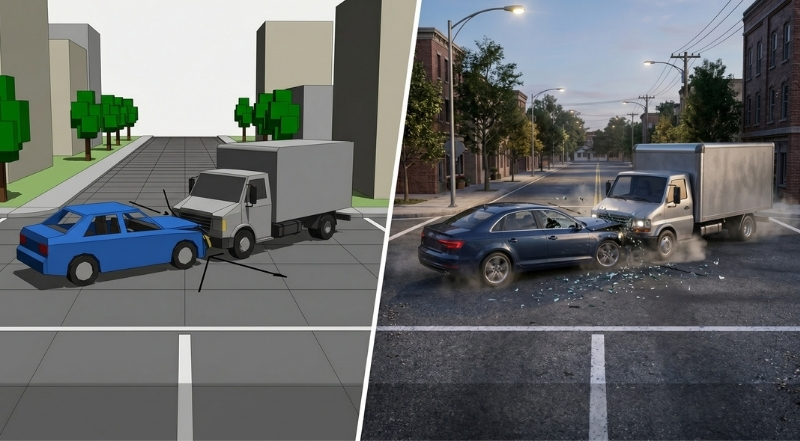
Personal injury and wrongful death cases frequently require reconstruction of vehicle accidents, workplace incidents, or premises liability events. A 3D animation can show vehicle positions, speeds, sight lines, and impact sequences in a way that photographs and testimony cannot. When skid marks, vehicle damage, and witness statements create a record of what happened, animation synthesizes these data points into a coherent visual timeline.
We’ve created reconstructions showing intersection collisions where visibility, traffic signals, and reaction times all factored into liability determinations. We’ve animated construction site accidents demonstrating how equipment operation, safety protocols, and site conditions contributed to injuries. These videos don’t argue for a conclusion—they present the physical facts so decision-makers can understand what occurred.
Medical Procedures and Injuries
Medical malpractice, personal injury, and product liability cases often turn on medical concepts that jurors find abstract. How does a surgical error damage a nerve? What happens during a stroke that causes permanent disability? Why does a defective implant lead to tissue damage?
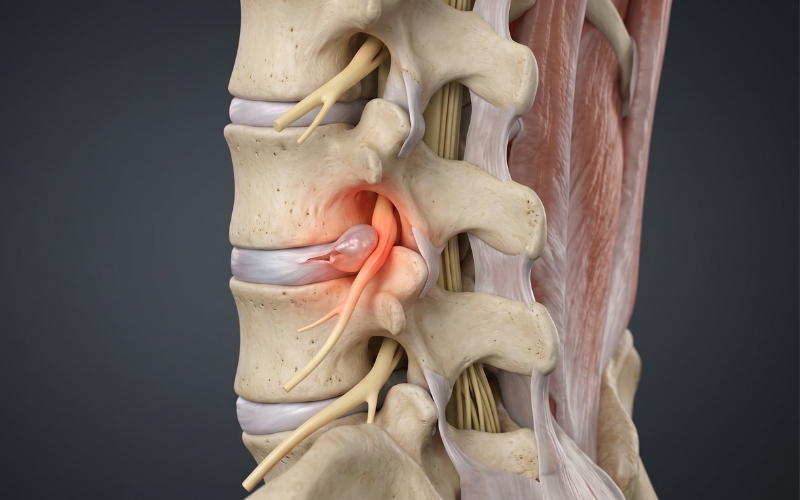
Medical animation translates these processes into visual information. Instead of asking a jury to imagine how a herniated disc compresses a nerve root based on verbal description, an animation shows the anatomy, the injury mechanism, and the resulting symptoms. This doesn’t replace expert testimony—it makes that testimony comprehensible. The expert still explains the medical significance, but now the jury can actually see what the expert is talking about.
Patent and Intellectual Property Disputes
Patent litigation requires explaining how inventions work, how allegedly infringing products operate, and where the overlap exists. When the technology involves mechanical systems, chemical processes, or software algorithms, verbal explanation becomes nearly impossible for non-specialists to follow.
We’ve produced animations showing how patented mechanical devices function, breaking down complex assemblies into understandable sequences. We’ve created visual comparisons demonstrating similarities and differences between patented designs and accused products. These videos give judges and jurors the technical understanding they need to make informed decisions about infringement and validity.
Contract and Business Disputes
Commercial litigation sometimes involves complex business arrangements, financial transactions, or operational processes. An animation or motion graphics presentation can clarify corporate structures, transaction flows, or timeline sequences that would take hours to explain through documents and testimony.
For example, a fraud case might involve dozens of corporate entities, multiple transactions across several years, and complex relationships between parties. A motion graphics timeline can show how money moved, when representations were made, and where deception occurred. This helps fact-finders see patterns and connections that aren’t apparent from testimony alone.
The Production Process for Legal Video
Initial Consultation and Case Analysis
Production begins with understanding the legal issue, the evidence, and the communication goal. We meet with attorneys and experts to review case materials—reports, depositions, photographs, physical evidence, expert analyses. This isn’t about deciding who’s right; it’s about identifying what needs to be shown and what evidence supports each visual element.
During this phase, we identify gaps in the visual record and discuss how to address them. If the evidence supports showing certain facts but leaves others uncertain, we plan how to represent that honestly. If expert opinions differ on key points, we determine whether the video should present one interpretation or acknowledge the dispute.
Script and Storyboard Development
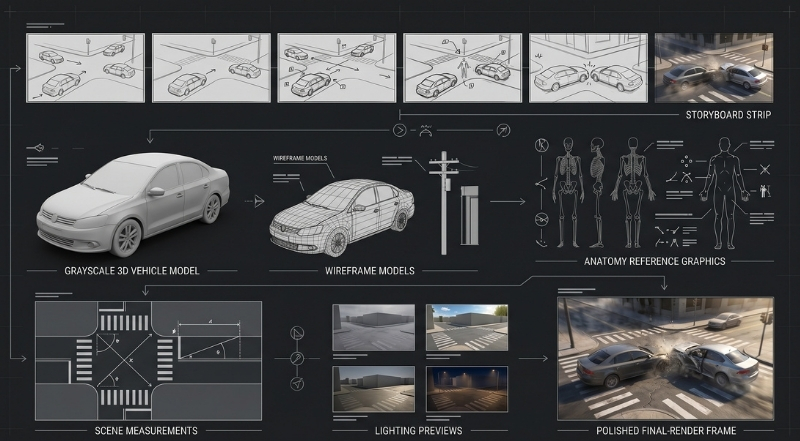
Before creating any visuals, we develop a detailed script and storyboard. The script explains what will be shown and said at each point in the video. The storyboard provides visual sketches showing camera angles, object positions, and key moments. This allows attorneys and experts to review the approach before production begins.
This review process is critical. Attorneys often identify legal issues with proposed approaches—elements that might be objectionable, facts that need different emphasis, or technical details that require correction. Experts ensure medical, engineering, or technical accuracy. Revisions at this stage cost time, not money for completed animation that needs to be redone.
3D Modeling and Animation
Once the approach is approved, we build 3D models of relevant objects—vehicles, anatomy, devices, environments. These models use measurements from evidence: vehicle specifications, medical imaging, engineering drawings, scene photographs. Accuracy matters because opposing counsel will scrutinize dimensions, proportions, and details.
Animation then brings these models to life, showing motion, interactions, and sequences. We animate based on physics and evidence, not artistic interpretation. If an accident reconstruction shows a vehicle rotating during impact, that rotation reflects calculations from crush damage, tire marks, and final rest positions. If a medical animation shows blood flow, that flow reflects actual physiology, not a simplified cartoon version.
Review, Revision, and Finalization
We provide draft versions for review, allowing attorneys and experts to verify accuracy and suggest refinements. This might involve adjusting timing, modifying camera angles, correcting technical details, or revising narration. The goal is a final product that accurately represents the evidence and effectively communicates to the intended audience.
We also prepare documentation supporting the animation’s accuracy—source materials for measurements, calculations showing motion sequences, references for medical or technical details. This documentation helps with admissibility and allows experts to testify about the video’s factual basis.
Admissibility Considerations
Creating an effective legal video means nothing if the court excludes it from evidence. Admissibility standards vary by jurisdiction and case type, but several principles apply broadly.
First, the video must be based on reliable evidence and methodology. This typically requires an expert witness who can testify about the video’s factual foundation, explain how conclusions were reached, and verify accuracy. The expert doesn’t need to have created the video, but they need to vouch for its content.
Second, the video must help the jury understand evidence rather than creating prejudice. Courts exclude videos that inflame emotions, present speculation as fact, or advocate for a conclusion rather than explaining information. The line isn’t always clear, which is why we work closely with attorneys to create presentations that inform rather than argue.
Third, the probative value must outweigh any prejudicial effect. A medically accurate animation of injuries might be disturbing, but if it’s necessary to understand the case, courts typically allow it. A dramatized recreation with ominous music and selective editing that serves mainly to create emotional impact would likely be excluded.
We’ve worked on videos for federal and state courts across the country. While we can’t guarantee admissibility—that’s a legal determination based on the specific case and jurisdiction—we structure our process to create videos that meet evidentiary standards. This includes maintaining source documentation, working with qualified experts, and avoiding editorial techniques that prioritize persuasion over accuracy.
Cost and Timeline Factors
Attorneys often ask about pricing early in the conversation, which is reasonable—litigation expenses matter. The honest answer is that cost varies significantly based on complexity, length, and timeline.
A simple 90-second animation showing a single vehicle collision might cost $8,000-$15,000. A complex medical animation demonstrating a surgical procedure with detailed anatomy might run $15,000-$30,000. A patent case requiring multiple animations of mechanical assemblies from different angles could exceed $40,000. These ranges reflect the hours required for modeling, animation, review, and revision.
Timeline depends on complexity and revision cycles. A straightforward project might be completed in 4-6 weeks. Complex cases requiring detailed modeling, extensive expert consultation, or multiple rounds of revision might take 10-12 weeks. Rush timelines are possible but typically involve premium pricing and may require other projects to be postponed.
We provide detailed quotes after reviewing case materials and understanding requirements. This ensures you’re not comparing our price for a comprehensive, court-ready animation against another vendor’s quote for a basic marketing video that won’t meet evidentiary standards.
Beyond Courtroom Presentation
While trial presentation is the obvious application, legal explainer videos serve other purposes throughout litigation and practice.
Settlement negotiations benefit from clear visual presentations. When you can show opposing counsel and their clients exactly what happened and what a jury will see, you create common understanding that facilitates realistic settlement discussions. Many cases settle after parties view a well-constructed animation that clarifies disputed facts.
Mediation and arbitration provide opportunities to educate neutral decision-makers efficiently. Rather than spending hours explaining technical concepts through testimony, a focused video can convey essential information in minutes, leaving more time for legal arguments and negotiation.
Client communication improves when you can show rather than tell. Clients facing complex litigation often struggle to understand their own cases. A video that explains what happened, why it matters legally, and what the litigation will try to prove helps clients make informed decisions about settlement, trial strategy, and expectations.
Some firms use legal explainer videos in their marketing and thought leadership efforts, demonstrating expertise in specific practice areas. A personal injury firm might create generic educational videos about accident reconstruction or injury mechanisms. An IP firm might explain patent claim construction. These applications require different approaches than litigation-specific videos, but they draw on the same technical capabilities.
Working with Austin Visuals
We’ve been producing legal animations and explainer videos since 2007, working with firms handling everything from catastrophic injury cases to complex commercial disputes. Our location in Austin, Texas gives us proximity to clients throughout the state while allowing us to work nationally through digital collaboration.
Our process emphasizes collaboration with your legal team and experts. We don’t simply take instructions and deliver a finished product. We ask questions, identify potential issues, suggest alternatives, and work iteratively to create videos that serve your strategic goals while maintaining evidentiary integrity.
We also understand litigation timelines and pressure. While we prefer adequate time for thorough production, we recognize that court schedules and case developments sometimes require faster turnarounds. We maintain flexibility to accommodate urgent needs when possible.
Our technical capabilities include 3D animation, 2D motion graphics, medical illustration, accident reconstruction visualization, timeline presentations, and various hybrid approaches. We match the technique to the communication need rather than forcing every project into the same format.
Our client inlude:

Conclusion
Complex cases require clear communication. When verbal testimony and static exhibits aren’t sufficient to convey what happened or why it matters, a legal explainer video attorney services can use provides an alternative—a visual tool that makes complicated information accessible to judges, jurors, and clients without legal or technical training.
The key is approaching video production as a serious evidentiary exercise, not a marketing project. That means basing every visual element on documented evidence, working closely with qualified experts, maintaining accuracy even when simplification would be easier, and creating presentations that inform rather than manipulate.
Austin Visuals has spent nearly two decades developing processes and expertise specifically for legal applications. We understand the difference between persuasive marketing and admissible evidence. We know how to collaborate with attorneys and experts to create videos that withstand scrutiny while remaining understandable to lay audiences.
If you’re handling a case where visual presentation could make the difference between confusion and clarity, contact us to discuss your needs. We’ll review your situation, explain what’s possible, and provide a realistic assessment of costs and timelines. Reach Austin Visuals at info@austinvisuals.com or call 512-591-8024 to start the conversation.