
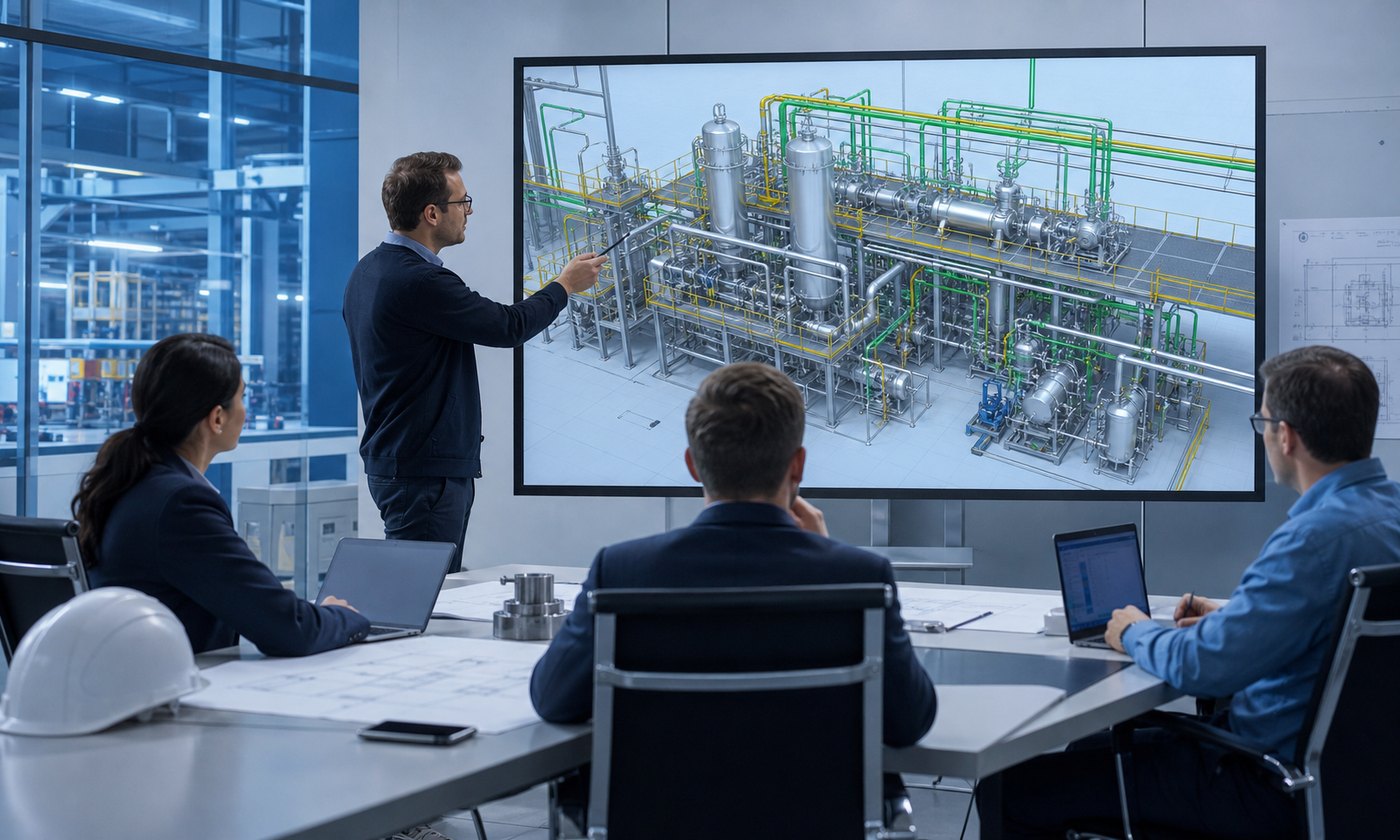
Engineering animation for process plants helps engineering, operations, and training teams understand plant design, process flow, equipment behavior, and safe procedures before they are tested in the field. For many process plant projects, the challenge is not a lack of information.
The challenge is that the information is spread across PFDs, P&IDs, CAD models, operating procedures, safety notes, vendor drawings, and field experience.
Austin Visuals helps turn those technical inputs into clear visual communication that teams can review, train from, and share with decision makers. If your team needs a process plant animation for design review, operator training, safety communication, or maintenance planning, call (512) 591-8024 or email info@austinvisuals.com.
What Is Engineering Animation for Process Plants?
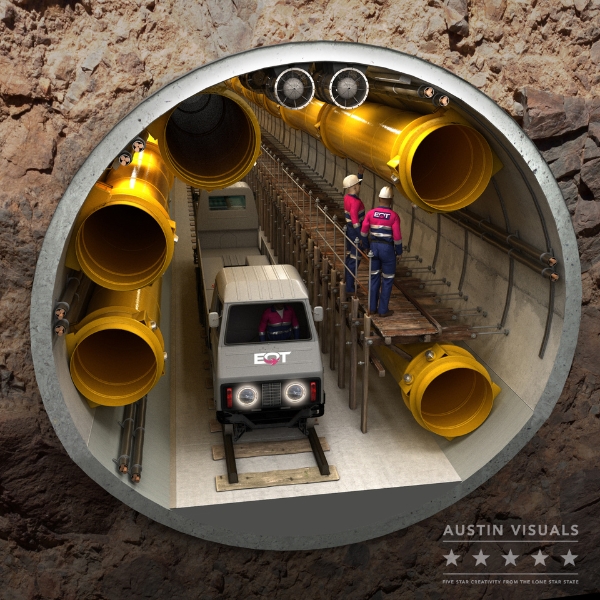
Engineering animation for process plants is a technical visual that shows how a plant, unit, system, or procedure works over time. It may show the relationship between vessels, pumps, compressors, exchangers, valves, pipe racks, instrumentation, control logic, access platforms, and human actions. Unlike a single rendering, an animation can show sequence. It can demonstrate flow direction, equipment startup, shutdown order, maintenance access, isolation steps, or what happens when a process condition changes.
The best technical animation for process plants is built from real engineering references. It does not invent impossible physics or decorate the scene with unrelated visuals. It uses the right level of detail for the audience. A design review may require dimensional accuracy and plant layout context. A safety module may simplify the plant so workers can focus on hazards and decisions. A sales or stakeholder presentation may combine accurate plant context with a clean narrative that explains value quickly.
Why Process Plant Teams Need Visual Communication
Process plants contain many moving parts, but most of the important activity is not easy to observe directly. Fluids move inside pipework. Pressure changes occur inside closed equipment. Instrumentation sends signals that operators may see only as values on a screen. Maintenance teams may need to understand a system before the unit is isolated, opened, or lifted. A well-planned process plant animation makes those hidden relationships visible.
Visual communication also helps align departments that naturally think in different formats. Engineers may work from drawings and specifications. Operators may think in procedures and alarms. HSE teams may focus on hazard controls. Executives may need a concise explanation of risk, cost, and schedule. Animation gives those groups a shared picture, which can reduce misunderstandings during review, training, and approval.
For complex technical industries, Austin Visuals often recommends pairing animation with clear narration, labels, callouts, and staged scenes. The goal is not to overwhelm the viewer with every detail. The goal is to guide the viewer through the correct mental model so the plant, process, or procedure becomes easier to understand.
Process Plant Design Review and 3D Plant Visualization
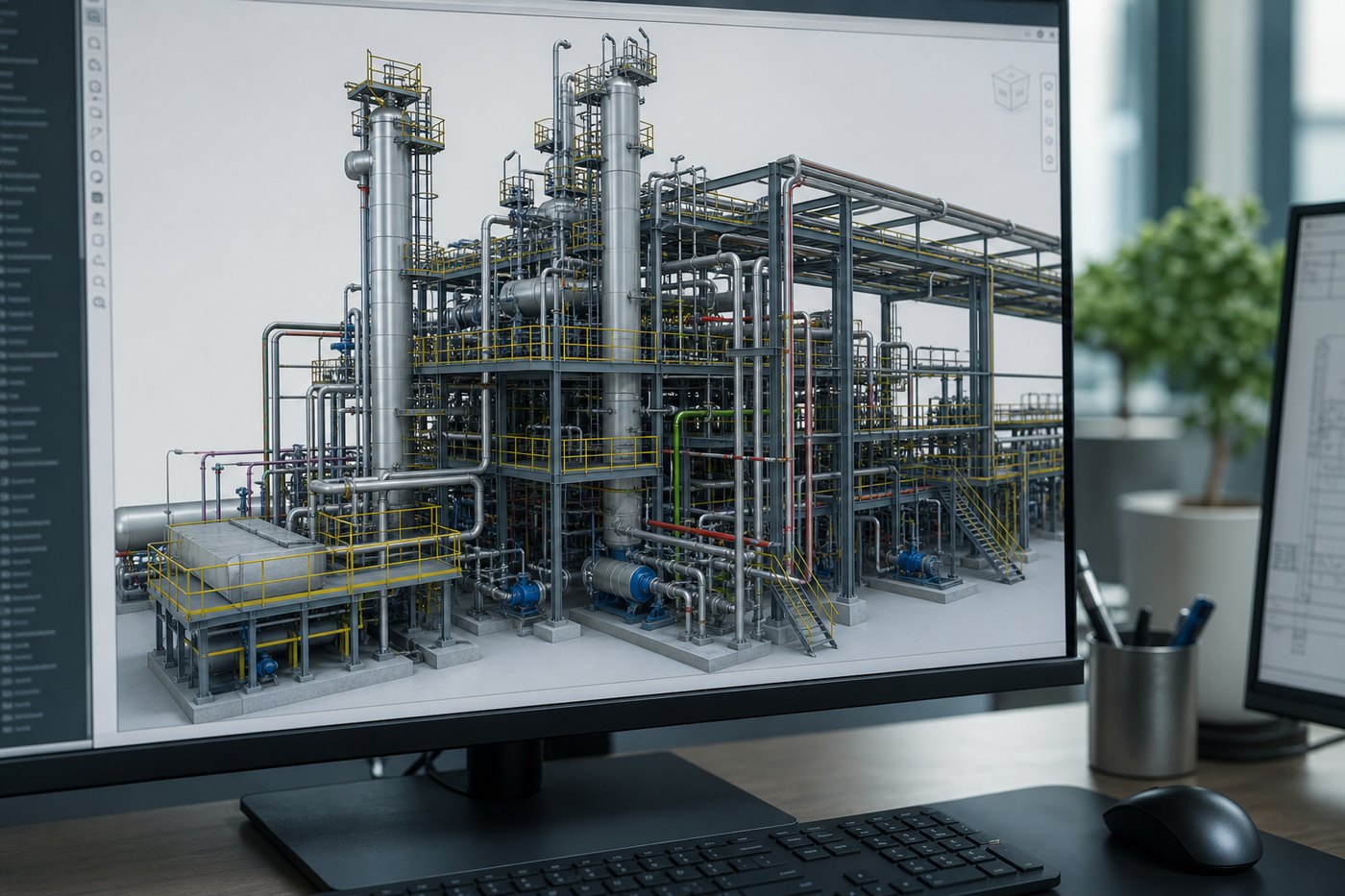
Design reviews often involve dense documentation. Engineers may know what a drawing means, but stakeholders, trainees, procurement teams, and field crews may need a more visual way to understand the same information. 3D plant visualization can show equipment placement, pipe routing, access platforms, clearance zones, maintenance access, and construction phasing from angles that are easier to read than flat drawings alone.
Animation can also help teams evaluate practical questions. Can a valve be reached safely? Does the lift path conflict with adjacent equipment? Will a platform block the needed view? Does a new unit tie into the existing plant in a way that field crews can understand? When visualized before installation, these issues can be discussed earlier and with less ambiguity.
Austin Visuals has produced visual content for industrial and technical organizations that need to communicate complex systems clearly. For related plant-focused work, our article on industrial plant animation services explains how 3D visuals can support industrial communication beyond a single presentation.
Industrial Process Animation for Process Flow
Industrial process animation is especially useful when the main story is movement through a system. A process flow may include raw material intake, separation, heating, cooling, filtration, blending, compression, chemical reaction, waste handling, or product transfer. In a diagram, those steps can be represented by symbols and arrows. In animation, the same flow can be shown as a timed sequence with visual emphasis on the most important decisions and constraints.
This matters because process flow is often where misunderstandings begin. A viewer may know that a pump transfers fluid from one vessel to another, but may not understand the valve lineup, pressure boundary, bypass path, or interlock that makes the transfer safe. Animation can isolate each step, highlight the active equipment, dim the unrelated background, and show what changes from one state to the next.
For teams that are building training content, launch materials, or stakeholder presentations, this approach can make the technical story easier to retain. You can also review our article on industrial process animation for more examples of how process visuals improve understanding.
Engineering Animation for Training and Operator Readiness
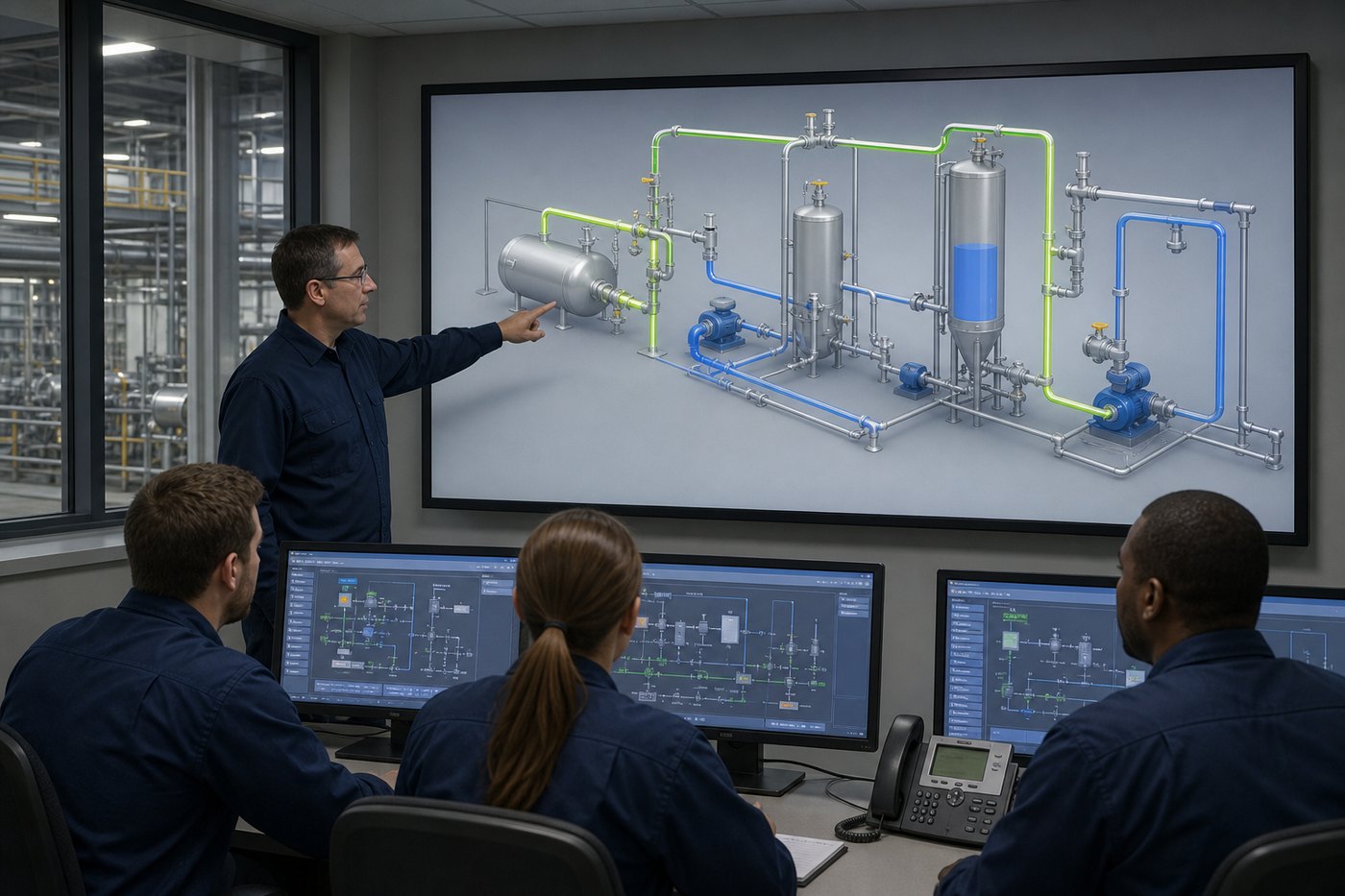
Engineering animation for training gives operators and technicians a controlled way to understand plant behavior before they face the procedure in the field. This is valuable for startup, shutdown, abnormal condition response, equipment isolation, lockout, confined space entry preparation, sampling procedures, and maintenance handoff. It can also be useful when a facility has experienced turnover and needs to preserve knowledge from senior staff.
Training animation works best when it is scenario based. Instead of simply showing a nice plant model, the animation should walk through what the learner needs to notice, decide, and do. It can show the control room display, the field equipment, the valve lineup, the hazard area, and the expected outcome in one connected sequence. That connection is difficult to build with a slide deck alone.
Plant owners also use training animation when it is not practical to film real procedures. Some operations happen rarely. Some areas are hazardous. Some equipment may be too loud, hot, confined, or remote for a film crew. Animation solves that by showing the procedure clearly without disrupting operations. For adjacent industry use cases, our article on engineering-grade animation discusses how technical teams use animation for training, planning, and communication.
Process Safety Training Animation
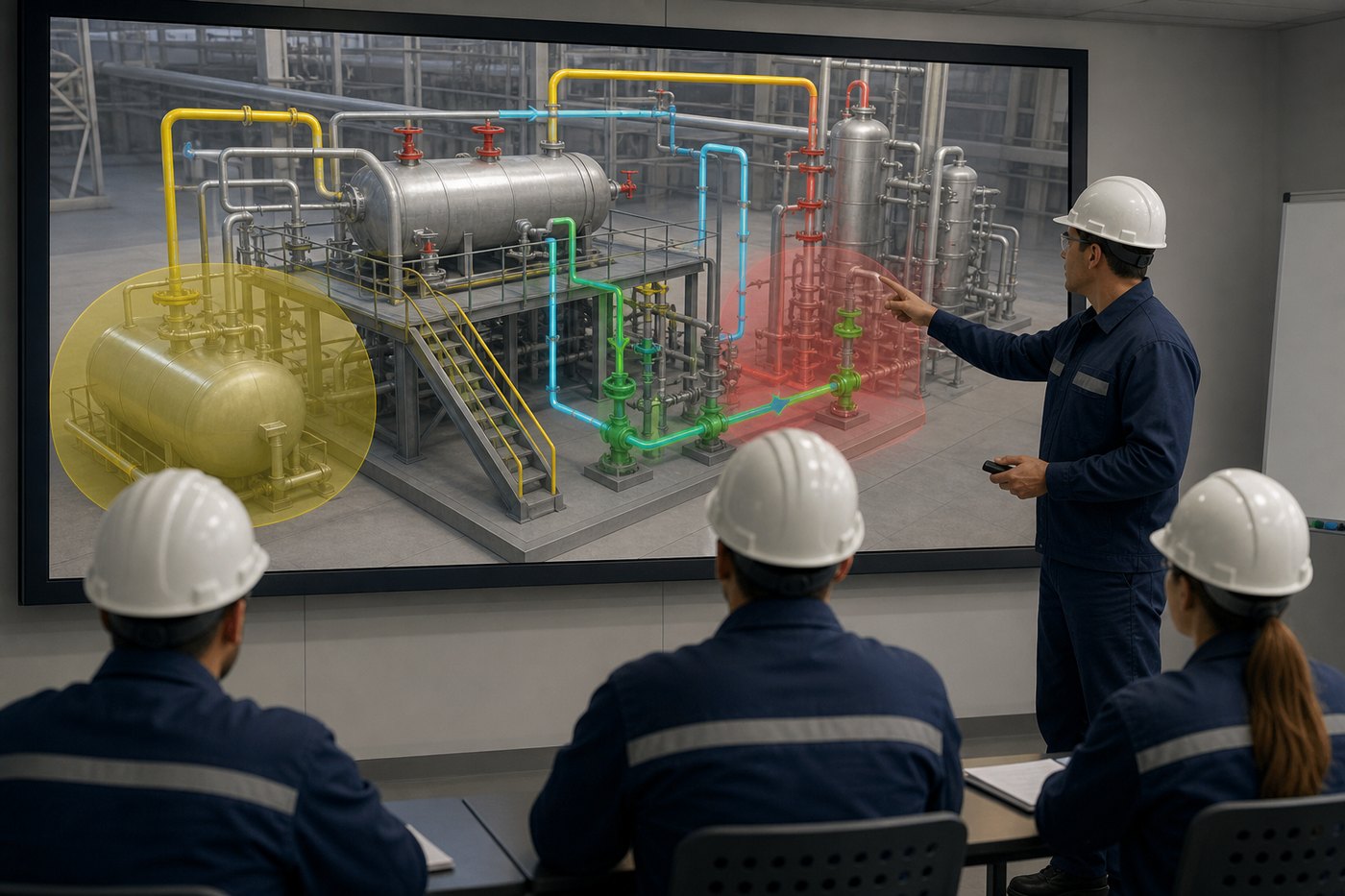
Process safety training animation can help teams understand hazards that are hard to see. Pressure, temperature, chemical exposure, stored energy, vapor movement, ignition risk, and wrong-way flow are not always obvious in real footage. A realistic 3D scene can show the plant context, while color overlays, callouts, or simplified particles can show what the viewer needs to notice.
This does not mean the animation should exaggerate danger or create unrealistic effects. In safety communication, credibility matters. The visual should be technically plausible and should match the operating reality as closely as the training goal requires. For example, a hazard zone can be color coded while the equipment remains realistic. A wrong valve lineup can be shown step by step without turning the scene into a fictional accident sequence.
Safety teams can use animation for onboarding, refresher training, toolbox meetings, incident lessons learned, emergency response drills, and contractor orientation. When paired with narration and review questions, the same visual asset can support both formal training and shorter field briefings.
Maintenance, Shutdowns, and Turnaround Planning
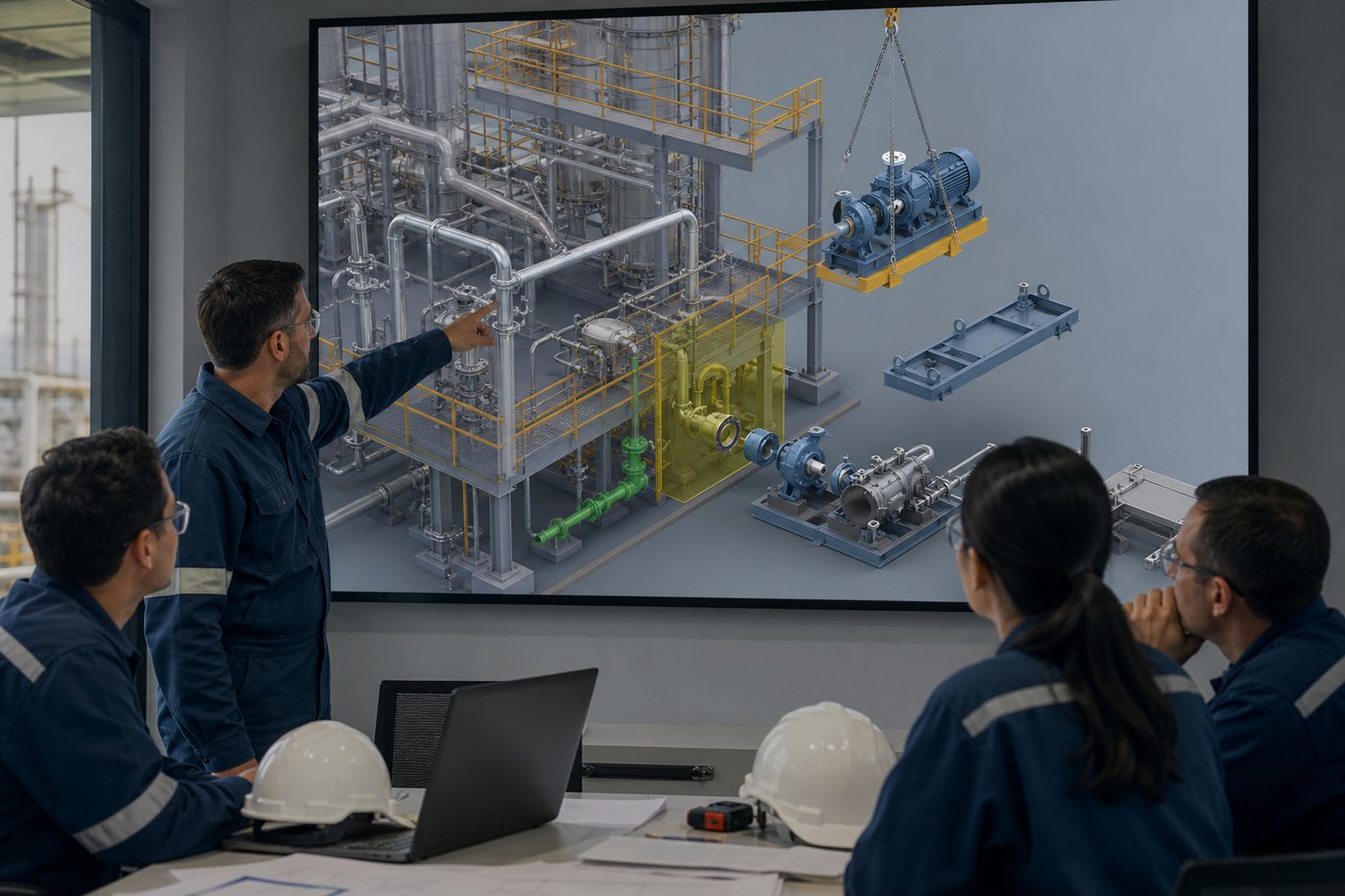
Maintenance and turnaround planning often depend on spatial understanding. Crews need to know what must be isolated, what must be removed, where access is limited, where lifting equipment can travel, and which nearby systems remain live. A process plant animation can show those constraints before the work begins.
For example, an animation can demonstrate the removal path for a pump skid, exchanger bundle, large valve, agitator, or vessel component. It can show temporary supports, crane reach, nearby obstructions, barricade areas, and sequencing. It can also show what should happen before the lift, such as draining, flushing, blinding, locking out, testing, or verifying zero energy.
This type of visual is useful because maintenance plans can be technically correct yet hard to communicate. Animation gives field teams, supervisors, safety personnel, and planners a common view of the work. It also helps new team members understand why the procedure is written the way it is.
How Austin Visuals Helps With Engineering Animation for Process Plants

Austin Visuals works with industrial, engineering, manufacturing, energy, and technical organizations that need complex systems explained clearly. For engineering animation for process plants, our role is to help translate technical references into visuals that are accurate enough for engineers and understandable enough for the intended audience.
A typical workflow begins with discovery. We review the communication goal, audience, project references, existing drawings, available CAD, and subject matter expert input. Then we define what the animation must show, what can be simplified, and what should remain visually accurate. From there, we develop a script or outline, storyboards, 3D assets, motion tests, review renders, voiceover, editing, and final delivery.
Because process plant audiences are technical, review cycles are important. Engineers and operations experts need the chance to correct details before the animation is finalized. Austin Visuals can support that with clear milestones, draft reviews, and practical revision steps. The result can be used for training, sales support, stakeholder meetings, trade shows, onboarding, safety communication, or project approvals.
If you need help planning a plant animation, call Austin Visuals at (512) 591-8024 or email info@austinvisuals.com. We can help you decide what level of realism, detail, and structure makes sense for your project.
Our Clients include:

Common Mistakes to Avoid
The first mistake is treating animation as decoration instead of technical communication. A beautiful plant model is useful only if it helps the audience understand the right thing. Start with the learning goal, design question, safety issue, or business message. Then build the visual around that goal.
The second mistake is trying to show every pipe, label, and specification at once. Process plants are dense. If the viewer cannot tell where to look, the animation will feel impressive but confusing. Good direction uses framing, timing, callouts, and simplification to keep attention on the active system.
The third mistake is skipping technical review. Even small inaccuracies can reduce trust with engineers, operators, or HSE teams. A simplified animation can still be accurate in the ways that matter. Make sure subject matter experts review the sequence, terminology, flow direction, equipment labels, and procedure logic.
The fourth mistake is waiting too long to define deliverables. A training module, trade show loop, sales explainer, and design review animation may share assets, but they are not the same deliverable. Planning those outputs early helps the team create reusable scenes and avoid expensive rework later.
Planning a Process Plant Animation Project
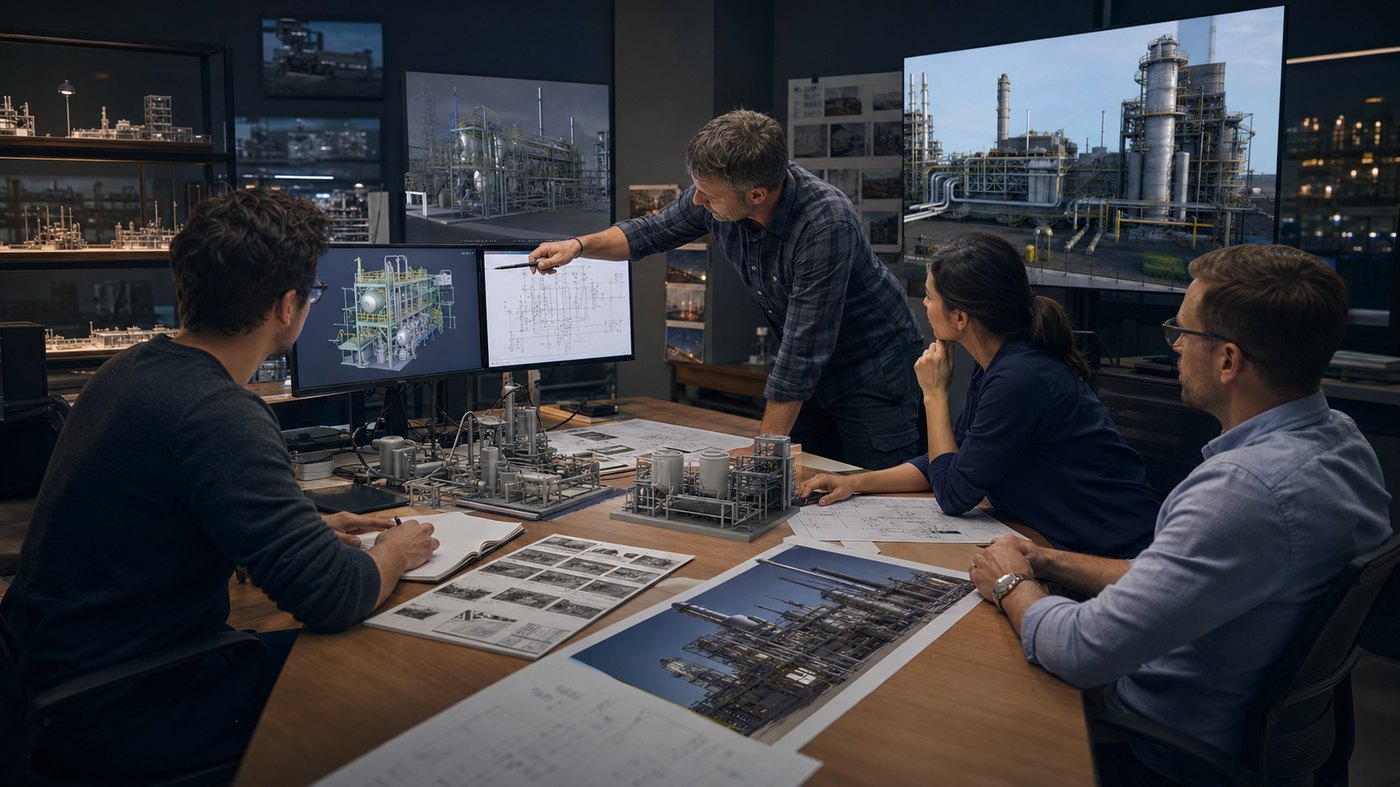
Start by identifying the main audience. A plant manager, a new operator, a regulatory stakeholder, a maintenance planner, and a potential customer need different levels of detail. Next, define the action the viewer should take after watching. Should they understand a procedure, approve a design, remember a hazard, support a budget request, or explain a system to someone else?
Then gather references. Helpful inputs include PFDs, P&IDs, CAD models, equipment drawings, process descriptions, site photos, drone footage, operating manuals, safety procedures, brand guidelines, and sample animations your team likes or dislikes. If CAD files are unavailable, a technical animation can still be built from drawings and photos, but the schedule should account for modeling from reference.
Finally, choose the right delivery format. A 90-second executive overview may need a different structure than a five-minute training chapter. A looping trade show visual may need less narration and stronger visual rhythm. A safety animation may need pauses, labels, and review prompts. The earlier these choices are made, the easier it is to build a focused animation.
FAQ: Engineering Animation for Process Plants
What is engineering animation for process plants?
Engineering animation for process plants is a 3D or motion graphics visual that explains plant layouts, process flow, equipment behavior, safety procedures, maintenance access, or operating sequences in a clear technical format.
How is process plant animation different from a standard 3D rendering?
A 3D rendering shows a still view, while process plant animation shows movement, sequence, cause and effect, fluid paths, operator actions, or equipment changes over time.
What materials are useful before starting a process plant animation?
Useful materials include PFDs, P&IDs, CAD files, equipment drawings, site photos, operating procedures, safety documentation, training goals, and input from engineers or subject matter experts.
Can engineering animation support operator training?
Yes. Engineering animation for training can show startup, shutdown, isolation, lockout, maintenance, emergency response, and abnormal operating scenarios without putting personnel or equipment at risk.
Can animation help with process safety training?
Yes. Process safety training animation can show hazard zones, pressure changes, chemical transfer paths, wrong-way scenarios, protective systems, and correct response steps in ways that are easier to understand than text alone.
How realistic should 3D plant visualization be?
The level of realism should match the purpose. Design reviews may need accurate spatial relationships and equipment placement, while safety and training modules may use simplified visuals to keep attention on the procedure.
How can Austin Visuals help with process plant animation?
Austin Visuals can help plan, script, model, animate, edit, and deliver technical animation for process plants, including training modules, design review visuals, safety animation, and industrial process animation.
Conclusion
Engineering animation for process plants can make complex plant design, process flow, safety procedures, and maintenance planning easier to understand. It gives teams a shared visual language for systems that are otherwise hidden inside drawings, equipment, and operating experience. When it is grounded in real engineering references and shaped around a clear communication goal, animation can support better training, faster reviews, safer procedures, and stronger stakeholder communication.
Need engineering animation for process plants? Austin Visuals can help you turn technical plant information into clear 3D visuals for design review, training, safety, maintenance, and communication. Call (512) 591-8024 or email info@austinvisuals.com to discuss your project.