

Introduction
Software in healthcare isn’t just about data and dashboards—it’s about saving lives, improving care, and increasing hospital efficiency. Yet explaining how advanced platforms work to hospitals, medical staff, or even potential investors can be challenging. That’s where custom 3D animation steps in. It turns complex concepts into simple visuals people can understand in seconds. Whether you’re creating a product demo for a new EMR system or pitching a diagnostic tool, the right visuals improve impact. In this article, we’ll break down who needs 3D animation in healthcare, how it works, and where it brings the most return.
If you’re ready to tell your story the right way, schedule your free consultation today. Call +1-512-591-8024 or email info@austinvisuals.com.

Why Medical Software Demos Need Custom 3D Animation
Medical software often deals with clinical workflows, data analysis, and device integration. That makes it complex by nature. Many hospitals and clinics struggle to find time to sit through technical slides or long instructions. Presentations filled with jargon or menus often lose the audience before they’ve even grasped the basics. And static visuals don’t do much to show interactions or logic pathways.
Custom 3D animation changes that. It captures how a tool fits into the daily routine of healthcare professionals. Animations can show data moving inside secure workflows, replicate decision-support steps backed by AI, and even simulate interaction with diagnostic platforms or surgical planning systems. A viewer doesn’t need clinical training to follow what’s happening in an animation. That’s how clarity is achieved.
With hospitals balancing time, compliance, and investment decisions, 3D animation helps teams break down what matters without overwhelming the audience. And more than explaining—it shows usefulness.
When Is 3D Animation Right for Your Hospital or MedTech Demo?
Not all medical projects need 3D visuals, but when your product solves a problem that requires a flow to be understood—animation matters. For example, if you’re developing a HIPAA-compliant patient communication tool, it’s essential to show data safety. If you’re selling a surgical planning product, doctors want to see spatial views of anatomy and how your software enhances accuracy.
3D animation is ideal for:
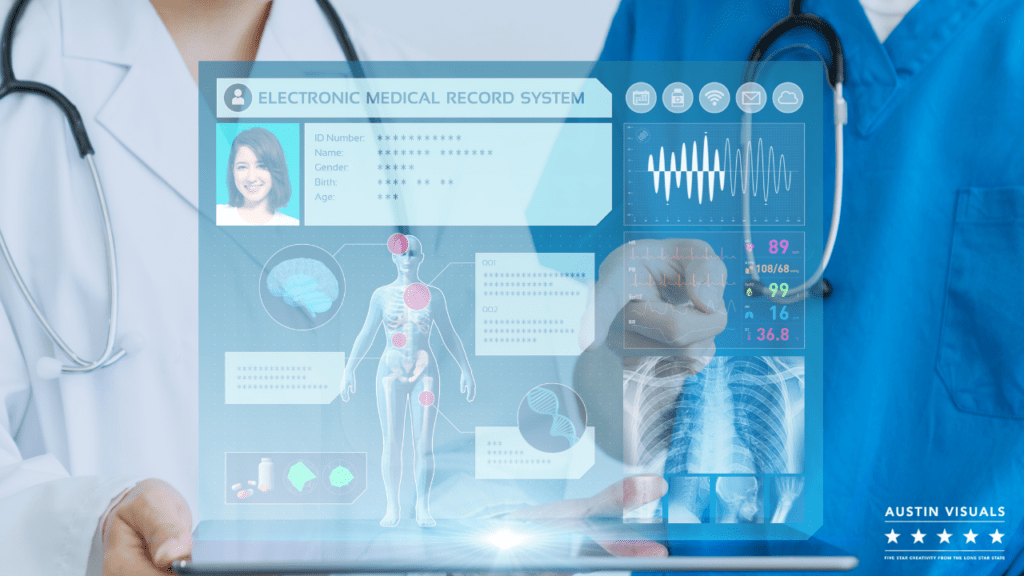
- Electronic Medical Record (EMR) interfaces showing data visualization and inter-system communication
- AI diagnostic tools that analyze patient imaging or behavior over time
- Telemedicine platforms where workflows and data flow matter as much as the UI
- Hospital training modules where staff need to visualize patient interaction or administrative functions
- Medical devices that sync with apps or workflows
Since most hospital tech is sold B2B—to directors, boards, or private healthcare providers—you need something more than basic UI walkthroughs. These stakeholders aren’t just buying features; they’re buying confidence. 3D animation helps you show how your product works in a real-world setting. That builds trust during sales, fundraising, and even regulatory review.
Common Challenges Hospitals Face With Visual Storytelling, Solved
Most healthcare organizations and MedTech startups don’t have in-house animation teams. Even when they do, explaining a new piece of software visually can take more than one attempt. Add regulations like HIPAA, and the road gets complicated quickly.
One major roadblock is translating technical features into benefits that investors or clinicians care about. The next is staying compliant. Teams also run into trouble when multiple stakeholders need to agree on one version. That’s where a professional animation studio with healthcare experience changes the process.
At Austin Visuals, we help organizations simplify hard topics. We meet with your engineers or developers, get into the logic of the tool, and build visuals that show function—accurately and clearly. All of our workflows can follow HIPAA guidance if needed. And we don’t just deliver a video—we guide medical teams on how to tell the story. From scriptwriting to rendering, revisions, and approvals—our service is designed so your team doesn’t have to manage another technical process alone.
How Austin Visuals Creates Custom Medical 3D Animation Step-by-Step
Discovery & Objectives
First, we sit down to identify what the software does and who it’s for. Whether you’re selling to hospital directors, nurses, board members, or health IT executives, each audience learns differently. Discovery helps us define the key actions that need to be seen.
Scriptwriting & Storyboarding
Our writers specialize in healthcare communication. That means your message won’t get lost in translation. We script the scenes, decide the visual style, and create storyboards so you see every step of the message before animation begins.
Animation & Voice Over
Our medical illustrators and 3D animators bring the story to life. Whether it’s a patient journey, software walkthrough, or backend logic, we make each part clear and engaging. You can also pick professional voice-over artists suited for your tone—whether it’s scientific, friendly, or formal.
Feedback & Revisions
We use a secure cloud portal for all feedback and file sharing. You can leave comments directly on the video timeline, making approvals quick and remote-friendly—with no need for long email chains.
Final Delivery
Once approved, we deliver a final high-resolution version in whatever format you need—for presentations, websites, investor decks, training modules, or social media. We also provide compressed versions for web speed.
Why Work With Austin Visuals?

Trust matters in healthcare. That’s why we’ve built a team that understands the science behind the story. We’ve created visuals for companies like LDR Spine, the University of Texas, and other health-focused projects across North America. With 20 years in business and a team of 29 trusted specialists, we scale to meet your project goals without compromising quality.
Some clients come to us with completely new product ideas. Others have a live product that needs a demo fast. Either way, we stay agile. Being based in Texas with a remote crew also keeps us cost-effective—no overhead, just expertise.
Our Clients include:

Case Study: Bringing a Medical Startup’s Complex Software Demo to Life
A startup approached us with a remote patient monitoring system built with AI. They were pitching hospitals and investors but ran into a common problem: the software worked well, but it was hard to explain. Their audience got confused during manual walk-throughs and sales would stall.
We worked with their CMO and technical lead to build a 3D animation. It showed how wearable data moved across the system, flagged anomalies using machine learning, and triggered alerts in the hospital dashboard in real-time. In less than 90 seconds, the animation covered what the team used to take 10 minutes to explain through slides. The result? Quicker meetings, more investor interest, and a higher close rate when selling to hospitals.
Let’s Build Your Medical Animation Together
Explaining complex hospital tools doesn’t have to be difficult. With the right visuals, you can save time, increase confidence, and give your audience the clarity they need. Whether you need a software demo for a pitch, a training video, or a visual sales tool, we build animations tailored to your message.
Contact us now to start your custom 3D animation project. Call +1-512-591-8024 or send an email to info@austinvisuals.com. View our complete medical portfolio and see how we help healthcare ideas get seen—and understood.
Frequently Asked Questions (FAQs)
What is custom 3D animation used for in medical software demos?
Custom 3D animation helps explain how medical software functions in real-world hospitals or clinics. It shows things like workflows, patient interaction, data movement, and system alerts in a visual way that’s much easier to understand than documents or slides.
How long does a 3D animation project take?
Timelines can range from two to six weeks depending on the scope. For medical software demos that explain multiple features, you can expect a timeline closer to 4–5 weeks with feedback phases included.
Does 3D animation for hospitals follow HIPAA rules?
Yes. We can ensure HIPAA-compliant production workflows. No patient data is used unless required, and confidentiality is built into our contracts and delivery systems.
How much does a custom medical animation cost?
Costs vary by length and complexity. A standard 60-90 second custom animation for medical software ranges between $5,000 and $15,000 depending on requirements. You’ll get a detailed quote based on the script and style you need.
Have a Project to discuss? Use this form to Contact Austin Visuals