
Healthcare marketing video production for trade shows should communicate an approved product message in a noisy, crowded environment. A clear silent loop and a more detailed demonstration can serve different stages of a booth conversation. Austin Visuals produces medical animation and video assets for these purposes. Booth traffic, qualified leads and sales should be measured rather than promised.
To discuss a visual communication project, contact Austin Visuals with your audience, approved source material and intended use.
Healthcare marketing video production: design a message that works without audio
A visitor may start watching halfway through the loop and may not hear narration. Use readable approved text, a clear visual sequence and a recognizable product view. Repeat the central idea where useful without making the screen crowded.
Test the design at the expected viewing distance. A label that is legible on a laptop may be too small on an exhibit screen. Check contrast and pacing with the sound muted, and make sure the relevant limitations remain visible in any promotional version.
Updated October 14, 2026.


Use different assets for attention and explanation
An aisle-facing loop can introduce one product question and invite a conversation. A presenter-operated clip can then explain a component or sequence in greater detail. A follow-up video may provide the approved overview for a buyer who wants to share it with colleagues.
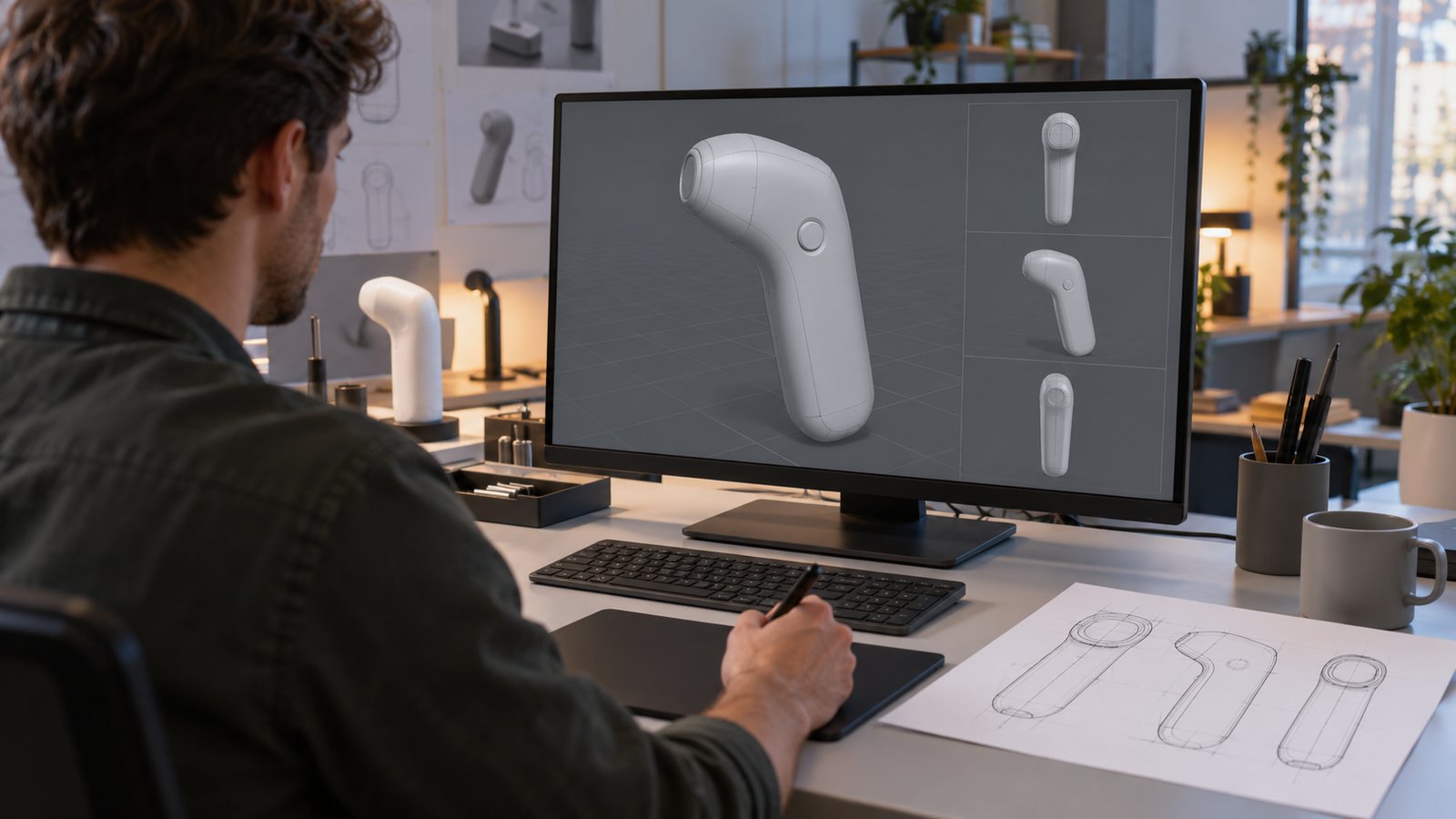
For example, an ultrasound-device presentation could begin with a recognizable probe view, then show approved components in a separate demonstration. This is an illustrative production concept, not a report of measured performance at a particular exhibition.
Choose content by the visitor role
| Visitor | Likely information need | Useful asset |
|---|---|---|
| Clinical professional | Reviewed function and context for an appropriate discussion. | A detailed animation with a representative available for questions. |
| Purchasing or operations team | Approved features and relevant workflow information. | A concise product overview and a follow-up resource. |
| Research or business partner | Development status and the proposed scientific concept. | A presentation that separates established information from investigational claims. |
| General attendee | A plain explanation of what is being presented. | A readable silent loop with one main message. |
Keep the medical and commercial messages appropriate to the audience. An eye-catching molecular sequence should not imply a proven benefit that the supporting evidence does not establish.

Build review into the production schedule
Start with approved claims, product files, references and the names of the reviewers. Approve the script and storyboard before detailed animation. Allow the relevant scientific, medical and regulatory teams to review the final combination of visuals and text.
The schedule depends on scope, source readiness, revisions and approvals. Agree on milestones after reviewing those requirements. A general production range should not be treated as a promised delivery date, and an animation studio cannot independently certify every healthcare claim as compliant.
For prescription-drug promotion, FDA’s Office of Prescription Drug Promotion describes the importance of truthful, balanced and accurately communicated information. The applicable review requirements depend on the actual material and intended use. Read the FDA OPDP overview.
Confirm technical requirements before the event
Request the organizer’s screen dimensions, resolution, player requirements and connectivity details. Prepare the formats the booth equipment needs and test them on the actual player where possible. Keep an approved local playback copy if reliable network access is uncertain.
Agree on permitted reuse, the files included and who will update the content later. A vertical kiosk, landscape booth screen and website player may need separate layouts. Shortening a video or changing its aspect ratio can affect text visibility and the meaning of a sequence.
Measure booth performance without overclaiming
A general survey of marketers cannot establish what a healthcare booth achieved. Define the event objective and measurement method before opening day. Useful measures include engaged conversations, qualified inquiries, requested demonstrations and accepted follow-up meetings.
Record the event, campaign version, time window and qualification criteria. Compare reasonably similar conditions when investigating the effect of a video. Booth position, staffing, product interest and follow-up all affect results. Do not infer increased sales from views or badge scans alone.
If the goal is comprehension, ask a brief question about the product’s intended function after the explanation. If the goal is lead generation, agree on the next step and track completion after the event. Those are different outcomes and should be reported separately.

Prepare the booth presentation workflow
Decide how staff will use the video during a conversation. An aisle-facing loop can introduce the topic, while a separate controlled version lets a representative pause at the relevant device feature. The staff should know which questions the video answers and which need a qualified product or clinical response.
Make the follow-up resource easy to identify and appropriate for the visitor. A purchasing contact may need an approved product overview to share internally. A professional with a technical question may need a meeting with a specialist. Treat those as distinct next steps in the lead record.
Rehearse with the sound off and the actual display conditions where possible. If a representative must explain a label that nobody can read from the aisle, revise the layout before the event. The goal is a usable presentation that supports conversation, not a promise that motion alone will bring qualified buyers to the booth.

Illustrative lead-measurement plan
A hypothetical event team could define an engaged conversation as one in which a visitor discusses a relevant product need. It could separately record demonstration requests and accepted follow-up meetings. The definitions should be agreed before the event so staff use them consistently.
The team would record which video version was used, the event and the follow-up period. It could investigate differences from a suitable earlier campaign, while accounting for booth position, staffing and audience. A claim that a video caused a sales change would require stronger analysis than counting badge scans.
This is an illustrative planning method. It is not a healthcare-event result established by a general survey of marketers or an Austin Visuals client case study. The distinction lets a company measure useful commercial activity without presenting a broad statistic as evidence for its own booth.
Approve the booth loop and the follow-up edit separately
A silent loop needs to communicate its message at any point in the sequence. A follow-up video can use narration and a more linear explanation. The two versions may share models and scenes, but they can convey different impressions because viewers encounter them differently.
Review the final text, visual sequence and accompanying copy for each version. Check that a shortened edit retains the context needed for any medical or product claim. A benefit statement should not remain after the qualification that made it accurate has been cut.
Keep the released files associated with the approval record and source references. If product information changes after the event, check the website and sales copies as well as the booth master. Planning these responsibilities before production makes later reuse easier and prevents an old event asset from being treated as permanently approved marketing content.
After the event, record which questions the visuals answered well and which needed additional explanation. Use those observations to refine the next brief. Keep the interpretation tied to the event conditions and the actual visitor group, so a useful lesson from one booth does not become an unsupported claim about every healthcare campaign.
Published medical animation examples from Austin Visuals
These published work samples illustrate medical visual communication. Use them to discuss presentation choices; any clinical or commercial outcome claim needs separate project evidence.
Ultrasound-device explainer animation
Austin Visuals publishes an ultrasound-device explainer in its portfolio. It provides a relevant product-communication example. The entry is not used here to claim a validated training result, device effectiveness or increased sales. View the published ultrasound-device explainer animation work sample.
Boston Cell Standards scientific animation
The Boston Cell Standards entry is a published scientific animation work sample. It illustrates a category of laboratory and scientific communication. The portfolio listing does not establish a clinical benefit or the commercial performance of a campaign. View the published boston cell standards scientific animation work sample.
Trade-show medical video assets from Austin Visuals
Austin Visuals creates medical animation and product-explanation assets that can be adapted for a healthcare exhibit. Define the aisle-facing message and the detailed questions booth staff need to answer before choosing the video formats.
Provide approved claims, product files, organizer specifications and the names of scientific or regulatory reviewers. Discuss a readable silent loop, a controlled demonstration and a follow-up version if the event plan calls for them. Agree on milestones around actual source readiness and approvals. Test the finished files on the intended player, and keep the lead definitions separate from the visual-production scope when measuring event performance.
Conclusion
Healthcare marketing video production for trade shows needs an understandable silent loop, a usable demonstration and an agreed follow-up process. Test the display under booth conditions and distinguish engaged conversations from qualified leads and eventual sales.
Austin Visuals can help turn your approved material into a clear visual explanation. Email info@austinvisuals.com or call (512) 591-8024 to discuss your audience and production requirements.
Frequently asked questions
How long should a booth video be?
Length should follow the message and viewing conditions. Test a concise loop with representative viewers instead of assuming one duration works for every exhibit.
Can the video work with no sound?
Yes. Plan readable approved text and a sequence that communicates its key point without narration.
When should production start?
Start when the product information and reviewers are available. Set milestones around the scope and the actual approval process.
Can Austin Visuals guarantee medical compliance?
The product owner's appropriate reviewers must approve the claims and intended use. Visual production alone does not certify regulatory compliance.
Does more booth traffic mean more sales?
No. Track qualified next steps and later outcomes before making a sales claim.
Can the footage be reused after the event?
Reuse depends on the agreed rights, formats and current product information. Review revised versions before publishing them.