

Medicine animation explains anatomy, procedures or biological processes through an agreed visual sequence. A useful animation starts with a defined audience, reliable references and review of the scientific content. Austin Visuals creates medical animation for education and communication. Published work samples show visual capability; they do not by themselves prove improved treatment adherence, funding or clinical outcomes.
To discuss a visual communication project, contact Austin Visuals with your audience, approved source material and intended use.
Medicine animation: decide what the audience needs to understand
A patient may need a general explanation of a condition or procedure. A clinician may need detailed anatomical relationships or a device sequence. A research or investor audience may need to understand a proposed mechanism and its development status. Those are different communication briefs.
Choose a single main question for the piece and agree on the level of vocabulary. Define which structures or interactions are essential and which can be omitted for clarity. A general patient explanation should make clear that it does not depict an individual viewer’s diagnosis or anatomy.
Updated October 14, 2026.
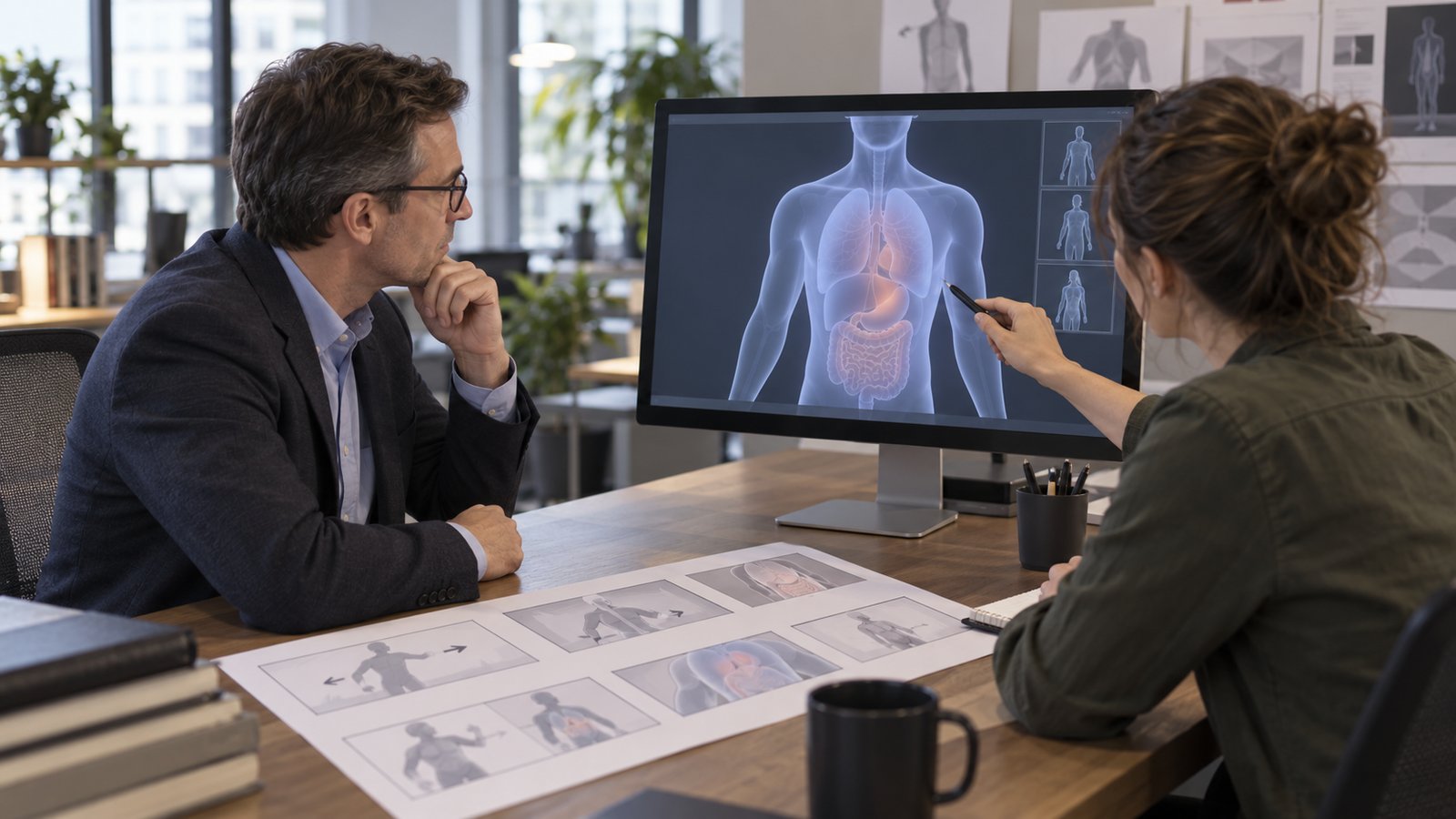

Medicine Animation
Separate explanatory visuals from clinical evidence
An animation can make an idea visible, but the scientific accuracy of the explanation comes from its references and review. A convincing render does not establish that a treatment works. An animated mechanism should distinguish what is established from what remains a hypothesis.
The FDA describes drug development as a process that includes scientific research, clinical studies and review of evidence. An animation used in a presentation communicates information from that process; it does not replace it. Read the FDA drug development process.

A practical production and review sequence
- Agree on the audience, distribution channel and intended communication result.
- Assemble approved publications, product documents and anatomical references.
- Write a script that identifies claims and their supporting sources.
- Build a storyboard showing the scene order, labels and important simplifications.
- Have a relevant specialist approve the scientific content and review rough motion.
- Approve the final animation, narration and captions as one complete message.
Keep the review record with the deliverables. If the product information changes, identify which scenes and voiceover lines need revision before reusing the video.

What a documented project example should include
A useful case description identifies the actual visual deliverable, its audience and its purpose. It can explain how the animation presents a device or scientific topic. A statement about increased funding, improved adherence or better patient outcomes needs separate project documentation and a suitable method of measurement.
The portfolio examples linked below are published Austin Visuals work samples. They are used here to illustrate types of medical visual communication. No financial or clinical outcome is inferred from their existence.
Measuring understanding and commercial use
For an educational piece, test whether the intended viewers can explain its central idea and identify which questions remain. For a sales or investor presentation, record qualified requests for information and the next steps taken. Match the measure to the original goal.
A positive reaction is useful feedback but does not prove treatment effectiveness or a return on investment. A claim about an actual project should identify the measurement period, comparison and permission to publish the result. If those records are unavailable, describe the deliverable and purpose without adding an outcome.
Replace a vague case story with inspectable evidence
A case story should let a reader identify what was produced and why. Link to a published work sample or an approved project record. Explain the audience and visual task using facts that the record actually supports. Do not fill gaps with a plausible client name or outcome.
If a project has measured results, identify the metric, period and comparison. A statement about investment interest is different from a statement about funding received. A patient-understanding measure is different from adherence or clinical recovery. Keep those categories separate in the narrative.
When records are incomplete, a concise description of the deliverable is still useful. A reader can evaluate the presentation format and ask the studio about a relevant production brief. The example does not need an invented success statistic to demonstrate the kind of work that was published.
Illustrative concept: explaining a device before a meeting
Suppose a device team needs a general explanation for a professional meeting. Its communication question is how a particular component functions within the approved product description. The team supplies the correct product files and identifies any anatomy needed for the explanation.
The studio could develop a script, storyboard and rough animation. Product reviewers would check component identity and movement, while the appropriate clinical specialist would review the anatomical context. The team would agree on which simplifications help explanation and which could mislead the audience.
Feedback could investigate whether viewers understood the component and what information they requested next. It would not establish that the device improved treatment outcomes or attracted investment. This is an illustrative production concept. A real project description requires a record identifying the actual deliverable, its purpose and any measured results.

Keep the animation useful after the first release
Medical communication often has several versions: a full explanation, a shorter presentation extract and a silent display. Keep the approved source material and script associated with each version. Changes in narration, labels or order should be reviewed for their effect on meaning.
Assign responsibility for updates before commissioning the work. A product revision or new scientific interpretation may make part of an older sequence unsuitable. The animation can remain visually impressive while its explanation needs attention.
Retain the agreed editable files and review history so later changes can be scoped accurately. Before reuse, check the audience, rights and current source information. This turns the production process into a maintained communication resource without claiming that the content will automatically remain scientifically current or suitable for every future audience.
When showing a portfolio sample in a proposal, explain the aspect that is relevant to the new brief. It might be the use of a component view, a particular level of anatomical detail or a presentation format. Avoid transferring an assumed result from the sample to the proposed project. The new audience, sources and review requirements may be different. A clear explanation of relevance helps a buyer evaluate visual capability while keeping the production discussion grounded in work that can actually be inspected. It is more informative than a generic claim that every past animation produced a successful clinical or financial result.
Published medical animation examples from Austin Visuals
These published work samples illustrate medical visual communication. Use them to discuss presentation choices; any clinical or commercial outcome claim needs separate project evidence.
Angioplasty device animation
Austin Visuals publishes an angioplasty-device animation in its portfolio. It is a relevant example of presenting a medical-device topic visually. The portfolio entry does not provide a clinical outcome study or measured sales results. View the published angioplasty device animation work sample.
Boston Cell Standards scientific animation
The Boston Cell Standards entry is a published scientific animation work sample. It illustrates a category of laboratory and scientific communication. The portfolio listing does not establish a clinical benefit or the commercial performance of a campaign. View the published boston cell standards scientific animation work sample.
Planning medicine animation with Austin Visuals
Austin Visuals creates medical visual explanations of anatomy, devices and biological processes. A medicine animation brief should identify the specific question the viewer needs answered and the references supporting the explanation.
Bring the audience, distribution plan and approved source material to the initial discussion. Use published work samples to explain the presentation detail you need, then name the qualified specialist responsible for reviewing the new subject matter. Agree on the script, storyboard and rough-motion approvals before final rendering. Keep the source record and permitted reuse with the delivered assets so later edits can be reviewed in their own context.
Conclusion
Medicine animation should be commissioned around a specific explanation and supported by reviewable references. Use published work samples to assess visual capability, and report client results only when project records support them.
Austin Visuals can help turn your approved material into a clear visual explanation. Email info@austinvisuals.com or call (512) 591-8024 to discuss your audience and production requirements.
Frequently asked questions
Can medicine animation improve patient outcomes?
An outcome claim requires appropriate evidence. The animation itself demonstrates a communication format, not a clinical result.
Are the linked work samples clinical case studies?
They are published visual work examples. They are not presented here as clinical outcome studies.
Who should check the science?
A qualified specialist in the relevant subject should approve the references, explanation and important visual assumptions.
Can an investigational mechanism be shown?
It can be explained when its research status and uncertainties are clear and the appropriate reviewers approve the content.
What makes a useful animation brief?
Define the audience, main question, sources, distribution channel, approved claims and review responsibilities.
What does a medical animation showreel demonstrate?
A showreel demonstrates visual presentation and production styles. It does not by itself establish clinical accuracy or effectiveness.