
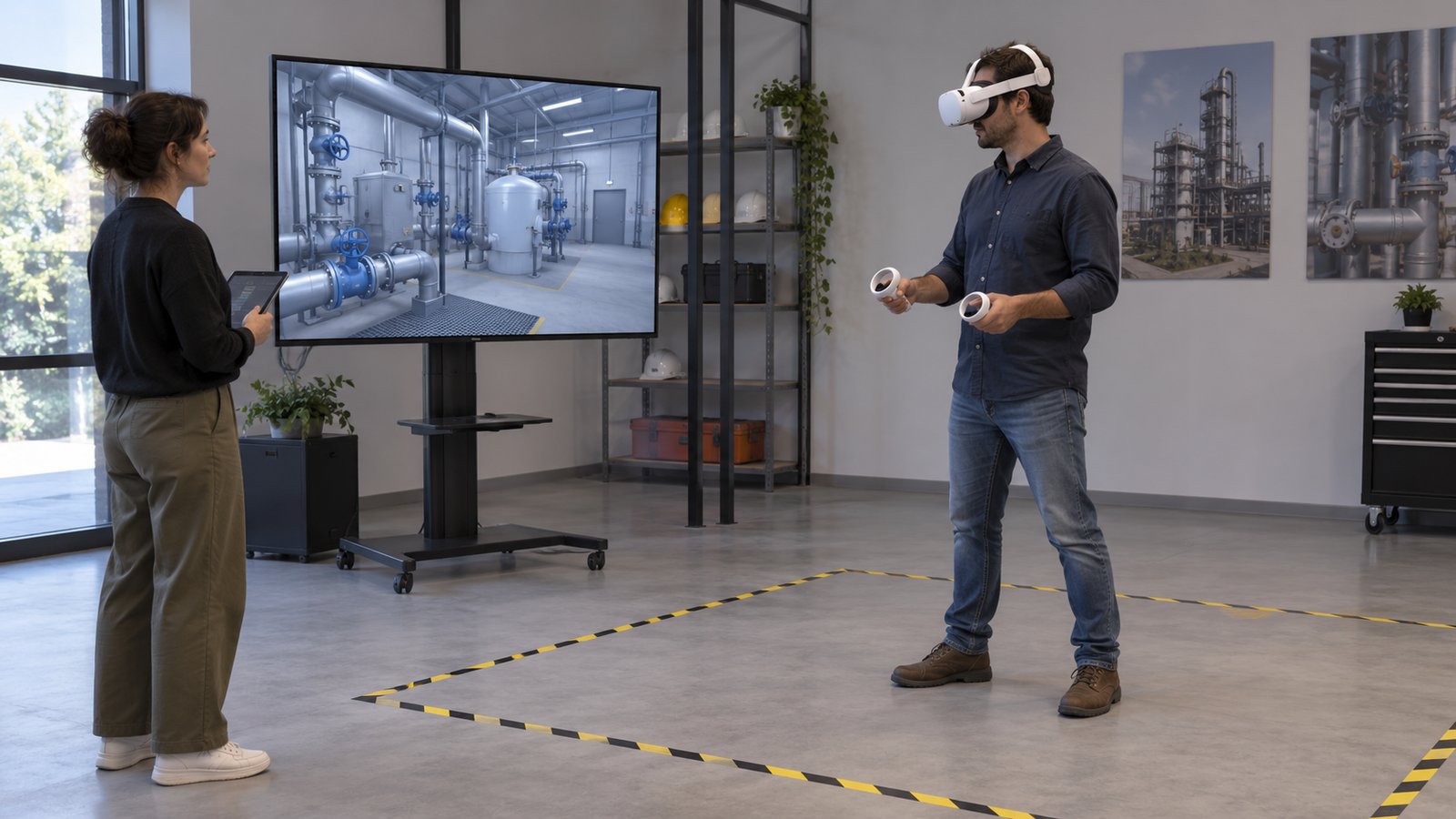
Virtual reality oil and gas training uses simulated environments and interactions to present a defined equipment or site scenario. Its value should be assessed against a specific training objective, with technical review and an appropriate role within the wider training program.
A VR project needs more than a convincing virtual facility. It needs decisions about what the learner will do, which actions the system can recognize, and what the instructor or assessor will observe. Austin Visuals offers virtual reality training services and oil and gas animation for project discussions built around those requirements.
This guide explains how to scope a pilot, choose the delivery format, prepare references, and evaluate the result. It does not assume that VR automatically reduces accidents, guarantees competence, or delivers a particular percentage of cost savings.
Discuss a VR training scope with Austin Visuals with a defined scenario and your intended training setting.
Define what you mean by virtual reality training
Headset VR, screen-based simulation, recorded video, and remote instruction are different formats. A proposal should identify the experience being built instead of using “virtual” as a catch-all description.
A headset experience can present a spatial environment and accept supported controller or tracking inputs. A desktop simulation presents its experience on a screen. A recorded animation follows an authored sequence, while live remote instruction includes an instructor communicating with learners through a chosen platform.
These formats may be combined, but they have different production, hardware, and support requirements. Specify what a learner can see and do, how an instructor participates, and whether the module records actions. A visually detailed scene without meaningful interactions may serve an orientation objective while leaving a task-practice objective unmet.
Choose a narrow objective for the first pilot
A useful pilot tests a clearly defined learning or usability question. Starting with a limited scenario makes it possible to inspect both the content and the delivery experience.
For example, a fictional facility-orientation pilot could ask learners to identify equipment areas and find the location of an approved information resource. A separate module might let a learner explain a component relationship using a reviewed virtual model. Neither example establishes qualification to operate real equipment.
Write the objective in observable terms. “Understand the facility” is difficult to evaluate. A more specific objective identifies what the learner should recognize, explain, or demonstrate within the simulation and what remains outside its scope.
| Decision | Question for the brief |
|---|---|
| Task | What should the learner do within this scenario? |
| Environment | Which approved equipment configuration is represented? |
| Interaction | Which actions can the system recognize? |
| Instruction | How can the learner obtain clarification? |
| Assessment | What evidence will the training team review? |
| Boundary | Which real-world conditions are excluded? |
Prepare equipment references and scenario logic
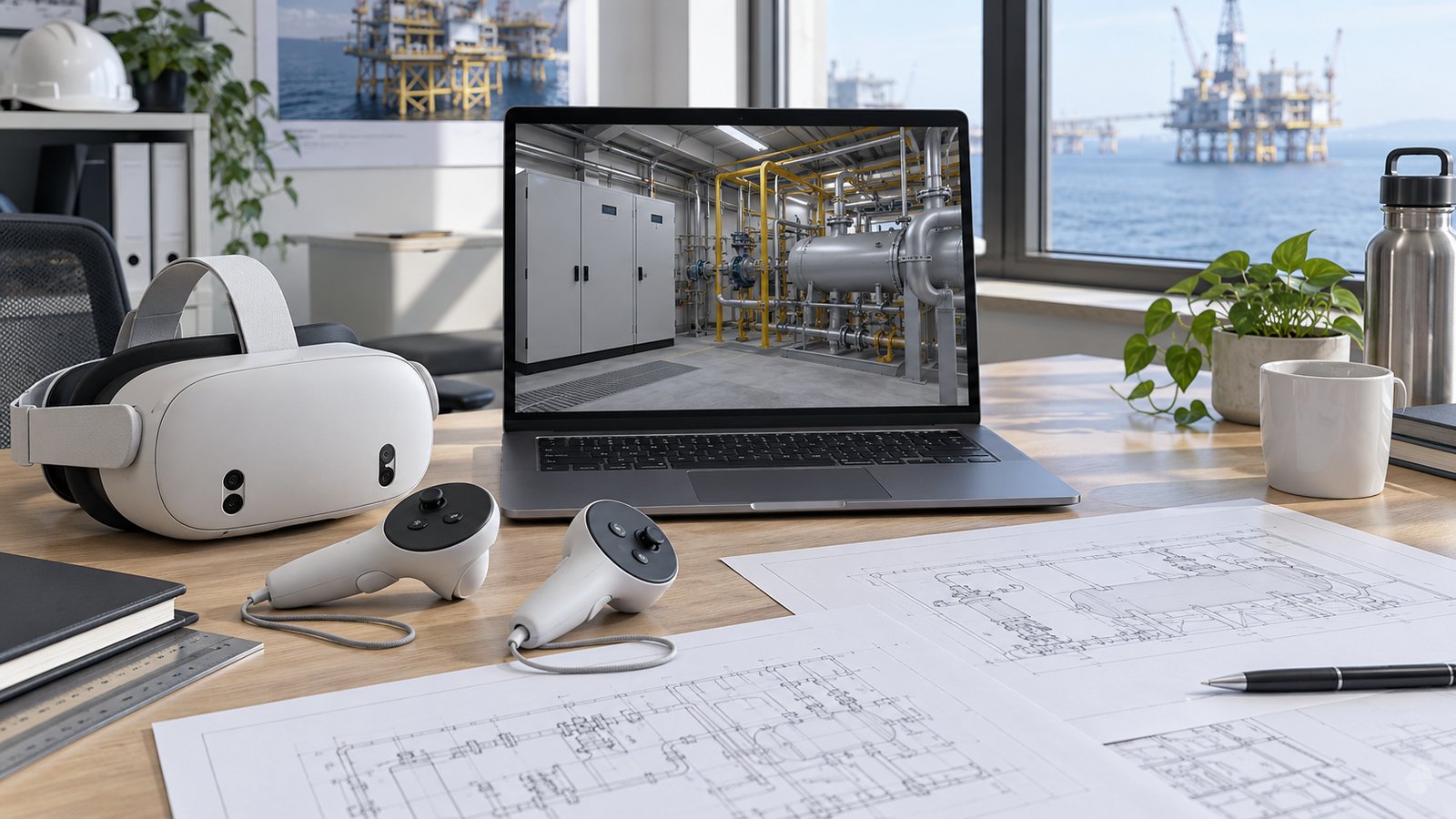
A simulation needs approved visual references and a reviewable description of its behavior. A model that looks plausible does not independently verify the scenario.
Provide the relevant drawings, photographs, procedure revisions, and terminology. Identify the equipment configuration and any differences between the available files and the intended training environment. A subject matter expert should resolve conflicting inputs before they become virtual components.
Describe interactions as a scenario outline. For each supported action, identify the condition, expected system response, and information shown to the learner. If a task can branch, reviewers should check the branches as well as the main path.
Keep technical instructions within approved source material. The production team should not invent missing operating steps to make a simulation feel complete. Unresolved details should be documented for the people responsible for the content and training requirements.
What an industry example can establish
A documented industry example shows that a particular organization describes using VR; it does not establish the outcome of your project. Separate the existence of an application from claims about its effectiveness.
Baker Hughes describes virtual reality training with instructor-led and on-demand options on its training website. This is a first-party description of the company’s offering, not independent evidence that any Austin Visuals module will produce the same result.
When reviewing examples, identify whether they actually concern headset VR or another simulation format. Also check the audience, equipment, instructor involvement, and assessment. An impressive demonstration may address a different task or deployment setting from yours.
Ask for an example to clarify an interaction or visual treatment, then define your own acceptance criteria. Avoid attaching a general savings percentage or accident-reduction claim to the format without a defensible project-specific comparison.
Review training requirements beyond the simulation
VR should be planned as a resource within the applicable training program. Qualified training and safety reviewers should determine what instruction, supervised practice, and assessment remain necessary.
OSHA’s computer-based training interpretation discusses access to a qualified trainer and hands-on requirements in its specific context. The letter should not be treated as blanket authorization for a headset module or proof of compliance with every applicable standard.
Document what the simulation cannot reproduce. Real-world physical forces, environmental conditions, equipment variation, and team communication may require different instruction or assessment. A virtual interaction can demonstrate what the software accepts while leaving those conditions unresolved.
Arrange a way to obtain clarification and report confusing behavior. Instructor participation, pause points, and supporting materials should be discussed as part of the training design rather than added only after the virtual environment is finished.

Specify hardware, delivery, and support
The target hardware and deployment setting affect both development and usability. Confirm them before assuming a module can run wherever learners need it.
Record the intended device, supported controls, available space, and installation method. Check how staff will start sessions, maintain equipment, and identify the current approved module. Determine whether learner records are needed and who is permitted to access them.
A pilot should test legibility, interaction clarity, comfort, and recovery from mistakes on the intended setup. Also discuss an alternative delivery route for learners who cannot use the chosen format. Record problems so revisions can be evaluated against specific observations.
Compare costs and evaluate the pilot
A cost comparison needs a defined alternative and the full delivery scope. Development cost alone is insufficient to establish whether a VR program is less expensive.
Include hardware, content review, deployment, instruction, maintenance, updates, and support where they apply. Compare equivalent training objectives and audiences. State which costs are measured, estimated, or excluded.
Evaluate the pilot against the objective established at the start. Review the relevant assessment and usability observations rather than interpreting completion as competence. Plan the next phase only after the training team has identified what worked, what needs correction, and which content must be reviewed again when equipment or procedures change.
How Austin Visuals helps with virtual reality oil and gas training
Austin Visuals offers virtual reality training services and oil and gas animation. Discuss the task, equipment references, target hardware, and intended interactions before choosing a production scope. Keep technical validation and training-program requirements with the qualified people responsible for those decisions.
Explore Austin Visuals services and project planning for the relevant production scope and examples. The content and required review should be confirmed for your particular project.
Prepare a clear project brief
Choose the audience and objective before deciding how much visual detail the project needs. Gather the current references, identify the people who can approve the explanation, and specify the delivery versions. These decisions provide a practical basis for production planning and a useful project discussion.
Have an animation project to discuss?
Share your audience, references, and delivery requirements with Austin Visuals to discuss an appropriate production scope.
Contact info@austinvisuals.com or call (512) 591-8024.
Frequently Asked Questions
What can virtual reality oil and gas training cover?
It can present defined equipment or site scenarios for orientation and practice within a reviewed simulation. The scope should identify the specific task and what the simulation represents.
Is VR the same as remote video training?
No. Headset VR, screen-based simulation, and live remote instruction are different formats. Specify the interaction, hardware, and instructor role in the training brief.
Does VR replace supervised training?
A VR module should be planned within the applicable training program. Qualified reviewers should determine what instruction, supervised practice, and assessment remain necessary.
How should a VR training pilot be measured?
Measure a defined objective against appropriate assessment criteria and record usability issues. Cost or safety outcome claims need a separate, defensible comparison.
What information is needed for a VR training quote?
Include the task, current equipment references, required interactions, target hardware, assessment needs, and review process. Identify updates and support requirements as part of the scope.
Can VR training guarantee a percentage reduction in cost?
No general percentage can be promised from the format alone. Compare development, hardware, support, updates, and delivery costs against a clearly defined alternative.