

Virtual reality simulated training lets healthcare learners rehearse selected tasks in a computer-generated environment. Some research supports improvements in specific skills, but a training result alone does not establish shorter anesthesia exposure, lower mortality, or better recovery for every patient. Austin Visuals helps teams explain medical topics through animation and interactive visual content; clinical training needs a curriculum and qualified supervision.
To discuss a visual communication project, contact Austin Visuals with your audience, approved source material and intended use.
Virtual reality simulated training: what does the research actually show?
A randomized study by Seymour and colleagues, published in 2002, involved 16 surgical residents. It tested whether practice on a VR simulator transferred to a specific part of laparoscopic gallbladder surgery. The trained residents performed the assessed dissection task faster and with fewer observed errors. This was a small, procedure-specific study, not evidence that every VR course reduces deaths or total anesthesia time. Read the original surgical training study.
A broader 2019 systematic review reported improvements in some knowledge and skill measures, with important limitations. The included studies did not report patient-related outcomes. That evidence supports careful evaluation of a learning tool; it does not support a blanket promise of better clinical outcomes. Read the health professions education review.
Updated October 14, 2026.
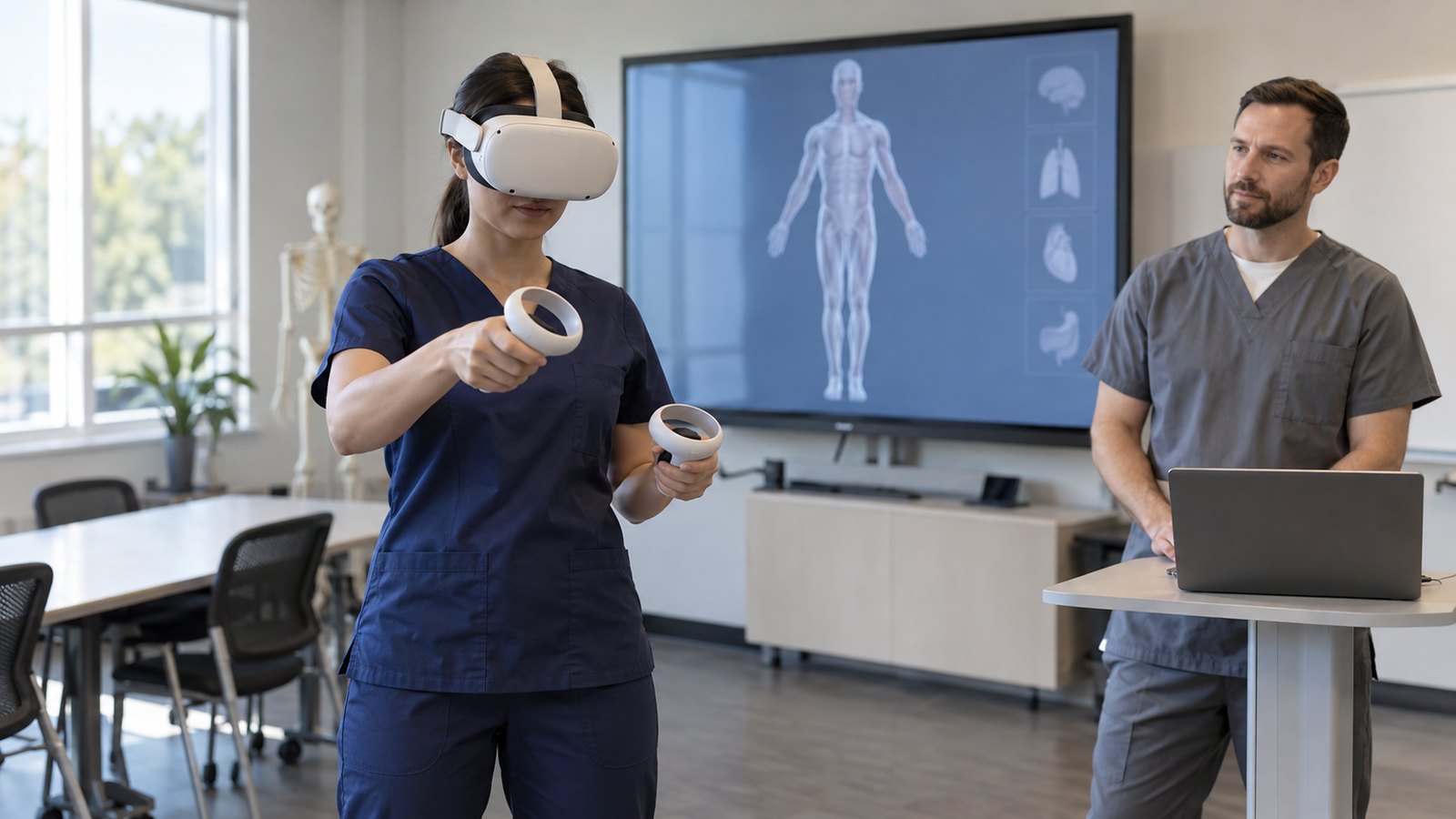
How could patients benefit from better preparation?
Rehearsal can give learners a place to recognize anatomy, discuss a sequence, and receive feedback before a supervised clinical encounter. The intended patient benefit comes from a well-designed training program and demonstrated transfer of skills. It should be measured rather than assumed.
A hospital evaluating a module should specify the skill, the learner’s starting level, the assessment method, and who decides readiness for practice. A visual walkthrough, an interactive task, and a simulator with validated performance measures serve different purposes. A realistic animation may be useful for orientation without being an assessment instrument.
What does a simulated environment protect against?
A virtual rehearsal does not expose a real patient to the simulated procedure. That is different from describing surgery as risk-free. Real procedures still require appropriate supervision, clinical judgment, equipment, and institutional safeguards.
Headset use also needs practical assessment. The FDA identifies possible AR/VR risks including discomfort, dizziness, fatigue and problems with displayed information. Plan space, breaks and an alternative learning format for users who cannot comfortably use a headset. See the FDA’s discussion of AR/VR medical devices.
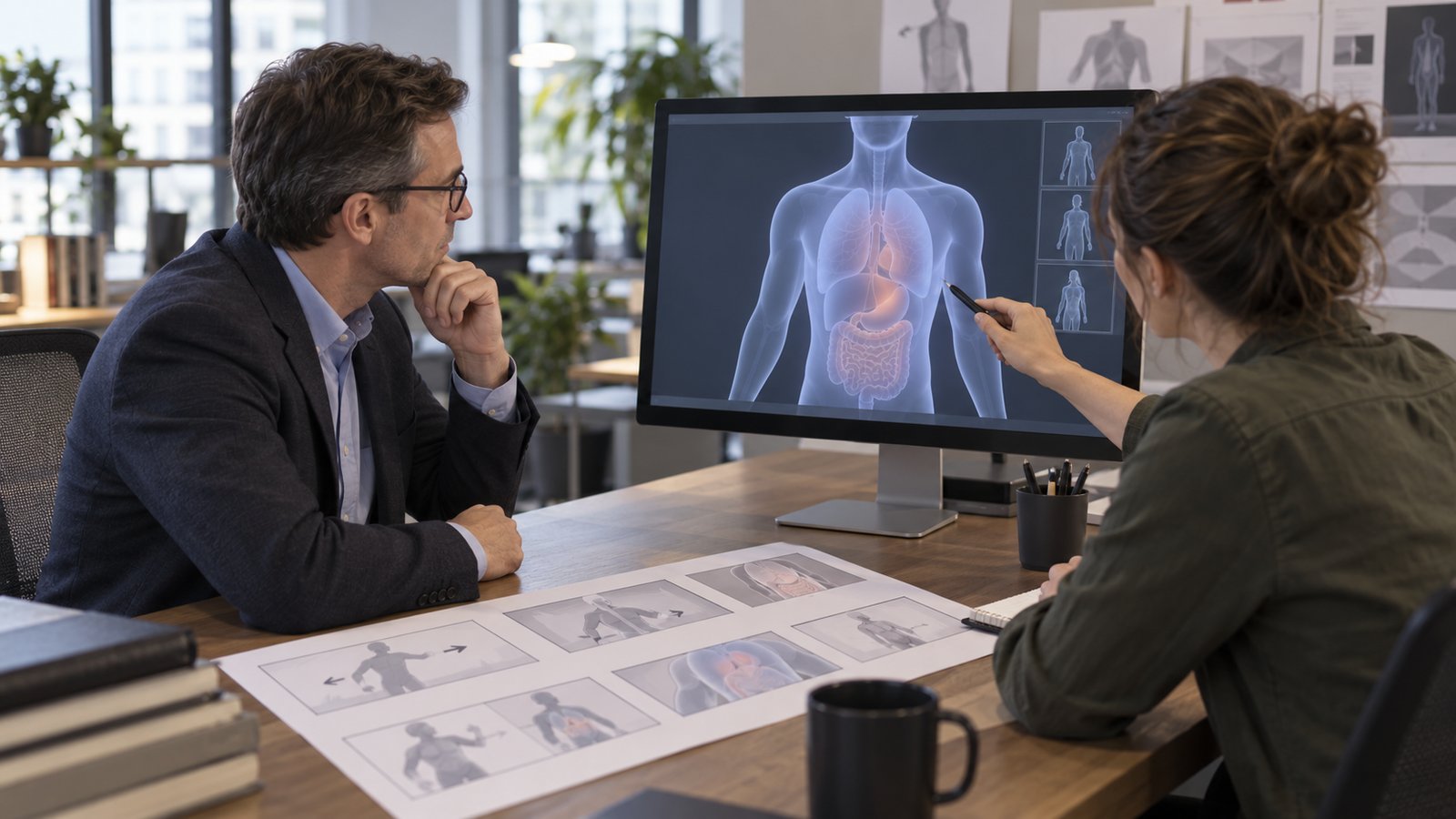
How should a healthcare team evaluate a training pilot?
- Choose one learning objective that can be observed, such as identifying device components or recognizing the sequence of an approved procedure.
- Have a qualified subject expert approve the scenario, anatomy and feedback before learners use it.
- Record a baseline and an assessment after training. Separate satisfaction scores from demonstrated skill.
- Use supervised assessment to investigate whether learning transfers to the intended setting.
- Monitor usability problems, errors, access needs and maintenance costs before expanding the program.
Patient outcomes require an appropriate study design and clinical governance. Completion rates or headset usage should not be presented as a reduction in complications.
Keep the outcome chain visible
A useful evaluation separates four questions: did the learner use the module, did the learner understand its content, did the learner perform the intended task, and did that performance affect care? Each question needs its own evidence. A participant finishing a session answers only the first question.
For an anatomy orientation, a reviewed knowledge assessment may fit the objective. For a procedural skill, an educator may need an observed assessment with defined criteria. A claim about patient outcomes requires a study designed to measure those outcomes and account for relevant differences between groups. The animation provider should not collapse these levels into one success statement.
Write the intended result into the brief before production. That helps determine what interaction and feedback are needed. It also gives the team a clear reason to omit impressive-looking scenes that do not serve the learning task. A program can be worthwhile as orientation even when it has not been shown to change clinical outcomes.
Illustrative example: orientation to an unfamiliar device
Consider a hypothetical hospital education team preparing a device orientation. The goal is for learners to identify components and explain an approved sequence before a supervised session. The team first gathers the manufacturer’s current documents and asks an appropriate specialist to approve the educational explanation.
The visual production brief might include a component overview, an internal view and a pause point where learners describe what they have seen. A conventional video could provide the overview. An interactive version would be considered only if selecting or manipulating components supports the objective.
The pilot would assess the stated knowledge task and record usability issues. A participant who identifies the components correctly has met that particular objective; the result should not be described as competence to operate on a patient. This is a planning example, not an Austin Visuals clinical case study or a promise of reduced anesthesia time.
Questions to ask before citing a training study
Check who participated in a study, what they practiced, what comparison was used and how performance was measured. A finding among residents using a particular simulator may not apply to students watching a passive animation. A task-specific result should remain tied to that task when summarized.
Also inspect when the assessment occurred and whether learning was examined outside the simulator. Immediate recall, later retention and transfer to practice are different outcomes. If a source does not report patient outcomes, do not add a clinical benefit while paraphrasing it.
For a public article or presentation, place the source next to the statement it supports. Give enough context for a reader to understand the scope without opening every citation. If a qualified reviewer later changes the interpretation, update both the text and any related visual. The correction should improve accuracy without turning a limited finding into a broader promotional claim.
For a training project, retain the assessment instructions alongside the visual files. A reviewer should be able to identify what the module was intended to teach and how that objective was assessed. If the task changes, the course owner should reconsider the content and assessment together. A video can remain technically functional after its place in the curriculum has changed. Checking that connection helps prevent a general explanation from being described later as a validated clinical course. It also gives the team a clear basis for deciding whether an updated visual needs a new pilot.
Published medical animation examples from Austin Visuals
These published medical animation samples illustrate ways to explain anatomy and products visually. Their portfolio entries do not establish outcomes for a VR training program.
Angioplasty device animation
Austin Visuals publishes an angioplasty-device animation in its portfolio. It is a relevant example of presenting a medical-device topic visually. The portfolio entry does not provide a clinical outcome study or measured sales results. View the published angioplasty device animation work sample.
Plastic surgery animation
The published plastic-surgery animation shows a related medical visualization format. Use the sample to discuss presentation detail and audience needs; it does not establish fewer complications or predict an individual surgical result. View the published plastic surgery animation work sample.
How Austin Visuals supports visual preparation for training
Austin Visuals can help turn an approved training explanation into storyboards, anatomical views and animation assets. Its medical animation production services are relevant when learners need to see a component, spatial relationship or sequence before a facilitated lesson.
Bring the learning objective, audience prerequisites and source documents to the production discussion. Identify the clinical educator who will approve the explanation and decide which tasks require supervised practice. A brief should also specify whether the asset is a preparation video or part of an interactive module. Agree on the review checkpoints, accessible versions and update responsibilities before detailed animation begins.
Conclusion
Virtual reality simulated training is most useful when a healthcare team defines the skill being taught and tests whether learners can apply it. Keep simulator performance separate from claims about anesthesia exposure, complications or mortality.
Austin Visuals can help turn your approved material into a clear visual explanation. Email info@austinvisuals.com or call (512) 591-8024 to discuss your audience and production requirements.
Frequently asked questions
Does VR training reduce patient deaths?
The sources cited here do not establish a general reduction in patient mortality. A claim about deaths needs clinical outcome evidence for the specific training program and population.
Does faster simulator performance mean less anesthesia?
No. A simulator score or a faster assessed surgical task does not directly measure total anesthesia exposure.
Can junior surgeons operate independently after VR practice?
VR practice alone does not establish independent readiness. Supervision, competency assessment and institutional requirements still apply.
Is an animated procedure the same as a surgical simulator?
No. An animation explains a sequence, while a simulator may allow interaction, feedback and assessment. Its training claims require separate evaluation.
Who should review a medical training scenario?
A qualified clinician or relevant subject expert should review the clinical content and assessment criteria. An animation team handles visual production.
What can Austin Visuals contribute?
Austin Visuals can help develop visual explanations, storyboards and animation assets. The healthcare team should define the curriculum and approve medical claims.