
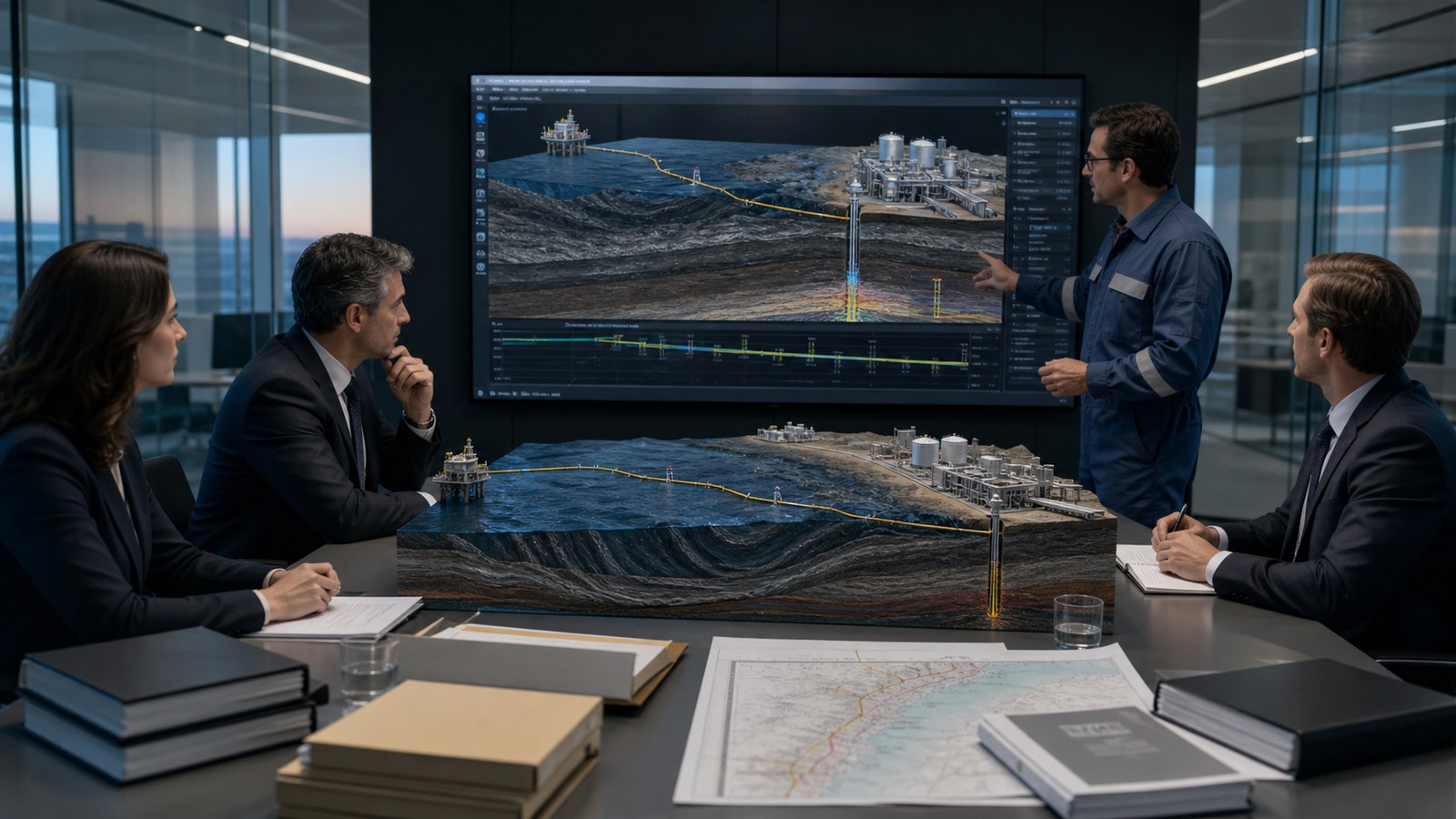
Legal animation for oil and gas litigation turns technical records, expert opinions, and disputed event sequences into a controlled visual explanation of what happened, where it happened, and which evidence supports each step. It can connect subsurface conditions to surface equipment, pipeline routes to inspection histories, or production measurements to royalty calculations without asking a judge, mediator, or jury to reconstruct the system from disconnected exhibits.
The strongest work is not a dramatic film about a lawsuit. It is a documented chain of explanation built with counsel and qualified experts. Every camera angle, equipment state, time interval, flow path, label, and simplification should have a source, a reviewer, and a defined purpose. Admissibility and use depend on the jurisdiction, the record, pretrial rulings, and the judge; the animation team does not make those legal decisions.
Contact us at info@austinvisuals.com or call (512) 591-8024.
What Is Legal Animation for Oil and Gas Litigation?
Legal animation for oil and gas litigation is a litigation-support visual created to explain technical facts or expert analysis involving exploration, drilling, completion, production, gathering, processing, transportation, measurement, decommissioning, or environmental response. Depending on the matter, the deliverable may be a narrated sequence, an interactive timeline, a 3D site model, a wellbore cutaway, a pipeline route visualization, or a set of short modules for different issues.
Search terms such as oil and gas litigation animation, energy litigation graphics, and 3D legal animation for petroleum cases describe overlapping services. The useful distinction is the disputed proposition: a visual built for pressure communication needs a different source set and reviewer than one built for a lease calculation or remediation history.
Some visuals function as pedagogical demonstratives that help an expert explain an opinion. Others summarize admitted records or illustrate facts independently established by evidence. Those categories are not interchangeable. Counsel should define the intended use early because it affects disclosure, foundation, design restraint, source management, and how the visual is introduced.
Which Oil and Gas Disputes Benefit From Animation?
Well Construction and Mechanical Failure
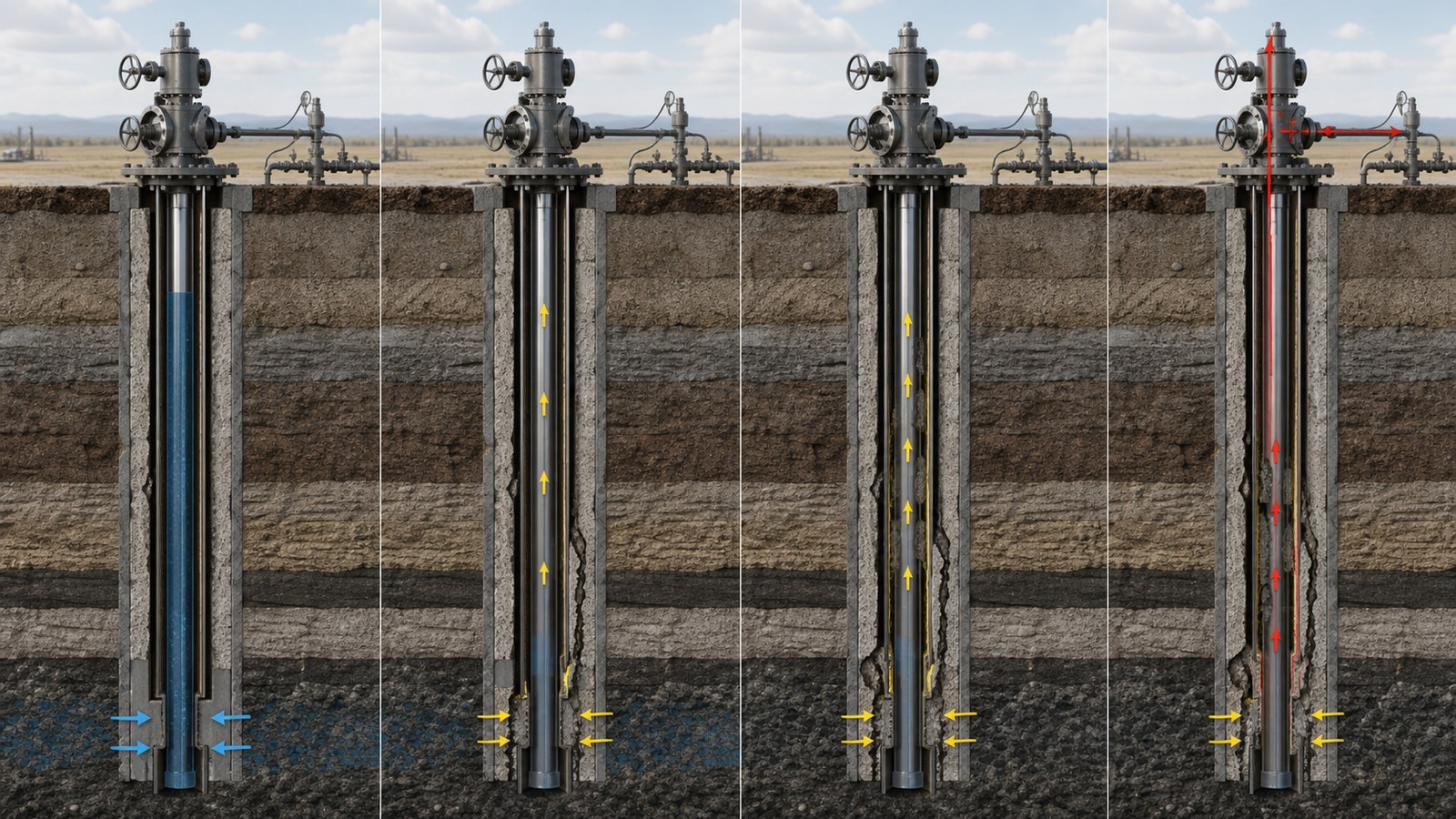
A well may involve nested casing strings, cement intervals, tubing, packers, valves, perforations, pressure zones, barriers, and surface equipment that are difficult to understand from separate schematics. A reviewed 3D cutaway can show the configuration at a specific date, then isolate the component or pathway addressed by the expert.
An oil well failure animation should begin with the configuration and conditions supported by the record. It can then show the sequence offered by the expert without implying that every hidden movement was directly observed.
Useful matters may involve casing or cement integrity, pressure communication, well-control events, tool failure, completion operations, abandonment, groundwater claims, or damage to neighboring interests. The animation should distinguish measured conditions, calculated values, expert interpretations, and purely illustrative geometry.
Pipeline Integrity, Construction, and Right-of-Way Claims
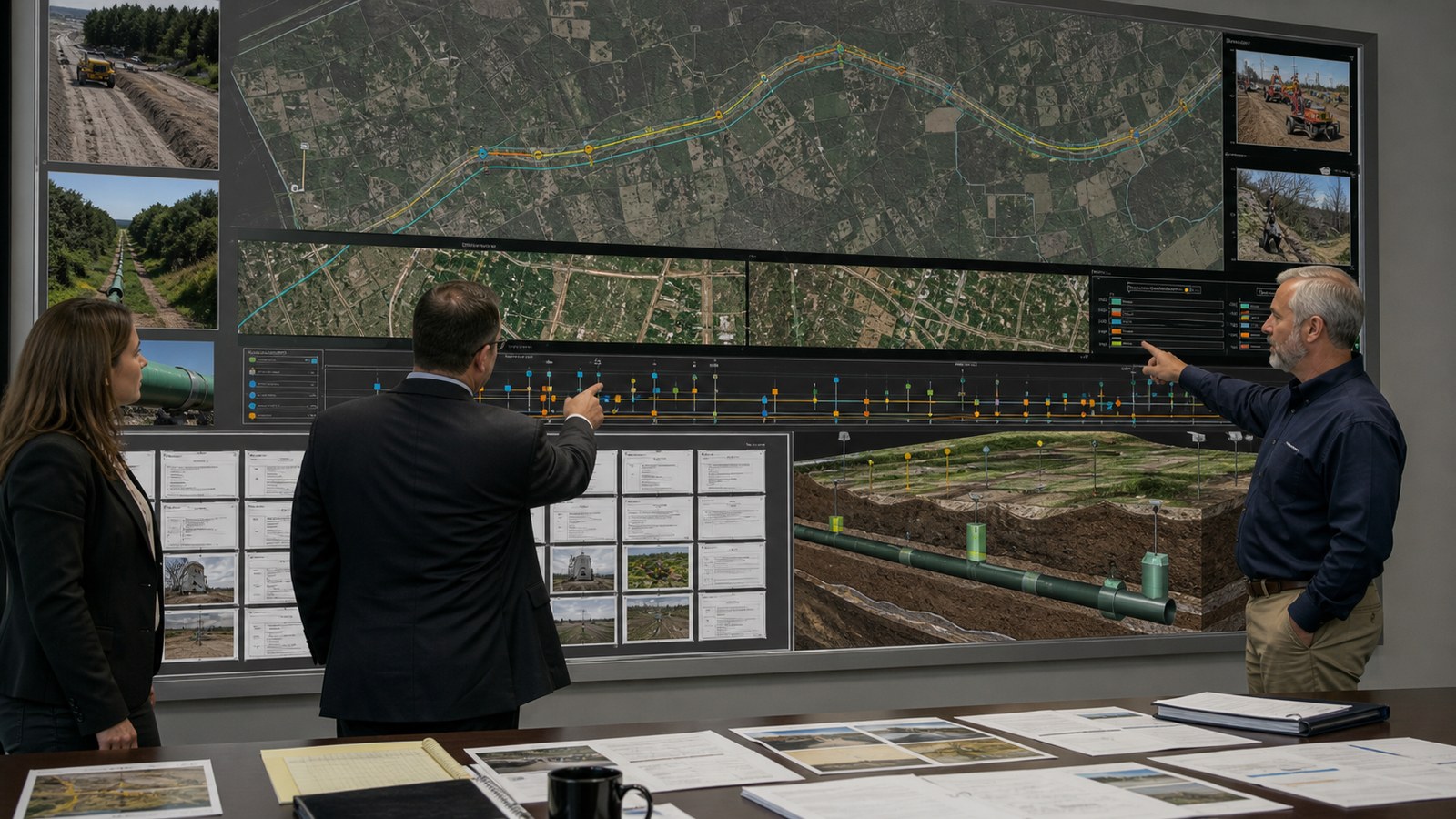
A pipeline case can combine route surveys, alignment sheets, inspection data, maintenance records, excavation history, easements, construction photographs, valve locations, elevation, and changing land conditions. Animation can place these materials on one spatial and chronological framework.
A pipeline litigation animation may be regional when route, access, and notice are disputed, or highly detailed when the issue concerns coating, corrosion, a weld, a valve, or an excavation. The model should use only the resolution necessary for the expert’s explanation.
It may clarify where an alleged defect was located, how construction progressed, when an inspection occurred, what equipment could access the right-of-way, or how a product pathway relates to valves and control points. It should not convert an uncertain failure origin into a precise point merely because a clean visual is easier to watch.
Environmental Release and Remediation Disputes
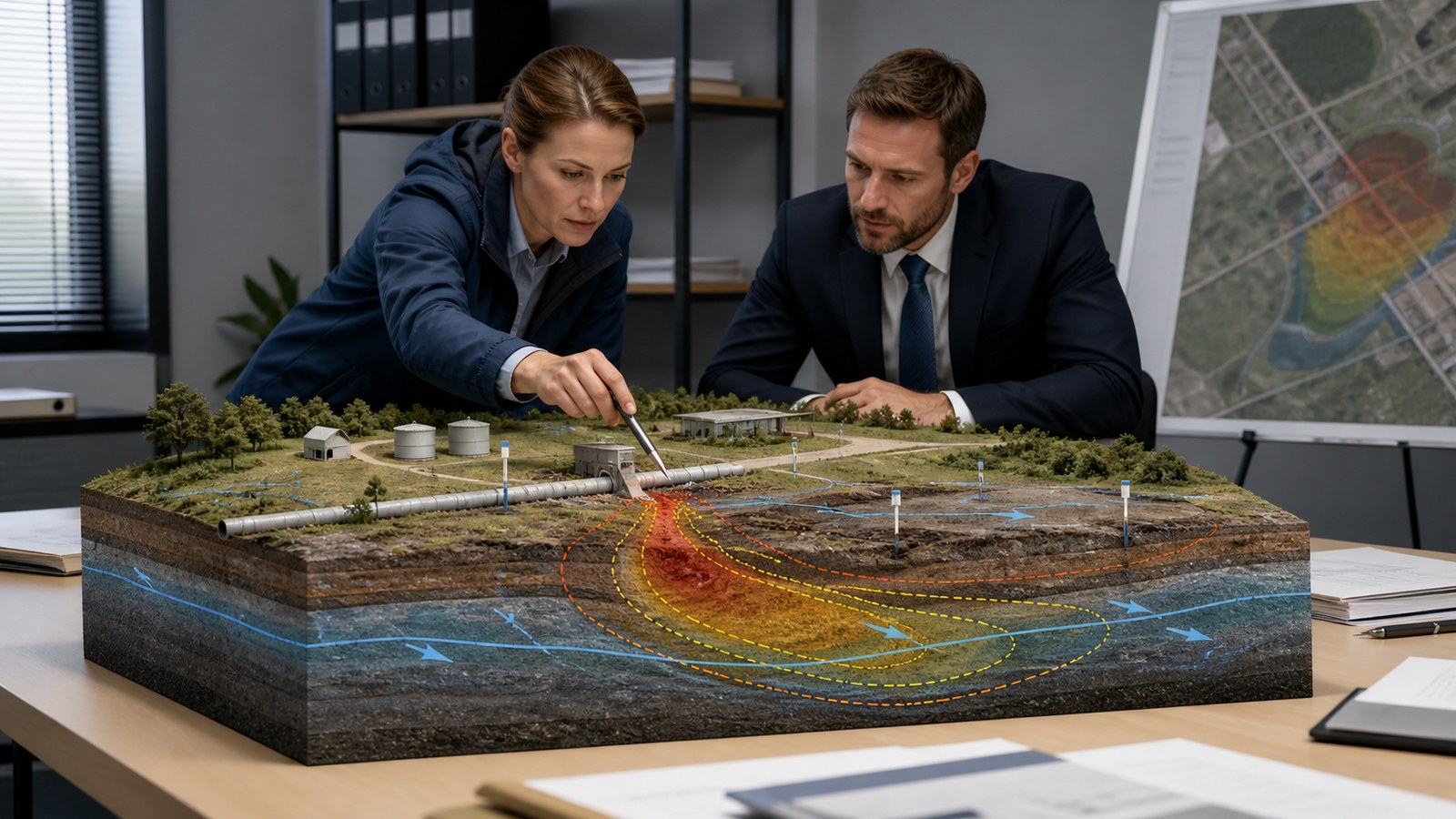
Environmental matters may require viewers to understand topography, drainage, soil layers, groundwater direction, weather, sampling locations, analytical results, excavation limits, response actions, and changes over time. A layered visualization can separate observed data from interpolated boundaries and expert modeling.
Restraint is essential. Color gradients, plume edges, transparent soil, and accelerated time can imply more certainty than the data supports. Dates, data gaps, model assumptions, vertical exaggeration, and alternate interpretations should be handled explicitly with the retained environmental specialist.
Royalty, Measurement, and Production Accounting
Not every oil and gas dispute is a physical failure. A royalty or allocation case may involve leases, units, wells, meters, gathering systems, processing stages, product streams, deductions, ownership interests, and monthly records. Motion graphics can trace where a volume was measured, how it moved, and where a disputed calculation entered the accounting chain.
These visuals work best when equations and records remain available alongside the animation. The goal is to organize the calculation, not replace the underlying documents or present a contested assumption as an established fact.
How Does the Evidence Become a Defensible Visual?
1. Build a Claim Map
Start with the proposition the expert needs to explain. Break it into visual claims: configuration, location, state, movement, timing, measurement, causation, or comparison. Each claim should identify its source and whether it is observed, calculated, assumed, disputed, or offered as expert opinion.
2. Create a Source Ledger
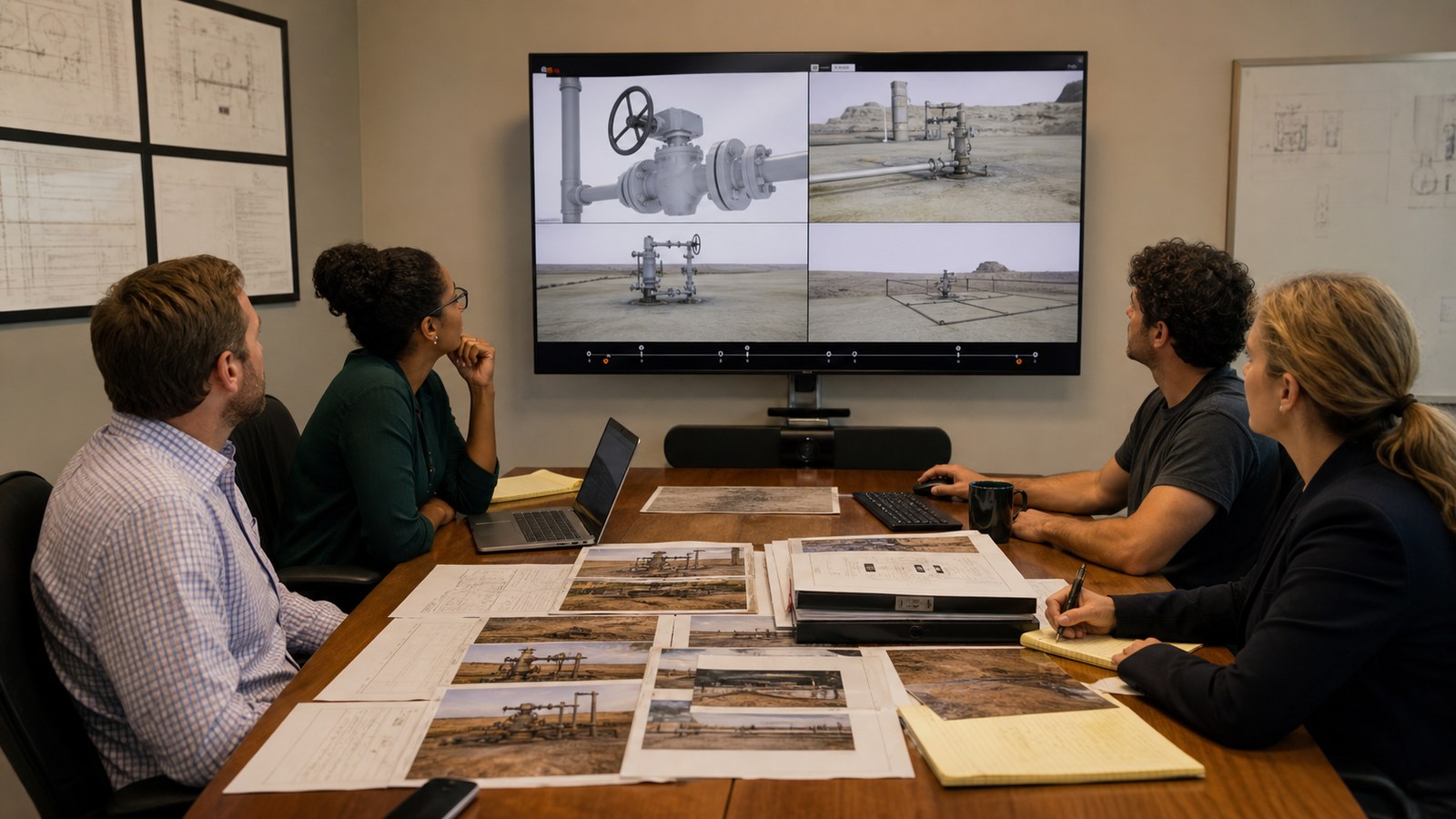
The source ledger records document identifiers, dates, revisions, custodians, deposition references, expert work product, and the visual elements derived from each item. Common inputs include CAD, GIS data, surveys, well logs, daily drilling reports, inspection records, SCADA exports, photographs, sampling results, contracts, accounting tables, and deposition testimony.
3. Resolve Scale and Time
Oil and gas systems span very different scales. A viewer may need to move from a regional pipeline route to a weld, or from a multi-year inspection history to a seconds-long equipment event. The storyboard should disclose when distance, diameter, speed, or time is compressed so the explanation remains clear without appearing literal.
4. Approve a Low-Detail Animatic
An animatic tests the sequence before polished rendering. Counsel and experts can review camera position, labels, chronology, transitions, comparisons, and narration while revisions are still efficient. This is also the right stage to remove unsupported scenery and decorative effects.
What Evidence Rules Shape the Production?
Federal Rule of Evidence 702 addresses expert testimony and the basis and reliability of an expert’s methods. Rule 403 permits exclusion when probative value is substantially outweighed by risks such as unfair prejudice, confusion, or misleading the jury. Rule 901 concerns authentication, while Rule 1006 addresses summaries of voluminous materials. State rules and case law may differ, and the court controls the final use.
These rules do not create a universal recipe for courtroom animation. They do suggest practical production questions: Who will sponsor the visual? What facts and opinions support it? Is the underlying process reproducible? Does the animation fairly reflect disputed uncertainty? Can the team explain how it was made? Is a summary tied to records available for examination?
Counsel may also need to consider discovery deadlines, exhibit exchange, protective orders, confidentiality, expert-report scope, demonstrative preclearance, and local courtroom technology. Those decisions should be made before the final render, not after a costly visual has locked in the wrong assumptions.
How Should Uncertainty and Competing Theories Be Shown?
A useful visual can show uncertainty without becoming visually weak. A range can be shown as a band rather than a line. An unverified component position can remain neutral. Sampling points can be displayed separately from an interpreted plume. A disputed event can be presented as two matched sequences using the same scale, camera, and clock.
Consistency matters in side-by-side comparisons. One theory should not receive cinematic lighting, smooth motion, and a favorable angle while the other receives a cluttered frame. If the visual is designed to advocate for one supported expert opinion, it can do so clearly while still labeling assumptions and avoiding invented facts.
What Should Counsel Ask an Animation Studio?
Ask how the studio manages sources, revisions, confidentiality, expert review, and late-stage changes. Request a scope that identifies discovery, technical intake, scripting, storyboard, 3D modeling, animatic, review rounds, final rendering, narration, exhibit formats, and on-site or remote presentation support.
The team should be comfortable receiving imperfect industrial material without pretending to be the expert. It should know how to separate a representative model from an as-built model, record purposeful simplifications, preserve versions, and produce still frames or alternate edits without introducing inconsistencies.
Security questions also matter. Determine where sensitive files are stored, who can access them, how third-party artists are managed, what is deleted after the case, and whether the production environment can satisfy a protective order or client policy.
How Much Does Oil and Gas Legal Animation Cost?
Cost depends on the number of disputed issues, quality of source material, 3D modeling burden, runtime, expert-review cycles, alternate theories, data visualization, narration, deadlines, and presentation formats. A short 2D timeline built from organized records may cost much less than a detailed well, pipeline, or processing-facility sequence reconstructed from conflicting documents.
A practical estimate should separate source audit, visualization planning, modeling, animatic, technical review, final rendering, revisions, and delivery support. Rush work is expensive because legal and technical reviewers still need meaningful approval time. The least expensive plan is often to identify the decisive visual question early and avoid modeling parts of the system that never appear in the explanation.
Why Choose Austin Visuals to Work With?
Austin Visuals combines industrial 3D production with a milestone-based review process suited to technically dense disputes. The team can work from CAD, engineering drawings, maps, photographs, operating records, expert annotations, and counsel’s demonstrative plan, then build only the level of detail required for the disputed issue.
For oil and gas litigation, Austin Visuals can coordinate wellbore cutaways, pipeline and facility models, time-based equipment states, environmental layers, measurement flows, maps, motion graphics, narration, captions, and presentation-ready files. Experts retain control of the technical theory, and counsel retains control of legal strategy and intended use.
Related capabilities include oil and gas animation services and forensic animation services. These resources are most useful when the project begins with a clearly defined audience, disputed proposition, source set, and reviewer list.
Our Clients include:
Conclusion
Legal animation for oil and gas litigation is valuable because it connects a complex industrial system to the evidence used to explain it. A disciplined visual can align location, equipment, chronology, measurements, and expert analysis while helping the audience see exactly where a disputed conclusion begins.
The process should remain source-led from intake through presentation. When the team documents assumptions, labels uncertainty, approves an animatic, and gives qualified reviewers real authority, the result is clearer, easier to update, and better prepared for counsel’s evidentiary strategy.
Contact us at info@austinvisuals.com or call (512) 591-8024.
Frequently Asked Questions
What is legal animation for oil and gas litigation?
It is a 2D or 3D litigation-support visual that explains a technical oil and gas system, event, timeline, calculation, or expert opinion using sources identified by counsel and qualified reviewers.
Can an oil and gas animation be used as evidence?
Its use depends on purpose, foundation, jurisdiction, disclosure, objections, and the judge’s ruling. Some animations illustrate expert testimony; others summarize or display evidence. Counsel should classify and plan the visual early.
What records are needed to create the animation?
Useful inputs may include CAD, GIS files, surveys, well schematics, logs, daily reports, inspection data, SCADA records, photographs, sampling results, contracts, accounting data, depositions, and expert analyses.
How is technical accuracy maintained?
The team uses a claim map, source ledger, version control, a low-detail animatic, and milestone reviews. Each important visual statement should have an identified source, assumption, or expert owner.
Can the animation show two competing expert theories?
Yes. Matched camera angles, scale, timing, and labels can compare theories fairly. Uncertain values can be shown as ranges, while disputed assumptions remain visibly distinct from measured facts.
How long does an oil and gas legal animation take?
A focused visual may take several weeks. A detailed well, pipeline, facility, environmental, or multi-theory sequence may require eight to sixteen weeks or more, especially when sources and expert reviews are extensive.
Does Austin Visuals provide legal or engineering opinions?
No. Austin Visuals produces the visual under the direction of counsel and qualified experts. The legal strategy, evidentiary foundation, engineering opinions, environmental conclusions, and calculations remain with the responsible professionals.