
Introduction
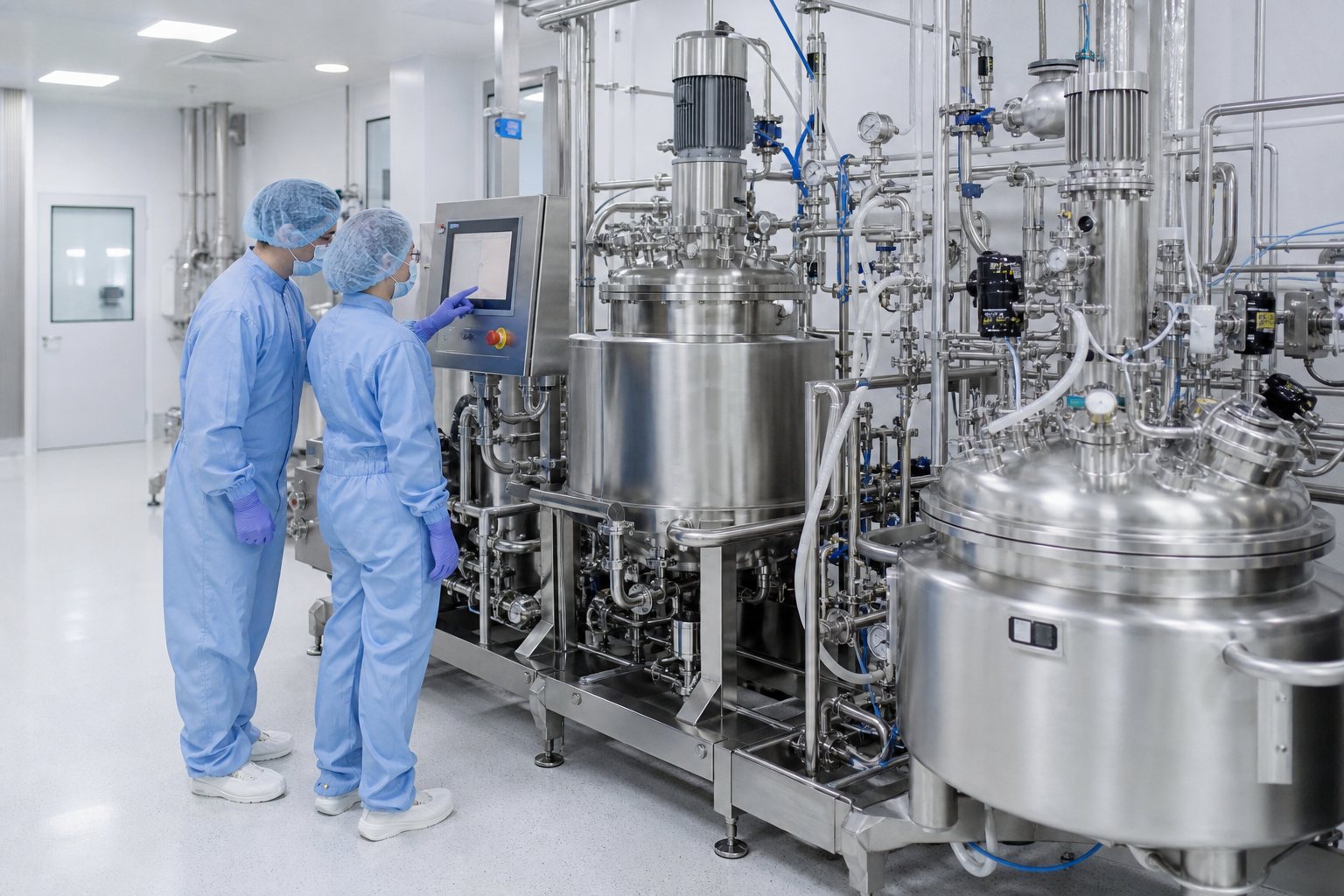
Pharmaceutical production depends on controlled facilities, qualified people, approved procedures, maintained equipment, accurate records, and a quality system that keeps the process in a state of control. Written instructions remain essential, but learners may still struggle to understand spatial relationships, hidden components, process sequence, or the reason behind a contamination-control step. Austin Visuals creates technically grounded visual content that can support training, engineering communication, onboarding, and process explanation.
The purpose is not to turn a regulated process into entertainment. A strong visual preserves the important technical facts, makes assumptions visible, and directs attention to the decisions that matter. For help planning a medical or pharmaceutical manufacturing animation, contact Austin Visuals at (512) 591-8024 or info@austinvisuals.com.
What Is Medical Animation for Pharmaceutical Manufacturing?
Medical animation for pharmaceutical manufacturing is a visual explanation of how medicines, biologics, equipment, or production controls move through a defined process. It may show raw-material flow, a closed transfer, bioreactor operation, filtration, aseptic filling, tablet compression, cleaning boundaries, laboratory testing, or a training scenario. The result can be a realistic 3D sequence, simplified technical motion graphics, or a hybrid of animation and live action.
The defining feature is technical intent. A pharmaceutical manufacturing animation should answer a specific question: What happens next? Which pathway is open? Where is the critical boundary? Which intervention creates risk? What does the operator verify? Which sample represents the process stage? The camera, timing, color, section views, and callouts are selected to clarify that question rather than simply display expensive equipment.
Animation does not automatically become an approved work instruction. The site SOP, batch record, validated process, equipment status, and quality system remain authoritative. When a visual is used in training, it should be reviewed against current controlled information, assigned a defined purpose, and revised or retired when the process changes.
Why Pharmaceutical Manufacturing Training Benefits From Animation
Many pharmaceutical processes are difficult to observe directly. Stainless vessels hide mixing and flow. Isolators and restricted-access systems intentionally separate people from critical operations. Cleanroom filming may be limited. Some events occur too quickly, too slowly, or at a scale that a camera cannot show. Animation can reveal those relationships without opening equipment, interrupting production, or placing a film crew in a controlled area.
A well-designed pharmaceutical training animation can establish the starting condition, identify relevant equipment, show the approved sequence, pause at a decision point, and compare correct and incorrect states. It gives instructors a repeatable visual reference while leaving room for site-specific discussion, supervised practice, and assessment.

For new employees, the animation can provide a mental map before they enter a production area. For experienced staff, it can support change communication or refresh a procedure that is performed infrequently. For cross-functional audiences, the same model can be adapted so manufacturing, quality, engineering, maintenance, and leadership see the level of detail relevant to their roles.
Key Applications of Medical Animation in Pharmaceutical Production
Aseptic processing and sterile filling
Aseptic operations depend on controlling contamination risk through facility design, environmental conditions, equipment, personnel practices, interventions, and validated procedures. An aseptic process animation can show the relationship between the filling line, barrier or isolator, container path, filling needles, stopper placement, transfer points, and operator interventions. The visual can isolate one event while preserving the surrounding process context.
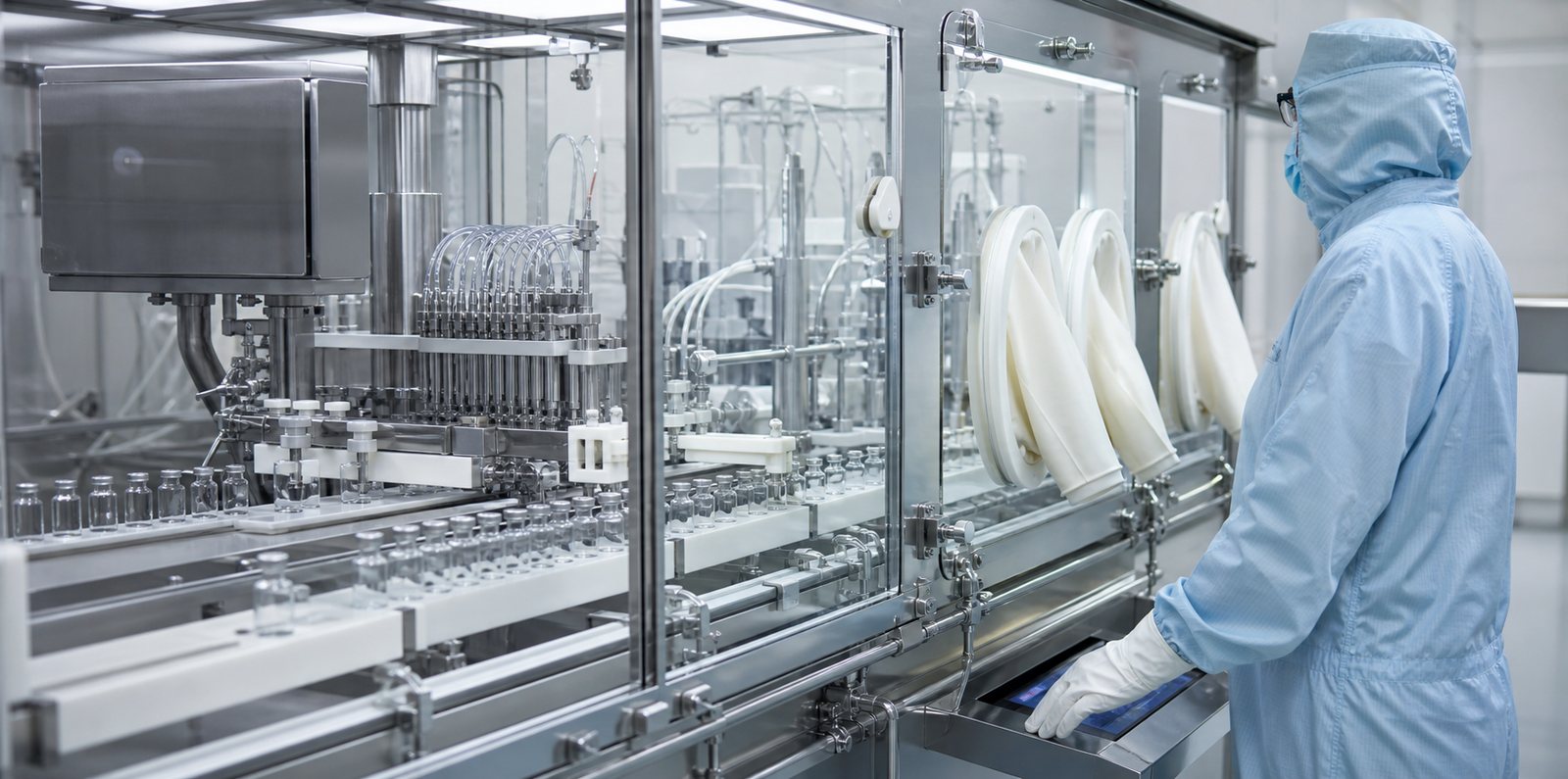
The animation should not suggest that sterility can be proven by appearance alone. It should use client-approved terminology and distinguish between demonstration and actual batch data. If it portrays an intervention, the gowning, access method, component position, and sequence must match the intended procedure. Simplification is useful only when it does not erase the control being taught.
Bioreactors and biologics manufacturing
Bioprocess equipment contains interacting mechanical and process systems: agitation, gas delivery, temperature control, feeds, sampling, harvest, and instrument connections. A realistic cutaway can reveal those components while keeping them aligned with the physical vessel. Biopharmaceutical process visualization is useful for onboarding, process overview, technology transfer, customer communication, and explaining why a parameter or flow path matters.
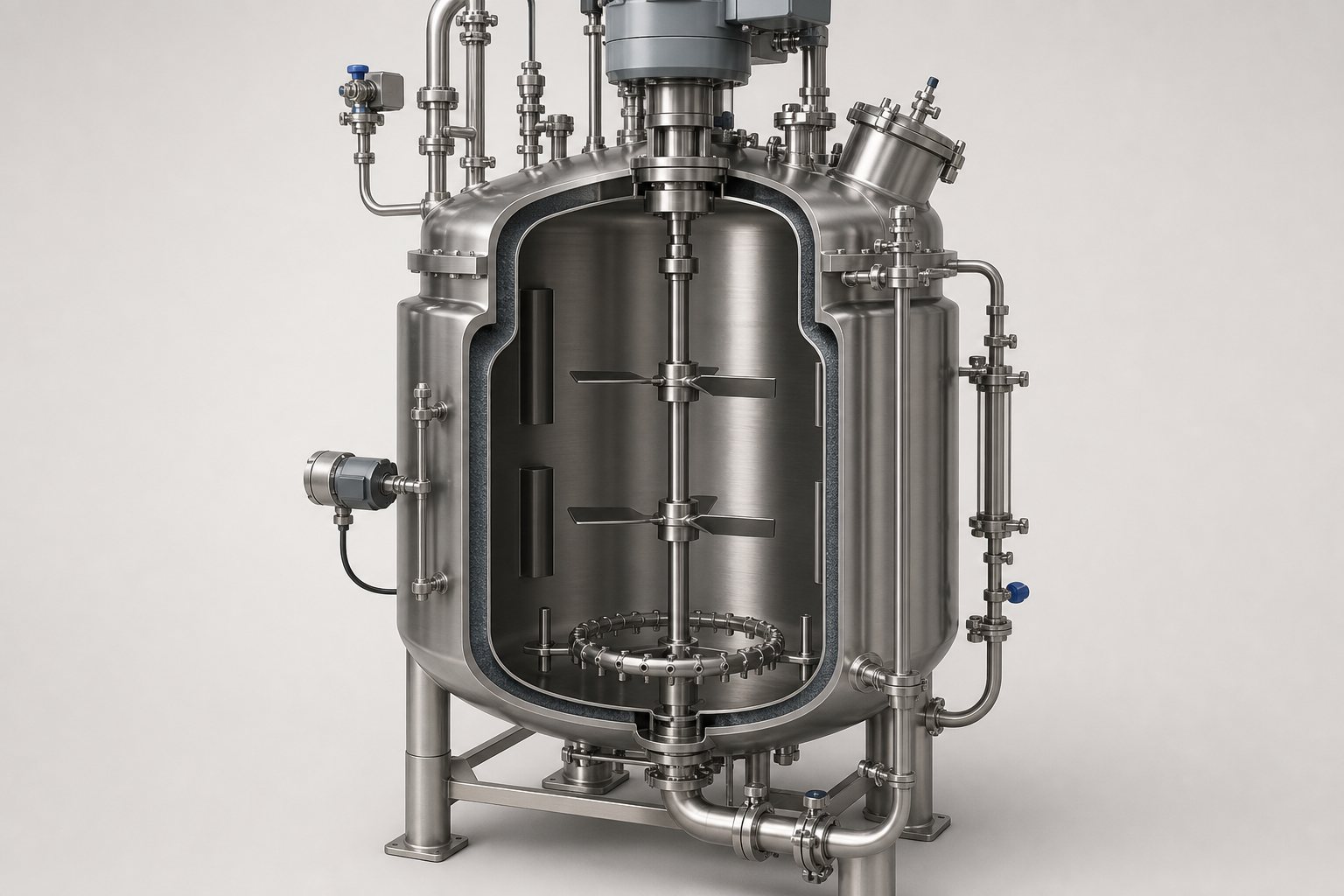
A cutaway should be treated as an explanatory view, not as a claim that every bioreactor uses the same configuration. Impeller type, sparger design, port arrangement, sensor placement, scale, and control strategy vary. The animation team should work from approved equipment information and clearly document any generic or simplified geometry.
Solid-dose manufacturing
Solid-dose operations may include dispensing, blending, granulation, drying, milling, lubrication, compression, coating, and packaging. Animation can show material flow between enclosed stages, the role of containment, the function of guards, and the points where operators perform an in-process check. It can also show the internal action of a tablet press or blender from a viewpoint that live video cannot capture safely.

The visual must avoid implying uncontrolled powder release or access to moving parts. If the training objective concerns cleaning or changeover, the equipment state and energy controls need to be represented accurately. If the objective concerns tablet formation, the animation can slow the compression cycle, isolate tooling, and show the relationship between fill depth, compression, and ejection without inventing product specifications.
Quality control, sampling, and analytical testing
Quality-control communication often spans production, sample handling, laboratory preparation, instrument analysis, data review, and disposition. Animation can connect those stages into one understandable sequence. It may show where a sample originates, how identity is maintained, which instrument concept is being explained, or how a deviation moves into an investigation workflow.
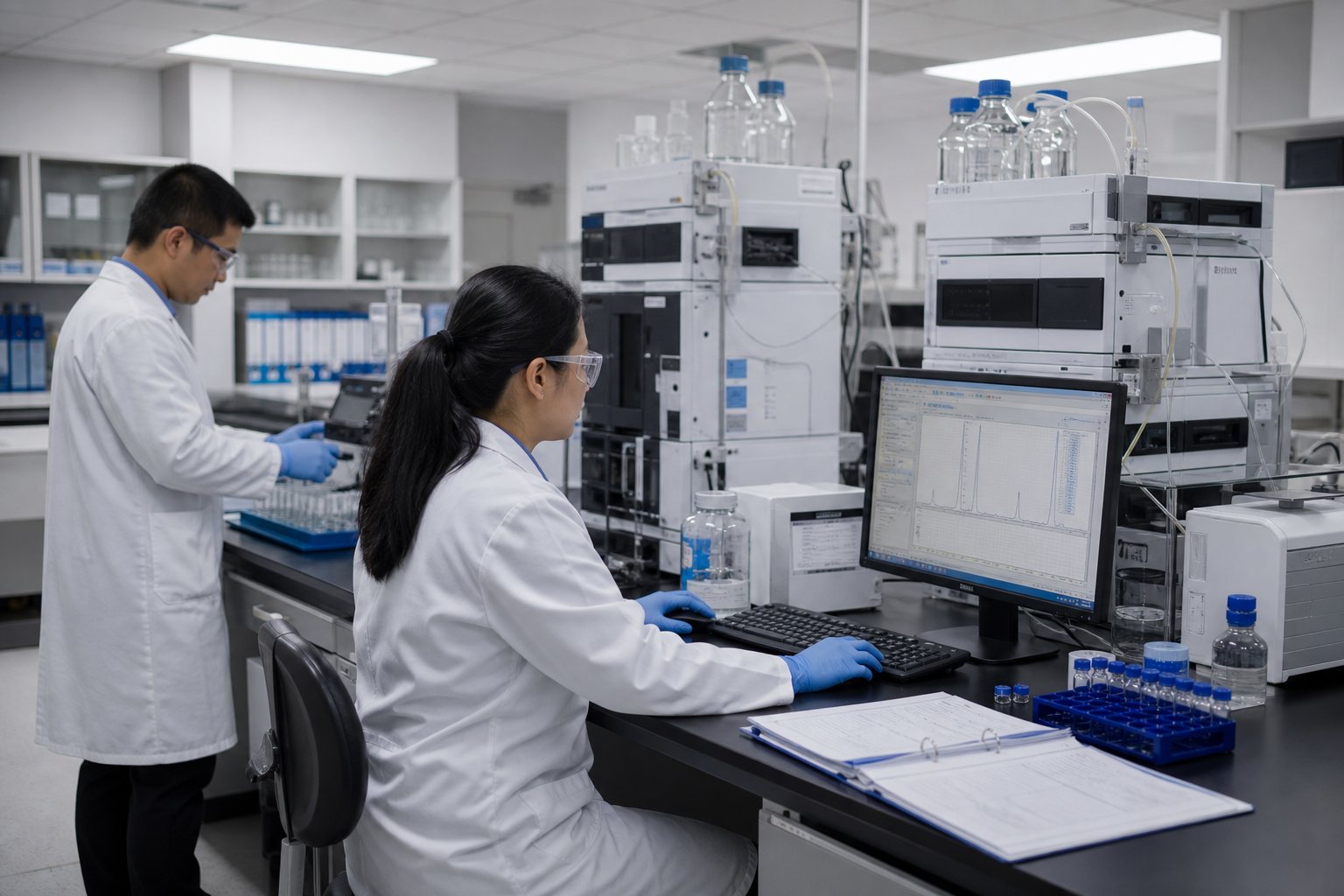
The animation should never fabricate analytical results or acceptance criteria. A chromatogram, particle count, assay value, or environmental result must be labeled as representative unless it comes from approved project data. The goal is to explain the workflow and decision structure while the validated method and quality procedures remain authoritative.
How 3D Medical Animation for Pharma Improves Understanding
3D medical animation for pharma can control what the viewer sees at each moment. A pipe can be isolated from a dense skid. An opaque tank can become a section view. A valve can be enlarged while remaining in its real location. A transfer can be paused at the boundary that matters. This control reduces visual competition and helps the learner build a correct mental model.
It also allows one approved model to support several deliverables. A detailed process animation may produce short training clips, still images, onboarding modules, presentation loops, and simplified executive visuals. Reusing the underlying assets can improve consistency, but each deliverable still needs its own review because context and audience change the risk of misunderstanding.
Realism should serve comprehension. Photorealistic materials are useful when equipment recognition matters. Simplified colors may be better when the learner must follow flow paths or distinguish clean and dirty states. Microscopic or molecular scenes may require a scientific visualization style rather than literal photography. The project should state which elements are to scale and which are schematic.
Building an Accurate GMP Training Animation
1. Define the training decision
Start with the action or decision the learner must perform after the lesson. That might be recognizing an equipment state, following an approved sequence, identifying a critical boundary, responding to an alarm, or understanding how one unit operation affects the next. A narrow objective prevents the animation from becoming a general facility tour.
2. Establish the controlled source set
Useful sources include approved process descriptions, current SOPs, batch-record excerpts, equipment drawings, CAD, piping and instrumentation information, photographs, training objectives, and the terminology approved by the site. Identify the owner of each source and note where confidential details must be removed or generalized.
3. Create a storyboard and assumptions register
The storyboard establishes scene order, camera position, visible equipment states, callouts, and narration before detailed production. An assumptions register records any missing geometry, representative values, generic components, or simplified movement. Reviewers can then accept, replace, or reject those assumptions early.
4. Review geometry and motion before final rendering
Low-detail previews allow manufacturing, engineering, quality, EHS, and training reviewers to check process order, valve states, material paths, interventions, gowning, and equipment relationships. Corrections are easier at this stage than after final materials, lighting, voiceover, and rendering are complete.
5. Validate the communication package
The organization should confirm how the animation will be used, who approves it, how completion is recorded, whether knowledge checks are required, and how revisions are controlled. A visual can support learning, but it does not remove the need for qualified instructors, supervised practice, or role-specific assessment.
What Should a Pharmaceutical Company Provide?
A productive starting package includes the audience, learning objective, current process description, equipment references, existing training materials, and a list of reviewers. CAD is helpful but not always required. Photographs, equipment manuals, approved diagrams, and a guided review with a subject matter expert may be enough for a simplified process animation.
Security and confidentiality should be addressed before file transfer. The project can use controlled access, simplified geometry, neutral product identifiers, restricted review links, and agreed retention requirements. Public-facing visuals may need more abstraction than internal training content.
Review availability is as important as source files. The animation producer cannot independently approve a pharmaceutical process. Designated reviewers need time to verify the facts that fall under their responsibility and to distinguish required corrections from stylistic preferences.
Why Choose Austin Visuals for Pharmaceutical Manufacturing Animation?

Austin Visuals helps technical and medical organizations turn complex equipment, processes, and scientific concepts into structured visual communication. Our team can support discovery, scripting, storyboarding, CAD preparation, 3D modeling, animation, motion graphics, voiceover, editing, and delivery. We plan review stages so technical corrections can happen before final rendering.
For pharmaceutical projects, we can create a process overview, equipment cutaway, onboarding module, aseptic training sequence, quality workflow, hybrid live-action video, or a library of reusable technical scenes. The visual style can range from clean engineering graphics to realistic 3D production imagery, depending on the audience and objective.
Training projects can also connect with broader workplace safety training videos when the content naturally includes PPE, controlled access, equipment hazards, or emergency procedures. We keep that safety context separate from product-quality claims and use the client’s approved information for both.
How to Measure Training Value
Measurement should reflect the defined learning objective. Useful indicators may include knowledge-check performance, instructor time, repeat questions, observed errors during supervised practice, time to reach qualification milestones, or the ability to identify equipment and process states. The animation is one part of the training system, so results should not be attributed to the video alone without considering instruction and practice.
Collect qualitative feedback as well. Ask learners which scene clarified the process and where uncertainty remains. Ask instructors which segments they replay. Review whether the animation causes questions that reveal an incorrect assumption. Those observations can guide a focused revision instead of adding more visual detail everywhere.
Finally, define ownership. When a process, equipment configuration, SOP, gowning practice, or terminology changes, someone should assess the animation. Current visuals can support consistent learning; obsolete visuals can create confident misunderstanding.
Frequently Asked Questions
What is medical animation for pharmaceutical manufacturing?
Medical animation for pharmaceutical manufacturing is a technically reviewed visual explanation of equipment, materials, process flow, aseptic operations, quality controls, or training procedures used to produce medicines and biologic products.
How can pharmaceutical animation support GMP training?
Animation can help learners see equipment relationships, process sequence, contamination-control concepts, cleaning boundaries, interventions, sampling points, and quality decisions before supervised practice. It should remain aligned with current approved procedures and training requirements.
Can an animation replace an approved SOP?
Not automatically. An animation may support an approved training or instruction system, but the controlled SOP, batch record, validated process, and site quality system remain authoritative unless the organization formally approves the animation for a defined use.
What source materials are needed for a pharmaceutical manufacturing animation?
Useful inputs include approved process descriptions, equipment drawings or CAD, piping and instrumentation information, SOPs, batch-record excerpts, facility photos, training objectives, terminology, and reviews from manufacturing, engineering, quality, and EHS specialists.
Can animation explain aseptic filling without filming inside a cleanroom?
Yes. A reviewed 3D animation can show isolator or barrier-system relationships, vial movement, filling and stoppering stages, planned interventions, and environmental boundaries without placing a camera crew in the critical manufacturing area.
How long does a pharmaceutical process animation take to produce?
A focused module may take several weeks. Programs requiring CAD cleanup, several procedures, custom scientific visualization, voiceover, multilingual versions, and formal stakeholder reviews can take longer. Scope and review availability are major schedule factors.
How does Austin Visuals maintain technical accuracy for pharmaceutical projects?
Austin Visuals builds from client-approved source information, documents assumptions, uses staged visual reviews, and asks designated subject matter experts to verify geometry, sequence, terminology, gowning, safety details, and the final intended use.
Conclusion
Medical animation for pharmaceutical manufacturing can make enclosed equipment, aseptic boundaries, material flow, laboratory workflows, and training sequences easier to understand. Its value comes from a clear objective, current source information, documented assumptions, staged technical review, and deliberate control of the final training asset.
When the visual remains aligned with approved procedures, it can help learners prepare for supervised practice, help departments communicate across specialties, and help organizations explain complex manufacturing without interrupting production.
Austin Visuals helps companies turn equipment, workflows, safety procedures, products, and technical processes into clear visual content that teams and customers can understand.
Contact us at info@austinvisuals.com or call (512) 591-8024.