
Medical device sales is one of the most technically demanding commercial roles in any industry. Reps are expected to explain how complex devices work, articulate clinical benefits, address physician objections, demonstrate procedure compatibility, and do all of this in a short window — often in a hospital corridor, a procedure room, or a quick meeting between cases.
The problem is that most sales training programs still rely heavily on slide decks, printed materials, and classroom instruction. These formats work for general product knowledge. They are less effective when the product involves implanted components, surgical instrument mechanics, catheter delivery systems, or proprietary technology that is difficult or impossible to see with the naked eye.
Medical device animation gives sales teams a way to show what they are describing. A well-built 3D animation can visualize device deployment, mechanism of action, anatomical interaction, procedure steps, and competitive differentiation in a format that is both accurate and easy to understand. Austin Visuals works with medical device companies to create this kind of training content — production that supports both onboarding and ongoing rep education.
Need a clearer way to prepare your sales team for complex product conversations? Email info@austinvisuals.com or call (512) 591-8024 to discuss a medical device animation built around your training goals.
Why Standard Training Materials Fall Short for Device Sales
Medical device reps typically learn their products through a combination of lab days, cadaver training, clinical literature, and internal presentations. That combination covers the basics, but it creates gaps that standard materials cannot close.
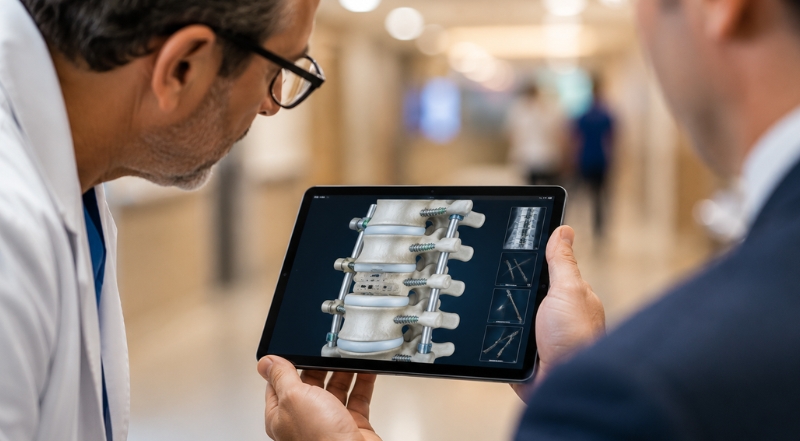
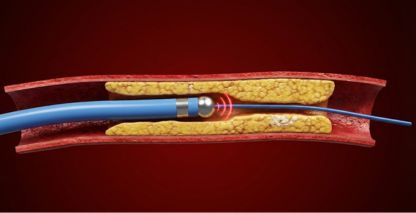
The biggest gap is spatial understanding. When a rep explains how a fixation screw anchors to bone, how a balloon catheter expands at a target site, or how a robotic arm positions a cutting tool, the person they are speaking to needs to visualize that interaction. A labeled diagram can point to a structure. It cannot show the motion, the sequence, or the spatial relationship the way a 3D animation can.
A second gap is consistency. When product knowledge is delivered through live demos and informal coaching, the message drifts. Different reps learn different versions of the story. Animation provides a standardized visual reference that every member of the sales team can use, review, and return to — keeping messaging consistent across a national or global salesforce.
A third gap is recall. People retain visual information longer than text alone, and for complex clinical products, that retention gap matters when a rep walks into an account after a two-month absence and needs to recall the exact deployment sequence of a device.
What Medical Device Sales Training Animation Covers
The scope of medical device animation for sales training varies by product category, sales environment, and competitive situation. Common use cases include:
- Mechanism of action (MOA) visualization — shows how a device, implant, or delivery system interacts with tissue, biology, or anatomy at a level that static images cannot capture
- Procedure walkthroughs — step-by-step sequences showing how a procedure unfolds from preparation through completion, helping reps speak credibly about instrument steps, timing, and clinical context
- Competitive differentiation — animation that shows how a device performs differently from a competitor’s approach, without requiring a physical side-by-side comparison
- Device assembly and handling — demonstrations of proper setup, calibration, and handling for instruments that require specific technique before use
- Patient education support — content that helps physicians explain a procedure or implant to their patients during consultation, giving reps a tool that supports the clinical conversation beyond the product itself
Each of these use cases works because animation can show what written training materials can only describe.
How Animation Fits Into a Sales Enablement Program
Medical device animation is most effective when it is integrated into a broader sales enablement system — not used as a standalone asset that gets watched once and forgotten.
During onboarding, animation reduces the time it takes new reps to achieve product fluency. Instead of waiting for a lab day or a shadowing opportunity, new hires can review device deployment, procedure walkthroughs, and MOA sequences in their first week and arrive at their first customer visit with a clearer baseline understanding.
During ongoing training, animation serves as a reference library. When a rep prepares for an account that uses a competitor’s system, they can pull up the relevant differentiation content and review it before walking in. That kind of just-in-time preparation is hard to support with printed materials.
During product launches, animation gives the sales force a head start before live training events are scheduled. Teams can receive a visual overview of the new device, understand its clinical positioning, and begin asking better questions by the time the in-person event happens. This is particularly valuable when launch timing is compressed.
During customer interactions, short animation segments loaded onto tablets or embedded in sales portals can be referenced during conversations with clinicians, procurement teams, or hospital administrators. A two-minute animation showing how a device performs in a specific anatomy is often more persuasive than extended verbal explanation — especially with a busy surgeon who has seen many competitor reps make the same claims.
This kind of strategic content integration is part of what makes animation valuable beyond its visual appeal. As Austin Visuals describes in its work on medical device marketing with 3D animation, the clearest technical communication tends to win in environments where the buyers are sophisticated and the products are complex.
What Makes a Strong Medical Device Training Animation
Not every animation serves a device sales training audience equally well. The difference between content that changes how reps sell and content that gets shelved after launch usually comes down to a few specific choices.
Anatomical accuracy. Device animations that show anatomy need to represent it correctly. Surgeons, cardiologists, and orthopaedic specialists will notice if a model does not reflect real anatomy or if the surgical approach contradicts established technique. Accuracy is not just a production detail — it is a direct signal of credibility.
Procedure logic. The animation needs to reflect how the procedure actually works. Reps who learn from a simplified or idealized version can end up in difficult conversations when an experienced physician asks a question the animation did not prepare them for.
Layered complexity. Not every audience needs the same level of detail. Strong animation programs include a high-level overview for general communication and a more detailed version for clinical conversations with experienced specialists. Knowing the intended audience determines how much depth belongs in each layer.
Visual hierarchy. Effective training animation uses camera movement, lighting, labels, and cutaway views to direct the viewer’s attention deliberately. The best content makes it obvious what to look at, in what order, and why it matters.
Modular structure. Assets that can be broken into segments are more flexible than single long-form videos. A modular structure lets a training team use the full piece for new hire onboarding and pull individual segments for refreshers, product updates, or preparation for specific accounts.
Production Considerations Specific to Medical Device Animation
The production process for medical device animation differs from general commercial work in several important ways, and understanding those differences helps set realistic expectations for planning and timelines.
Source materials drive quality. The best starting point is an accurate 3D model of the device — ideally from the engineering or design team. If that is not available, reference drawings, physical samples, and detailed photography can support model building. Anatomical references need to be sourced carefully, often from medical illustration standards or licensed anatomy libraries.
Regulatory and compliance review is often required. Sales training materials for regulated medical devices may need to go through legal, regulatory affairs, or medical review before they can be distributed to the field. Building those review cycles into the production timeline from the start prevents schedule disruptions later.
Clinical advisors add value during development. For MOA content or procedure walkthroughs, having a clinical reviewer involved during script and storyboard development catches accuracy issues before they reach the animation phase — saving time and reducing revision rounds.
Voiceover matters for training content. A professionally recorded narration track aligned to the visual timing makes animation easier to follow in self-directed training settings and reduces the need for a facilitator to be present every time the content is used.
Platform format affects delivery. Training content may need to live in an LMS, a sales enablement platform, a tablet-based presentation tool, or a hosted video environment. Each format has technical requirements that affect file type, compression, aspect ratio, and interactivity options. Knowing the destination early helps avoid reformatting after delivery.
Austin Visuals handles the full production pipeline — from concept and scripting through modeling, animation, stakeholder review, and platform-ready delivery. For companies that also need this kind of thinking applied to broader production decisions, the post on how long animation production takes for a real B2B project walks through realistic timelines and what affects them.
Why Work with Austin Visuals

Austin Visuals works with companies that need to communicate complex processes and products clearly. That includes medical animation, product animation, industrial animation, engineering visualization, training video production, and corporate video — all from a studio that has worked across technical industries where the margin for error in communication is low.
For medical device companies, the combination that matters is technical credibility and production clarity. We are not a general marketing agency that occasionally produces video. We are an animation and video production studio focused on helping technical companies explain what they do in a way that buyers, clinicians, and trainees can actually understand.
Clients come to Austin Visuals when they need someone who can bridge two disciplines: the technical world of devices, anatomy, and procedures, and the communication world of storytelling, audience awareness, and visual structure. That combination is what makes training animation effective — and what makes it stick when a sales rep needs to use it in a real clinical conversation. You can read more about how we approach this kind of work in our post on elevating training communication with 3D animation.
Our Clients include:

Frequently Asked Questions
Can animation replace hands-on lab training for medical device sales?
No — and it is not designed to. Animation works alongside hands-on training. It accelerates foundational product understanding, standardizes messaging, and gives reps a reference they can use outside the lab. It does not replace tactile or procedural training.
How technically detailed should a sales training animation be?
That depends on the audience. Content for new hires generally needs more explanation at a higher level. Content for experienced clinicians or key opinion leader conversations can go deeper. Most programs benefit from layered content with at least two versions — one for orientation and one for clinical depth.
What if we do not have a 3D model of our device?
Austin Visuals can build models from reference drawings, product photography, physical samples, and engineering specifications. Starting without a ready-made model adds time to the project, but it is a common starting point for companies without accessible CAD in a usable format.
How long does a medical device sales training animation take to produce?
A focused two-to-three-minute animation covering a single device and procedure typically takes six to twelve weeks, depending on complexity, source material availability, and review cycles. Larger programs with multiple modules take longer and benefit from phased production planning.
Can the same animation serve both sales training and physician education?
Sometimes, but not always. Messaging and depth that works for a sales rep often differs from what a clinician needs for procedural decision-making. It is worth discussing upfront whether one asset can serve both audiences with minor adjustments, or whether two distinct versions make more sense.
What is the best first step for scoping a project like this?
Start by defining who the animation is for, what action or understanding it should produce, and what source materials are available. From there, a production studio can give you a realistic estimate of scope, timeline, and cost. The post on what an animation studio needs before production starts is a useful reference for that conversation.
Conclusion
Medical device sales teams carry one of the most technically complex communication challenges in any commercial role. The products are sophisticated, the buyers are experienced, and the window for explanation is short. Animation does not eliminate that challenge, but it gives reps a clearer, more consistent, and more memorable way to explain what their device does — and why it matters in a clinical setting.
When sales teams can reference accurate procedure walkthroughs, mechanism of action sequences, and competitive differentiation content on demand, they go into customer conversations better prepared. That preparation shows up in the quality of clinical discussions, in faster onboarding for new hires, and in the confidence reps carry when dealing with skeptical or experienced physicians.
Austin Visuals creates medical device animation, product animation, engineering visualization, and training video production for companies that need their technical content to be both accurate and clear.
Ready to improve medical device sales training with animation?Austin Visuals helps medical device companies turn complex products, procedure steps, and mechanism of action content into clear visual training assets that sales teams can use in the field, during onboarding, and across the full sales cycle. Whether you need a single device overview or a modular training library, we can help.
Contact us at info@austinvisuals.com or call (512) 591-8024.
Related Blog Posts
- Revolutionizing Medical Device Marketing with 3D Animation
- How 3D Animation Improves Manufacturing Training Effectiveness
- What an Animation Studio Needs From You Before Production Starts
- How Long Does Animation Production Take for a Real B2B Project?
- Elevating Manufacturing Process Efficiency Through 3D Animation