
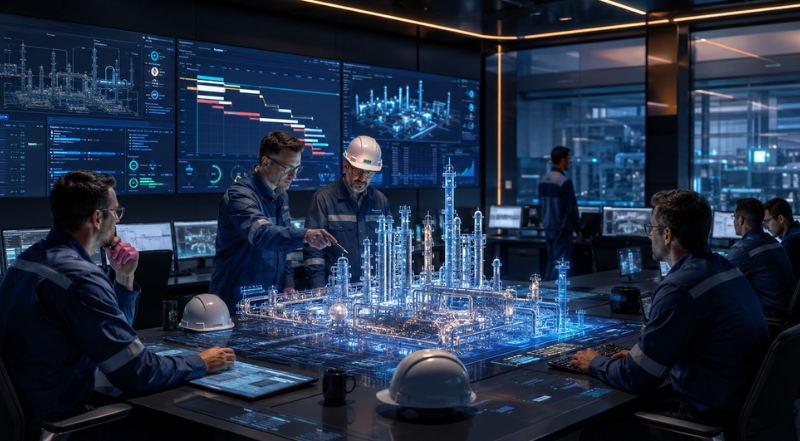
Refinery turnarounds are expensive, time-sensitive, and unforgiving. A short delay can ripple across contractors, plant teams, equipment access, safety planning, and production schedules. Everyone involved may have the same shutdown date on the calendar, yet they are often working from different levels of understanding. One group is focused on access. Another is focused on sequence. Another is tracking confined spaces, lockout steps, or scaffold timing. Leadership wants confidence that the plan is realistic and controlled.
This is where technical animation for refinery turnaround projects becomes especially useful. Instead of relying only on dense schedules, marked-up drawings, and long meetings, animation gives teams a way to see the work before the work begins. It can show how a shutdown sequence unfolds, where maintenance activity happens, how systems relate to one another, and what needs to occur in what order.
Austin Visuals helps industrial and technical companies turn complex operational processes into clear visual communication. For refinery maintenance teams, engineering firms, and operations leaders, that means animation can support planning, training, safety communication, contractor alignment, and stakeholder confidence without oversimplifying the technical reality.
Planning a refinery turnaround, shutdown, or maintenance campaign? Email info@austinvisuals.com or call (512) 591-8024 to talk with Austin Visuals about a technical animation tailored to your project.
What Technical Animation for Refinery Turnaround Means
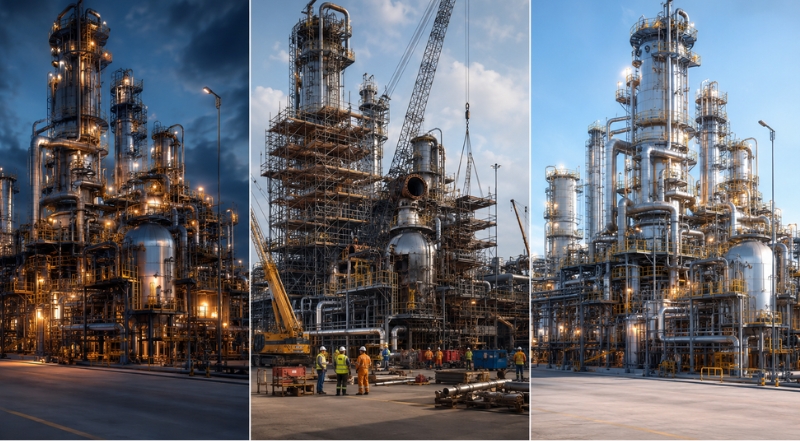
Technical animation for refinery turnaround is a form of engineering and industrial visualization used to explain maintenance events, shutdown sequences, equipment work, process relationships, and safety-sensitive procedures in a clear visual format. Unlike a purely promotional animation, its primary job is to make complicated plant activity easier to understand and easier to coordinate.
In refinery environments, that can include:
- Turnaround sequencing and outage phasing
- Unit shutdown and startup overviews
- Equipment removal and replacement procedures
- Access planning for crews, cranes, and scaffolding
- Process isolation logic and maintenance dependencies
- Training support for contractors and internal teams
- Safety communication for high-risk work zones
- Executive or stakeholder overviews of outage scope
The value is not just visual polish. The value is operational clarity. Refinery teams are dealing with complicated systems, tight windows, and real-world risk. A good animation helps everyone move from abstract interpretation to shared understanding.
That is why this work often overlaps with broader oil and gas system animation and industrial process animation. The common thread is technical communication. When equipment, people, timing, and safety all have to align, visuals become a practical tool, not a luxury asset.
Why Refinery Teams Use Animation During Turnarounds
A turnaround concentrates complexity into a limited period of time. More contractors come on site. More high-risk tasks occur in parallel. More people need to understand what is happening across units, systems, and work fronts. The bigger the event, the harder it becomes to rely on written explanations alone.
Technical animation helps refinery teams in several specific ways.
It makes sequence easier to understand
One of the biggest challenges in turnaround planning is sequence. Teams need to understand what comes first, what has to be isolated, what can happen in parallel, and what becomes a bottleneck if it slips. Animation makes sequence visible. That alone can improve planning discussions dramatically.
It helps align plant staff and contractors
Turnarounds bring together people from different disciplines and different organizations. Operations, maintenance, engineering, EHS teams, specialty vendors, and outside contractors may all interpret the plan differently. A visual reference reduces that gap.
It supports safer communication
Safety meetings often include large amounts of verbal and written information. Animation can reinforce that communication by showing equipment relationships, access constraints, exclusion zones, and step-by-step work context. It does not replace procedures, but it can make those procedures easier to absorb.
It improves confidence at the management level
Leaders responsible for cost, schedule, and plant readiness need a fast way to understand scope and strategy. A short, precise animation can communicate the shutdown approach more efficiently than a stack of documents.
It creates reusable communication assets
A turnaround animation can often be edited into multiple versions for different audiences. One version may be detailed for internal planning. Another may be simplified for orientation. Another may support executive briefings or future maintenance planning. That makes the asset more cost-effective over time.

Oil and gas equipment inspection predictive maintenance pipeline integrity testing
How Technical Animation Supports Planning, Safety, and Maintenance Communication
The strongest refinery animations are built around a use case. They are not created just because the project is important. They are created because the project needs clearer communication.
Planning and pre-turnaround alignment
Before the outage begins, teams need to see how the plan comes together. Animation can map unit boundaries, shutdown sequence, work windows, crane paths, laydown areas, equipment access, and interdependent activities. This gives planners and managers a visual tool for spotting confusion early.
Contractor onboarding and orientation
Outside crews may be highly skilled but unfamiliar with the exact plant layout or the sequence logic behind the turnaround. A visual orientation piece can accelerate understanding and reduce misinterpretation during briefings.
Safety and hazard awareness
Refinery environments present high consequences when assumptions go wrong. Technical animation can show where hot work will occur, how access routes change, when equipment is offline, and what parts of the plant require special caution. It works especially well when combined with voiceover, labels, and simple step-based structure.
Leadership and stakeholder updates
Executives, plant managers, and partners do not always need every technical detail. They do need a clear picture of scope, risk, and readiness. Animation can help communicate why the turnaround matters, what the work includes, and how the team plans to execute it responsibly.
Post-project review and future readiness
Some companies also use animation after the event as part of lessons learned, future planning, or internal documentation. Once the visual asset exists, it can support more than one maintenance cycle if the equipment and procedures remain broadly similar.
This kind of clarity is one reason technical buyers respond well to specialized content like 3D Technical Animation for Energy & Utilities Buyers. The need is not entertainment. The need is faster comprehension in environments where mistakes cost real money and time.
Where Technical Animation Helps Most in a Refinery Turnaround
Not every maintenance task needs animation. The strongest fit is usually work that is difficult to explain, easy to misunderstand, or important enough that better alignment pays for itself.
Major equipment replacement
When reactors, exchangers, vessels, valves, pumps, or other major assets are being removed, inspected, replaced, or reinstalled, animation can show access paths, lift strategy, sequence, and spatial constraints in a way that static diagrams often cannot.
Shutdown and startup communication
Bringing a unit down safely and bringing it back online involve timing, dependencies, and role clarity. Animation can simplify that sequence for broader audiences while still respecting the plant’s technical structure.
Confined or congested work zones
Some refinery tasks happen in areas where multiple crews, platforms, tools, and safety controls intersect. Showing the work visually helps teams understand where activity overlaps and where coordination matters most.
High-visibility turnaround campaigns
Large outages often attract more scrutiny because they carry major budget and schedule implications. Visual communication helps leadership, owners, or partners follow the plan without sitting through long technical walkthroughs every time.
Training-intensive projects
If the turnaround involves large numbers of outside workers, repeat procedures, or unique equipment, animation can strengthen training and make onboarding more consistent from crew to crew.
What Makes a Good Refinery Turnaround Animation
A good turnaround animation does more than move through a plant model. It answers the right questions for the right audience. That usually starts with a careful scoping discussion.
Before production begins, the most useful questions are:
- Who needs to watch this animation?
- What decisions or actions should it support?
- How technically detailed does it need to be?
- Will it be used for planning, safety, leadership, or all three?
- What source files are available today?
From there, the production process usually includes several stages.
Source material review
P&IDs, CAD models, plant layouts, turnaround schedules, marked-up procedures, equipment references, photos, and drone imagery all help define scope. The better the source package, the more precisely the animation can reflect the real environment.
Message design
Not every viewer needs the same level of depth. A plant manager briefing needs a different structure than a contractor orientation video. Good animation is shaped around the communication need, not just the available geometry.
Model cleanup and technical simplification
Plant files are often not presentation-ready. Models may need cleanup, optimization, or abstraction so the final piece stays clear rather than visually crowded. The goal is accuracy with readability, not raw data overload.
Sequence building and camera planning
The order of information matters. A refinery turnaround animation should show process logic and work sequence in a way that builds understanding step by step. Good camera direction is part of technical clarity.
Labels, callouts, and training support
Many of the most effective pieces include simple text overlays, color coding, step markers, or narration. These additions help teams understand not only what they are seeing, but why it matters.
Technical review
Because this is engineering-oriented communication, stakeholder review is essential. Operations, maintenance, engineering, and safety leaders may all need to confirm that the sequence and assumptions are represented correctly before the animation is circulated.
This accuracy-first approach is closely related to what Austin Visuals discusses in How Oil & Gas Companies Will Use Engineering-Grade Animation in 2026 and The Importance of Engineering-Grade 3D Visualization in Modern Industry. In technical environments, clarity and credibility have to work together.
Cost, Timeline, and Scope Considerations
The cost of technical animation for refinery turnaround projects depends on how much detail the animation needs to show and how much usable project data already exists. The most important pricing drivers are usually scope, complexity, and audience count.
Typical factors include:
- Availability of CAD, plant models, or layout files
- How many systems, units, or procedures need coverage
- The level of equipment detail required
- Whether the animation focuses on one task or an entire turnaround campaign
- How many versions are needed for planning, safety, or management
- Need for narration, captions, multilingual delivery, or branded graphics
- How many stakeholders will review the piece
A short, focused animation for a single procedure may be relatively straightforward. A multi-scene piece that covers unit shutdown, equipment access, work sequencing, and safety orientation across multiple audiences will naturally take more time.
The smartest planning approach is to define the core goal first. For example, if the highest-value use is contractor alignment, build the first version around that. Then determine whether the same source assets can support a management overview or training variant. That often improves budget efficiency while keeping the communication sharp.
It also helps to start early. Animation is most valuable when it influences planning and understanding before the outage is underway. If the team waits until the last minute, the asset may still be useful, but the opportunity to shape the conversation is smaller.
Why Work with Austin Visuals

Austin Visuals works with companies that need to communicate complex processes clearly. That includes industrial animation, engineering animation, product animation, training videos, corporate video production, architectural visualization, and AI-enhanced video workflows where those tools help the client communicate more efficiently.
For refinery and energy-related projects, the key is translating technical material into a form that busy teams can understand quickly without stripping out the substance. We focus on communication that supports real business and operational goals, whether that means planning, training, stakeholder review, or marketing support around a broader technical initiative.
Clients often come to Austin Visuals because they need a partner that can bridge two worlds at once:
- The technical world of systems, equipment, and procedures
- The communication world of clarity, storytelling, and audience understanding
That combination matters during refinery turnarounds because the audience is rarely just one audience. Plant teams, contractors, executives, and outside stakeholders may all need different levels of explanation from the same core material. A well-planned animation can serve those audiences more effectively than a document-only approach.
FAQ: Technical Animation for Refinery Turnaround
What is the main benefit of using animation for a refinery turnaround?
The main benefit is clarity. Animation helps teams understand sequence, equipment relationships, site access, and maintenance scope faster than written or static materials alone.
Can technical animation be used for contractor training?
Yes. Many companies use turnaround animation for contractor orientation, task familiarization, and safety communication, especially when many outside crews are involved.
Does animation replace procedures or engineering documents?
No. It supports them. Animation works best as a communication layer that helps people understand the plan more quickly before they work from the formal procedures and approved documents.
Can Austin Visuals work from existing refinery models and drawings?
Yes. Projects often begin with CAD files, plant layouts, schedules, photos, markups, or engineering models. The exact workflow depends on what is available and how detailed the final animation needs to be.
Is technical animation only useful for large turnarounds?
No. It is especially valuable on large events, but it can also help with a single high-risk procedure, a major equipment replacement, or a training-intensive maintenance task.
How early should a company start an animation project before a turnaround?
Earlier is better. Starting ahead of mobilization gives the team more time to use the animation for planning, review, alignment, and revisions before the outage window begins.
Austin Visuals creates technical animation, industrial animation, oil and gas animation, and engineering visuals that help refinery teams communicate more clearly. Contact info@austinvisuals.com or call (512) 591-8024 to discuss your project.
Conclusion
Technical animation for refinery turnaround projects helps industrial teams see the plan before the plant goes offline. That matters because turnarounds combine high cost, compressed schedules, large contractor counts, and elevated safety demands into one event. When people understand the sequence, access, and work context more clearly, the entire communication process becomes stronger.
For refinery maintenance, shutdown planning, and outage communication, animation is more than a presentation asset. It is a way to reduce confusion, improve alignment, and support better decisions across operations, engineering, maintenance, and leadership. Austin Visuals helps companies build those visuals with the right mix of technical accuracy, audience awareness, and production quality.
Ready to improve refinery turnaround communication with technical animation?Austin Visuals helps refinery, industrial, and energy teams turn shutdown plans, maintenance procedures, equipment workflows, and safety-sensitive operations into clear visual content that teams can actually use. Whether you need a turnaround overview, a contractor orientation piece, or a technical maintenance sequence, we can help.
Contact us at info@austinvisuals.com or call (512) 591-8024.
Related Blog Posts
- 3D Technical Animation for Energy & Utilities Buyers
- Oil & Gas System Animation: Streamlining Complex Concepts
- How Oil & Gas Companies Will Use Engineering-Grade Animation in 2026
- The Role of Animation in O&G Investor Presentations and Technology Pitches
- Enhancing Understanding Through Industrial Process Animation