
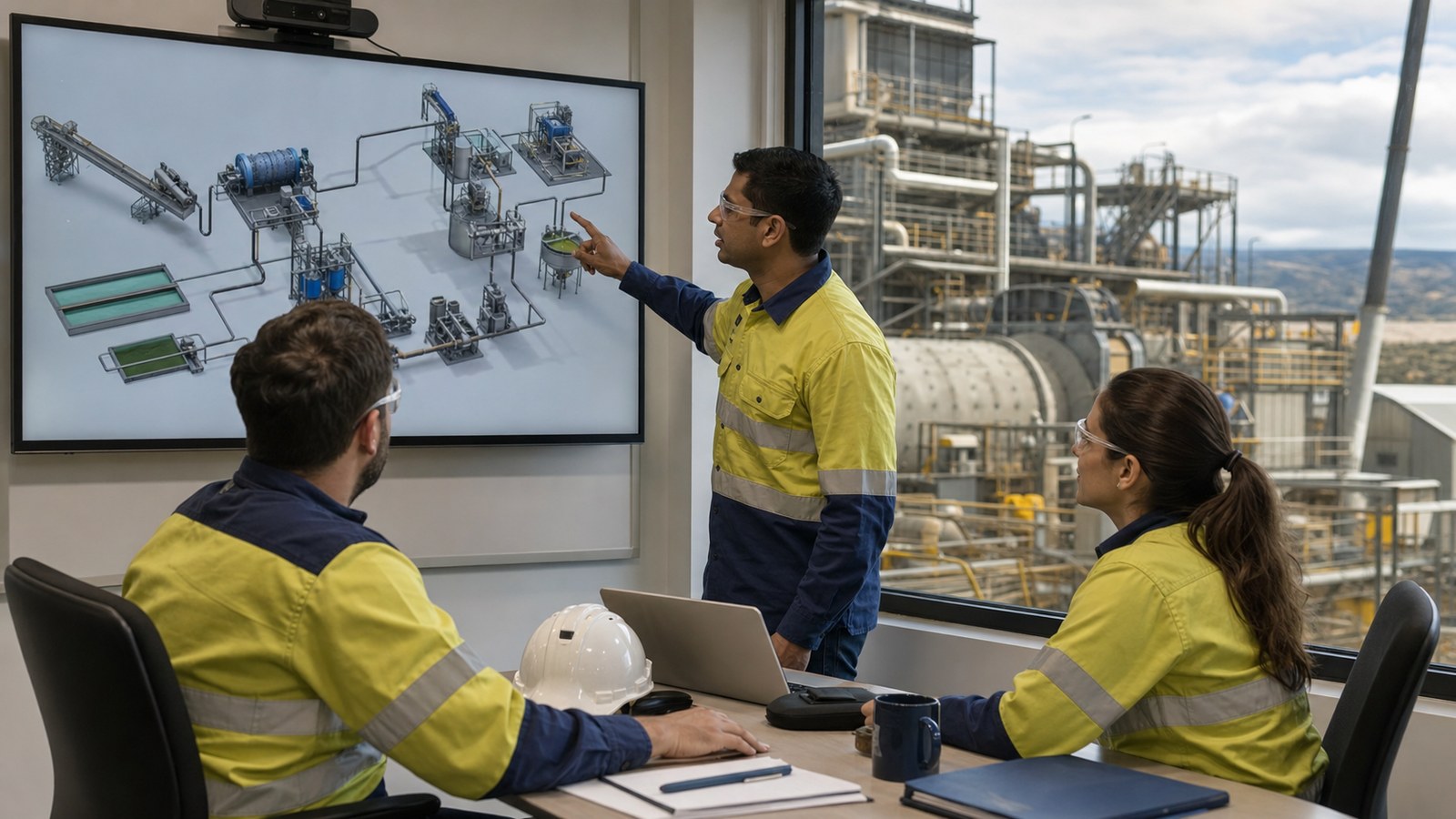
3D animation for rare earth mineral processing gives technical and nontechnical audiences a controlled way to follow ore, concentrate, solutions, reagents, separated products, water, and residues through a complex plant. Austin Visuals creates realistic process animation for mining companies, technology developers, engineering teams, training groups, and project stakeholders.
Rare-earth processing is difficult to communicate because important transformations occur inside crushers, mills, flotation cells, tanks, filters, mixer-settlers, and thermal equipment. The valuable elements may represent only part of the feed, and chemically similar rare-earth elements can require many separation stages. A static flowsheet identifies streams, but it does not always show residence, recycle, phase behavior, equipment scale, or the relationship between the process and the physical plant.
A technically useful animation must be based on the actual project. Rare-earth deposits, concentrates, secondary feedstocks, and waste-derived resources can require very different processing routes. This article describes common visualization opportunities, not a universal flowsheet or operating instruction. Mineralogy, testwork, engineering, safety analysis, environmental controls, and approved operating procedures remain authoritative.
What Is 3D Animation for Rare Earth Mineral Processing?
3D animation for rare earth mineral processing is a visual model of a project-specific sequence that may connect mining or feed preparation with beneficiation, hydrometallurgy, separation, product finishing, water management, and residue handling. It can reveal equipment internals, isolate one stream, compress hours of operation, slow a rapid event, or compare current and proposed plant arrangements.
A rare earth processing animation should begin with a clear objective. An operator-orientation module may explain what each area does and how streams connect. An engineering presentation may focus on a proposed circuit and interfaces. A stakeholder visual may need a simplified mass-flow story with water and residues included. A technology presentation may isolate a novel separation step without implying that the whole plant is already commercial.
Level of detail matters. A plant-wide overview may omit small-bore piping and secondary instruments. A maintenance or safety module may require exact access, isolation points, equipment states, and hazards. Each scene should identify whether it is exact, simplified, representative, conceptual, or based on an assumption awaiting confirmation.
Why Rare-Earth Processing Is Hard to Visualize
Rare-earth elements often occur together and have similar chemical behavior. The plant may first reject large volumes of gangue, then dissolve a concentrate, remove impurities, and progressively separate groups or individual elements. Recycles can return water, reagents, organic phase, or intermediate solutions to earlier stages. The physical plant can therefore look repetitive even when each stage serves a different separation purpose.
Critical mineral processing visualization can maintain one coherent model while changing the viewer’s scale. The camera can begin with the site, move into a process area, cut through equipment, follow a selected stream, and then return to the overall flowsheet. Consistent color use can distinguish material categories without suggesting that actual plant liquids have those colors.
Visual accuracy also means preserving uncertainty. A research or pilot process should not be rendered as a proven commercial plant unless that is the intended and verified context. Recovery, purity, capacity, and environmental claims should appear only when the client has approved their source, basis, and wording.
Ore Characterization, Crushing, Grinding, and Beneficiation
The front end of a mineral-processing flowsheet prepares the feed and, where feasible, increases the concentration of rare-earth-bearing minerals before chemical treatment. Animation can show run-of-mine receiving, primary crushing, conveying, stockpiling, grinding, classification, magnetic or gravity separation, flotation, dewatering, and concentrate storage. The exact combination depends on the ore and testwork.
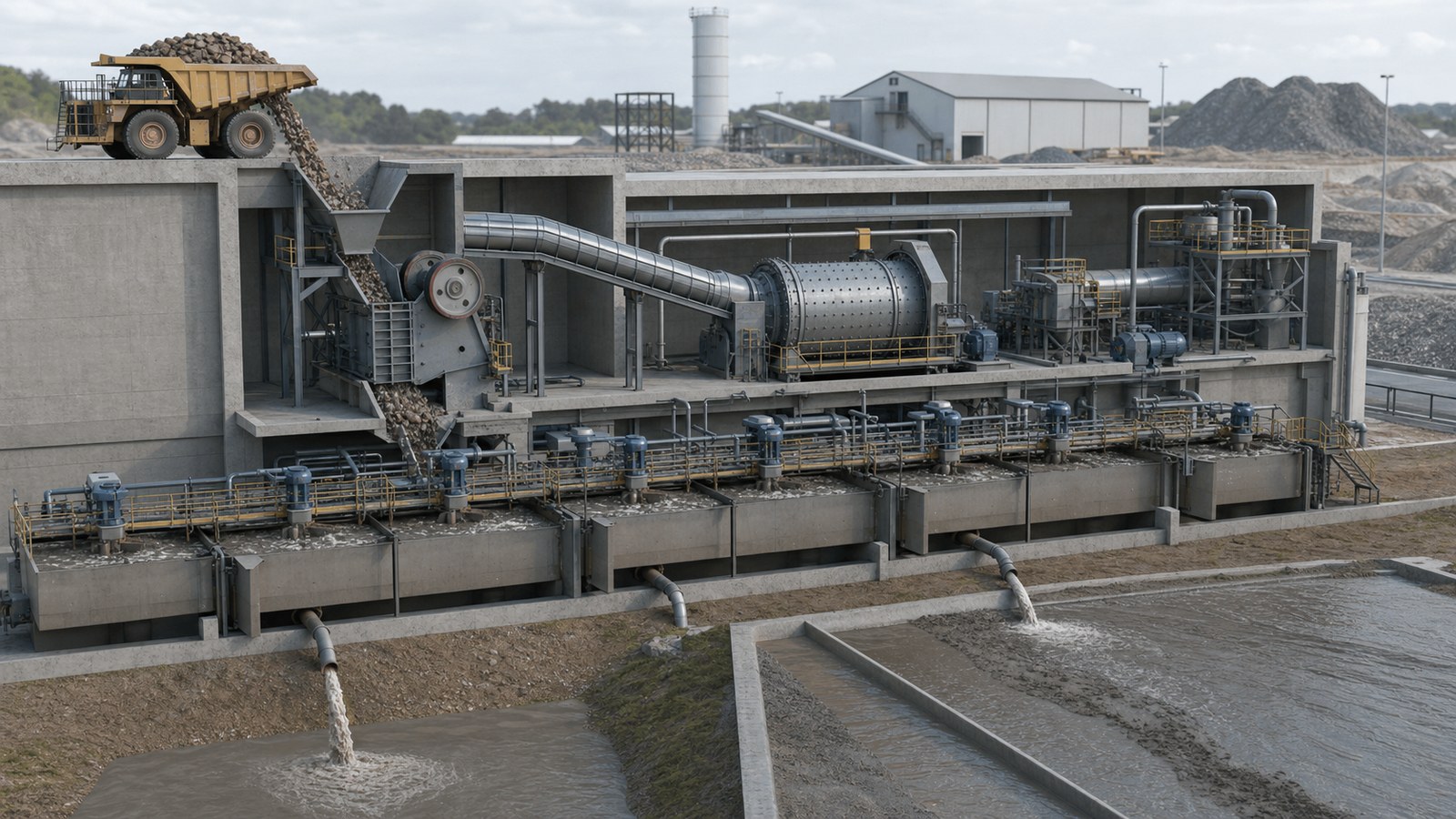
A mineral beneficiation animation can reveal why particle size and mineral liberation matter. A mill cutaway can show grinding media and slurry motion at a representative level. A classifier can split fine and coarse material. A flotation cell can show air dispersion, froth collection, and tailings discharge without pretending that visual bubbles predict recovery.
The animation should not imply that flotation is appropriate for every rare-earth feed. Some projects use other physical concentration methods, direct leaching, or combinations. Equipment states, stream splits, reagent additions, and sampling points should come from approved process documentation. Dust, noise, guarding, and slurry containment should also be represented when they are relevant to the learning objective.
Cracking, Leaching, and Solid-Liquid Separation
After concentration or feed preparation, a project may use thermal or chemical treatment to make rare-earth values available for recovery. Depending on the mineralogy and process, this can involve cracking, roasting, acid or alkaline leaching, pressure leaching, or another project-specific extraction route. A hydrometallurgical process animation can show the sequence without exposing learners to a live process.
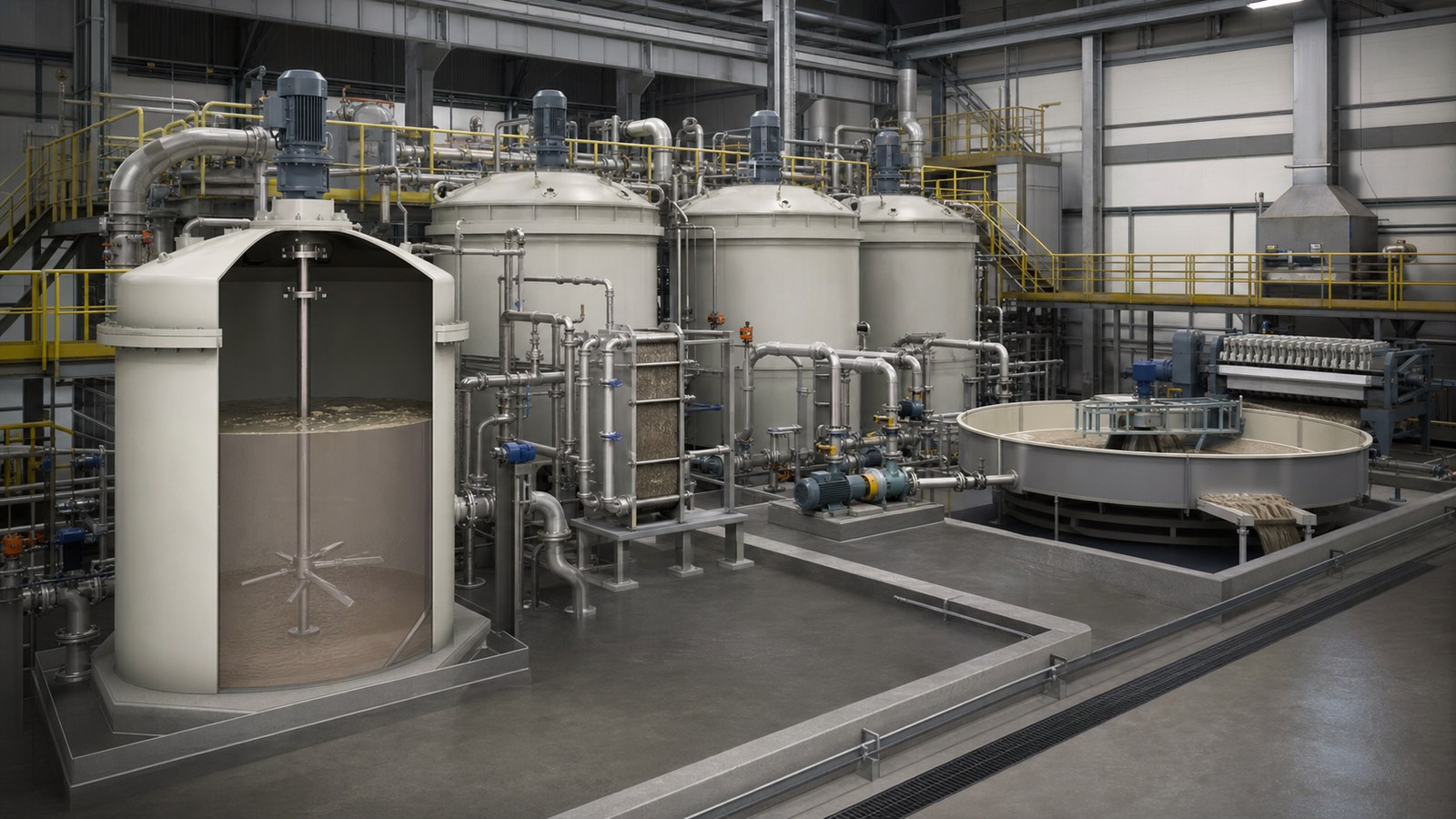
Tank cutaways can show feed entry, agitation, heat transfer, reagent addition, residence, off-gas handling, and discharge. Piping can be isolated so the audience sees where slurry, solution, wash water, and recycle streams go. A thickener, clarifier, or filter can then show the separation of pregnant solution from residual solids.
Safety and materials of construction are part of the story. Corrosive reagents, elevated temperature, pressure, vapors, and residual minerals may require containment, ventilation, compatible equipment, monitoring, and controlled access. The visual should follow client safety information and avoid generic open tanks or workers standing beside exposed chemicals.
Purification and Rare-Earth Separation
Once rare-earth values are in solution, the process may remove impurities and separate rare-earth groups or individual elements. The U.S. Department of Energy notes that solvent extraction is a primary industrial separation method and that the exact system is engineered for the concentrate. Other projects may use ion exchange, membranes, precipitation, or emerging technologies.
A solvent extraction animation can show aqueous and organic phases entering a mixer, contacting under controlled agitation, and separating by gravity in a settler. Repeated stages can then illustrate extraction, scrubbing, stripping, and recycle. The model should show a train rather than implying that one vessel separates a complex rare-earth mixture instantly.
The chemistry remains the client’s responsibility. Phase ratios, extractants, pH, temperature, stage count, residence, impurities, and target products should come from approved design or testwork. Restrained visual colors can differentiate phases, but the narration should clarify that they are a communication device rather than the actual appearance of the fluids.
Precipitation, Filtration, Calcination, and Oxide Products
Separated or mixed rare-earth solutions may proceed through precipitation, aging, solid-liquid separation, washing, drying, and calcination to produce oxide products. A 3D sequence can connect the reaction vessel, filter, dryer, calciner, dust collection, sampling, packaging, and product storage while keeping powder handling enclosed.
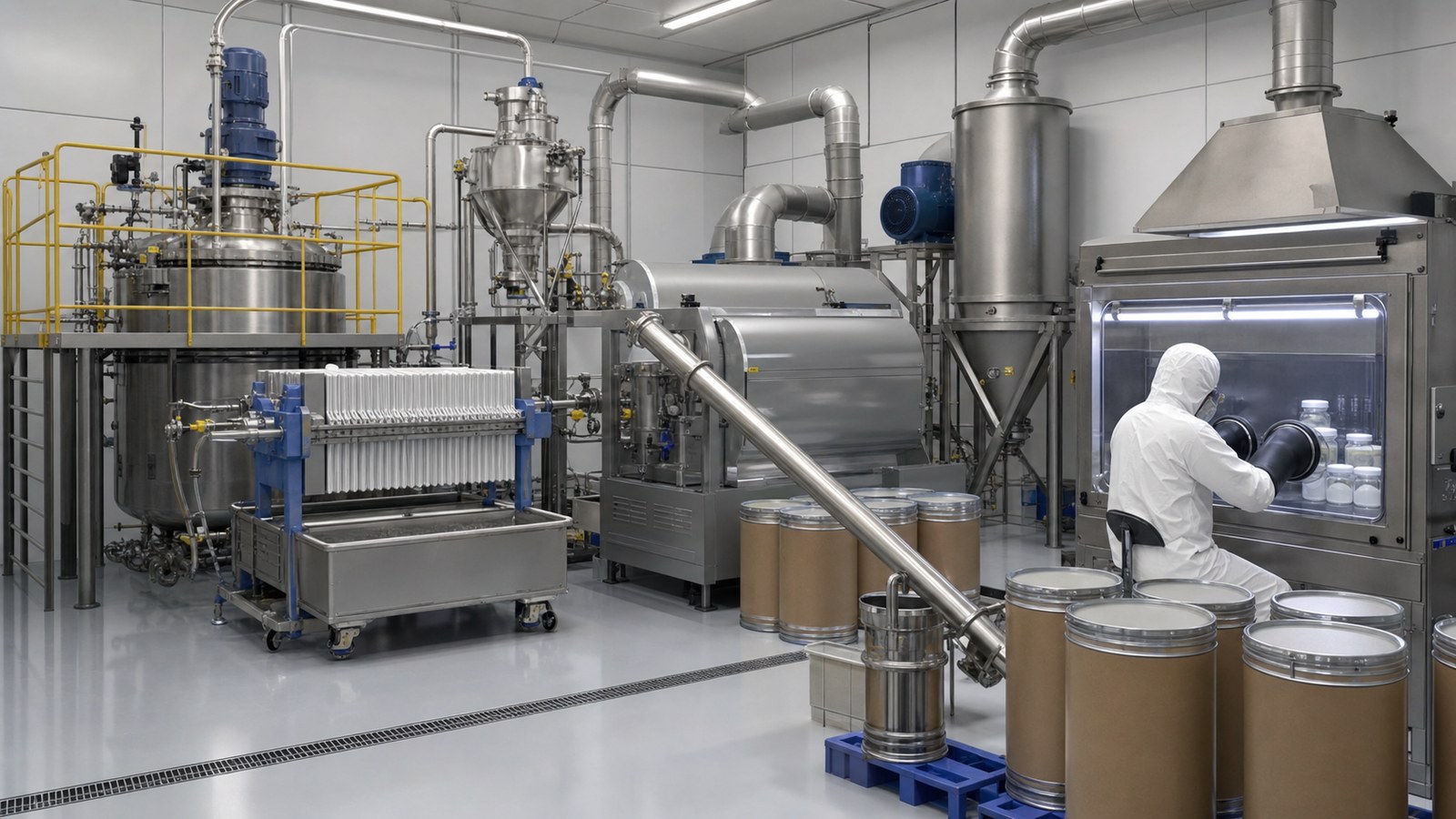
The animation should state what product level it represents. A rare-earth oxide is not the same as a finished rare-earth metal, alloy, magnet material, or end-use component. If downstream metal-making or alloy production is outside the project boundary, the visual should end at the approved product rather than inventing additional steps.
Sampling and quality control can be included at a high level. The visual may show where samples are collected and how batches or streams move through the plant, but analytical results and product claims require verified project data. Fine powders should never be shown blowing openly through the workplace or handled without suitable controls.
Water, Reagents, Residues, and Environmental Controls
A process animation is incomplete if it shows only the valuable product. Water supply and recycle, reagent storage, secondary containment, ventilation, residue neutralization, tailings or filtered solids, stormwater, monitoring, and closure considerations may be central to how the plant is understood.
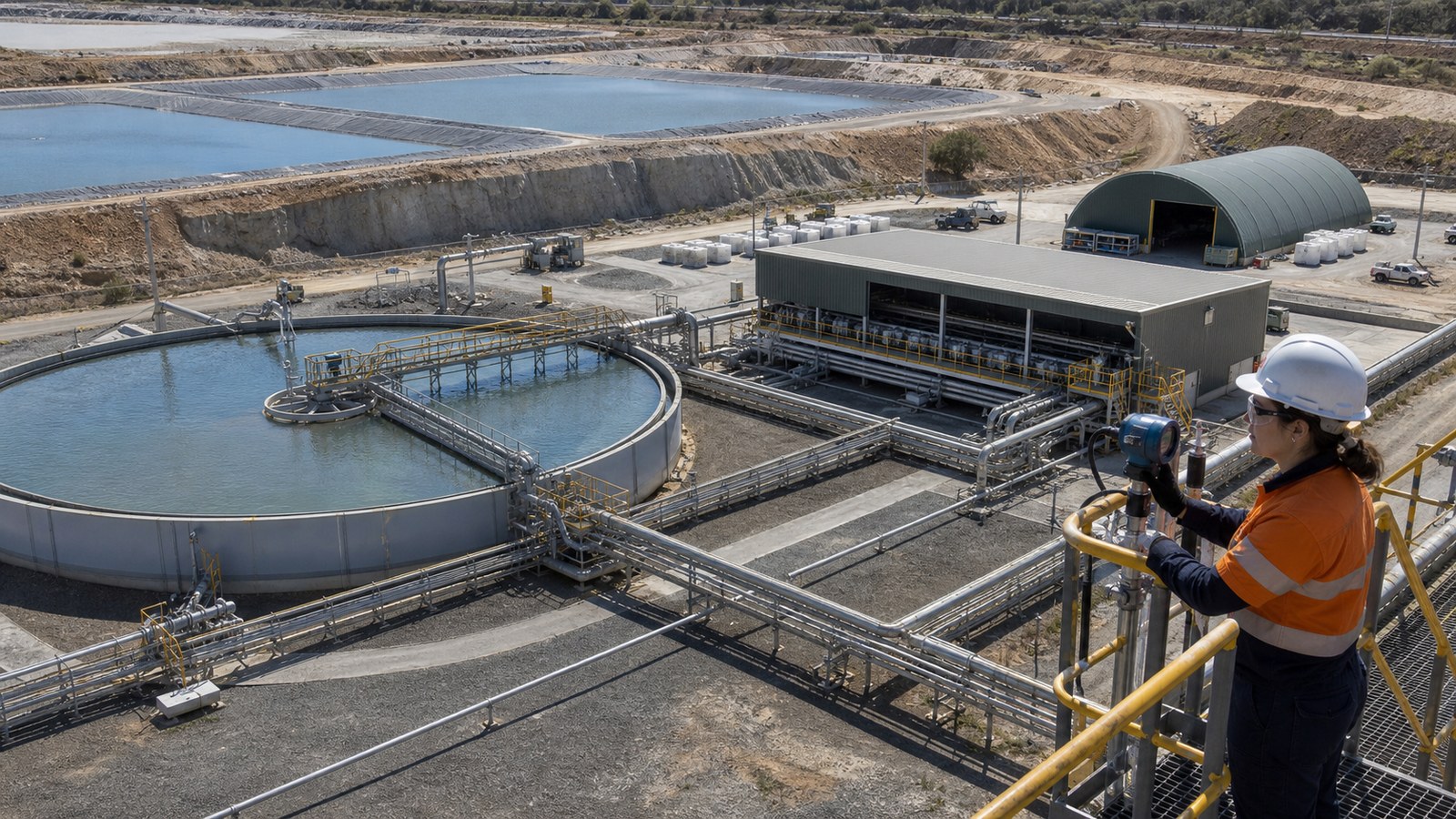
Visuals can follow water from makeup through process use, clarification, treatment, and recycle. They can show where residues are thickened, filtered, washed, transferred, stored, or sent to a designed facility. If feed materials contain uranium, thorium, or other regulated constituents, their handling must reflect project-specific characterization and requirements rather than generic imagery.
Animation should not imply zero impact, zero discharge, or complete recovery unless those claims are supported and approved. It can instead show the designed controls, monitoring points, boundaries, and material accounting. This gives environmental and process teams a common visual for reviewing assumptions and interfaces.
Our Work samples:
SEAGATE Commercial 3D Animation | 3D Product Animation
Komatsu’s 3D Animation
3D Animation Demo Reel
Applications for Training and Technical Communication
Operator and contractor orientation
A mining process training animation can introduce plant areas, stream relationships, access restrictions, PPE expectations, alarms, and emergency arrangements before field instruction. It should support site orientation and supervised practice, not replace them.
Engineering and design reviews
Teams can use the model to discuss equipment arrangement, access, maintenance space, piping routes, interfaces, and proposed changes. Animation is not a substitute for engineering calculations or formal design review, but it can expose misunderstandings before detailed discussion.
Technology and investor presentations
Developers can explain where a new process fits within the broader flowsheet and which feed, intermediate, or product it addresses. The visual should distinguish laboratory, bench, pilot, demonstration, and commercial status and should avoid unsupported performance claims.
Stakeholder and community communication
A simplified site-to-product story can help nontechnical audiences ask better questions about feed sources, water, reagents, products, residues, transport, and monitoring. It should preserve the important boundaries and uncertainties instead of reducing the project to a frictionless product animation.
How to Build an Accurate Rare-Earth Process Animation
1. Define the audience and decision
Identify what the viewer must understand or do. A plant operator, regulator, investor, engineer, and community audience need different detail, terminology, and evidence.
2. Establish the approved process basis
Collect process flow diagrams, equipment lists, general arrangements, mass-balance information, operating narratives, testwork summaries, vendor references, and environmental diagrams. Assign owners and revision dates.
3. Create a visual source map
Connect each scene, stream, equipment state, and performance statement to a source or reviewer. Record assumptions and identify conceptual areas before they acquire the authority of a finished render.
4. Review storyboards and animatics
Confirm sequence, stream direction, equipment state, color conventions, safety conditions, and narration in low-detail form. Metallurgy, process, mechanical, operations, safety, and environmental reviewers may own different details.
5. Approve and maintain the asset
Preserve the approved master, source model, review notes, and revision history according to the project agreement. Update or retire training content when the plant, process, controls, or operating philosophy changes.
Why Choose Austin Visuals for Rare-Earth Process Animation?

AV Thumbnail
Austin Visuals helps technical organizations turn complex plants, equipment, chemistry stages, and industrial workflows into clear visual communication. Our team can support discovery, scripting, storyboarding, CAD preparation, 3D modeling, process animation, motion graphics, voiceover, editing, still graphics, and delivery for multiple platforms.
We build projects around staged technical review. Early diagrams and storyboards establish the process boundary. Animatics let specialists correct streams, equipment states, sequence, and assumptions before final rendering. The final style can range from clean engineering visualization to realistic 3D imagery depending on the audience.
A shared plant model can support training, design communication, stakeholder presentations, investor media, trade-show content, and reusable still images when each output is reviewed for its purpose. Contact Austin Visuals at (512) 591-8024 or info@austinvisuals.com to discuss the process basis, schedule, and deliverables.
Our Clients include:

Frequently Asked Questions
What is 3D animation for rare earth mineral processing?
3D animation for rare earth mineral processing is a technical visualization of equipment, material streams, chemistry stages, controls, and plant relationships used to explain a project-specific flowsheet for training, engineering communication, stakeholder presentations, or business development.
Which rare-earth processing stages can animation show?
Animation can show ore receiving, crushing, grinding, classification, physical concentration, flotation where applicable, cracking or leaching, solid-liquid separation, impurity removal, solvent extraction or ion exchange, precipitation, filtration, calcination, product handling, water recycling, and residue management.
Does every rare-earth ore use the same processing flowsheet?
No. Mineralogy, grade, particle liberation, gangue, target elements, impurities, testwork, economics, product specifications, environmental controls, and local requirements determine the actual flowsheet. A generic animation must be labeled as representative.
Can animation explain solvent extraction clearly?
Yes. A cutaway can show mixing, phase contact, gravity settling, extraction, scrubbing, stripping, recycle streams, and repeated stages. The chemistry, phase behavior, equipment count, and operating conditions must come from approved project information.
What technical files are useful for production?
Useful inputs include process flow diagrams, P&IDs when appropriate, mass-balance data, equipment lists, general arrangements, CAD, vendor references, testwork summaries, operating narratives, control philosophy, safety requirements, environmental diagrams, and a list of technical reviewers.
Can one 3D plant model support several communication needs?
Yes. An approved model can support operator orientation, process overviews, maintenance or safety modules, investor presentations, stakeholder communication, trade-show media, and still graphics, provided each version is reviewed for its audience and purpose.
How does Austin Visuals maintain scientific and technical accuracy?
Austin Visuals organizes client references, records assumptions, develops storyboards and animatics, and schedules staged reviews with client-designated metallurgists, process engineers, equipment specialists, environmental teams, and operations personnel before final rendering.
Conclusion
3D animation for rare earth mineral processing can make beneficiation, extraction, separation, finishing, water, and residue systems easier to understand without pretending that every feed uses the same flowsheet. Its value depends on a clear objective, verified process information, visible assumptions, and review by the people responsible for the technology and operation.
When technical accuracy leads the production process, animation can become a reusable communication asset for operators, engineers, partners, investors, and stakeholders.
Austin Visuals creates realistic process animation, equipment cutaways, plant overviews, training modules, and technical presentation assets with staged expert review.
Contact us at info@austinvisuals.com or call (512) 591-8024.